

Author archive
Toyota Doubles Down On Updates: HiLux And Fortuner Facelifted.
Toyota has made some noise in the first week of June 2020 in respect to the facelifted and upgraded HiLux. Quietly though, their “forgotten” SUV, the Fortuner, has also been given a makeover and received the power/torque upgrades as well.
Fortuner.
Front and rear are where the exterior changes have come to play, and definitely moreso up front. The headlights have been given a restyling that brings them a sharper, narrower look, but also mimics the sharper and narrower styling found on Mitsubishi’s Pajero Sport. Underneath is a pair of broader airvents that first appeared on the Lexus LX570. In the middle the air intake is now a deeper Vee shape, with the whole look more like that found on HiLux from a couple of years ago. Overall, it’s a cleaner and less invisible look.
The rear brings the same bumper extensions and have hints of roundness, rather than heavy angles. The rear lights have changes in the internal look, with the top of the range Crusade gaining LEDs, whilst the rear window line remains unchanged. Unfortunately.
Behind the nosejob lies a rejigged diesel engine. Like the HiLux, there are now 150kW and 500Nm (auto only) which are increases of 20kW and 50Nm, and a change to the economy. Toyota says up to 17% is the improvement in urban driving. Towing has increased; it’s now up to 3,100kg. Inside the infotainment screen has been upped to eight inches from seven, and now has the smartphone apps as standard, as are satnav and DAB audio. The range is still a three level layout, being GX, GXL, and Crusade. Contact your local Toyota dealer for pricing and availability. HiLux.
 Toyota have also waved the update wand over their best selling HiLux. The engine has the same upgrades (150kW, 500Nm for auto transmissions, up to an 11% increase in economy) and the exterior also has been updated. Late August is the ETA for arrival on Aussie shores. Here’s what’s been done.
The HiLux sports a large trapezoidal grille which Toyota says “dominates the front design and incorporates more pronounced horizontal elements”. Depending on the level chosen, the surrounds will differ in look. The headlight clusters have been reconfigured for a more slimlined and edgier appearance and the upper levels will be LED lit. The lower bumper corners have a restyled look that brings a stronger “jut-jawed”, almost bulldog appearance that builds upon that seen on the RAV4. In profile though, some subtle restyling on the flanks and a creaseline for the doors has been added to join front and rear.
Inside HiLux also gets an update, including the increase to an eight inch, not seven, touchscreen that includes DAB and smartphone apps. The driver’s display now has a full colour 4.2 inch display, bringing the HiLux into line with Camry and Corolla, for example.
Motorvation comes from a 2.7L petrol, 2.4L and 2.8L diesel. 4×2 and 4×4 drive modes remain available depending on model. The three body styles of single, extra, and double cab remain as do the five trim levels: Workmate, SR, SR5, Rogue and Rugged X. Pick-up and cab-chassis options are both available.
Underneath, the HiLux range has been made over as well. The suspension has had the shock absorbers retuned and mounted to new bushings. The leaf sprung rears have been refined and provide a more comfortable ride without losing handling ability. So have the technological abilities been increased, with a new traction control feature redistributing torque in the 4×4 models when 4×2 mode is being used. The Downhill Assist Control uses sensors to provide an almost 4×4 like split of torque on demand in wet, muddy, or grassy conditions. Towing for the auto 4×4 variants is now up to 3,500 kilograms, and the 4×2 versions are upped to 2,800kg. That’s an increase of up to 300kg.
Toyota’s Sean Hanley, the Vice President for Sales and Marketing, said: “More than ever, Australia’s favourite ute will inspire go-anywhere confidence for customers who rely on it as a load-carrying and trailer-towing workhorse for doing their jobs. Equally, the latest changes will advance HiLux’s credentials among customers who demand the handling, ride comfort and convenience of an SUV.”
Although vehicle sales in Australia have declined dramatically in recent months, in May 2020 the HiLux commanded a full 25.5% share of the pickup/cab chassis market, selling 90 for each day of May.
2021 Hyundai Santa Fe Is On The Way.
Hyundai Motor Company’s long awaited revamp of the Santa Fe was unveiled in the first week of June. There are clear signs of exterior change and a freshen up for the interior brings higher level of passenger comfort and convenience. What could point the way to a new design ethos for the brand is a new grille shape and look. There’s a heavier emphasis on the diamond styling in the grille itself, with the LED “eyebrow” driving lights slimmed down even further, and the headlights changed in shape and brought towards a more even line on either side of the grille. A pair of driving lights fall down from the eyebrows in a sweeping curve and form a bisecting line for the main lights in a T-shape.
Down in each bottom quarter the air intakes have also been reduced in size. This brings a more elegant and stylish look to the whole front end presence. There’s also elegance in the side profile, with a line drawn from the the DRLs to the leading edge of the rear lights. This runs over enlarged wheel arches which house 20 inch wheels. The rear lights have been given a subtle makeover, with a more defined arrowhead look on the outer edges, and are now joined by a bar located on the tailgate. There is also a T-shape inside the rear lights turned 90 degrees.
Inside and Santa Fe has been given more space and comfort with a higher level of use for soft-touch materials. The centre console has been raised in comparison to the front seats, giving an impression of the front occupants sitting more in a comfortable armchairs. There’s a more balanced, a more symmetrical look to the centre, with the touchscreen, centre airvents, and aircon & auxiliary controls in a more integrated cluster. It looks more intuitive and includes a removal of a sliding gear selector. Hyundai has moved to a push button drive selector thanks to the implementation of a drive-by-wire throttle input. Although the Santa Fe has been seen as an off-road capable vehicle, until now it’s never actually had a drive-mode selector for getting dirty. This feature includes unique modes for sand, snow and mud, as well as eco, sport, comfort and smart modes, the last of which automatically recognises the driving style and selects a mode so the driver does not have to. Hyundai’s HTRAC all wheel drive system should be standard across all, if not most, of the range.
The redesign of the centre console allows for a larger touchscreen, which is now 10.25 inches. It should includes the smart apps, satnav, digital audio, and camera views.
“We modernised the new Santa Fe with premium features and appealing aesthetics that are sure to add value,” said SangYup Lee, Senior Vice President and head of Global Design Centre. “The bold lines that extend from one side to the other and from front to back give Santa Fe a rugged yet refined look that SUV customers want. Besides, we’ve added numerous features and functions to create a truly family-focused SUV that is a pleasure to drive.”
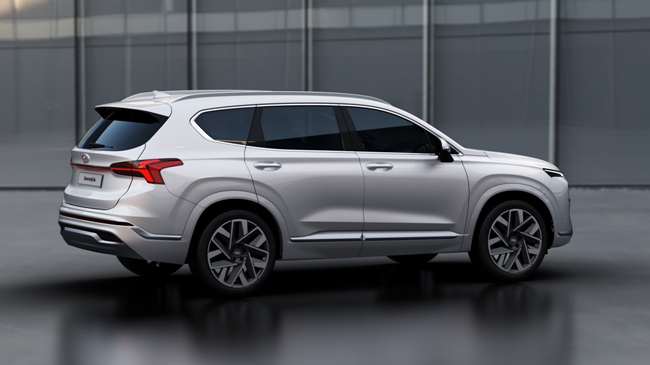
Hyundai expects to release the Santa Fe to the Australian market in the third quarter of 2020.
New Vehicle Sales Continue The Downward Slide.
The Federal Chamber of Automotive Industries (FCAI) has released the new vehicle sales statistics for May 2020. Unfortunately for the Australian new car market, it shows a continued decline in cars finding homes. Compared to May 2019, which saw 92,561 vehicles sold, May 2020 had a reduction of 35.3 per cent, down to 59,894. VFACTS says this is the largest drop in sales since recording of sales began in 1991.
Victoria saw the biggest drop, with over 11,000 fewer vehicles sold in May 2020 compared to May 2019. It dropped from 26,136 to 15,366. New South Wales dropped by a similar margin, from 29,654 to 19,403.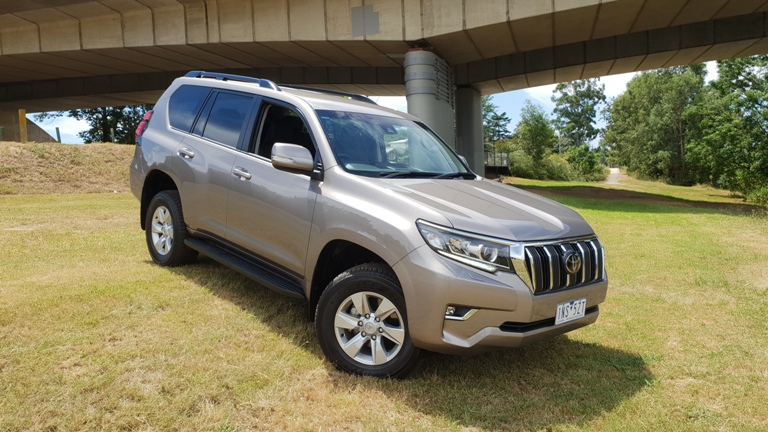
In the overall market share, once again it was Toyota that lead the pack, making up 20.2% of total sales in May. Kia (11.6%) and Hyundai (10.7%) took out 2nd and 3rd. Mazda was 4th at 9.9%, with Volkswagen taking 5th at 7.6%. Key to Toyota’s success were the RAV4 and Prado, with 24.9% and 23.5% (2,345 & 1,358) in the medium and large SUV categories. In the SUV segment Toyota was a clear leader at 22.5%, well ahead of Mazda’s 12.0%.
Toyota held a narrow lead in the 4×4 Pick-up category, selling 2,800 HiLux 4×4 vehicles for a share of 25.5%. In comparison the 4×2 HiLux moved just 727. Ford’s Ranger moved 2,499 or 22.8% of the category. Volkswagen’s 4×4 Amarok found 512 new homes. Toyota completely dominated the Light Commercial Vehicle sector too, with 5,221 vehicles sold in May for a market share of 35.3%. The second place was Ford with 19.2%, selling 2,882.
Inside the sub-$70K large car market, Kia’s Stinger sold 93, down from 157 in May 2019. Holden’s still clearing Commodores, with the once dominant nameplate selling just 40. BMW took home the gold in the plus-$70 sector, selling 57 5-Series, ahead of the 29 Mercedes-Benz E-Class. For the still comparatively lively people mover sector and under $60K, Kia’s soon to be updated Carnival had 190 sales for a 50.5% share, tripling the Hyundai iMax at 68 (18.1%). The recently released Granvia, the people mover version of the HiAce, just pipped the Mercedes-Benz V-Class, with 19 to 15.
In the models sold, Toyota had the Corolla sell 1,626. Kia’s Cerato sold 842, whilst the Hyundai 130 cracked the thousand, with 1,191. From Mazda, the Mazda3 had 1,052 new buyers with the CX-5 almost double the CX-3 with 1,479. Ford’s all-conquering Mustang continued its winning ways, selling 257 in the sub-$80k market for 53.4%. 2nd place went to Toyota’s 86, with 40 sold for 8.3%, just ahead of Hyundai’s just updated Veloster and BMW’s 2 Series Coupe/Convertible. Both sold 38 for 7.9%.
Going to the plus-$80K market, Mercedes-Benz had 75 C-Class coupes and convertibles sold, for 34.6%. The BMW Z4 was a clear second with 39 and 18%.
For May 2020, the passenger car segment was 13,836. That’s a substantial dip from May of 2019 where there were 28,890 sold. In comparison, the SUV sector saw 28,652, down from 40, 937 last year.
Tony Weber, chief executive of the FCAI, said the automotive market has been under pressure for some time. “May 2020 is the 26th consecutive month of negative growth for the market, and the causative factors are well documented – droughts, floods, bushfires, tight lending conditions, unfavourable exchange rates, and political uncertainty. Now, we add to that the devastating effect of the COVID-19 pandemic over the past three months. While COVID-19 is primarily a health crisis, it has brought about an economic crisis as well. These are difficult times for the global and domestic economy, and this of course has repercussions for the local sales sector, including the automotive industry,” Mr Weber said.
He added: “And finally, brand End of Financial Year campaigns have started, meaning the opportunity to snare a bargain has increased significantly. So if you are in the market for a new vehicle, now’s the time to visit your local dealer.”
2020 Subaru Forester Hybrid – S Hybrid & XV Hybrid – Private Fleet Car Review.

 This Car Review Is About: Two new Hybrid vehicles for the Australian market, courtesy of Subaru. The Forester is the brand’s best seller, and along with the XV sees the company launch their first forays into the hybrid arena.
Each come with a varying trim range. The Forester Hybrid comes in Forester Hybrid-L and Forester Hybrid-S trim, and is available in four “normal” levels; 2.5i, 2.5i-L, 2.5i Premium, and 2.5i-S. XV is available in XV Hybrid AWD, and 2.0i, 2.0i-L AWD, 2.0i Premium AWD, and 2.0i-S AWD.
How Much Does It Cost? According to the pricing matrix on the Subaru Australia website, the entry Forester is $39,322, Forester 2.5i-L Hybrid starts at $44,731, with the 2.5i-S at $51,031 drive-away. XV kicks off at $33,546 in entry level trim, and $40,239 for the sole XV Hybrid.
Under The Bonnet Is: Where the changes lie. A 2.0L boxer four in the Forester replaces the normally fitted 2.5L The battery is located in the rear. The XV has the same layout, and also comes with a 2.0L petrol engine. The Forester and XV have a 48L tank. That’s down from the normal 63L. There are no changes to the Subaru signature all wheel drive platform otherwise.
 The spec sheet lists the peak power for the Forester and XV Hybrid as 110kW at 6000rpm, and 12.3kW for the electric motor. Torque is rated 196Nm at a typical 4000rpm, and 66Nm for the electric motor.
Economy for the Forester Hybrid, says Subaru, is 6.7L/100km combined, 7.5L for the urban, and 6.2L for the highway. For the Forester, we finished on 7.7L/100km. This was on a drive loop of 80% urban and a hilly backroads remaining 20%. XV Hybrid is rated as 6.5L/100km for the combined, 7.5L for the urban, 5.9L/100km for the highway and also finished on 7.7L/100km. Required fuel is 91RON. Both are heavier than their non-hybrid siblings, with the Forester at 1,603kg dry and XV at 1,536kg. Both are around 90kg heavier thanks to the battery pack. Transmission is a seven step CVT in both with manual mode. Torque vectoring is standard as well.
On The Outside It’s: Moreso a badge denoting the hybrids drive-train with E-Boxer than any wholesale changes since the cars were facelifted two years ago. Forester is much like the Outback. Both look like station wagons yet are SUV sized. Forester is 4,605mm in length, and stands an impressive 1,730mm to provide that SUV presence. It’s clever design work from Subaru in this area as compared to other brands, it simply doesn’t look like an SUV. The XV is 4,465mm, and is actually a little lower than the non-hybrid XV, standing 1,595mm, 20mm down on the roof-rail fitted non-hybrids. The XV is more a hunchbacked style visually though, thanks to the extra ride height it has over the Impreza hatch it’s based on. Ground clearance for both is 220mm.
  Wheelbases are almost identical, with a mere 5mm separating the pair at 2,670mm and 2,665mm respectively. Wheel and rubber combos for the two tested were 225/55/18s on the Forester S Hybrid with Bridgestone supplying the rubber. The XV has Yokohamas and 225/60/17s. There are eight paint colours for the Forester, including the deep aqua blue on the Forester Hybrid and a shade of aquamarine on the XV. It was a colour remarked upon by many as being a lovely colour.
 The C shaped LED lights in the front and rear clusters bring a model and brand defining look, as it’s common across the range Subaru offer. The Forester has self leveling front lights and they’re steering sensitive. The XV doesn’t get these features in Hybrid trim.
On The Inside It’s: Definably Subaru. There are the three screens, one in the dash binnacle, the touchscreen in the centre (smaller in the XV at 6.5 inches against the 8.0 screen in Forester S Hybrid), and the very useful info screen perched up high. Audio is DAB enabled however none of the information normally available such as artist and song could be accessed. The Forester had a Harman-Kardon supplied speaker system. There is also a CD player in each.
External views though, as part of the safety system, can also be accessed here, such as the left hand side when reversing and showing in crystal clear clarity the angle of the car in relation to the kerb.  The steering wheel has a pair of tabs on the lower left arc, at around the seven o-clock position, and a flick back or forth is what changes the information on the dash display. The Info button on the spoke changes the info on the upper screen, and includes angles of incline, economy, and drive distribution when underway. Centre console rocker switches for the front seat heating sit close to the X-Drive control knob (chromed in the Forester, a tab in the XV) and they warm the seats quickly in the Forester. The XV has leather appointed cloth sports style seats and no heating is fitted here.
The driver’s seat is powered and has memory positioning. Leather trim is found on the Forester’s seats, cloth for the XV Hybrid. Cargo room is 509L to 1,779L in the Forester, 345L to 919L in the XV, showcasing the differing rear roof lines plus the higher cargo floor in the XV.


The dash design is classy bar one small niggle. The USB ports up front and well and truly buried in a niche that requires unnecessary fiddling to access. There’s some crouching down required in order to first sight the ports then actually insert cables. Ancillary controls for the driver are smartly laid out and visible above the driver’s right knee. There are a couple of acronyms in the pair; SRH is Steering Responsive Headlights and AVH is Auto Vehicle Hold, the braking mechanism on slopes. What About Safety?: From the Subaru website: Subaru’s Vision Assist technology featuring: Front View Monitor, Rear Cross Traffic Alert, Reverse Automatic Braking, Side View Monitor. There is also the Driver Monitoring System – Driver Focus3 featuring distraction and drowsiness warning. There is an icon on the driver’s dash display and warning tones aplenty of it reads the face and feels the eyes haven’t been looking forward. airbags are seven in number.
 On The Road It’s: Surprising in a couple of ways. In the case of the hybrid system in the Toyota range, the cars start in a fully electric ready to go mode. The cars then will reach 20kph before the petrol engine switches in. In the case of the Forester and XV, the petrol engine is rotating from the get-go. Select Drive, gently squeeze the go pedal, and there’s plenty of urge as both battery and petrol get the cars underway.
 There is an EV icon in the driver’s display area, and this appears moreso when the cars are cruising on the highway, and the petrol engine is barely ticking over. There’s a fair bit of engine noise when really pushing it, such as going up hills, and this was where the Forester really suffered in economy. That smaller tank didn’t help as just after 260 kilometres covered the gauge said it was half empty. The XV had more kilometres on the petrol engine and felt noticeably perkier, looser, more spritely.
Certain sections of the acceleration curve felt more linear, less stressed than the Forester. However, no matter what, compared to the system in Toyota’s range, the petrol engines here felt more “always on”, and engage the EV system far less than Toyota’s. The Toyota setup is definitely EV up to 20kph, the Subaru setup says it should but doesn’t. Even on very light throttle pressing on the highway, the petrol engine is still engaged.
Also, the CVT isn’t bad, but there’s still that sense of energy sapping depending on how the throttle is used. Under hard acceleration there’s that constant sense of slipping however more a snese of gears changing. Lighter throttle pressing seems to have better response and more a traditional CVT feel with revs rising and motion increasing. The attached image shows Subaru’s intent. In real terms the engine package is the only difference in how they drive. The brakes have a slightly more responsive feel, the steering is quick and light to the touch, and there is little to quibble about in regards to the roadholding abilities. With the all wheel drive grip levels and torque vectoring facility, both cars can be pushed into turns and corners with plenty of confidence. On longer sweeping corners there is a distinct lack of need to constantly adjust the steering as well.
What About Safety?: Both cars have a five star rating. Both have Subaru’s much vaunted Eyesight safety system. There is a Driver Monitoring System that literally watches the driver’s face. There is facial recognition and looks for drowsiness and distraction cues. Blind Spot Monitor, Rear Cross Traffic, Reverse Braking for when sensors pick up an object in a reversal path, Forward Collision Warning (which can be a bit overly sensitive), and seven airbags round out a very solid package.
What About Warranty And Service?: Like most hybrid makers, it’s a little mixed. The main range comes with a 5 Years/Unlimited kilometres warranty period, with the Subaru New Vehicle Warranty period on high-voltage batteries for Subaru Hybrid vehicles is 8 years/160,000 kilometres, whichever comes first. It seems unlikely that drivers would do less than 160,000 over eight years.
Servicing costs for the hybrids are the same. The first checkup after one month is free, with the Forester S Hybrid and XV Hybrid on a 12 month or 12,500 kilometre cycle. The first service cost $350.25, followed by B’ Service 24 months or 25,000kms at $588.31, and then the ‘C’ Service 36 months or 37,500kms is $354.83. The final two are ‘D’ Service, 48 months or 50,000kms, $784.77 and ‘E’ Service 60 months or 62,500kms at $354.86.
At The End Of The Drive. It’s mixed feelings. Given Subaru’s own fuel consumption figures, and that we recently got 5.0L/100km from a Camry Hybrid, loaded with four adults, some baggae, and a mid sized pooch, they fall short of expectations. They’re not big cars, they’ve been driven in urban areas, yes, but with one aboard for pretty much most of the drive cycles. There is no question about the rest of the package, with the interiors largely up to the very high standard seen in Subaru vehicles, and the technology seen for some years now. But in a hybrid sense? More work to be done, we suspect. Pick your Subaru here.
 Level 2, 9 Help Street