

Author archive
Holden: The Day For Closing Is Coming. Part Two.
This is part two of an interview conducted with Holden’s PR guru, Sean Poppitt, before the closure of Holden as a manufacturer of cars and engines in Australia.
Speaking of local products…Keeping the Commodore nameplate has seen plenty of discussion as to whether it should stay or not. What has been Holden’s reason for doing so?
There wasn’t one single thing that drove that decision…there’s a number of different factors we considered…one of the first ones was this: we went out and talked to Commodore owners. We went and talked to non-Commodore owners, and we did a really extensive market research piece, sitting down with customers and non-customers and asking that question. The overwhelming response we got was to keep the name. Of course that doesn’t take anything away from people’s right to have an opinion on this, I would wonder how many of those with a negative opinion are Holden or Commodore owners.
Two, we made sure that we were comfortable that the car did everything a Commodore should do. (It’s here that Sean’s tone changed and he became very thoughtful.) What defines a Commodore? Is it local manufacturing? You could argue that it’s that as every Commodore from the start has been manufactured here. Let’s not forget that the first ever Commodore was…an Australian modified Opel Rekord…which we built…and we’ve come full circle…taking an Opel car and making it a Commodore.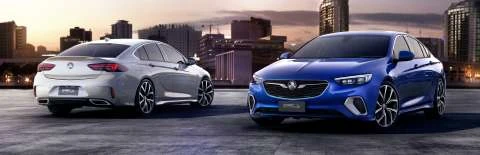 One of the great things about keeping our Lang Lang proving grounds is it’s allowed us to have our engineers embedded in that program for six years. There’s been well over one hundred and sixty thousand kilometres of local testing, which has given us a unique suspension tune for every single model, a unique engine and gearbox combination which isn’t available anywhere else in the world. We’re talking the V6 and nine speed auto, the advanced all wheel drive system, the adaptive chassis. If it’s going to be a Commodore we NEED it to be able to do X, Y, and Z. This car has everything the last car did and more, but there isn’t the obvious emotional attachment and nostalgic element to it not being built here.
I don’t want at all to make light or not give the gravity that it’s due to the local manufacturing people and the passion the people had for that, and what it’s meant for this country and this brand…by every conceivable measure, the new car is a better car than the old one.
(Sean’s tone becomes lighter here). We always knew that a front wheel drive four cylinder Commodore was going to raise some eyebrows, we knew that, but the four cylinder turbo is the fastest, most fuel efficient, most powerful base engine we’ve ever had in a Commodore, so by every single possible measure that car will be better than the base Commodore we have here.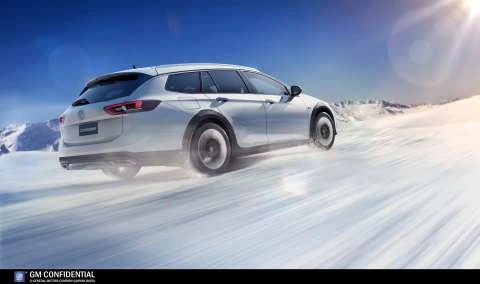 Outside of your preference for front drive or rear wheel drive, for the diehard performance enthusiast we’re going to have a sports car, or, potentially, sports cars in the not so distant future. It’s important to note that it’s really only in the last eighteen months that the sales of V8s in a Commodore has lifted up so high. Over the last ten years 88% of Commodore sales have been V6s, and of that a vast majority have been SV6s.
With Opel now under the PSA umbrella, does this open up the model range available for Australian buyers?
There’s certainly opportunities. We’ve been very clear that the current Opel products that we’re taking, which includes the next gen Commodore and the current Astra hatch, there will be no change to them over the course of their projected model life. Dan Amman, who’s our global president, said, when we were in Geneva recently that there’s more opportunity for Holden, not less.
At the current time, where does Holden see itself in five years time, especially with the new SUVs and Camaro in the frame?
We made a commitment back in, I believe, 2015, that we would launch 24 new models by 2020, which effectively means we’re revamping or replacing every single vehicle in the Holden line-up. I’d also say that right now we have the best “pound for pound” showroom we’ve ever had. And it’s only going to get better; we’ve got Equinoxe coming in mid November, the next gen Commodore of course, next year there’s the Acadia, which gives us this really filled out SUV portfolio, which is obviously great for us as that’s where the market is going.
Our strength, for a long time, has been in large sedans, which is a shrinking part of the market. The growth in SUVs, we’ve been really well represented there in the past, and we’ve got Trax, we’ve got Trailblazer, and Equinoxe and Acadia to come. Even Colorado, that continues to grow, with every month the figures show an increase in sales. It’s about going where the market goes rather than hanging onto a sector of the market where clearly people have voted with their feet and wallets to not be a part of.
When we made this announcement four years ago, back in 2013 (about ceasing manufacturing), which really raised questions about what does Holden stand for, which did have a shadow hanging over the business in a way, we want to stay and remain a clear and solid number four in the market and stay on track to sell one in ten vehicles sold in this country. I think it’s remarkable, too, that in such a tough period we’re still one of the top players in this country. I also think we’ve got a rare and unique opportunity to honour one hundred and sixty years of history and heritage and make sure that Holden means as much to our grandkids as it did to our grandfathers.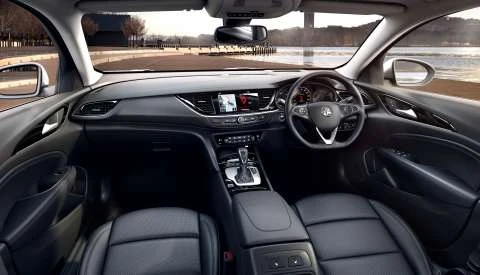 (It’s a huge thanks to Sean Poppitt for his time and his candid responses, and since this interview Holden has confirmed the Camaro SS will come to Australia as the “halo” car. It also officially unveiled the 2018 Commodore which, effectively, confirms for Commodore the SS badging is no longer…)
Hyundai Kona Hits Aussie Roads.
Hyundai has joined the burgeoning small SUV family with the addition of the Kona, a sharp looking machine with a front end that is sure to raise eyebrows. New Kona will be available in three trim levels, Kona Active, Kona Elite and Kona Highlander, with an optional safety pack for Active (‘Active with Safety Pack’).
Engine.
You’ll have a choice of a 2.0-litre, 110 kilowatt/180 Nm naturally-aspirated, four-cylinder engine with conventional six-speed automatic and front-wheel-drive, or a 1.6-litre Turbo-GDI with 130 kW/265 Nm between 1500 to 4500 rpm with seven-speed dual-cutch transmission (DCT) and all-wheel-drive.
The 2.0L engine accelerates the front-wheel-drive Kona from standstill to 100km/h in 10 seconds flat. The ‘Gamma’ 1.6 T-GDi has 18% more power and 47% more torque than the 2.0 litre MPi engine, giving a 7.9 second 0-100km/h time.
The turbo engine is mated to Hyundai’s efficient and responsive seven-speed, dual-clutch transmission (DCT) which combines the fuel efficiency of a manual transmission with the ease and convenience of an automatic. Economy is quoted as 7.2L and 6.7L per 100 kilometres.
Body.
Kona will offer nine body colour choices and two roof colours. The rear echoes the Tucson and Santa Fe (and the front of the Kona) whilst the front has hints of Jeep Cherokee thanks to LED driving lights at the bonnet line, headlines in a slightly unusually shaped cluster at mid grille and globe driving lights centrally located at the bottom of the front bar. Profile wise it’s a long bonneted look, flared guards, a curved rear, with the driver pretty much centrally located. Hyundai have used an innovative manufacturing process, with AHSS or Advanced High Strength Steel, making the body more rigid yet 10 perent light than using conventional steel panels. There’s also metal adhesive, 114 metres of it, to supplement conventional building processes.
Dimensions.
It’s compact, for sure, at 4165 mm in length, 1800 mm in width, 1565 mm in height, and rides on a wheelbase of 2600 mm. Ground clearance is a minimum of 170 mm. Although it’s smallish, Hyundai have put some TARDIS inside, with front shoulder room of 1410 mm, leg room of 1054 mm, and head room of 1005 mm. Rear seat passengers will have no issues either. Boot space is a minimum of 361 litres.
Equipment and Suspension.
Apple CarPlay and Android Auto are on board, Forward Collision-Avoidance Assist (FCA) with Pedestrian Detection, plus Drive Mode Select is available on both automatic and DCT variants, the function letting drivers choose between ‘Comfort’, ‘Eco’ and ‘Sport’ modes. Blind Spot Colliosion Warning is active up to thirty kph, and there’s Rear Cross Traffic Collision Warning. On board will also be a Lane Keeping Assist package with Departure Warning.
Underneath there’s the tried and proven MacPherson strut front suspension, and a torsion beam or multi-link rear depending on using front wheel or all awheel drive. There’s also a variety of suspension tunes depending on which variant you buy. During testing, 13 and 29 front and rear shock absorbers for the all wheel drive system, and 13 & 29 for the front wheel drive, two different stabiliser bars, and three & two spring sets were trialled to provide the best balanced deemed suitable for both country and city driving.
Pricing.
Current pricing is set to start at $27000.
Car Review: 2018 Holden Astra LS/LT/LT-Z Sedan
It’s back to the future for Holden as the Astra nameplate on a sedan resurfaces with the sedans developed in Europe and built in Korea. The name replaces the Cruze, itself a resurrection of a previously used nomenclature. We’ve had the European sourced Astra hatch for a while and there’s also a new wagon version on the way. Private Fleet spends time with the mid-spec LT, top spec LT-Z, and entry level LS (there’s also a LS+), all fitted with the same engine and transmission combination. Up front, and the sole choice for a powerplant in the Astra sedan, is a 1.4L petrol engine, complete with turbo and good for 110 kilowatts. There’s 240 torques available between 2000 to 4000 rpm, with an extra five if you go for the six speed manual which is available in the LS only. Recommended go-go juice for the 52 litre tank is 91RON, of which it’ll drink at over eight litres per one hundred kilometres in an urban environment. On the freeway AWT saw a best of 6.3 in the LS and 7.1L/100 km in the LT-Z. Holden’s Astra sedan brochure doesn’t appear to specify weight, however elsewhere it’s quoted as being just under 1300 kilograms.
 The engine itself is a willing revver, especially so when the torque is on tap…for the most part. What was noticeable was the lag between a hard prod of the go-pedal, the change down a cog or two, and the resulting leap forward. In tighter Sydney traffic when a quick response was needed in changing lanes, that hesitation could potentially result in a safe move not being as safe as it should be. Also, in the LS, a noticeable whine, an unusual note at that, was audible and not found in the LT or LT-Z. Otherwise, once warmed up, the six speed auto had invisible gear changes up and down on a flat road, and downshifted nicely, holding gears, on the bigger downward slopes out west.
 It’s a trim, lithe, almost handsome car to look at though. It’s a longish 4665 mm in length and hides a boot of good depth and breadth at 465 litres. The rear deck lid does have old school hinges that swing down into the boot space though. The boot on the LT and LT-Z gain a small, discreet, lip spoiler as well. It’s also broad, with over 1800 mm in total width, and stands 1457 mm tall. What this gives you is 1003 mm front headroom, 1068 mm legroom, 1394 mm shoulder room, and in the rear 1350 mm shoulder room. 939 mm and 951 mm are the numbers in the rear for leg and head room.
 Up front, the three are virtually identical, bar chrome strips in the lower corners of the front bar for the LT/LT-Z. The headlights are LED DRL backed from the LS+ upwards and provide quite a decent spread of light. The headlight surrounds themselves gleam in the sunlight and add a solid measure of presence to the look. Wheels wise they’re all alloys, with a 16/17/18 inch and appropriate tyre size to match. There’s 205/55/16, 225/45/17, and 225/40/18s. And each of these contribute to the ride quality to the differing models…

 The LS is undoubtably the most plush, soft, of the three, but by no means does it lack grip when pushed. The rubber on the LS is from Hankook, the LT and LT-Z have Kumho Ecsta. Both brands provide more than enough grip and even occasionally chirp when when hard acceleration is given and both brands do provide a rumble, a somewhat intrusive rumble, on the coarser chip tarmac in Sydney. The LT and LT-Z also benefit from the fettling the Australia engineers have given, with a firmer and more sporting ride, less rebound but a small measure of more harshness.
 All three are brilliant freeway cruisers but it’s around town that the suspension tune really shines. In the varied road conditions that Sydney throws up, from table flat to mildly pockmarked to rutted and broken tarmac, all three dealt with them adroitly and with the words “sure footed” writ large. Only occasionally would the LT-Z, with the stiffest feel, skip and that was more so on the more ragged undulations that some corners have. There’s plenty of conversation from the steering wheel vinyl in the LS, leather in the LT/LT-Z), with an almost tactile amount of constant feedback through to the driver.
 Speaking of steering, the design of the wheel itself has your hands feeling as if they’re sitting between ten & two and eleven & one. The horizontal spokes sit just that little too high for a totally comfortable feel. You’ll also dip out on electric seats, even in the LT-Z, however there is more manual adjustment than in the LS. Across the range you’ll get auto headlights (which have an overly sensitive sensor), parking sensors, reverse camera, Android Auto and Apple CarPlay, along with a seven inch and eight inch touchscreen for LS and the LT models.
Digital radio is also on board the LT and LT-Z to take advantage of the quite decent speakers on board. Also available in the LT and LT-Z are parking assist and with front parking sensors, Blind Spot Alert, auto headlights with tunnel detection, whilst the LS+ joins the party with Lane Keep Assist, following distance indicator, and Forward Collision Alert. However, window wise, only the LT-Z gets auto up and down for the driver’s window.
 Trim wise it’s cloth seats or machine made leather, soft-ish touch plastic on the dash, a grey coloured surround for the touchscreen and a frankly boring look for that in the LS, versus a higher sense of appeal and presence in the LT/LT-Z with chrome and piano black. Aircon in the LS is dialled in whereas the others get dials but with LEDs in the centre to show temperature and add more visual pizzaz. There’s a colour info screen in the LT and LT-Z’s driver binnacle which mirrors that seen in the touchscreen.
 Both look fantastic and appeal greatly. The LS? Standard monochrome. There’s clearly a high level of quality in the build being based on a Korean sourced sedan, but inside the Astra sedan does lack visual appeal, even though it’s not a physically unpleasant place to be.
 At The End Of The Drive.
At the time of writing, just a few days before Holden ceases manufacturing, the company had announced a seven year warranty being made available for the Astra range. However, there are terms and conditions so please speak to your local Holden dealership. Also, again at the time of writing (October 2017), the LS Astra sedan was being offered from $20990 driveaway if you choose the manual.  Pick the self shifter it’s from $21990. The LS+ auto is from $23490 with the LT and LT-Z from $26290 and $30290 respectively. Again, please check with your local dealer. Those prices include stamp duty, 12 months rego and compulsory third party insurance, by the way.
All three (of the four trim levels available) cars tested did not disappoint; the LT-Z for me would be the pick, if only for the more sporting feel of the ride, the higher trim level and the fact that DAB is included, as it is below this model. But as a model range intended to effectively assist in kickstarting the importation model for Holden from October 2017 onwards, it’s somehow slipped under the radar. And that, so far, is a shame because it’s a very capable vehicle and more than worthy of continuing the legacy of the Holden Astra name.
Here’s where to go for inforamtion: 2018 Holden Astra range
End of an era: 2017 Supercheap Auto Bathurst 1000.
There should be a sense of occasion about the 2017 Supercheap Auto Bathurst 1000. There should be a sense of majesty, of pride, of nostalgia…and perhaps there will be for those that follow what is now called, merely, Supercars, and for those that attend the yearly event that is seen as the pinnacle of motorsport in Australia, at the fabled Mount Panorama.
My earliest experiences of what was to become a significant part of my motorsport career were of watching highlights of the Hardie-Ferodo 500 on one of the just three tv channels available in Perth during the 1970s. Channel 7 would run a package from late Saturday night through to race start on the Sunday morning (early, Perth time) whilst I, bleary eyed and barely awake, would watch the blurry, grainy, images on our 48cm black and white tv screen.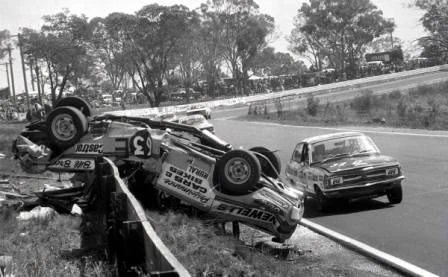 As times and technology changed, the quality would improve, colour was the norm, and the sound of the cars would be better. We’d have different camera views, more overhead shots from the choppers, in-car cameras, and people that didn’t follow motorsport would be able to name at least six of the drivers. We saw the racing move from Production Car style racing to the Group C to the international Group A to effectively Holden versus Ford to five manufacturers with racing cars loosely based on production cars.
Now…we have five main channels and a raft of subsidiary channels delivered digitally. We have pay television, we have internet capable access and we have a category so far from its heyday that the impact it once had on a viewing audience and the attraction that once had grandstands full of bums on seats simply don’t exist anymore. Yes, there are the dedicated followers of motorsport, and there are those that can still tell you at least six names, but for the everyday Mr and Mrs Jones, the Supercars, the racing, and the lure of the mountain just aren’t there as they were once.
Australia’s primary non free to air television source is delivering, in the days before “The Great Race”, replays of previous races and highlights of the sport.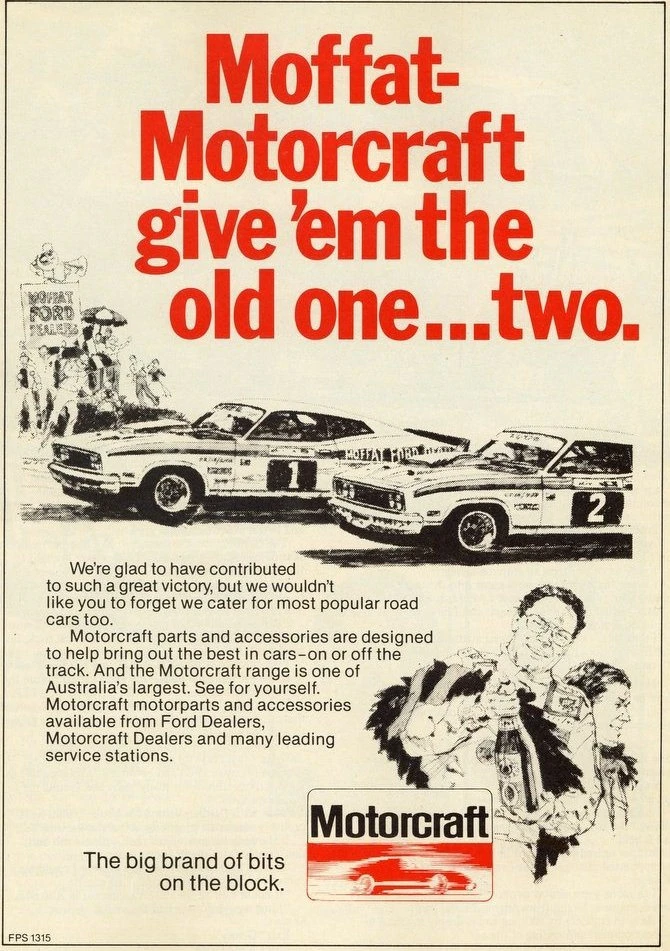 This gives us a great comparison of what was, what is, and eyes off the “what will be” because in 2018 the rules change again. Holden and Ford, as two of the three manufacturers still making cars in Australia until 2016, when Ford ceased local manufacturing, will have their final Aussie built look alikes on track. Nissan, Volvo, and Mercedes-Benz once raced cars with five litre V8s, as per the category rules, even though two of the brands never released production based cars with that engine.
People knew that and some of the gloss wore off, the appeal waned, and the numbers of bums on seats diminished at tracks. The move towards a non free to air delivery diversified a once captive market audience and for many, the need to pay for access to a product once “live and free” was the stopping point. Advertising for the category seems almost non-existent but, again, for the dedicated follower they’d not need to have advertising because they’d know where to get information.
2018 sees Holden race a car with a design no longer based on an Australian based, front engined and rear wheel drive, V8 optional, production car. Instead they’ll race a turbocharged V6 engine chassis. The category rules have once again changed that having a V8 engine ONLY is now not the norm. The rules now also allow a non four door sedan, and with Ford selling just about every Mustang they’ve imported over the last two years, there’s a fair chance we’ll see that shape on race tracks. BUT, but, the rules stipulate cars MUST be built on a common chassis, effectively making the cars we’ll see on racing tracks in 2018 visually different outside but engines aside, the same (more or less) underneath.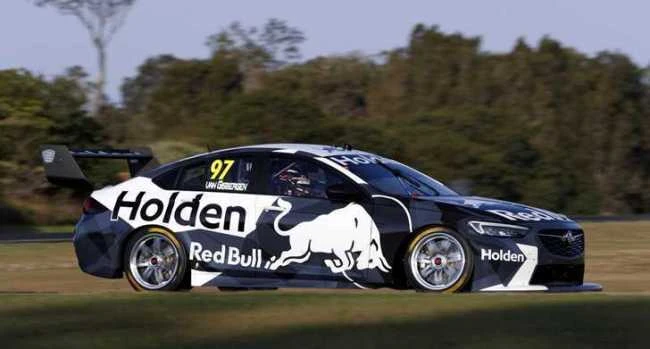 Nissan raced a chassis based on a car that wasn’t, in Australia, ever available with a V8. Volvo and Mercedes-Benz withdrew after the 2016 season, and Ford branded cars raced without Ford Australia factory support. So in 2017, at “The Great Race”, we’ll see, for the final time, a fully V8 powered field in Supercars, at Mount Panorama. But where’s the sense of loss, of sadness, of regret, the sense of pondering what was once a broad ranging appeal category?
Talk to anyone with a loose affiliation with motorsport and you’ll get a range of answers. You’ll also get a common theme….the cars that drew us to Bathurst every year are no longer relevant. Large sedans such as the Commodore and Falcon barely ripple the sales charts, SUVs and four wheel drive utes are what people buy and the win on Sunday, sell on Monday mentality that once (no pun intended) drove sales is no longer with us.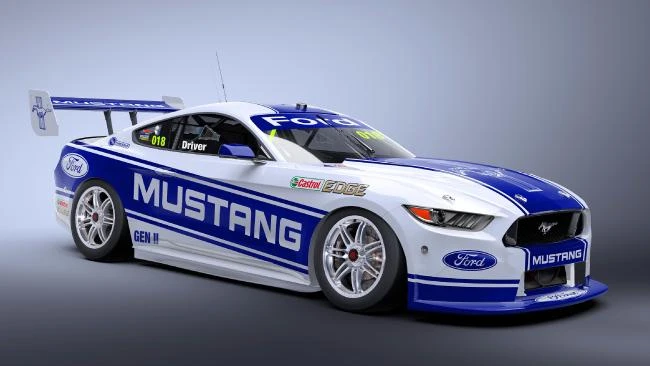 Sunday the eighth of October, 2017, should be a day of occasion, a day of looking back at of over fifty years of history with an appreciation of what was, and a want for what will be. For me, that’s not the case and judging by the numbers of people that no longer show up at circuits around the country, it will really only be the dedicated and those that work with motorsport that may shed a tear.
Post event note: the 2017 event was won by David Reynolds and Luke Youlden after polesitter and expcted winner Scott McLaughlin and Alex Premat’s number 17 car had engine failure and retired on lap 72. Viewer numbers weren’t vastly different from the years shown.
2007 1.357 million
2008 1.249 million
2009 1.182 million
2010 1.046 million
2011 1.212 million
2012 1.253 million
2013 1.263 million
2014 1.351 million
 Level 2, 9 Help Street