

Author archive
Indicate, Mate. That'd Be Great.
In surveys of the things that annoy drivers, it’s always in the order of over eighty percent that respondents say people nott indicating that rates as an annoyance. Yet, in any city or town, in any Australian state or territory, you’ll find people that either use their indicators or use them correctly as being of the minority.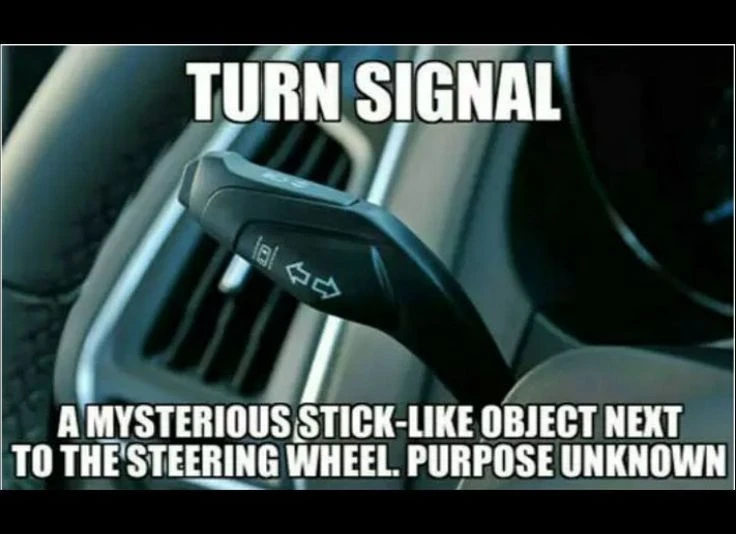
In NSW a very common transgression is not indicating when crossing a merge lane, along with non indicating when pulling away from the roadside. Here’s the legislation in NSW:
(2) The driver must give the change of direction signal for long enough to give sufficient warning to other drivers and pedestrians.
(3) If the driver is about to change direction by moving from a stationary position at the side of the road or in a median strip parking area, the driver must give the change of direction signal for at least 5 seconds before the driver changes direction.

In fact, the legislation even specifies what needs to be done: “How to give a left change of direction signal. The driver of a vehicle must give a left change of direction signal by operating the vehicle’s left direction indicator lights.” Naturally this applies for the right hand side of the car too. Note also the time requirement: at LEAST five seconds. Even more confusing is when to use an indicator if a road curves and also has an exit at the apex. Far too many DON’T indicate at the apex or actually indicate as they follow the road….and don’t need to indicate.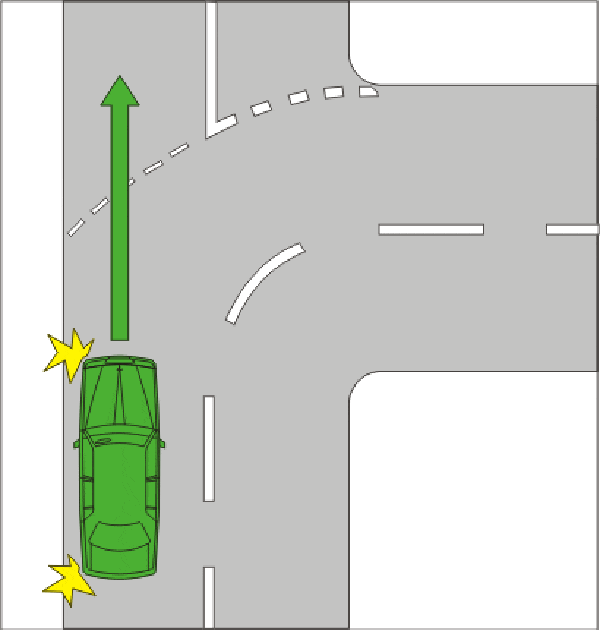
Complicated stuff, right? So why are there so many drivers that don’t indicate? Don’t indicate for more than one or two blinks? This also coincides with drivers wrestling their cars from lane to lane almost as if they’re being blown around like a leaf in the wind. Is there something wrong with a gentle, easy, merge along with enough indication?
Roundabouts are another bugbear and these, too, are easy to deal with.
(1) This rule applies to a driver entering a roundabout if:
(a) the driver is to leave the roundabout at the first exit after entering the roundabout, and
(b) the exit is less than halfway around the roundabout.
(2) Before entering the roundabout, the driver must give a left change of direction signal for long enough to give sufficient warning to other drivers and pedestrians.
(3) The driver must continue to give the change of direction signal until the driver has left the roundabout.
And:
(1) This rule applies to a driver entering a roundabout if the driver is to leave the roundabout more than halfway around it.
(2) Before entering the roundabout, the driver must give a right change of direction signal for long enough to give sufficient warning to other drivers and pedestrians.
(3) The driver must continue to give the change of direction signal while the driver is driving in the roundabout, unless:
(a) the driver is changing marked lanes, or entering another line of traffic, or
(b) the driver’s vehicle is not fitted with direction indicator lights, or
(c) the driver is about to leave the roundabout.
Note 2.Rule 117 deals with giving change of direction signals before changing marked lanes, or entering another line of traffic, in a roundabout.
Note 3. Rule 118 requires a driver, if practicable, to give a left change of direction signal when leaving a roundabout.
 I could count on one finger the amount of times this is seen on our our roads. What’s more troubling about the lack of indication Aussie drivers do is just how SIMPLE it is to indicate. Cars are designed, engineered, and built with many factors of safety, including how easy it is to access the indicator stalk. They’re literally at your finger tips. So what causes drivers to not uses them? Pride? Arrogance? Stupidity? Laziness? Distracted whilst wearing earbuds (a stupidly non-illegal rule!)?
Private Fleet Car Review: 2017 Great Wall Steed Diesel 4×4 Ute.
Great Wall first landed in Australia in 2009. It was a range full of petrol engines and manual transmissions and sharp pricing. However, quality was questionable and it wasn’t long before the brand was withdrawn. Fast forward a few years and the Great Wall brand features three variants in a four door crew cab design, a petrol or diesel 4×2 and a diesel 4×4, priced from $29990, driveaway. Private Fleet trials the 2017 Great Wall Steed 4×4 diesel to see if things have improved. Engines wise it’s a choice of a 2.4L petrol or 2.0L diesel, as tested. Both come with a manual, being a five cogger for the petrol and six for the oiler. The transmission itself in the Steed is typical manual; a reasonably light throw, a tad notchy, a sensible gate so you’re not hunting for the slot and there’s a simple push button based high/low range system. It is, however, mated to a living definition of time travel, backwards time travel. Great Wall quotes 110 kilowatts of power and a lowish 310 Nm of torque between 1800 to 2800 revs from the two litre engine… that’s substantially less than a good portion of its competitors.
 In order to get the Steed underway, a little slip of the clutch and a judicious prod of the go pedal are required, needing around 2000 revs to move it along with something approaching acceleration. It genuinely feels like an old school diesel, with nothing below 2000 and a cliff fall once you see 4000 rpm. It’s breathless, ragged, lacks urge and is defintely old school with the rattle. It also means that some uphill runs require constant downchanging, providing some good exercise for the left arm. However, on the freeway, the gearing means that it will happily pootle along right in the torque band.
It’s frighteningly thirsty though, with a final consumption figure of 9.7 litres of dinosaur juice being ingested for every 100 kilometres driven. That’s not great even allowing for the 1740 kilogram weight. The steering is also…unusual. What’s called lock to lock describes the process of winding the steering wheel from one side through to straight ahead to the other side. The Great Wall Steed is something close to five turns. What this means is a turning circle a battleship would be embarrassed to show and some serious arm work to engender directional changes. A half turn sees minimal left or right movement and you need, as a result, to wind on more lock to really see anything happen.
 Ride quality from the double wishbone front and leaf spring rear is also iffish. The Steed is too hard when it needs to be softer, and too soft when a firm and taut ride is needed. It’ll skip sideways too easily, thumps over the small metal speed bumps in shopping centres, crashes on the front when going over the bigger speed bumps, and just doesn’t seem to track straight and true on the freeway. In all, it’s a somewhat frustrating drive and ride experience.
 Outside it is handsome enough, with a number of positive comments from passers-by and colleagues. In profile it’s clear the car has been sourced from an Isuzu desgn, with the nose cone being given a thorough massage to ensure a clear GW identification. There’s a solid grille with five horizontal bars, a pair of LED driving lights inserted in each far corner of the bumper assembly, headlights not unlike that found in Holden’s Colorado, indicators in the wing mirrors and sitting in the middle of the 3200 mm wheelbase a pair of sidesteps. The rear bumper stands proud of the rear bodywork and adds a bit of extra length to the overall 5345 mm. There’s an approach angle for the alloy section in the front bumper of 25 degrees and a handy 21 degrees departure angle. Towing? 2000 kilos, braked.
 Tyres are 235/70/16 from Giti and are of a semi off-road capable tread design. They may also contribute to the skittishness of the Steed’s handling. What may also contribute is the one tonne cargo carrying capacity tray was unladen throughout the review period. It’s an almost square tray at 1545 mm long and 1460 mm wide and there’s 480 mm of depth. The test car came fitted with an alloy roll bar as well plus the tray was lined with a polyurethane liner and fitted with tie down points.
 Inside is where the Steed picks up some points. The slightly flat and slabby leather seats are heated, with the driver gaining simple electrical controls to adjust their pew. The overall presence is pleasant enough, with a basic but legible monochrome info screen between the uncomplicated dials; a touchscreen that is ssslllloooowwww to load the navigation system and looks peculiarly Asian in layout and colour scheme.
  Audio is standard AM/FM with Bluetooth and auxiliary inputs but you can watch DVDs….actual audio quality was ok, with a slightly boomy bass at levels that would normally sound tight and punchy. The rest of the dash and console is uncomplicated, ergonomically friendly, and of a pleasing enough quality throughout the cabin to appeal to most in the market.
 Safetywise the Steed features a reverse camera, which didn’t always engage, six ‘bags, pretensioning seat belts, stability control, hill start assist (which holds the brakes momentarily) and, surprisingly, tyre pressure monitoring. Blind spot monitoring, lane keeping alerts and the like aren’t available. However it still rates not terribly well for the ANCAP scoring, with a two from a possible five ponts when lasted tested. Warranty is a standard three years or one hundred thousand kilometres, and servicing starts at six months or five thousand kilometres. It’ll then move to 12 months or fifteen thousand after the first service.
At The End Of the Drive.
The 2017 Great Wall Steed, on its own, would be an ok vehicle for a private buyer or even a fleet buyer. However it needs more to really be a consideration, more as in refinement of the steering ratio, more in the torque, more in the fettling of the ride. It’s inside that the Great Wall Steed scores ponts, along with a not unattractive exterior. However, if price is a consideration, as it was in 2009 when I worked at a dealership that sold Great Wall, then 30K driveaway will dull the headache.
Here’s where you can find out more: 2017 Great Wall Steed diesel crew cab 4×4
Car Review: 2017 Suzuki S-Cross Turbo Prestige.
Suzuki continues to cement its position as a leader in the small car market by giving us an updated 2017 Suzuki SX-4 S-Cross. Although a sort of SUV look, it’s not. It’s front wheel drive only, powered by a ripper petrol fuelled turbo four. Like it so far? Private Fleet does. There’s three trim levels, simply named GL, Turbo, and Suzuki S-Cross Turbo Prestige. The test car, the Prestige, gets the same 1.4 litre turbo engine as the Turbo, however the GL is the outgoing model. Just need to clarify that…
Anyways, there’s a simple question the S-Cross Turbo poses. Is it any good? Most of the time a simple question has a simple answer and so it is with this car. Yes. First up, there’s that belter of an engine. 1.4L. 16 valves. Turbocharged. 103 kilowatts. Torque: 220 of them between 1500 to 4000. Transmission: six pseed auto. Potency level? High. This combination is superb. It reacts to a breath on the go pedal, the gearbox is crisp, shifts quickly and without fuss, and even with traction control on, will happily and merrily chirp the front driven 215/55/17 Continental tyres. It’s a corker. Consumption in a mainly urban environment finshed on 6.7L per 100 km from the 1170 kilogram plus fuel (47 litre) and passenger vehicle.
 It’s a ripper handler too, with beautifully weighted steering connecting the driver to the road and providing plenty of feedback. The ride quality also is near nigh perfect with a supple mix of sporting and absorption offering an ideal combination of tautness and comfort from the McPherson strut/torsion beam suspension.
 Tip it into a tightening radius corner and the body will lean but ever so slightly, whilst the tiller requires minimal input to adjust to the curver coming in on itself. Pound it across the sunken and raised sections of various tarmac roads and you’ll feel a small bump before it passes and the chassis settles rapidly. Brake wise it’s spot on, with feedback straight away and a progressive travel allowing a driver to judge just….when…more or less pressure was needed.
 Suzuki have also performed a stunning piece of engineering upon the S-Cross, managing to squeeze apartment sized room inside a shoebox. The S-Cross is a mere 4300 mm in length, stands tallish at 1585 mm and spans 1785 mm horizontally. Inside that overall length is a 2600 mm wheelbase, ensuring ample leg, shoulder, and head room for four people, although three up in the rear seat is a touch squeezy. Luggage space is also huge at 430L to 1269L, including a double tray storage plus there’s the usual assortment of bottle and cup holders.
 The interior design is now familiar and standard Suzuki; there’s the four quarter touchscreen with Navigation, Apps, radio and Phone plus voice activation, traditional and eminently usable dials for the aircon, blue backlit driver’s binnacle dials and a simple to read and use monochrome screen between them. The dash and console design is a curvy design, flowing around into the doors in a clear swoop and with airvents/gear selector surround/door trim highlighted in alloy look plastic.
  The manually adjusted seats seats are heated (not cooled) and are a comfortable mix of leather and cloth. Of course the rear seats are 60/40 in split and foldable to allow access to that capacious and well trimmed boot. If there’s a negative it’s a small but persistent one. The setbelt straps in the height adjustable locaters were double strapped, as in both front and rear were reachable to pull over and it was the rear strap, not front, that kept getting grabbed.
 Outside it’s unrecognisable from the original SX4 of 2007 and noticeably different from the superceded model The tail lights have been subtly but obviously refreshed however it’s the bluffer, more “no nonsense” front end that has the 2017 S-Cross standing out. Although the headlight cluster (LED projector on the Prestige) looks almost the same, they’re a touch more angular and feature dusk sensing in the Prestige.
 It’s the stand out proud reprofiled nose, with an assertive chrome grille, polyurethane black running from the centre to the rear along the flanks and with a splash of metal chrome around the globe lit DRLs. There’s a crease line and stance not unlike Ford’s Escape, a 180 mm ride height, and hi-vis polished alloys to finish the visual appeal.
 Safety is high, as usual, with reverse camara, sensors front and rear, Hill Hold Control, 2 ISOFIX points, seven airbags including knee, electronic driver aids, even an auto dimming rear vision mirror. Servicing is capped for up to 5 Years / 100,000km and you’ll get a 100,000 km or three year warranty.
At The End Of The Drive.
Suzuki have pretty much stamped themselves leaders of the small car builders. There’s a new Jimny on the way as well to further fuel the fire of desire for this slightly quirky but nonetheless enjoyable brand from Japan. The 2017 Suzuki S-Cross Prestige Turbo builds upon their revamped range and is a genuine contender for best in class. Find out more about this pearler, here: 2017 Suzuki S-Cross Turbo Prestige
Holden: The Day For Closing Is Coming.
Holden, along with Toyota, will cease to manufacture cars in Australia. But how has the process leading up to that day been handled, what about the people involved? Private Fleet‘s Dave Conole had a one on one interview with the head of PR for Holden, Sean Poppit. This is part one of a two part story.
With Holden stopping manufacturing in Australia, what has been the process to wind down making cars up to the final day?
October 20 is the final day of production and we’ll continue building cars up until the final day and it will be full speed up until that point. Let’s say we’re doing 170 cars per day, we’ll stay at that figure right until the final day. Obviously that day won’t be a full production day and we’ll hold a private employee only ceremony at the plant to mark and honour our heritage and our people.
What is being done to support the workers across the factories?
At the plant in Adelaide we’ve got just under a thousand workers there. One of the things that has been ABSOLUTELY non-negotiable from us, right from the outset, have been what we call the transition services and the transition centres. Our HR and manufacturing teams have won several national, and in fact, global awards for the quality of that work.
We’ve got a full time transition centre set up at the Holden Vehicle Operations which is at our plant in Adelaide. We’ve fully decked out the bottom floor of one wing and that’s a dedicated, permanent , centre to assist people in getting new jobs or be retrained. We have independent people from many industries, government support including the military, people from the private sector like engineering groups…it’s been a benchmark piece of work and it’s something we’re justifiably and extremely proud of in the way it’s helped and continues to help people transition.
Up until this chat we’ve had an eighty percent success rate, meaning eighty percent of those that have left Holden since 2013 have found or gone onto new work, while that other twenty percent have either gone into full time study or chosen to retire. So it’s been an amazing success rate which I think is a testament to what we have in place to helping our people transition AND how eminently employable our people are.
That’s some really good news for the people involved, yes?
Absolutely. Not just in the north of Adelaide but in Adelaide itself Holden was seen as a job for life. It’s a great place to work, really fair pay, you get to work with a brand you are passionate about and get opportunities to move around the plant and do different roles. There’s lots of long term employees and we know it (the change) can be daunting to re-skill and re-train which really is the reason for being, these transition centres.
However there will still be roles for current employees, right, in places and roles such as Lang Lang or in research and development?
True. We’ll become a vehicle importer, engineering, and design centre and we’ll still have the second largest dealer network in the country. Our corporate HQ will remain here at Port Melbourne and there’ll still be our team of 150 designers as part of the international design studios and yes we’ll retain the Lang Lang proving ground (south east of Melbourne) and the 150 engineers on site there. What that means is there will be somewhere between 350 to 400 designers and engineers working on local and international products as well as the hundreds of people in the corporate side, sales, marketing etc.
With the new Commodore on the way, how does Holden see the vehicle being received?
We ran a drive day at the proving grounds earlier this year, with the next gen Commodore. We had the V6 and four cylinder version. We had a dozen Commodore customers there. I’ll be up front, we had a couple of them come up and question why they were there, saying yes they were keen to see the proving ground but didn’t have a lot of interest in a front drive Commodore.
(It’s here that Sean shared some quotes from those that attended.)
“I wouldn’t have considered this car, now I’d even consider the two litre, never mind the V6.”
“ I’m really surprised at how well it gets the power down, it feels quicker through the corners than expected.”
“The new Commodore is really impressive, I particularly like the V6 model with the all wheel drive, even the two wheel drive model is not bad and very quick with the turbo.”
It’s going to be on us to present the car in the right way, we don’t imagine for one second it’s going to have the same emotional and nostalgic appeal. Our sales numbers, we don’t expect it’ll sell in the same numbers the locally built car did. But what’s critical, and what was reinforced to us in a pilot program we ran recently…. what we want is for people to drive the car and understand that Holden magic, what made the Commodore so great, there’s a very, very big streak of it in this new car. Rob Tribbiani (Holden’s legendary chassis engineer and the driver of the Holden ute that set a record at the famed Nurburgring) is super excited about the all wheel drive V6 with the adaptive dampers and tricky real differential system, is a real belter. We just want the car to be driven and judged on its own merits.
 Level 2, 9 Help Street