

Author archive
Private Fleet Car Review: 2018 Holden Equinox LTZ-V
As Holden transitions from a builder to an importer, an important part of the plan to do so successfully is to increase and improve its model range. The new Commodore is being rolled out, the new Astra sedan and hatch is in showrooms and the long serving Captiva is slowly being wound back as the new nameplate for the mid sized SUV takes over. Here is the 2018 Holden Equinox LTZ-V. The five model range starts with the LS. With the manual it kicks off the range at $27990 RRP (plus ORC). It’s $2000 for the auto. The LS+ is a $3000 premium over the LS and the first of the LT range at $36990. The LTZ/LTZ-V are $39990 and $46290 respectively. The AWD option on the LTZ is an extra $4300 however it’s standard on the LTZ-V and selected via a button in the front centre console.
 It’s a choice of two engines available. Both have a turbo and are a 1.5L or 2.0L capacity. A diesel is due later in 2018. The 1.5L will be found in the LS and LS+ with the 2.0L servicing the LT range. The LTs come with a nine speed auto as standard with the LS getting a six speed manual and auto.
 The auto has no paddle shifters nor side movement for manual changing. The selector in the LTZ-V has a + and – rocker switch on the top of the rather long throw selector. Holden say the Equinox should see the ton in around seven seconds. It’s slick and smooth under most driving situations however was caught out sometimes from start, with hesitant, jerking, unsure decisions initially.
The 2.0L produces 188kW and 353 torques with that peak torque on tap between 2500 – 4500 rpm. The 1.5L isn’t far off with 127kW and 275Nm. The preferred tipple of the 2.0L is 95RON. Combined fuel consumption is quoted as 8.4L/100km from the 59L tank in the LTZ-V. It’s 55L in the others. Economy finished at 9.0L/100 km.The LTZ-V gets plenty of high level tech and comes well loaded with standard equipment. However there’s really not that much to differentiate between it and the other LT models. A full length glass roof is one obvious difference. Driver friendly Advanced Park Assist in the LTZ and V is another. Auto levelling LED headlamps, LED tail lights, remote engine start (all LT models) and chrome roofrails complete that. The roof itself is moved via two tabs and they don’t have the same edge feel to know when you’ve got hold of them.
 The interior of the LTZ-V is a nice place with heating AND venting for both leather front seats. They look a little slabby but aren’t noticeable in lacking support. Surprisingly, gratefully, they’re there for the rear leather clad seats too with rear seat passengers getting a pair of USB ports, a 12V socket, rear air vents and a 230V socket. It’s of a different configuration than the Aussie 240V sockets so a converter for anything like a portable fridge will be needed.
 Full colour LCD screens greet the driver and passengers in the LTZ-V and light up in vivid blue. It’s a dash mounted eight inch touchscreen with Holden’s MyLink system on board for apps and entertainment, including a Bose speaker system to complement the DAB audio and Apple CarPlay/Android Auto. The layout is clean and usage is largely intuitive. The sound itself is as expected from Bose and the sensitivity of the DAB tuner is better than that found in Kia’s Stinger. The upper dash is also Euro influenced, with the sweeping arc that runs from door to door and stitched soft material look and feel. There’s even a notch in the front console for wireless smartphone charging for compatible handsets.
The smaller screen for the driver has info made available via the rubberised arrows on the right hand spoke of the heated steering well. It’s not as easy to navigate as the same found in say a Mitsubishi or Kia but does the job well enough.
 All four windows are auto down, however just the driver gets auto up, which in a top of the range vehicle is an odd decision. The tail gate is power operated and can be opened and closed from afar via the remote plus there’s a tailgate height dial in the driver’s door near the bottle holder. Foot operating openin is available however is intended for use when your hands are full. There’s 848L or cargo space, a hidden storage locker between the main floor and space saving spare, and increases to 1796L with the rear seats folded.
Safety levels are high across the range with Autonomous Braking from the LS+ upwards, Lane Keep Assist and Lane Departure Warning. Following Distance Indicator and Forward Collision Alert with Head Up Alert (flashing red lights) and a vibrating seat cushion that gets input from the parking sensors is there as well. There’s no driver’s kneebag however. It’s this level of tech and features that has a slightly confused feel for AWT about the range structure. Outside it’s a mix of corporate GM and hints at the Astra sedan as being the base sheetmetal, especially at the rear. The noticeable Vee shaped nose and grille structure leads to a bonnet with deep scallops either side, a crease line from the top of the front wheel arch which joins the door handles front and rear to the tail lights. There’s a difference at the rear windowline, much like Ford’s Territory, in that the thicker part of the rear window is the C pillar, where the rear door meets the end of the car, rather than above the tail lights.
 Ride and handling from the McPherson strut front and four link independent rear is on the slightly taut side. It was never harsh but noticeable in that smaller bumps transmitted more into the cabin. The steering has a weighty feel, with minimal understeer at speed, but somehow the steering translates into a wider than expected turning circle which makes parking and three point turns not as easy as expected. It’ll shift lanes well enough though and do so with minimal fuss.
Being a predominantly front wheel drive car there were also occasional chirps from the front tyres when launched. Corners at speed were despatched with indifference, straight line stability is spot on, and that taut suspension pays for itself when dealing with the varying surfaces of the roads travelled, with dips, wallows, undulations, almost unfelt. The rolling stock is a decent size, with 19 inch alloys wrapped in 235/50 Ventus Prime rubber from Hankook. Although city oriented they did a credible job getting through and over enough rock, sand, gravel, and mud to show some off road cred. With AWD selected, the gear selector moved into L, and Hill Descent mode engaged, the LTZ-V, although not a dedicated off roader, managed some parts of AWT’s test track with only a few moments of will it/won’t it.
 Warranty is starting to lag, with just three years or 100,000 kilometres on offer. There is however a choice of extended warranty, for 12/24/36 months. There’s also free roadside assist for the first year with another two for free if you get your car serviced by Holden.
At The End Of The Drive.
Holden is still in a period of shaking down what it will deliver to Australian car buyers. With the LT and LS+ to be reviewed separately, the Holden Equinox LTZ-V has made a solid enough impression. It’s the similarity of features in the LT level that may not though have many people opting for the V spec with the glass roof and AWD systems as standard. With over $7000 difference between the two these two features on their own may be seen as unnecessary enough for many to not spend that extra.
There’s no doubt though that the 2.0L engine, the transmission, and the general fit and finish is high enough to wipe away any lingering doubts. Certainly, compared to a Japanese brand that will be also reviewed separately, it’s far ahead of what that car has and in LT form will more than likely have both the features and price point that will meed customer expectations.
Here’s where to find more: 2018 Holden Equinox
2018 Kia Stinger Si V6 and GT-Line Turbo Four: Car Review
There’s been few cars released into the automotive market that have divided opinions as much as the new 2018 Kia Stinger. Available in three trim levels and with a choice of two engines mated to the single transmission offered, an eight speed auto, the Stinger spent a fortnight with me, in V6 twin turbo Si and top of the range GT-Line turbo four.
 The Si sits in the middle of the V6 range and is priced at $55990 plus on roads and options. The GT-Line with the turbo four is the same price and came clad in a gorgeous $695 option Snow White Pearl paint. There’s the standard seven year warranty and capped price servicing over the seven years, with the V6 being a total of $221 over the turbo 4.
 The V6 is the driver’s pick and backing up the four straight after sees it suffer in comparison. The 3.3L capacity V6 has a peak power figure of 272 kW at 6000 rpm and a monstrous 510 Nm of torque from 1300 to 4500. The four in comparison is 182 kW at 6200 rpm, and maxes out a torque figure of 353 Nm between 1400 to 4000 rpm. Although the V6 has a tare weight of 1780 kilos versus the four’s 1693 kg, it gets away cleaner and quicker, overtakes quicker, and will comfortably beat the four to the ton. Surprisingly, the required fuel is standard ULP and comes from a 60L tank.
Consumption is quoted for the V6 as 10.2L/14.9L/7.5L per hundred for the combined/urban/highway. The four isn’t much better, at 8.8L/12.7L/6.5L. AWT’s final figure for the six was 11.6L/100 km and for the four a slightly more reasonable 9.3L. These figures are slightly disturbing, in all honesty, as they’re more or less line-ball with the V8 engine seen in Holden’s VF Commodore and over the slightly bigger naturally aspirated 3.6L V6. There is a trade-off for that consumption and in the case of the V6 it’s the extraordinary driveability it offers. Off the line, and bear in mind it does offer Launch Control, it’ll see the 100 kmh mark in a quoted 4.9 seconds. There’s absolutely no doubt in that claim apart from a possibility it’s conservative. On a 48 hour trip to Dubbo in the central west of New South Wales, those 510 torques were so very useable in overtaking, with times to get up and pass and doing so safely compressed thanks to that torque.

 By having such an amount available through so many revs makes general, every day, driving unbelievably easy, with such a docile nature it’ll happily potter around the suburbs as easily as it will stretch its legs out in the country. The throttle setup is responsive to a thought, and there’s a real sense of urgency in how it all happens. There’s a bi-modal exhaust and this cracks a valve in the rear pipes allowing a genuine crackle and snarl from over 2500. Otherwise it’s a vacuum cleaner like woofle that can become wearying very quickly.
 The four, as mentioned, suffers in comparison, lacking the outright flexibility the bigger engine has. Note: “in comparison”. On its own the 2.0L turbo four, as found in the Optima GT and the sibling Sonata from Hyundai, is a belter. Paired against the big brother 330 it is slightly slower, slightly less able, slightly less quick to get going from a good prod of the go pedal as it waits for the turbo to spool up. Overseas markets do get a diesel and this is potentially the engine that Kia should replace the petrol four with. As long, as long, as it offers comparable performance to the V6.
The eight speed auto in both cars is a simple joy to use. All of the words that mean slick and smooth can be used here. Changes are largely unfelt, rarely does the backside feel anything other than forward motion as the ratios change.  And naturally there’s different drive modes. Comfort is the default with Eco, Sports, Custom (GT-Line) and Smart the others and accessed via a dial in the console. However, somewhat confusingly, you can access a menu via the seven or eight inch (trim level dependent) touchscreen and set the steering to Sports, engine/transmission to Sport, and suspension to Sport yet have the driver’s display show Comfort from the dial setting.
 In Sport, the transmission doesn’t change any more cleanly but will hold revs longer and feels as if the shift points themselves change. There’s no manual shift mode as such; what this means is that the gear selector doesn’t have a side push or buttons to do a manual change. There are paddle shifts and once used doesn’t stay in manual mode but reverts quickly back to auto. What this means for the driver is simple piece of mind and not having to worry which mode the transmission is still in.
 Roadholding and handling from both was nigh on nearly impeccable. BUT, and it’s an odd one, the V6’s mechanical limited slip differential rear had more of a propensity for skipping sideways even on flat and relatively settled surfaces. A slight bump, a ripple, and the rear would move just enough to alert you of it. The Stinger has a big footprint though, with a 2905mm wheelbase inside the 4830mm overall length.
 Track front and rear also helps at over 1650mm minimum, as do the offset tyres of 225/40 & 255/35 on 19s for the Si and GT-Line six and GT-Line four. The others have 225/45/18s. And it’s McPherson struts front matching the Aussie tuned multilink rear that provide the superb roadholding the Stinger exhibits. The steering is precise, well weighted, en pointe, and tells you exactly how the road is feeling.
 There’s Launch Control on board as well and it’s a fairly simple matter to engage. Traction control gets turned off, the car must be in Sports mode, AND the computer must be happy with the engine temperature. It’ll also limit the amounts of attempts. Brakes in the V6 come courtesy of Brembo, however seats of the pants says the brakes in the four cylinder equipped Stinger are just as able.
 Design wise the Stinger foreshadows and continues a coupe like look for a five door sedan or four door hatchback. It’s a long, flat, E-Type-ish bonnet that has two faux vents. Apart from aesthetic reasons they’re pointless. Why? Because there’s vents in the front bumber into the wheelwell and from the rear of the wheelwell that exits from vents in the front doors. The roofline tapers back in a gentle curve before terminating in a rear that’s a cross between an Audi A5 and Maserati. The rear lights themselves are Maserati and LED lit front and rear in the GT-Line.
 Inside there’s plenty of legroom in the rear, a slightly compromised cargo space at 406L due to the hatchback style, a power gate for the GT-Line, and a stylishly trimmed interior. Plastics, for the most part, look high quality, and the overall presence echoes something from Europe, perhaps Jaguar, in this case. The central upper dash mounted seven inch touchscreen that looks as if it rises and falls, ala Audi, for example. It’s mostly intuitive, clean to read and use, but sensitivity needs to be upped as sometimes two or three taps were required to activate a menu.
 There’s DAB radio and here there’s a minor hiccup.With other brands tested with a DAB tuner, in comparison the one used in the Stinger also lacked the sensitivity found in others, with dropouts in more areas in comparison. There’s Android Auto and Apple CarPlay, plus voice recognition, with the middle and top range Stingers having nine or fifteen speakers with under front seat subwoofers. Harman Kardon is the feature brand in the GT-Line.
  As an overall presentation is pretty damned good, yet there’s still a sense of, in the top of the range GT-Line especially, that it lacks a knockout punch, and doesn’t seem to visually say this is a premium vehicle.The menu system on the touchscreen includes safety options such as voice warning for school zones, merging lanes and such like. Although an eminently worthwhile feature it became tiresome very quickly. Thankfully the voice presentation can be deactivated. Extra safety comes in the form of a forward camera and 360 degree camera depending on the model.
  The 360 degree version superimposes a Stinger top down view into the picture on one side of the screen and shows whichever camera view selected in the other. It’s super clear and immensely handy for parking. Another Euro feature is the rocker and Park button design for the gear selector. Foot on brake, press a tab on the selector, rock forward for Reverse or back for Drive. Inexplicably, the GT-Line had more issues correctly selecting Reverse or Drive.Only the driver’s seat is electrically powered however both front seats are vented but only in the GT-Line (for the Australian market, this is a must) and heated. A slight redesign has these operated via simple console mounted rocker switch that lights blue for venting, red for heating. Across the range they’re supportive, comfortable, and do the job well enough, along with the ride quality, that you can do a good country drive and feel reasonably good at the break.
 The GT-Line also features two position memory seating and a pad for smartphone wireless charging for compatible smartphones. It’s a leather clad tiller and the GT-Line gets a flat bottomed one but the material felt cheap, as did the buttons under the three central airvents in comparison to the good looking interior design.
 Even the base model is well equipped for safety; there’s seven airbags for all models, front seatbelt pretensioning, pedestrian friendly AHLS or Active Hood Lift System before moving to Lane Keeping Assist and Advanced Smart Cruise Control (with forward collision alert and autonomous braking) in the V6 Si. The GT-Line gets Blind Spot Detection, Rear Cross Traffic Alert, High Beam Assist, and Dynamic Bending Headlights.
 Naturally there’s Kia’s class leading seven year warranty and the fixed priced servicing. The turbo four is cheaper from start to finish, with a gap of just three dollars for the first, two for the second, before the third service opens it to fifty. The final service sits at $785 for the V6 and $696 for the four.
At The End Of The Drive.
The easiest way to consider this is that, as a first attempt, Kia have just about nailed it. Just about. It’s a big car, seats four beautifully, rides as good as one should expect, goes like a scared rabbit in the V6 and a not quite so scared rabbit in the turbo four, is well equipped, and is utterly competitive for the features on price. Its biggest sticking point is one that’s completely inescapable and has already caused derision and division. It’s this: KIA.
Far too many people have locked themselves into the thought process that says Korea can’t built a competitor for the outgoing Commodore or the fading from memory Falcon. Ironically, as many have pointed out, detractors will have typed their sneering comments on a Korean built phone or have a Korean built TV. It’s also not unexpected that those slinging arrows from afar wouldn’t avail themselves of the opportunity to test drive. More fool them.
However, for a first attempt, like any first attempt, there’s room for improvement. A lift in presence to say more how the car should be perceived is one, and fuel efficiency needing a VAST improvement is another. The last one is something both Kia’s marketing gurus and Australia’s luddites need to work on. That’s that a Kia CAN be this damned good. The 2018 Kia Stinger is that damned good car.
Air, Apparent.
A band called “The Hollies” released a song in the mid 1970s called “(All I Need Is)The Air That I Breathe“. We humans breathe air. It’s made up of 78% nitrogen which is an inert (doesn’t react with anything) gas, oxygen at 21%, 0.93% argon and various other gases. CO2 or carbon dioxide is measured to be around 0.04%. It’s the oxygen and CO2 that we carbon based lifeforms worry about the most. But what does it mean when it comes to those other living, breathing things called cars?
Bugger all actually. Cars breathe in air via intakes or through air filters in pre- fuel injected cars via carbies. At the other end comes out CO2 and a smattering of other gases, and that’s the cycle of life. BUT, have you ever tried to push a car with a flat tyre? Yup, air inside comes out and makes rolling a car near nigh impossible. So we fill them with air and away we go.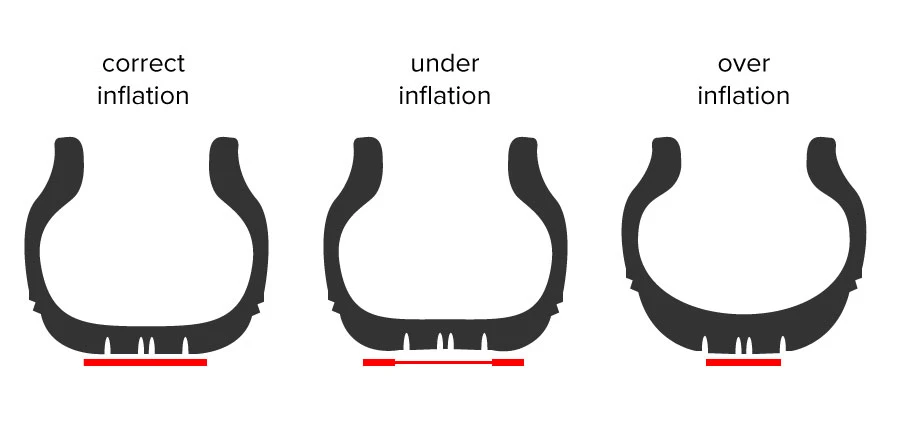 Air, I hear you ask? But that nice man at the service and tyre shop said I should get nitrogen in my tyres, right? Well, in a way, by using air you’ve already got nitrogen. 80%, remember?
But he said it’ll reduce wear and tear on my tyres? Well, no. The biggest cause of wear and tear on tyres is how we drive the cars that use them. If we also don’t check the pressures, so if the tyres are over or under inflated, either of these contributes to wear and tear. When air goes in (80% nitrogen, remember) and the pressures are right, then wear and tear should only be dependent on how you drive.
He also said that nitrogen improves ride quality? Ride quality is dependent on tyre pressure, springs and shocks working properly, road surfaces…you get the picture. So if your air filled tyres are at the right pressure, then ride quality remains the same irrespective of 80 or 100 percent nitrogen.
I’m sensing a pattern here. He also said that by using nitrogen it’ll make the tyre run cooler? Hmm, a toughie….ah…nup. It’s the moisture content of the air, so in fact, if you use dry normal compressed air, it’ll also run cooler., as long as, again, it’s at the correct pressure and the tyre isn’t overloaded.
So, the bottom line, if I’m charged five or ten bucks per tyre to get nitrogen in, I’m just wasting money? In a nitrogen filled nutshell, yep. Don’t waste your money and say no to nitrogen.
Hyundai Santa Fe Unveiled For 2018
Hyundai have released some details of its new for 2018 Santa Fe. Notable changes include a restyled front end, linking the big SUV to its slightly newer and smaller brethren, the Kona. There’s the upper level LED driving lights, mid level headlights that are in a separate cluster and set deep into their own scalloped section on the extremeties of the bumper. A restyled “Cascading Grille” is also featured. At 4770mm in length, a breadth of 1890mm, and an increased wheelbase, the Santa fe stamps itself firmly as the leader of Hyundai cars.
Inside it’s a complete makeover, with a sweeping line to the upper dash section, air vent designs not unlike those found in upper level European luxury cars. The dash and console are broader in look, with a more concise and intense look to the centre touchscreen and climate control section.
Safety details in full haven’t yet been released, however it is known that Rear Cross-Traffic Collision-Avoidance Assist is on board. It will recognise oncoming traffic from the side and wil automatically apply brakes if required.
More details will be released by Hyundai closer to its expected launch in late February and is due in Australia in mid 2018. 
 Level 2, 9 Help Street