

Author archive
2019 Lamborghini Urus Unveiled For Australia.
Lamborghini‘s long awaited SSUV or Super Sport Utility Vehicle, the Urus, was unveiled to media in Sydney’s Barangaroo district today (March 13, 2018). For the Australian market it will be priced from $390,000 (with GST and LCT included) plus on road costs. Weighing less than 2250kg, it will boast a V8 of 4.0L capacity, twin turbos which will give the engine 478kW and 850Nm of peak torque at 2250rpm, all wheel steer, and should see the ton in 3.6 seconds on its way to a top speed of 305 km/h. Lamborghini video 1 Lamborghini video 2
As expected, it’s a technological showcase. The DOHC engine features cylinder deactivation, twin scroll turbos, and is bolted to an eight speed automatic transmission. A all wheel drive system is capable of splittling torque from up to 70% to the front wheels to 87% to the back wheels. In normal driving it’s 40/60 front to rear. Torque vectoring is built in and works with the selectable driving modes to apportion torque where and as needed. Operated via a smart looking “tamburo” selector switch, there’s Strada, Terra (off-road), Neve (snow), Sabbia (sand), Sport, and Corsa. Depending on which driving mode is selected, the vectoring system on the 3003mm wheelbase will reduce or add grip, provide more or less oversteer as required, and cpmbines with the rear wheel steering system to provide sporting or agile driving experiences. The rear itself will move at + or – three degrees and will have all four wheels pointing in the same or opposite directions (in-phase or counter-phase) depending on speed.Lamborghini’s DNA shines through in smaller uet as important details, such as the exhaust note. Again it’s speed and drive mode dependent. In Strada it’s quiet, almost a background thrum. In Corsa it’ll be a more sonorous and guttural note emitted through the bespoke outlet system.
 The “tamburo” (or drum) selector dial allows a progressive move through the various modes and cycles through top to bottom before returning to the top as the selector lever is moved. It’s joined with the air suspension system to have each mode lift or lower the ride height to suit. It’s an adjustable system that can be left in Anima or automatic mode. Or the driver can select Ego to adjust manually.
 Underneath its angular, aerodynamically tuned, exterior is a mix of steel and aluminuim for the chassis. The cross members are light weight, as are the door frames, plus the front axle is bolted to an aluminuim subframe. The rear is a mix of aluminuim and steel in a cell structure, with all four corners rolling on 21 to 23 inch forged aluminuim with a choice of season suiting tyres. Inside are Carbon Ceramic brakes at 440 x 40 mm at the front, and 370 x 30 mm at the rear.
 The interior is beautifully appointed and includes a pair of super clear touchscreens, a four channel eight speaker sound system, with a 1700 watt B&O system and 21 speakers an option, aluminuim framed seats, Apple CarPlay and Android Auto, Bluetooth media streaming, and a DVD player. A DAB tuner and TV tuner are optional extras.
 Exterior design reflects the DNA of Lamborghini. It has short overhangs, a muscular stance, broad rear haunches, and a roof line that slides down into the LED tail lights. Up front is a deep set spoiler with air-inlets that almost but not quite dominate the view. Also up front is that powerplant, the first front engined Lamborghini for quite some time. From above, the lines draw the eye towards the somewhat piched waistline before spreading out to highlight the tail lights and and rear panels.
 Orders for the Lamborghini Urus are being taken now for deliveries in late 2018 or early 2019.


With thanks to Origin Agency and Lamborghini Australia.
2018 Haval H2: Private Fleet Car Review.
It’s fair to say that the Chinese company Haval doesn’t have a widely known presence in Australia. There’s some advertising on TV in early 2018 to let people know of the four model range, including the H2. It’s not unhandsome to look at, not bad to be in, and is well priced and equipped. But yes, there’s a but…. In profile there’s little doubt that the H2 is aiming at BMW, with an X1 or X2 presence. And this comes as no surprise as the designer is one Pierre Leclercq, the former head of design at…BMW. Inside it’s Range Rover’s tidy lidy Evoque, with a slightly overdone silver-grey plastic trim that won’t be to everyone’s taste. It’s cloth on the seats, comfortable, but set perhaps a little too high, which also brings in the high roofed resemblance to the Beemers.
 It’s well proportioned, and in the test car’s pearlescent white, looks good in the drive. There’s low-set LED driving lights, LED indicators, and distinctive Haval badged four bar grill, and BMW-esque tail lights in the non-powered tailgate.
 Motorvation is courtesy of a 1.5L turbocharged petrol engine with a rated fuel economy for the auto of 9.0L per 100 kilometres on the combined cycle. We finished at 8.5L/100km on a mainly suburban run. It does feel like it needs a bigger tank as it was on 1/4 to go with just under 400km covered. Peak power is 110kW at a typical small four 5600rpm. Peak torque is 210Nm between 2200-4500rpm.
  In comparison, the Holden Equinox with the same tech and capacity pumps 275Nm between 2000-4000. The Equinox tested had a six speed auto, the H2 also had a six speed auto. However there’s more to the Haval’s engine and gearbox combo than simply a comparitive dearth of torque.
It’s indecisive in its power delivery; sometimes first and second saw moving from standstill quicker than other times, particularly in a straight line move as opposed to off the line from a corner. There’s significant turbo lag at best, and a lag of urge in third or fourth in the same rev range where you’d have some pull below or above those ratios. Mash the pedal and although well within the torque band, forward motion was slower than the Titanic where she is now. Yet, at other times, the slightest touch of the pedal would see the H2 respond appropriately.
There was a mix of silky smoothness and jerkiness where it was once smooth. Not once at anything other than freeway cruising did it feel as if it was cohesive and capable of not confusing the driver. The auto has Snow and Sports modes, with Snow activated by a button in the centre console. Otherwise it’s a stand, reasonably well ratioed, six speed that shifts smoothly enough when it’s behaving itself. Inside, as mentioned, it’s not a bad spot. The dash dials hint strongly at Evoque, with a crystal look insert at every second speed indicator and brackets a colour 3.5 inch LCD screen that didn’t show speed but showed tyre pressure, instand and average fuel consumption, a layout that anyone with the Evoque would recognise, meaning its well laid out and easy to spot where things are. But…the CD/Bluetooth streaming/infotainment/non-DAB system is easily the worst we’ve experienced.
1. It doesn’t power off for something between five to ten minutes after the car powers off. Result? Flat battery. 2. None of the touchscreen tabs on the otherwise nice enough looking screen responded to touch until again after five to ten minutes of power on. 3. EVERY time the head unit was powered up it would go through a boot cycle of over fifteen seconds. This was irrespective of whether starting from an overnight off or whether you had JUST powered it off.
As a result it made using the whole thing harder than what it should have been. Changing stations had to be done using the toggle switch in the tiller and any sound settings had to wait until, like an old tube style radio, it had “warmed up”. Navigation wasn’t bad to look at but was largely rendered useless and actual audio quality was pleasing and clear enough. The sunroof is operated via an aircraft style dial above the driver and passengers head, with presets to open and close. Switchgear and build quality stood out as being of high quality for the most part, with an odd squeak here and there for a vehicle that had around 9850km or so and handback. There’s plenty of headroom as you’d expect from a 1814mm tall vehicle, plenty of legroom from the shorter than it looks 4335mm length and 2560mm wheelbase, and enough shoulder room for two kids in the 1695mm width.The H2 itself comes with a choice of two or four (all) wheel drive in Premium and Lux level trim.
  There’s really only the difference in dashboard trim here that separates the four levels, as 12V sockets, cargo blind, stainless steek door sill scuff plates, keyless entry/start/stop, a nice to the touch leather tiller (which features a small Audi-esque badge at the bottom), six airbags, tyre pressure monitoring, and traction control in its various forms are standard across the range. Cargo space is just big enough for a family’s weekly shop. When it comes to safety, the Haval H2 does come with an ANCAP five star safety rating.
 Where the H2 shone was in ride and drive quality. The electrically assisted steering was slightly numb on centre otherwise was solid in communicationand heft, The McPherson strut front and multi-link independent rear were beautifully tuned for a balance of comfort and absorption against a sporting enough ride when trialled through a well know one way downhill run, and had plenty of grip from the Kumho 235/55/18 Solus rubber wrapping the (optionally available) red painted brake callipers.
  There’s confidence in chucking it around thanks to a front and rear track of 1525mm/1520mm and confidence in stopping as the brakes respond to a light touch and retard forward progress…..progressively. It’s also lovely and quiet inside, to the point where a junior staffer asked “Is it electric?”
Haval further sweeten the deal with a standard five year/100,000 km warranty and five years roadside assistance, plus a capped price service offering.
At The End Of The Drive.
Haval’s H2 suffers from the death of a thousand paper cuts. Individually the niggles are mildly aggravating. As a package, as beautifully set up as a handler it is, those papercuts are enough to potentially not overcome, depending on your own driving preferences, the attractive starting price of $24,990 driveaway for the 4×2 Premium with auto. There’s no doubt at all that the indecisive driveline won’t be seen by some as a deal breaker but it’s also without doubt it needs more work. The infotainment unit needs hauling out and throwing away, and there’s any number of cars out there with far superior units.
If you look past the driveline and infotainment hiccups, you’ll be rewarded with a good looking, well handling, roomy enough for four, well priced SUV. PF is due to test the new Haval H9 in early April, 2018.
Nissan X-Trail ST-L Petrol 7 Seater & TL Diesel 5 Seater AWD.
Twin Peaks.
Nissan is in the midst of both a SUV driven renaissance and some healthy sales. The X-Trail is at the heart of this and leads in a updated Qashqai due soon. I spend some time with the (almost) top of the tree X-Trail ST-L seven seater with the petrol engine and X-Trail TL diesel AWD.
 The seven seater ST-L sits one level below the top of the ST ladder, with the ST-L 4WD at the peak. The TL diesel AWD caps the TL range. There’s a choice of 2.0L or 2.5L petrol engines depending on the trim level in the ST. The 2.5L pumps out 126kW and 226Nm, at 6000 and 4400rpm. There’s 130kW and a very decent 380Nm from the 2.0L diesel, at 3750 and 2000rpm.
 Transmission for both is a CVT (Continually Variable Transmission) and as usual seems to sap the energy of relatively low torque petrol engines. Nissan’s not alone in this. The diesel is better but suffers from lag from idle. Tank capacity is 60L each. Consumption for the diesel is rated at 6.1L/100 km and the 2.5L petrol at 8.3L/100 km, both for the combined cycle. AWT pretty much matched the petrol figure at 8.5L/100 km. That’s reasonable for both considering the 1534kg and 1664kg tare weights.
 The petrol’s acceleration is leisurely in comparison to the diesel, even allowing for the diesel’s time to spool up into its torque range. However, the petrol is more linear, being a constant ramp up as opposed to the slightly more “build then bang” of the diesel. And although both are front wheel drive oriented, with the diesel being a switchable to Auto or All Wheel Drive, there’s little to no noticeable torque steer. That’s impressive more so in the diesel given the rev point when max torque takes effect. Once on song the diesel is a cracker and pulls the TL nicely, if with a bit more chatter than expected from modern diesels.
 The transmission is programmed with seven ratios and is quite effective in engine braking on a downhill run, and occasionally needed a nudge into Sports mode in order to drop the revs and ratio down. However the diesel’s transmission had an odd whine and a feeling of being held back, almost as if the parking brake was engaged.
Ride and handling varied between the two, with the steering in the ST-L feeling overly light, overly assisted. There’s less assistance and a more weighty feeling in the TL diesel. Actual ride comfort was almost identical, with the ST-L feeling just that SLIGHTLY less tied down, with a fraction more float and rebound. The TL diesel’s suspension is built with soft- and off-roading in mind and feels more composed and confident. The undulations found in Sydney’s freeways see both damp down quicker than other SUVs, with far less float and rebound than many other brands observed. Turn in and turning circle are better than Holden’s new Equinox, meaning shopping centre carpark living will be easier. That’s the trade off for the assistance.
 The exterior bears almost no resemblance to the X-Trail released in the late noughties. It features the new deep V nose cone now seen across the Nissan range, and a flowing, organic, set of sinuous curves from the front to rear. There’s angular headlight clusters, ineffective indicator lamps buried deep into the bottom corners near the grille, beautifully sculpted LED tail lights and a power tail gate in the TL. The ST-L rolls on 225/65/17 rubber encased in simple yet stylish ten spoke “tuning fork” alloys, the TL 225/55/19 with black painted machined alloys.
 Inside it’s a mixed reception. Overall fit and finish and trim appeal was high but visual appeal is an independent thing. Although of a rounded and mainly ergonomic design, the X-Trail’s interior from the driver’s perspective doesn’t quite feel as fresh as it could. There’s a tight gap between door trim and arm when reaching down to adjust the electric seats, the seven inch main touchscreen is a dull and uninspired design for the audio (DAB only found in ST-L and TL with Bose speakers), the driver’s info screen is a sad looking mauve and dotted affair.
 However, they are at least easy to read and use. The reverse camera is crisp and in both had a superimposed top-down 360 degree view. There’s a glass roof fitted in the TL. Oh, and those door arms have no grip handle where you’d expect to find them, but have a handle at a difficult fulcrum point. And there’s no wireless charging pad either…


 The seats themselves were spot on for support and comfort in both TL and ST-L however the rear pews in the ST-L are utterly compromised by the relative lack of useable space and can’t be recommended for anything other than short journeys. There’s heating (no venting) for the front seats in the ST-L and for front and second row in the TL. The TL’s rear space features two removeable cloth covered sections that reveal a plastic tub, one thats more user friendly for dirt work and for shopping.


 Capacity is 445L for the 7 seater, and the TL has 945L with the second row folded flat. The popular venting for cooling cans and bottles remains, with the centre console featuring room for two items side by side. The dash in the TL is of a more higher quality to look at, especially in the touchscreen surround, and both cars have analogue dials still for the speed and rev counter.
 Both review cars came fitted with a towbar ($1120 option) and the ST-L with a non-descript plastic nudge-bar (a $1200 option) at the front. The TL had a switch for trailer braking fitted in a cluster near where the driver’s right knee would be to assist in towing braking. The cluster also included an Eco on/off, stability/traction control on/off, and a switch for a heated steering wheel. There’s also a button for the rear powered tail gate.
 There’s plenty of standard equipment in both and across the range. Auto headlights, powered mirrors, sliding second row seats, Bluetooth streaming are common throughout teh range, with the ST-L and TL receiving Blind Spot Warning and Rear Cross Traffic Alert. Lane Departure Warning is standard on the TL and is somewhat sensitive, seeming to go off if you looked at the white or dotted lines.At the time of writing Nissan Australia was offering some sharp driveaway deals; the ST-L seven seater was $40817 for a 2018 model and $51192 for the diesel TL AWD. Naturally, these are subject to change so please check with your local Nissan dealer or enquire via 2017/2018 Nissan X-Trail info
Warranty is the standard three years or one hundred thousand kilometres and there’s a better than others three years roadside assistance package on offer.
At The End Of The Drive.
Nissan is doing something right with the X-Trail judging by the sheer amount seen in the two weeks the model spent at AWT HQ. The pick of the two is the diesel AWD, more so for the better handling feel the chassis exhibited. There’s a better ambience in the TL’s cabin and as an overall driving experience outweighs the ST-L. Those third row seats are compromised due to the sheer size of the X-Trail (4690mm length, 2705mm wheelbase).
If your need is for a dedicated seven seater, there’s other options out there that would be better. If you need a reasonable diesel AWD there’s still plenty of choice. But you’ll also need to consider that the Nissan X-Trail has been rated as the number one selling SUV for 2017. That, on its own, says a lot.
Jaguar Ups The Pace.
Get used to that word. Pace. It’s part of the Jaguar triple play. Grace, space, and pace. There’s the F-Pace, a sharp looking four door mid sized SUV, and now there’s the E-Pace and I-Pace. Both are SUVs and both showcase what modern Jaguar is all about.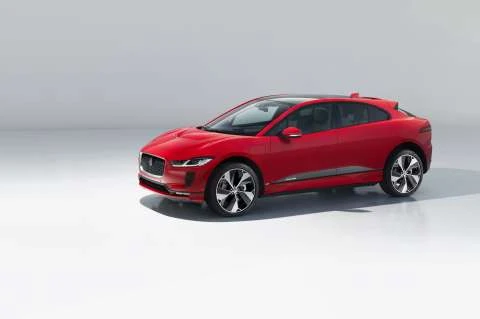
I-Pace.
It’s power to the people with the I-Pace being Jaguar’s first foray into fully electric mainstream driveability. Priced from $119000 plus on roads it showcases Jaguar’s own innovative approach as well, and here how.
ELECTRIC
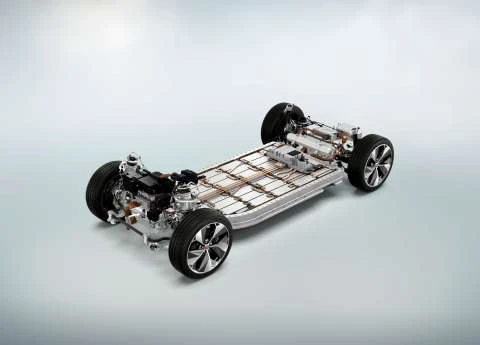
With a state-of-the-art 90kWh Lithium-ion battery using 432 pouch cells, the I-PACE delivers a range of 480km (WLTP cycle). Owners will be able to achieve a 0-80 per cent battery charge in just 40 minutes using DC rapid charging (100kW). Home charging with an AC wall box (7kW) will achieve the same state of charge in just over ten hours – ideal for overnight charging.
A suite of smart range-optimising technologies includes a battery pre-conditioning system: when plugged in the I-PACE will automatically raise (or lower) the temperature of its battery to maximise range ahead of driving away.
PERFORMANCE
Two Jaguar-designed electric motors – which feature driveshafts passing through the
motors themselves for compactness – are placed at each axle, producing exceptional combined performance of 294kW (400PS) and 696Nm, and all-wheel-drive, all-surface traction.
The high torque density and high-energy efficiency characteristics of the motors deliver sports car performance, launching the I-PACE from a standing start to 100km/h in just 4.8 seconds. The instantaneous performance is matched with exceptional ride comfort and engaging driving dynamics.
The bespoke EV aluminium architecture uses advanced riveting and bonding technology to deliver a light, stiff body structure. Together with the structural battery pack, it has a torsional rigidity of 36kNm/degree – the highest of any Jaguar.
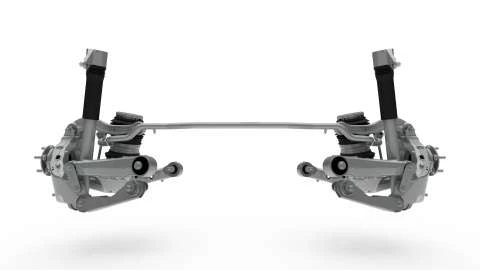
The battery is placed centrally between the two axles, and as low down as possible with a seal between the housing and the underfloor. This location enables perfect 50:50 weight distribution and a low centre of gravity: together with the advanced double wishbone front and Integral Link rear axle with (optional) air suspension and configurable Adaptive Dynamics, this delivers agile handling and outstanding ride comfort.
DESIGN
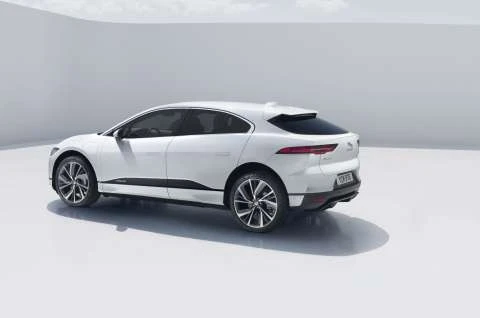
There will be nothing else on the road that looks or drives like the Jaguar I-PACE. It is designed and engineered to take full advantage of its smart electric powertrain and maximise the potential of the packaging benefits it brings.
Its sleek, coupe-like silhouette is influenced by the Jaguar C-X75 supercar with a short, low bonnet, aero-enhanced roof design and curved rear screen. This cab-forward design contrasts with its squared-off rear, which helps reduce the drag co-efficient to just 0.29Cd. To optimise the balance between cooling and aerodynamics, Active Vanes in the grille open when cooling is required, but close when not needed to redirect air through the integral bonnet scoop, smoothing airflow.
Inside, the layout optimises space for passengers while sophisticated materials – including the option of a premium textile Kvadrat interior – and exquisite attention to detail identify this as a true Jaguar.
While a mid-sized SUV, I-PACE’s cab forward design and EV powertrain means interior sp
ace comparable to large SUVs. In the rear, legroom is 890mm while, with no transmission tunnel, there’s a useful 10.5-litre central storage compartment. In the rear, tablet and laptop stowage is found beneath the seats, while the rear luggage compartment offers a 656-litre capacity – and 1,453-litres with seats folded flat.
CONNECTED-CAR TECHNOLOGY
I-PACE introduces the Touch Pro Duo infotainment system to Jaguar. Utilising an innovative combination of touchscreens, capacitive sensors and tactile physical controls, Touch Pro Duo is intuitive to use.
A new EV navigation system assesses the topography of the route to destination and insights from previous journeys, including driving style, to calculate personalised range and charging status with exceptional accuracy for maximum driver confidence.
The advanced system uses ‘Smart Settings’ technology – driven by AI algorithms – to identify individual driver preferences, and then tailors the I-PACE’s driving and interior settings accordingly.
I-PACE will also launch an Amazon Alexa Skill. This means owners will be able to ask an Alexa enabled device for information held in the Jaguar InControl Remote app.
Head to www.jaguar.com.au for information.Jaguar Cars Australia
 Level 2, 9 Help Street