

Archive for 2022
Remember this BMW?
Remember the Batmobile? An absolute classic BMW that has been set in motoring history is the old BMW 3.0 CSL. Known as the Batmobile, the quick and very unique 3.0 CSL BMW Coupe was first manufactured around 1973. At that time, the car was raced in the European Touring Car Championship, which it won. In fact, the car was so good that it won the Championship for four years on the trot.
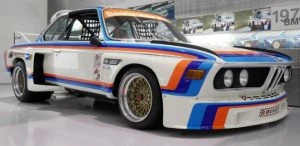
As a celebration, 50 years on from the release of the original Batmobile and as a 50 year celebration of their M division vehicles, BMW are making a very limited line of these brand new BMW 3.0 CSL Coupes that house the most powerful 6-cylinder engine BMW has ever produced for a road-legal vehicle. Only 50 of the cars will be made, making it an insanely rare vehicle on the road, while also ensuring that it won’t be purchased cheaply.

The new BMW 3.0 CSL comes with a six-speed manual gearbox, RWD, and 412 Nm of power. The engine has been based on the sweet 3.0-litre twin-turbo engine that is used in the current BMW M4 CSL but with a lift in power. The BMW M4 can run through the 0-100 km/h dash in a bit over four seconds, and the rare 3.0 CSL will likely better that.
The latest Batmobile, like the M4 CSL, comes with only the two front seats and no back seats. The interior inside the BMW 3.0 CSL Coupe is similar to the M4 CSL’s in structure and flow, yet there are plenty of special logos, detailing and design features to hark it back to the original. For instance, you’ll notice the logos on the headrests and some new horizontal stripes on the backrests match the looks of the old 3.0 CSL.
Out on the exterior is where you’ll find the design and bodywork really harking back to the original version, so the pair of round intakes on the sides of the bumper were inspired by the classic CSL’s design, so too were the vertical carbon fins that run down each side of the bonnet. And check out that chunky hindquarter where the rear wheel arches are beautifully flared and full, and sitting on top of the boot lid is a nice square spoiler to complete the stunning picture. The majority of the new car’s bodywork will have been constructed from carbon-fibre reinforced plastic with plenty of the parts having been made by hand.
A brand new BMW 3.0 CSL will be one of the rarest BMWs you can buy, and its also one of the most expensive. Pretty special though!
How Does Autonomous Emergency Braking Work?
With Autonomous Emergency Braking, or AEB for short, now effectively in just about every new car, it’s become a benchmark requirement in much the same way that ABS and traction control did all those years ago. Obviously, its impact cannot be appreciated enough, reducing all sorts of accidents and saving lives. But how exactly does AEB work? Let’s take a look.
The Basics of AEB
There are three attributes that ultimately play a role in AEB systems.
Autonomous: the system acts independently of the driver to avoid or mitigate the accident.
Emergency: the system will intervene only in a critical situation.
Braking: the system tries to avoid the accident by applying the brakes.

What Does AEB Rely On?
Most AEB systems use radar, a pair of cameras, and/or lidar-based technology to identify potential collision risks ahead of the car.
This information is combined with what the car knows of its own travel speeds thanks to internal sensors and direction of travel. It determines whether or not a critical, or potentially dangerous situation, is developing.
If a potential collision is detected, AEB systems generally, though not exclusively, first try to avoid the impact by warning the driver that action is needed. This could be in the form of a visual warning, such as dashboard mounted flashing lights, or physical warnings.
If no action is taken, and a collision is still expected, the system will then apply the brakes. Some systems apply full braking force. Others may be more subtle in application. Either way, the intention is to reduce the car’s speed. Some systems deactivate as soon as they detect avoidance action being taken by the driver

How AEB Has Evolved?
Most early AEB systems were configured to warn of larger objects such as cars. Over time, these systems have been refined to incorporate features like pedestrian-detection, which is arguably just as much a risk on the roads.
Unlike the early days, where AEB was mostly reserved for passenger vehicles, today you will find it in just about any type of vehicle. Whether it be a sedan, wagon, city car, hatch, ute, or SUV – the technology is firmly embedded across the board. And that is thanks to its significant influence in improving on-road safety.
In 2015, ANCAP and Euro NCAP found that the inclusion of AEB led to a 38% reduction in rear-end crashes at low speed. This percentage will have only increased since then given the advancements that have been made. That firmly puts it in the category of being one of the most important safety attributes you’ll find in any car on the road.
What to Check Before a Road Trip
As we approach the festive season, no doubt many of us are planning to get away. Whether it’s a much-needed holiday, or a family catch-up, this is the time of year where we load up the car and hit the roads. But how much preparation do we do before we go?
Here’s a small checklist of the things you should pay attention to.
Tyres
They may get the least love, but they are the sole reason a car can roll along a road. Tyre pressure is important; you should check this before any long drive and when the tyre itself is cold.
The right pressures are printed on a placard stuck somewhere on your car, generally inside where the doors close. Underinflation can lead to premature wear on the outside of the tyres, while overinflation can have the centre of the tread wearing.
The tread itself is important, with a minimum depth required in order to squeeze out any water you may drive through. There are also products that can be sprayed onto the sidewalls of the tyres that keep them clean and the rubber nourished, so it doesn’t dry out and leading to cracking.
Radiator
This is the box that sits in front of the engine and circulates cooling fluid through the engine. The whole idea is to try and keep the engine cool on the road. Water is only a part of the mix you need, with coolant also necessary. It is fantastic at working its way through the radiator and engine to keep it cool.
The radiator itself needs to be without leaks, otherwise you will run into all sorts of issues. It may be worth getting a good quality flushing agent to try and clear out any junk or goop that’s accumulated in the system.
Engine Oil
An engine needs oil to spin without overheating from friction. There is a dipstick on the side of the engine that, when pulled out, should be coated on some of its length, with clean oil. If it comes out black and maybe a bit smelly, this is not a good thing.
Clean oil helps things spin smoothly and can help in better fuel consumption. Any oil change will need a change of oil filter as well. Depending on your car and mechanical know-how, you may be able to do this at home, but always check the new filter is tightened sufficiently before adding new oil, otherwise your garage floor could become a mess.

Headlights and Indicators
Contrary to popular belief, it is actually against the law to not use your indicators. Sometimes the bulbs need replacing. A good indication to determine if you need a swap-out is the noise we hear inside the cabin. The noise may start to sound like a clock gone mad, as the system is designed to let you know something is wrong.
Headlights, depending on the age (and make) of the car, have no audible signal, but may display a warning on the dash. Some of the bulbs are easy to change, but others are far more tricky. Of course, it’s pretty simple to check your headlights to see if they’re working, just turn them on at night.
Air Conditioning
You’ll find there is a compressor in the engine bay that has a certain gas inside that makes the air cool. After some years, that gas becomes inefficient or may have leaked out and cold air doesn’t happen.
Although it may seem expensive to get the system re-gassed, it’s a one-off cost that can keep you chilled for years to come.
Windows
Of particular importance is the windshield – keep that clean and it reduces glare and sunlight scatter, which can impede a driver’s vision. In the engine bay is the reservoir full of water and cleaning agent. If this is empty, you need to make sure you use cleaning agent to help break up dirt, dust and any other rubbish. If the window is clean, but it looks like there are all sorts of surface imperfections from dirt and stones, it’s time to consider having the screen replaced.
Some More Exciting Mazda News

If you are anything like me, then you’ll be driving along the highway spotting the cars coming the other way. One of the snazzier brands out on the roads would have to be those from out of Mazda’s showrooms. Mazda’s great variety of models all look great and boast some striking modern designs. Even the new Mazda BT-50 ute, a very reliable workhorse, is looking pretty slick, and so too the family-oriented new Mazda 6 Sedans and Wagons. Mazda also offers a wide range of brand new SUVs with sharp looking exteriors and endearing interiors that are well-equipped. The small MX-30 is one of these SUVs, and it also has some cool new materials used inside the cabin – like the cork inlays that offset nicely against the premium leather trim.
Toyota, Mazda, Kia, and Hyundai sell the most cars in Australia; Toyota being out in front by a decent margin, with Mazda coming in at second place. For quite some time, in Australia, Mazda has been a popular vehicle to buy. Mazda’s 2022 sales of 43,687 are down 9% on this time last year, though Mazda retains its 2nd placing to Toyota’s 1st place for overall sales. Sales drops have occurred right across the market, thanks to the shortages of components and current logistical issues. Mazda had sold 101,119 vehicles in 2021, quite a large portion of the whole pie, considering all the brands that are available to buy new in Australia.
So, what’s some hot off the press Mazda news?
You may have noticed a tidy looking compact SUV running our roads the past couple of years. Mazda’s MX-30 is one of Mazda’s newer creations in recent times – gaining in popularity too. The little Mazda MX-30 has been a key model for Mazda in that this has been Mazda’s model of choice for bringing new technologies, hybrid motoring, and EV motoring into their modern fleet of vehicles that will also lead them in a new direction for future motoring.
As the direction of future transport trends toward cleaner engines and lower emissions, Mazda launched a series of mild-hybrid powertrains. We saw these first being used in the Mazda 3 and Mazda CX-30. The Mazda MX-30 provided a mild-hybrid engine, but Mazda also made available their brand new pure-electric drivetrain available for the MX-30. Designed purely for an emissions-free city commute, the Mazda MX-30 Electric uses its 107 kW to whistle up to 0-100 km/h in 9.7 seconds and up to a top speed of 140 km/h. The driving range proves to be over 175 km, a handy dollop of motoring before recharging needs to happen.
Some other new Mazda technology which will be implemented will be that of a new small rotary engine as a supplementary power source. With a NEDC (New European Driving Cycle) accredited range of 224 km, this will provide Mazda-buyers with another means of excellent low-emission city transportation.
Mazda’s approach to electrification is based on the customers’ demand for EVs, and the regional infrastructure available to support them. Within 5 years, Mazda hope to introduce a new hybrid system alongside more battery-electric models in their line-up of new vehicles. This is in response to the newer European emissions rules that come into effect.
Towards the end of this decade, Mazda’s entire line-up will offer fully electrified versions. One model that has been talked about as being another exciting Mazda EV will be the little MX-5’s progression into EV powering. Now that’s a tasty thought!
 Level 2, 9 Help Street