

Private Fleet Book Review: How To Drive. The Ultimate Guide From The Man Who Was The Stig by Ben Collins
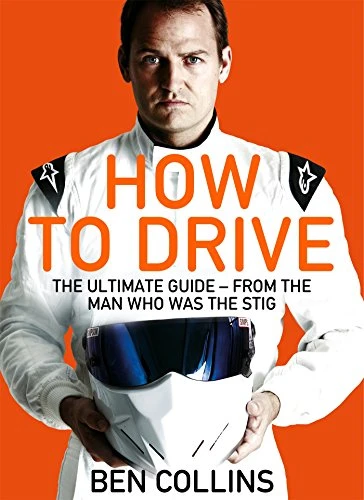 As we’re less than 100 days away from Christmas, it might be time to start dropping some hints as to what you’d like your nearest and dearest to get you. For most of us, a new car is out of the question in the Christmas stocking, but a new book is probably much more feasible as a present for the typical Australian.
Car Review: 2017 Suzuki S-Cross Turbo Prestige.
Suzuki continues to cement its position as a leader in the small car market by giving us an updated 2017 Suzuki SX-4 S-Cross. Although a sort of SUV look, it’s not. It’s front wheel drive only, powered by a ripper petrol fuelled turbo four. Like it so far? Private Fleet does. There’s three trim levels, simply named GL, Turbo, and Suzuki S-Cross Turbo Prestige. The test car, the Prestige, gets the same 1.4 litre turbo engine as the Turbo, however the GL is the outgoing model. Just need to clarify that…
Anyways, there’s a simple question the S-Cross Turbo poses. Is it any good? Most of the time a simple question has a simple answer and so it is with this car. Yes. First up, there’s that belter of an engine. 1.4L. 16 valves. Turbocharged. 103 kilowatts. Torque: 220 of them between 1500 to 4000. Transmission: six pseed auto. Potency level? High. This combination is superb. It reacts to a breath on the go pedal, the gearbox is crisp, shifts quickly and without fuss, and even with traction control on, will happily and merrily chirp the front driven 215/55/17 Continental tyres. It’s a corker. Consumption in a mainly urban environment finshed on 6.7L per 100 km from the 1170 kilogram plus fuel (47 litre) and passenger vehicle.
 It’s a ripper handler too, with beautifully weighted steering connecting the driver to the road and providing plenty of feedback. The ride quality also is near nigh perfect with a supple mix of sporting and absorption offering an ideal combination of tautness and comfort from the McPherson strut/torsion beam suspension.
 Tip it into a tightening radius corner and the body will lean but ever so slightly, whilst the tiller requires minimal input to adjust to the curver coming in on itself. Pound it across the sunken and raised sections of various tarmac roads and you’ll feel a small bump before it passes and the chassis settles rapidly. Brake wise it’s spot on, with feedback straight away and a progressive travel allowing a driver to judge just….when…more or less pressure was needed.
 Suzuki have also performed a stunning piece of engineering upon the S-Cross, managing to squeeze apartment sized room inside a shoebox. The S-Cross is a mere 4300 mm in length, stands tallish at 1585 mm and spans 1785 mm horizontally. Inside that overall length is a 2600 mm wheelbase, ensuring ample leg, shoulder, and head room for four people, although three up in the rear seat is a touch squeezy. Luggage space is also huge at 430L to 1269L, including a double tray storage plus there’s the usual assortment of bottle and cup holders.
 The interior design is now familiar and standard Suzuki; there’s the four quarter touchscreen with Navigation, Apps, radio and Phone plus voice activation, traditional and eminently usable dials for the aircon, blue backlit driver’s binnacle dials and a simple to read and use monochrome screen between them. The dash and console design is a curvy design, flowing around into the doors in a clear swoop and with airvents/gear selector surround/door trim highlighted in alloy look plastic.
  The manually adjusted seats seats are heated (not cooled) and are a comfortable mix of leather and cloth. Of course the rear seats are 60/40 in split and foldable to allow access to that capacious and well trimmed boot. If there’s a negative it’s a small but persistent one. The setbelt straps in the height adjustable locaters were double strapped, as in both front and rear were reachable to pull over and it was the rear strap, not front, that kept getting grabbed.
 Outside it’s unrecognisable from the original SX4 of 2007 and noticeably different from the superceded model The tail lights have been subtly but obviously refreshed however it’s the bluffer, more “no nonsense” front end that has the 2017 S-Cross standing out. Although the headlight cluster (LED projector on the Prestige) looks almost the same, they’re a touch more angular and feature dusk sensing in the Prestige.
 It’s the stand out proud reprofiled nose, with an assertive chrome grille, polyurethane black running from the centre to the rear along the flanks and with a splash of metal chrome around the globe lit DRLs. There’s a crease line and stance not unlike Ford’s Escape, a 180 mm ride height, and hi-vis polished alloys to finish the visual appeal.
 Safety is high, as usual, with reverse camara, sensors front and rear, Hill Hold Control, 2 ISOFIX points, seven airbags including knee, electronic driver aids, even an auto dimming rear vision mirror. Servicing is capped for up to 5 Years / 100,000km and you’ll get a 100,000 km or three year warranty.
Holden: The Day For Closing Is Coming.
Holden, along with Toyota, will cease to manufacture cars in Australia. But how has the process leading up to that day been handled, what about the people involved? Private Fleet‘s Dave Conole had a one on one interview with the head of PR for Holden, Sean Poppit. This is part one of a two part story.
With Holden stopping manufacturing in Australia, what has been the process to wind down making cars up to the final day?
October 20 is the final day of production and we’ll continue building cars up until the final day and it will be full speed up until that point. Let’s say we’re doing 170 cars per day, we’ll stay at that figure right until the final day. Obviously that day won’t be a full production day and we’ll hold a private employee only ceremony at the plant to mark and honour our heritage and our people.
What is being done to support the workers across the factories?
At the plant in Adelaide we’ve got just under a thousand workers there. One of the things that has been ABSOLUTELY non-negotiable from us, right from the outset, have been what we call the transition services and the transition centres. Our HR and manufacturing teams have won several national, and in fact, global awards for the quality of that work.
We’ve got a full time transition centre set up at the Holden Vehicle Operations which is at our plant in Adelaide. We’ve fully decked out the bottom floor of one wing and that’s a dedicated, permanent , centre to assist people in getting new jobs or be retrained. We have independent people from many industries, government support including the military, people from the private sector like engineering groups…it’s been a benchmark piece of work and it’s something we’re justifiably and extremely proud of in the way it’s helped and continues to help people transition.
Up until this chat we’ve had an eighty percent success rate, meaning eighty percent of those that have left Holden since 2013 have found or gone onto new work, while that other twenty percent have either gone into full time study or chosen to retire. So it’s been an amazing success rate which I think is a testament to what we have in place to helping our people transition AND how eminently employable our people are.
That’s some really good news for the people involved, yes?
Absolutely. Not just in the north of Adelaide but in Adelaide itself Holden was seen as a job for life. It’s a great place to work, really fair pay, you get to work with a brand you are passionate about and get opportunities to move around the plant and do different roles. There’s lots of long term employees and we know it (the change) can be daunting to re-skill and re-train which really is the reason for being, these transition centres.
However there will still be roles for current employees, right, in places and roles such as Lang Lang or in research and development?
True. We’ll become a vehicle importer, engineering, and design centre and we’ll still have the second largest dealer network in the country. Our corporate HQ will remain here at Port Melbourne and there’ll still be our team of 150 designers as part of the international design studios and yes we’ll retain the Lang Lang proving ground (south east of Melbourne) and the 150 engineers on site there. What that means is there will be somewhere between 350 to 400 designers and engineers working on local and international products as well as the hundreds of people in the corporate side, sales, marketing etc.
With the new Commodore on the way, how does Holden see the vehicle being received?
We ran a drive day at the proving grounds earlier this year, with the next gen Commodore. We had the V6 and four cylinder version. We had a dozen Commodore customers there. I’ll be up front, we had a couple of them come up and question why they were there, saying yes they were keen to see the proving ground but didn’t have a lot of interest in a front drive Commodore.
(It’s here that Sean shared some quotes from those that attended.)
“I wouldn’t have considered this car, now I’d even consider the two litre, never mind the V6.”
“ I’m really surprised at how well it gets the power down, it feels quicker through the corners than expected.”
“The new Commodore is really impressive, I particularly like the V6 model with the all wheel drive, even the two wheel drive model is not bad and very quick with the turbo.”
It’s going to be on us to present the car in the right way, we don’t imagine for one second it’s going to have the same emotional and nostalgic appeal. Our sales numbers, we don’t expect it’ll sell in the same numbers the locally built car did. But what’s critical, and what was reinforced to us in a pilot program we ran recently…. what we want is for people to drive the car and understand that Holden magic, what made the Commodore so great, there’s a very, very big streak of it in this new car. Rob Tribbiani (Holden’s legendary chassis engineer and the driver of the Holden ute that set a record at the famed Nurburgring) is super excited about the all wheel drive V6 with the adaptive dampers and tricky real differential system, is a real belter. We just want the car to be driven and judged on its own merits.
Chalk and Cheese: New Releases From Suzuki, Toyota, and Hyundai.
As Australia heads into spring and cocks an eye towards summer, the northern hemisphere says hello to the autumn car show season. The Frankfurt Auto Show saw Suzuki confirm the additon of the Sport to its revamped Swift range, Toyota unveil a revamped Prado and in Korea Hyundao shows off the Genesis G70 sedan.
2018 Suzuki Swift Sport.
The latest generation of the Swift Sport brings with it a raft of changes which include a lower, wider stance, more aggressive styling, and a torque-to-weight ratio that catapults the Sport into true hot hatch territory. We say goodbye to the 1.6L naturally-aspirated motor and hello to the 1.4L Boosterjet turbo engine (it’s the same as found in the brilliant Vitara). It’ll be a welcome addition to an increasingly grunty line-up with a turbo now available in five models across the range. Coupled with compact dimensions and a kerb weight that’s sub one-tonne should be music to the ears of sports-minded drivers.
 Level 2, 9 Help Street