

Mitsubishi Global Reveal: 2020 Pajero Sport.
Mitsubishi has unveiled the new look Pajero Sport. Formerly known as Challenger here in Australia, the Pajero Sport for 2020 is scheduled for “early 2020” as a release for the Australian market. Pricing is yet to be confirmed. It will be powered by the same 2.4L MIVEC diesel and power down via an eight speed auto. Exterior design cues see the Pajero Sport dipping further into the “shield” look up front, with effectively a transfer of the Triton nose over to the Pajero Sport, with the driving lights in each corner a little larger. The much maligned teardrop rear lights have been shortened in length, stopping above the rear bumper with a reprofiled bumper featuring reflectors. The rear tailgate is powered on the upper level models and has a handsfree (read: kick operated) release system. Sitting above the rear door is a wind deflector.
 Inside sees a new digital dashboard instrument cluster in full colour. The centre screen is also in colour and at 8.0 inches in diameter. Mitsubishi also now offer an option for some functions that is a smartphone based app. The Mitsubishi Remote Control can send a note to advise the driver that doors were left unlocked, for example, and the tailgate can be raised or lowered. In addition, the tailgate reservation system can be preset by smartphone anywhere, which enables the driver to open or close the tailgate automatically when they approach or leave the vehicle. This is Bluetooth operated.
There has been an upgrade to the interior trim with extra padding to door and dash, a revamped console, and a storage tray that’s accessible from more angles. USB power ports are now backed up by a AC socket for the rear of the centre console.
Rear Cross Traffic Alert and Lane Change Assist are now standard outside, with Apple CarPlay and Android Auto added to the touchscreen system. Pricing and spec for the Australian market will be released later.

Warning Signs I’d Like To See On The Dashboard

Modern cars and even not-so-modern cars have warning signs on the dashboard that light up like Christmas trees at the slightest provocation. However, unlike Christmas trees or fairy lights, the emotion experienced when one sees a dashboard warning light twinkling away isn’t one of joy but more like one of “Oh, heck!” to put it politely.
Car Review: 2019 Isuzu D-Max LS-T X-Runner & LS-U
This Car Review Is About: The 2019 spec Isuzu four door D-Max utes in LS-T and LS-U trim. The range was given a largely cosmetic upgrade in early 2019. The LS-T was fitted out in the limited edition X-Runner kit. The LS-U in standard trim is $45,990 driveaway and the X-Runner is $54,990 driveaway. Isuzu have increased the prices through the range, with the LS-T in non-X-Runner trim up by $1,000 to $51,990. The LS-U also came fitted with a lockable roller tonneau, snorkel air intake, and a “roo-bar” with LED spotlights. The LS-T has restyled wheels and gains, along with the LS-U, Highway Terrain or H/T tyres, as opposed to the All Terrain or A/T as previously fitted. These have had the effect of affecting handling. The roof rails and the lower strakes to the grille are now black, and the side steps are subtly different.
 Under The Bonnet Is: The rackety clackety 3.0L that makes 130kW and a thumping 430Nm of torque. In context, that’s below the 500Nm from a slightly smaller engine as found in the Holden Colorado…At just under 1000rpm there is 300Nm and that peak torque is on tap through a narrow rev range of just 500rpm. There’s still 350Nm available at 3,500rpm but it’s a very noisy exercise taking the engine past 3,000rpm. It’s possibly one of the noisiest diesels available in a passenger vehicle when pushed even moderately. It bolts to a six speed auto with sports shift and an electronic low range locking system.
 Economy is quoted as 7.9L/100km for the combined, 9.5L/100km for the urban, and 6.9L/100km for the highway from a 76L tank. We tested the X-Runner on a drive loop to Thredbo, Bega, and return, covering just over 1260 kilometres. Economy stayed at around 8.0L/100km throughout the whole trip, a decent figure considering the weight of the ute (1930kg dry) and the extra 300 kilos of passengers and baggage. Isuzu rate the towing capacity as up to 3.5 tonnes.
 On The Inside It’s: Cloth seats for the LS-U, leather appointed for the LS-T. There is no seat heating, no seat venting. The LS-U’s front seats are manually adjusted, with some electric motion for the driver in the LS-T. Rear seat passengers have plenty of leg room, and there is a USB port for the rear passengers at this trim level. The LS-T is a push button starter, with a traditional key for the LS-U. Both cars came fitted with rubber floor mats front and rear. Only the driver has a one touch window up/down switch in both. The centre console houses the dial for the two or four wheel drive modes, and there are two bottle/cup holders. The driver and passenger have a pull out cup holder, and each door has bottle holders.
 Sounds come via an 8.0 inch touchscreen, with AM/FM, Bluetooth, no Android Auto/Apple CarPlay, CD, USB and 3.5mm inputs, and even a HDMI connection. There is no DAB or Digital Audio Broadcast. The screen’s display is in dire need of a redesign and revamp, with one of THE most outdated looks seen in a passenger oriented vehicle. It’s lacking in visual appeal on every single screen. Hit the non-Auto headlights and there is no adjustment for the screen for day or night time driving. It also has a driver alert warning on engine startup and annoyingly will NOT switch off after a delay.
 The driver faces a basic looking but functional dash, with a pair of dials bracketing a display screen that shows trip distances, economy, expected range, and the diesel particulate filter status. Australian spec cars have the right hand stalk as the indicator and the left as wipers, and each has a button at the end of the stalk to access the screen info. The wipers themselves aren’t auto nor is there an Auto headlight setting. This is an oversight in the interest of safety, as a driver can too easily not switch the lights on.
 Actual switchgear is reasonably well laid out and accessible. The centre stack features Isuzu’s standard aircon controls, with a huge dial for temperature as the hub. Fan controls are on one side, mode on the other, and the dial itself shelters a small LCD screen to indicate what’s going on. the dash itself is a double scallop design, with a stitched leather look to the materials. Fit and finish is mostly ok however the leading edges of the doors have a gap of about a centimetre to the plastics wrapping the windscreen. There is a centre of dash storage locker that Isuzu don’t seem to have found a fix for in regards to the latch. It repeatedly failed to open.

 On The Outside It’s: similar but different. the X-Runner came in pearl white and has blackouts and logos spread over the metal. The nose has a bright red Isuzu as do the centre caps for the 255/60/R18 rubber and wheels. The LS-U has 255/65/17s. There are sidesteps here also on both and only the LS-U gets rear parking sensors. The LS-T had a lockable roller tonneau, a standard rollbar, and came fitted with a heavy duty steel roo-bar complete with LED spotlights. Otherwise it’s the same blocky profile with a wedgy looking nose.
 The rear of the LS-U had a lockable metal cover. It’s a roller mechanism which, on this particular vehicle, failed to allow itself to be pushed back. Something in the lock mechanism appeared to have jammed and although the key and button would allow a push and turn, the cover itself refused to move. the X-Runner LS-T has no cover fitted to the test car but there are tie down hooks, which came in handy for the long drive.
 The cargo section is 1,552mm in length in the four door utes. A maximum width of 1,530mm is here also and allows just over 1,000 kilos of payload.
Out On The Road It’s: Rackety clackety noisy. Think of being in a passenger jet on take-off where it’s fire and brimstone. Get to cruise altitude and it’s quieter. Landing where it’s off-throttle and there’s the background idle. That’s the 3.0L in a nutshell. It’s a determined load lugger too, and in no way can it be considered sporting. There’s a moment of turbo lag before the engine gets lively, and even then it’s a relaxed, don’t hurry we’ll get there, proposition. The transmission is mostly smooth, will drop a cog or two for downhill runs and engine braking, but will exhibit moments of indecisive shifting as well. On a normal acceleration run it’s slurry with hints of change, will downshift after a pause when the accelerator is pushed, but it’s a leisurely progression forward.
Corvette Goes For A Mid-Engined Sting.
General Motors have confirmed details and American pricing for its forthcoming 2020 Corvette Stingray. It’s a mid-engined machine and will kick off at under USD$60,000. The engine configuration puts it into the same sphere as Ferrari, McLaren, and Lamborghini. Importantly, it will be produced in factory fitted right hand drive, and is due to start production later this year.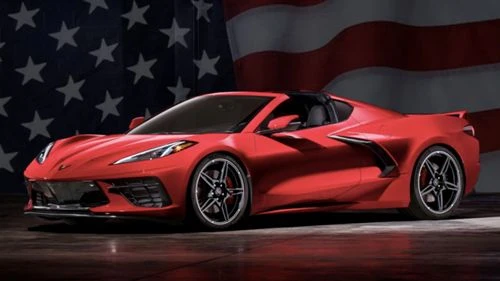 The engine is the same sized “donk” as before, at 6.2L. It’ll be naturally aspirated, and with an optional performance exhaust will pump 495 horsepower and 470 lb-ft of torque. In Aussie numbers that’s just shy of 370kW and 637Nm. Without that exhaust horsepower and torque drop by five each respectively. Expected weight is around 1530 kilos before fuel and passengers.
The engine is dry sumped, meaning a smaller oil pan. It also means, for the track day drivers, more consistent oil pressure as there’s far less oil to slosh around in a traditional oil pan. As it means a lower engine height as it sits behind the driver and passenger, it could mean a supercharger for later on…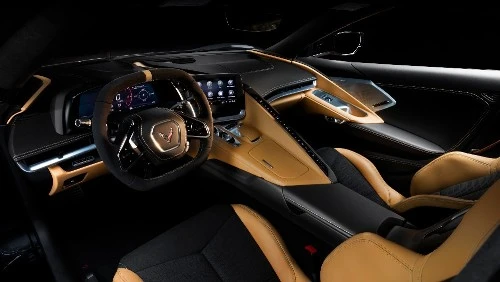 Transmission will be an eight speed dual clutch auto. Sadly, for the traditionalists, the manual transmission is no more, however the DCT will have paddle shifts as a semi-consolation prize. Expected 0-62mph/100kmh time is expected to be under three seconds.
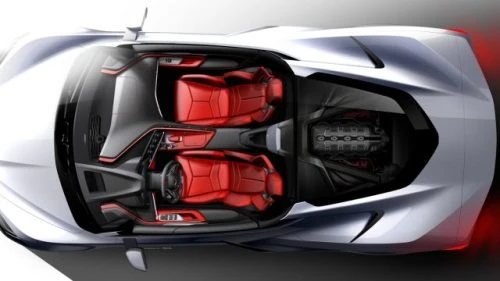 Of course, the big talking point will be the relocation of the powerplant. Not only has it given the exterior a sleeker design, it’s given the engineers a new platform to work on for handling. Mark Reuss, the former head of Holden, said: “The traditional front-engine vehicle reached its limits of performance, necessitating the new layout. In terms of comfort and fun, it still looks and feels like a Corvette, but drives better than any vehicle in Corvette history.” Each corner has coil-over suspension with the stiffer chassis. Those going for the option list can specify struts with what GM calls adjustable spring perches. Get the spanner out and this means adjustable ride height and stiffness.
 GM also offers Magnetic Ride 4.0, a system where magnets and a specific liquid work together to provide an adjustable ride height. There’s even a GPS enabled nose lift setup, where kerbs or speedhumps will hit the GPS and lift the nose to provide safe clearance. If you check the Z51 option box you’ll also get Pilot Sport 4S tyres over the 245/35/R19 front and massive 305/30/20 rear wheels, but Michelin ALS all-seasons will have to do for the bottom spec. Seat spec offers three choices: the comfortable GT1, the sportier GT2 or the track-focused and carbon-backed Competition Sport.
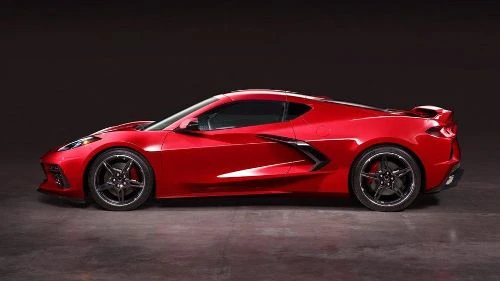
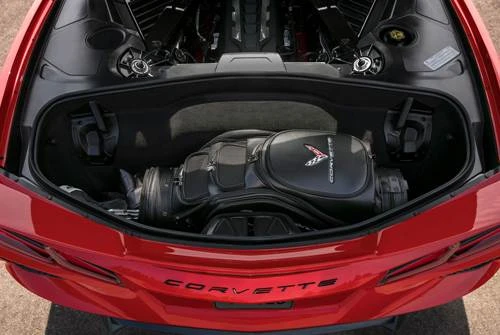 Outside is different yet familiar. A choice of 12 colours will be available to coat the redesigned body. That body leaves little doubt where some of the inspiration has come from. Massive air intakes on the flanks, a 3.2mm glass pane to showcase the engine, a sharper and more angular nose cone with strakes underneath the headlights. Oh, and don’t forget the removeable roof sections. There’s also room in the rear behind the engine and up front in what is called a “frunk” or front trunk, for some bags. The relocated engine pushes the seats and cabin forward, leading to a lower roofline that tapers off at a more slender angle.
 Level 2, 9 Help Street