

Women and Their New Car

According to recent Forbes research, 62% of new car buyers in America are women. They also suggest that 85% of new car buys are influenced by women. Australia can’t be too far behind these stats, either. But when it comes to spending habits, men and women are still vastly different, with very different priorities for their money. Research shows that men are more likely to splash out and buy big, whereas women focus more on lifestyle which also means being comfortable with spending money on a new car without the guilt. These spending habits and goal orientations do also align with what sort of cars women and men generally buy.
Bugatti's Chiron Goes Lower For Higher.
When automotive speed records are talked about, engine power and a slippery, aerodynamically shaped, body are the first thoughts. Weight, too, is a thought. Then there is the type of vehicle and it’s fair to think of jet or rocket powered cars. Australia’s Rosco McGlashan, for example, is finalising his Aussie Invader 5 rocket car for a tilt at the outright speed record. But what about location?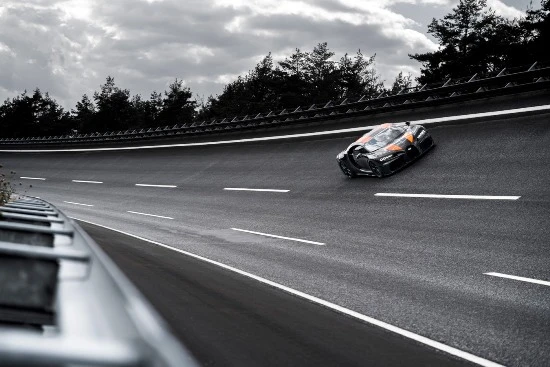
Bugatti recently faced that question head on when it came to attempting and creating a supercar speed record of 304.773 miles per hour or 490.484 kilometres per hour. Although the Chiron based car, driven by British born Bugatti chief test driver Andy Wallace, had been lengthened in the body by chassis maker Dallara for a better airflow, had a modified exhaust for the otherwise standard quad-turbo 1,600hp W16 engine, and had been lowered in height, Bugatti had looked into a couple of locations for the attempt. As it turns out, there’s some “Big Bang Theory” style physics involved.
2019 Lexus LS 500h: Car Review.
This Car Review Is About: The Luxury Sedan in the luxury arm of the Toyota family called Lexus. Named the LS 500h, with the h standing for hybrid, it’s a long, long, car that’s packed full of tech, niceties, and a couple of quirks.
What Does It Cost?: $196,125. That’s before options, government charges, and delivery charges at the dealership level. It’s a fair bit of coin and places the LS 500h firmly in the same area as the Audi A8 and entry level BMW 7 Series. However, the Lexus website indicates a driveaway price of not much more than $203,500 for the LS 500h in Luxury trim. Add in the Sports Luxury package and that’s up to $209,400. From here there are enhancement packs that include items such as handcut Kiriko glass and hand-pleated black leather.
 Under The Bonnet Is: A ten ratio, super slick, automatic that is bolted to a battery pack and 3.5L V6. Peak power is quoted as 264kW. The non-hybrid version has 310kW and 600Nm from a twin turbo V6. Economy is quoted as 6.6L/100km. Emissions are 150g/km. We reached an average of 9.7?100km on a 70/30 suburban/highway cycle.
 On the Outside It’s: Dominated by that air intake that’s made of 5,000 individual pieces. Lexus handcraft the spindle grille and in their own words: “The design process behind the grille would be considered extravagant if the result were anything less than visionary.” Indeed. The 5,235mm length starts with that, and that huge grille sees full LED illumination either side, both in headlights and the separate driving/indicator lights.
 At just 1,450mm in total height, the LS looks longer than that length measurement suggests. Such are the proportions that the driver is placed at the halfway point of the car. Subtle lines highlight the gentle upswing of the rear window line before a surprisingly small bootspace of 440L finishes with LED tail lights. Both front and rear indicators follow the Audi-eque style of flashing longitudinally in sequence, rather than all at once. Rubber is Bridgestone’s Turanza and at 245/45 front and rear on 20 inch diameter chromed alloys, it makes for an impressive footprint.
 On The Inside It’s: An impressive place. There are: Heated and vented front seats with three memory positions. Heated and massage capable rear seats. Blu-ray player and screens for the rear seats. 23 speakers of DAB quality sound from Mark Levinson. 12 airbags. Quad zone airconditioning. A passenger side section of the dash that lights up internally. Mood lighting. Rear and side window sunshades, which sees the rear lower on engaging Reverse… And that damnable touch interface on the centre console. It’s time to bench it and go for something ergonomically and user friendly. There’s also no wireless charge pad…The centre console houses some operating buttons and one is for the height adjustable air suspension.
 Back to that touchpad. Even allowing for touch and sensitivity setting changes, it’s not intuitive in usage. The cursor on the 12.3 inch display screen never seems to correctly line up with the icon being sought, some options are a swipe as opposed to a click like a mouse, and the menu system itself doesn’t always make for user friendly interpretation.
 The seating position for each pew is simply operated. The driver’s seat moves when power is switched off to provide lift and space for easier exit from the car. The rear seats have multiple modes for top of back, lumbar, and lower back massaging. It makes for interesting passage for the rear seat passengers, especially those that are in late primary and early high school. Because there is a screen each, their comfort level is higher than a single roof mounted screen. However, their centre fold out console which has a touchscreen for aircon and audio, allows the rear seat passengers to control audio for the front seats too…a separate audio source for headphone wearers would be more suitable.
 For the driver there is a classy looking binnacle and dash. Leather material surrounds the area and is stitched. The screen is full colour and changes in look depending on which drive mode is selected via the toggle dial on top left. Normal mechanical analogue gauges on either side show fuel and temperature. There is a HUD as well. This shows a broad variety of info but the display is limited to being adjustable for brightness and height only.
 Design wise, the dash showcases and mirrors the grille. Sine wave lines stretch from side to side, and in front of the passenger is a translucent panel that is lit internally to match the lines. The stitching in the seats in the test car also matches the stitching and dash, making for a cohesive appearance. What’s also cohesive is the feel of the centre console storage lid. Buttons on either side allow the lid to be opened in either direction. It’s a small yet eminently usable feature.
 Out On The Road It’s: A mix of power, grace, sportiness, and hmmm. It will launch, and hard, from a standing start. It will handle back country roads, of rutted surfaces and sweeping corners, as easily as it does smooth highways and suburban roads. It can be driven with verve and a nod towards sports as equally well as it can be driven gently and politely. The hmm is the reaction time from the air suspension.
Hyundai Has A New Venue.
Hyundai’s bold new Venue SUV marks a fresh entry point to the Hyundai range. It’s available very soon and will have a starting price from $19,990 (Manufacturer’s list price). Venue will become the Hyundai SUV entry point to a broad small car range, offering the road presence and interior space of an SUV, combined with the parking ease, economy, and manoeuvrability of a light car.
A three-grade line-up provides a new Venue to suit every customer, each with a flexible and economical 90kW, 151Nm 1.6-litre engine, front-wheel drive, and a choice of six-speed manual or six-speed automatic transmissions depending on the model grade. A two-stage variable intake system is fitted and designed to maximise low-end torque and drivability. The three grades are: Go, Active, and Elite.
 Level 2, 9 Help Street