

Buy A New Car
Private Fleet Car Review: 2018 Holden Equinox LT Diesel.
This review is a little different in that the difference between the Holden Equinox LT petrol we’ve reviewed and the Holden Equinox LT diesel is….the engine. And gearbox. Apart from that, there literally is nothing different about the car inside or out. Same interior trim, same annoying Stop/Start tech that canNOT be switched off manually, same reasonably attractive exterior. The link to that review is here: 2018 Holden Equinox LS Plus and LT petrol
What the diesel offers is a 1.6L capacity engine, with a six speed auto transmission only. The current RRP is $39,990 and that’s a three thousand dollar difference over the equivalent petrol version. Standard warranty is five years but Holden were offering a seven year package.
Peak power is 100kW, with peak torque being a very good (for the size of the engine) 320Nm. That’s a narrow maxium torque range, from 2000 to just 2250 rpm. Fuel consumption for the 1.6L in LT trim is a thrifty 5.6L/100 kilometres on the combined cycle. Go to the heavier LTZ & LTZ-V and that goes to 5.7L/100km or 5.9L/100 km. The six speed auto is also a standard auto, in that it’s a torque converter style, not a dual clutch or CVT. It’s an interesting drive setup; the traction control appears to have been formulated to allow some front wheel drive slip. Give the go pedal a good prod from stand still and there’s a noticeable scrabbling for grip for a second or two before the tyres hook up. Actual forward motion is deceptively quick. There’s a mild thrum from the front, which indicates there’s plenty of noise insulation and there is. There’s sheets fitted to the wheel arch and firewall, plus there’s a form of active noise cancellation too. The transmission selector is the same mechanism as found on the nine speed, with a rocker + and – switch for manual shifting. Like most well sorted electronic autos, there’s little to be gained in normal driving conditions by using the manual change. From a standing start and a low throttle application, the six speeder rarely disappointed. The diesel itself is throttle responsive, with a free spinning nature up to around 4000 rpm. Our real world drive, covering both urban and highway, saw a final fuel consumption figure of 6.1L/100 with a 75/25 urban leaning driving style.
Expect that figure to increase if you fit a towbar and utilise its 1500kg (braked) towing capacity. Bear in mind it’s a small diesel, not the bigger 2.0L or 2.2L (or even bigger) as seen in larger SUVs or utes. Other reviews seem to point out the relative lack of oomph from this engine but they’ve matched the 1.6L in the Equinox against 2.2L engines as found elsewhere. A fairer comparison would be against Suzuki’s excellent Vitara diesel. Although smallish, there’s still plenty of get up and go for when it’s needed. Roll off slowly and there’s quiet, unobtrusive changes and barely a hint of that traditional diesel rattle. Push a little harder and the changes are crisper, with the engine making itself known audibly but still quietly as mentioned. It’s really only when a heavy right foot is employed that the diesel really gets noisy and the six speeds seem to be lacking a cog or two or three.
Holden’s electronic engineers haven’t built in a feature to turn the Stop/Start mechanism off. The theory behind the feature is that it’s a fuel and emissions saver for when stopped at stop signs or red lights. the downside is that sometimes the car’s barely stopped before forward progress can be restarted. It can catch the car (and driver) unawares and sees the Equinox lurching forward, rather than moving smoothly. A little trick is that if the foot is lifted slightly off the brake pedal, it’ll re-engage the engine and still stop the car moving forward.
Ridewise it’s the same well sorted and compliant Australian tuned for Australian conditions ride as found in the petrol models. If there’s really anything that Holden should consider with the Equinox diesel, it’d be to evaluate having the nine speed fitted and calibrated to suit the specific torque delivery of the smaller oiler.
Another factor to consider is the forthcoming release of the Acadia, a larger SUV and a seven seater at that, helping Holden to re-target customers in the SUV market.
Contact Holden for more details on both and contact Private Fleet to see what we can do on a deal.
A Lotto Win Away: Aston Martin DBS Superleggera.
Iconic British car maker Aston Martin has unveiled their hotly anticipated Ferrari 812 competitor. It’s called the Aston Martin DBS Superleggera. Priced at US$305,995 it packs a supercharged 5.2 litre V12, punching out 533kW and a tree-stump pulling 900 Nm of torque across a mesa flat rev range of 1800 to 5000 rpm. Based on the DB11 AMR, that’s 63kW and 200Nm more than the donor block.
The car has a dry weight of 1693 kilograms and rolls on gorgeous black paint alloys at 21 inches of diameter. Pirelli P-Zero tires are the chosen rubber. The drivetrain has been uprated and provides a 0-100kph time of 3.4 seconds and will see the ton three seconds later.
Aston Martin has delved into the books of history with the name. DBS hasn’t been used since 2012 and Superleggera, Italian for “light weight”, goes back to the 1960s. To that end, Aston Martin have eradicated 121 kilograms of mass. It also, until 2012, sidelines the evocative Vanquish nameplate.
One of the design briefs was to visually spread the gap between AM’s model range. To that end, the DBS Superleggera has a more assertive grille and angrier looking headlights complete with angular LED driving lights. The grille is in a nosecone designed to increase down-force before combining with an extensively modified floorpan and rear diffuser to add up to a total of 180 kilos of down-force. Drag wasn’t sacrificed, with the same drag coefficient as the lesser down-force endowed DB11. There’s just 70kg here.
The profile is low, sensual, and definably Aston Martin is some elements. What’s new are the airvents leading from behind the trailing edge of the front wheels and edging back into the leading edge of the doors. The bootlid no longer displays the iconic Aston Martin emblem, it now proudly says the company name and sits between super slimline LED tail lights. This sits above a retuned exhaust, said to offer an extra ten decibels of what chief engineer Matt Becker says is “quality noise”.
There’ll be plenty of that on demand, with the traction control system being reprogrammed to cope with the extra torque and its delivery to the tarmac. Becker says of the reprogramming: “If you slide the car and you know how to drive, it gives you all of the information you’ll need about when to put your foot on or lift from the throttle.”
Aston Martin is targeting both its own existing Vanquish customers, but more specifically owners of the Prancing Horse. This car is part of Aston Martin’s “Second Century” plan, where a new model per year for seven years is released. This includes a convertible version of the DBS Superleggera due for 2019. Aston Martin expects to start deliveries before Christmas of 2018.
Aston Martin Rapide AMR
Aston Martin is perhaps best known for a glittering range of two door hard top and convertible cars. Under the radar is the four door contribution to the super saloon family. The Rapide is a subtle four door design and has recently been upgraded to AMR (Aston Martin Racing) specifications. Powered by a naturally aspirated V12 with 433kW and 630Nm and transmitting that to the tarmac via an eight speed auto, the AMR will come with three trim levels. Standard, Silhouette, and Signature will roll on 21 inch diameter wheels clad in Michelin Super Sport rubber, a first for the iconic brand. Tyre sizes are 245/35 up front and 295/ at the rear.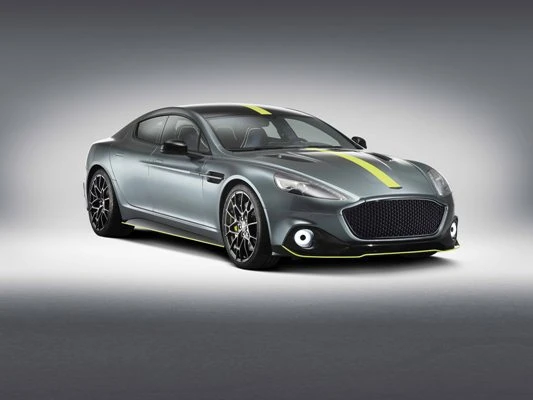
The five metre long Rapide AMR asserts itself with a large grille that evokes the track weapon Vantage AMR-Pro. Subtle aero hints come courtesy of the carbon fibre tail spoiler, front splitter, sill panels, and rear diffuser. Weight reduction is also further enhanced by fitting a carbon fibre bonnet, complete with engine bay exhaust vents.
The engine has been massaged by fitting larger inlet manifolds that pack tuned length intake runners, with the kilowatts breathing out via a new quad exhaust system. Stopping efficiency is enhanced by modified brake ducts, dust shields, and utilise the spoked design of the 21 inch alloys to funnel cooling air onto the 400mm six piston carbon ceramic front brakes. These are backed up by 360mm four piston rears.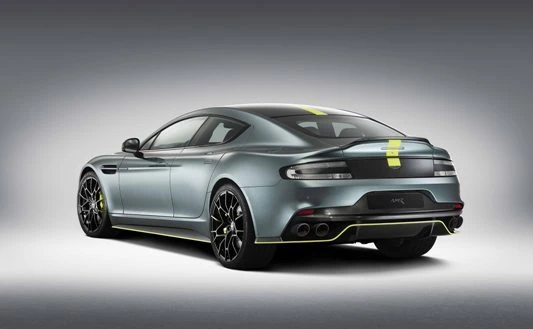
Being based on a racing design, the AMR Rapide sits 10mm lower courtesy of reworked suspension components. Aston Martin have gone over the front and rear double wishbones, fitted with stage three adaptive dampers, with plenty of Nurburgring evaluative work. To make sure the AMR looks the goods there’s a choice of four colours for the Standard and Silhouette. Mariana Blue, Scintilla Silver, Lightning Silver, and Onyx Black are complemented by AMR Lime Green highlights on the Standard’s sills, splitter, and diffuser, with the other gaining a China Grey or Clubsport White stripe.
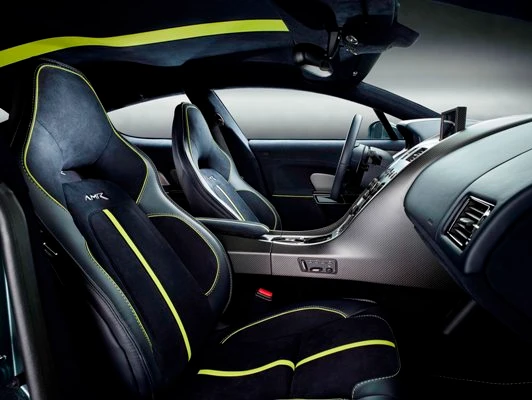
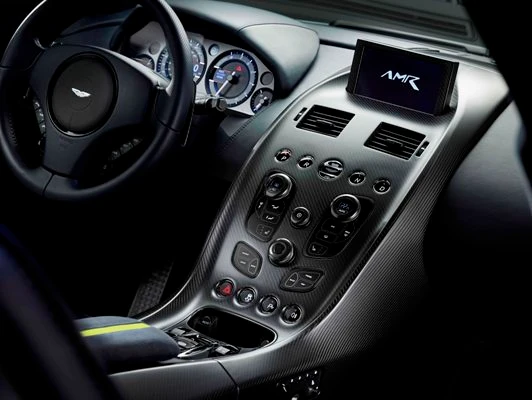
The Signature goes one step closer to a racing look with Stirling Green paint, Lime accents and stripe, backed by a combination of AMR Lime or Galena Silver stitching for all three versions. Driver, front passenger, and each rear seat passenger are cossetted in Alcantara seats which will have discrete AMR logos in Galena Silver stitched in, and there’s extra glamour with a full length carbon fibre centre console. Apart from visiting Aston Martin’s bespoke “Q Store” a buyer can specify the optional One-77 steering wheel as well. Digital radio, Apple CarPlay, and Android Auto will be standard, as will 700 watts of audio power.
Deliveries are scheduled to start from October 2018 worldwide. Contact Aston Martin Australia for details including pricing.
Tips When Buying a New Car
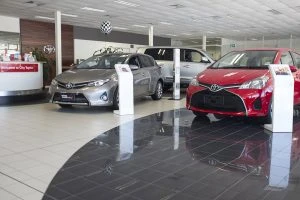
When it comes to buying a new car it can potentially be one of the top financial decisions you will ever have to make. For some, hunting for a new car can be a daunting prospect, but for others the process is fun. Here are some tips for you to consider when you are on the hunt for a brand new car.
Size
Firstly you will need to think about what exactly you will be using your car for. Are you going to be carrying passengers or travelling alone? What about the luggage – will you carry lots of items and therefore require a large boot space? If you’re going to be mostly travelling around the city then a small car like a VW Polo will be a great little car for you. A Corolla will happily accommodate four people and some luggage. You might consider a an SUV-type vehicle like a Volvo XC60 or an MPV like the Honda Odyssey if you want to carry elderly people about as there is plenty of space to climb in-and-out of the car. If you will be touring with the family, then a large estate like the Holden Commodore Tourer is superbly comfortable and spacious over the long open-road haul.
Number of Doors
SUVs, hatchbacks and station wagons with four doors and a big opening tailgate are all classed as having five-doors because the rear gate is a massive door that opens wide to access the boot space. There are three-door hatchbacks with two doors to access the seats and one big door at the rear to access the luggage space. Then there is the saloon car like a Honda Accord which has a smaller boot opening at the rear and four doors for access to the seating area – so it’s known as a four-door. A two-door car like a Mazda MX-5 has two doors to access the seats and a smaller boot opening at the rear. I’m sure once you’ve checked out a few cars with hands-on experience then you’ll form a good picture of the style of car you’ll want to buy.
Space
You’re going to need to consider the amount of space that passengers are going to either enjoy or hate. The freedom of occupant space and the number of doors – or lack thereof – will affect the enjoyment levels of the occupants while travelling. Even some three-door cars like the Renault Megane can accommodate passengers quite happily in the rear seats, however getting in and out of the back seats does require having to move the front seats forward in order for the rear seat occupant to get out of the car. And if you’re sitting nice and snug in the front seat when the rear seat passenger needs to get out for a leak, then I’m sorry but you’ll firstly need to get out of your front seat for them to be able to get out of their rear seat space. Not much fun! Accessibility into the seats of a five-door or four-door car is easy. Some SUVs like a Holden Trailblazer and MPVs like a Citroen C4 Picasso have three rows of seats and can carry seven occupants with ease. Those sitting in the third row will usually require a second row seat to be folded for them to get out – but the access and occupant space is usually quite good in one of these types of vehicles.
Luggage Capacity
Most cars have their luggage space at the rear of the vehicle and this area is known as the boot. Boot space, volume or capacity is given in the car’s specifications and is usually given in litres for us “down under”. If you talk American then then boot space will be given in cubic feet – just to be annoying! If you’re going to be carrying occupants and luggage regularly then it would be wise that you check out how much boot space your potential new car can offer. Most hatchbacks, SUVs, MPVs and station wagons have rear seats that can be folded down to provide more luggage space when required. Generally, the bigger the car – the bigger the boot space.
Fuel efficiency
It’s worth considering how economical a new car will be before handing over the cash. If you’re on a budget, then definitely check out the fuel efficiency of the particular vehicle you’re interested in. Most vehicles under 2.0-litre engine capacity will be quite economical with all of the latest engine technology like stop/start and more gears being standard on most new cars. Turbo diesels – particularly small ones – can be quite efficient, but do remember that fuel taxes are heavier for diesel vehicles. Hybrids like the Honda Insight are very efficient around town when they usually require most of the travel to be done by the electric motor. They get thirstier when performing open road driving because the car will require its petrol or diesel engine over the electric motor. There are purely electric vehicles which you can buy like the Nissan LEAF, but these are suited for city environments.
Warranty
All new cars come with a warranty. Most manufacturers offer a three year warranty and some offer five years like Mitsubishi, Hyundai and Toyota. Kia vehicles offer seven year warranties. Having a good warranty on the car you’re going to buy is ‘peace of mind’, really.
Outgoing models
When a manufacturer is about to release a brand new model, the outgoing model is often offered at a great price. So do keep this in mind when buying new. If having the very latest isn’t such a big deal, then buying an outgoing model is a great way of knocking a few thousand off the purchase price.
 Level 2, 9 Help Street