

Author archive
Yes, Virginia (Fanpetals), There Is A New Biofuel Feedstock On The Block

Sida hermaphrodita or Virginia Fanpetals: a new player in the biofuel game.
When it comes to biofuels, especially the sort of biofuel that gets used for ethanol, there’s always a bit of an issue. You see, it kind of defeats the purpose of having a sustainable fuel source if you have to pour on truckloads of fertiliser (a lot of which can come from petrochemicals as well) and tons of water. It’s also rather frowned on if the crop in question takes away land from something that could be used for growing crops that people are going to eat directly (as vegetables, flour, cooking oil, sugar, etc.) or indirectly (after a fodder crop has been fed to animals that produce milk, meat or eggs).
Now, we’re not doing too badly over here in Australia on the biofuel ethanol front, as we’ve got the sugarcane industry. Using residues from other crops is a tried and true means of sourcing ethanol feedstocks, with sugarcane residues being particularly good at it. In fact, Brazil, which has a bigger sugarcane industry than we do, is a tad further ahead when it comes to using ethanol for everyday driving. Other sources include residues from wood processing and residues from the alcohol industry (they’re doing this in the UK). Apparently, the trick is to find the right methods and the right bacteria, etc. that will break your feedstocks down so it can be turned into ethanol.
However, the search is on around the world for novel feedstock crops for biofuels of all types (this includes the crops that can produce oils for turning into biodiesel as well as the ones that have suitable stems or whatever for turning into ethanol). The ideal crop is something that grows easily with minimal input needed in the form of fertiliser and pesticides, doesn’t need people poking around with tractors much except during harvest, doesn’t demand water like a camel that’s been for a week in the desert and produces the three Fs: Food (for humans), Fodder (for animals) and Fuel.
One of the new players on the biofuel crop front is a plant that looks a bit like a common weed known as Virginia fanpetals, Virginia Mallow or Sida (its Latin name is Sida hermaphrodita). This is a native of the US but for some reason, it’s getting a fair amount of interest from a team in Eastern Europe because it doesn’t demand the same amount of water as elephant grass (Miscanthus), which is another easy-growing biofuel feedstock. What’s more, they’ve found that it’s a triple-F plant if you want to get technical. The plant has lots of flowers that are very attractive to honeybees, so the Food part of the equation comes in the form of the honey produced that way. The leaves, when they’re green, are pretty nutritious for animals. And when the plant is dry, the whole lot, stems and leaves, are great for biofuel (and they also burn cleanly in incinerators, making them an alternative to coal for generating electricity).
Sida is also tough as old boots, as it grows very happily on sandy soils and can handle drought and frost perfectly well. It also has a feature that would make it a right pain if it established itself in your garden: if you cut it back to ground level, it comes back again next spring and will do so for 15–20 years. This is what’s getting those researchers rubbing their hands with glee: no ploughing, harrowing or sowing. Just a bit of fertiliser a couple of times a year and you get a crop year after year. And it grows on the sort of ground and in the sort of conditions that are useless for, say, potatoes, wheat and carrots. In other words, it looks like it could be a bit of a winner. Can we grow it over here and make even more of our own biofuel?
However, finding out about this got me thinking. Now, we all know that we’ve got unique plant life knocking around in the Outback that’s used to really harsh conditions. Are they any good for biofuels? Is there something sitting out there that could be the next big thing? I really, really hope that there’s a nice CSIRO research team poking around to see if there are any native plants that could do the trick.
Closer to home, however, I also can’t help but notice all the weeds in the garden and the way that the lawn is starting to grow like crazy in the springtime. And let’s take a look in our rubbish bins at all the banana skins and apple cores. Couldn’t this be used as a bioethanol feedstock as well? Once you start looking around and getting this sort of mindset, all sorts of possibilities open up (especially when you’re on a long drive). Maybe we’d clear up some of the rubbish problem while we’re at it…
Bioethanol isn’t the only way forward, of course. It’s one of three possible lanes on the sustainable motoring highway, with the other two being electricity and biodiesel. And we shouldn’t forget the biofuels while we get all excited – rightly – about the new electric vehicles. After all, classic car drivers, tradies, tractor drivers, truckies and the owners of hybrids all need something to put in the fuel tank!
Electric Vehicles: What Will Happen With The Fuel Taxes?
 I think we all know by now that electric cars and hybrids are much more common on the roads than they used to be. It’s 20 years since the original Toyota Prius – the groundbreaking first hybrid vehicle – hit the roads, which means that if you’ve got your eyes open, you can score a second-hand hybrid. They’re getting better and better with extended range and more body types coming with hybrid and even all-electric versions.
One of the reasons put forward for why you should switch to an electric or hybrid vehicle – and you hear this one more often with pure electrics – is that electricity is cheaper than petrol or diesel, so it’s cheaper to fill up. You’re not paying all that tax.
Ah yes – the tax. Can anyone else spot the potential problem here? What will happen if a large proportion of us switched to purely electric vehicles? This means that one particular source of government income is going to drop dramatically. Can we see the government smiling happily about this and how we’re polluting so much less, etc. and just carrying on without the tax coming from fuel? Maybe they could take a cut in their salaries or spend less on frivolous projects and fancy-pants conferences. Ooh look – a flying pig. Better get out your manure-proof umbrella.
OK, if we take a less cynical view and make the charitable assumption that the fuel taxes get used to keep the roads in good order. If we don’t want our roads to deteriorate if loads of people switch to electric vehicles, that money has got to come from somewhere. But where? What are the options?
The first option would be to hike up the fuel tax to cover the shortfall. There are two problems with this one. The first is that even though there are some second-hand hybrids knocking about and even though we do our best here at Private Fleet to get you the best deals on a new car, pure electric vehicles still tend to be at the newer end of the spectrum and are beyond the budget of a low-income family (especially if said family needs a larger vehicle than the little hatchbacks that early examples of hybrids tended to be). This leads to a vicious cycle: they can’t afford to upgrade to an electric with the higher petrol prices, which means they have to keep on using the expensive fuel, etc. or switch to using public transport if they live in towns.
The other people who will get hit hard by this hypothetical hike in fuel taxes are those in rural communities. Although range of electrics is getting better, it’s not quite where it needs to be for those out the back of beyond: the park rangers, the tour guides in the Outback and the district nurses and midwives. Going electric isn’t really an option for them – and the sort of vehicles needed by your park rangers and tour guides (i.e. big 4 x4s) don’t usually come in electric (although that’s starting to change). What’s more, the big rigs and farm tractors don’t come in electric versions either (electric tractors exist but they’re puny), so they’ll keep on needing diesel. This means that their costs will go up with a hypothetical fuel tax hike, which probably means that farmers and trucking companies will go out of business or else they’ll pass the costs along and we’ll all have higher food prices. It’s like the old army wisdom about not pissing off the person who cooks: you don’t ever brush off the farming community as unimportant, because they are the ones who produce your food and most of us like to eat.
OK, so the knock-on consequences to rural communities and a lot of Australia’s industries would throw our economy into chaos (just think of all the diesel-powered machines involved in the mining industry, for example – although there are some rugged electric utes that have been specifically designed for the mining industry). The Powers That Be hopefully aren’t that stupid and they are more likely to find a fairer way of getting the tax money than simply increasing the existing tax. What’s much more likely is that they’ll create a new tax. Any guesses as to what that new tax is likely to be? It doesn’t take a genius to figure out that if people are using electricity instead of using petrol and diesel and thus avoiding the fuel tax, the obvious thing to slap a tax on is the electricity…
You read it here first, folks. Although at the moment, using electric vehicles will save you at the plug (rather than the pump), it’s only going to be a matter of time until a tax appears, especially as electric vehicles become more common. Yes, there are other advantages to using electric vehicles such as the reduced pollution and how they don’t depend on a finite resource (biofuels aside), but the advantage of not paying a fuel tax won’t last forever.
Enjoy it while you can!
How Not To Use Your Phone In Your Car
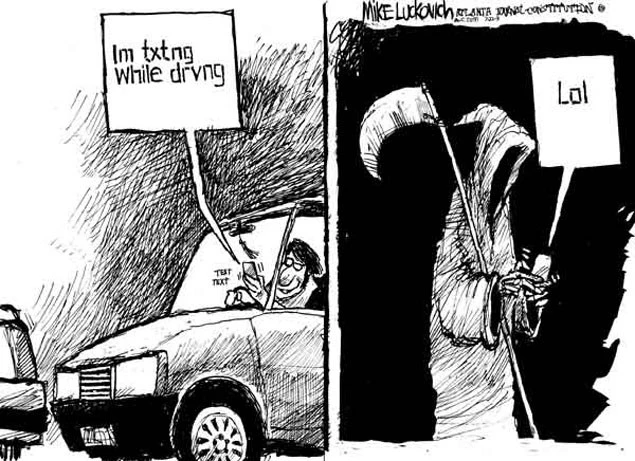 Don’t stop reading and decide that this post isn’t relevant to you because you’re not one of those social media-obsessed millennials. The fact is that it’s not just teens and twenty-year-olds that get distracted by that beeping phone when they ought to be concentrating on their driving. The problem seems to be common to all age groups. In the US (and possibly also here in Australia), it’s busy middle-aged people who are the most likely to be busted using their phones illegally while driving.
You’re going to have to break yourself of that habit of just taking a quick look at your phone to see what it’s notifying you about. You know that it’s not safe and you know that the potential consequences go way beyond just getting busted and slapped with a fine. To help you kick the habit, here’s a few things you could try to help you get out of the habit of checking texts, posts and calls while you’re driving.
(1) Analyse your excuses. Ask yourself why you feel that (a) you need to take a look at your phone right now and (b) why the law (yes, the law) about not looking at your phone when you’re driving applies to you. Perhaps some of these sound familiar…
- It could be important/urgent.
- I’m a good/experienced driver and I know what I’m doing, not like those teenagers who are always on their phones.
- The road’s not that busy right now.
- I could miss out on bagging that new client/job/contract.
- I’m only taking a quick look to see who it’s from.
- I was at a red light so it’s OK.
- I was just looking at the time.
- I’m just looking at a photo.
- I’m just taking a photo.
- I’m perfectly capable of multitasking.
- I’m trying to identify the song on the radio with the Shazam app.
- I can text without looking at the keys/screen.
The cops have heard them all before…
Honestly, there isn’t a text, post or call that isn’t so urgent that it can’t wait 10 seconds while you find a place to pull over safely. Yes, even that call that you need to make to secure that business deal – and if you were in the middle of a conversation that important, you shouldn’t have got behind the wheel in the first place. The same goes for the text or call to the family or the boss to say that you’re running late – a few seconds later won’t make that much difference to them or you, but an accident while driving distracted will make a huge difference.
(2) Go cold turkey. As part of your pre-driving routine (closing the door, adjusting your seat if needed, putting on your seatbelt, starting the engine), either switch your phone off or put it in the back seat on the passenger side where you can’t reach it. Then you’ll either not know that you’re being notified or you’ll hear the beep but not be able to do anything about it until you can stop and reach the phone. In the case of being able to hear the notification, you will probably find that the urge to respond instantly will pass after a few seconds, or at least a few minutes.
(3) Get an app. There are quite a few apps on the market that will autorespond for you if someone tries texting or calling while you’re driving. OK, you have to activate the app but this can easily become part of your pre-driving routine. These apps might be marketed at teens and the parents of teens, but they work for everybody, just like the laws of the land and the laws of physics.
(4) Mute it. If you can’t hear the notification, you won’t be tempted to respond when you shouldn’t. So mute your phone and don’t even have it on vibrate.
(5) Go offline. An awful lot of beeps and pings your phone makes are notifications from social media and emails. The trouble with quite a few phones (at least it’s the case with mine) is that the notification for a text is the same as a notification for an email or an update. Avoid quite a lot of temptations by going offline.
(6) Send a text before you drive. Most of the texts and calls you receive are likely to be from your most important five contacts (probably family members, best friends and immediate work contacts). Send them a group text telling them that you’re about to start driving (and maybe about how long you’ll be on the road) and they probably won’t send you anything for that period. Again, this will dramatically cut down on the notifications tempting you.
(7) Enlist a passenger. It’s kind of like the years B.C. (Before Cellphones) when the person in the front passenger seat had the job of reading the map for the driver. In this case, the front passenger becomes the official communications officer who will check the phone for you and tell you who it’s from, then (if necessary) opening the message and reading it out, and maybe typing out the reply you dictate. Checking the identity of the sender before opening the message is a smart move if you and your significant other are in the habit of sending each other raunchy texts so your 10-year-old or your co-worker doesn’t suddenly end up being on the receiving end of way too much information.
Come on now – no more excuses! Which of these steps are you going to try?
How Long Does It Take To Charge An EV?
 I guess we’ve all noticed by now that EVs (either hybrids or full-time electric vehicles) are getting common on the roads. Maybe you’re considering getting one for your next car. Charging stations for EVs are popping up left, right and centre. This is because the battery in an EV, just like the battery in any other device powered by electricity, needs to be recharged. It’s kind of like charging your phone or your laptop.
Most, if not all, of us have had some experience with charging up things with batteries and know that it can take some time. This raises a rather important question about EVs: how long does it take to charge one? We’ve mostly become familiar with how to fuel up an internal combustion engine (ICE) car: you pull up to the bowser, you open the fuel cap, you fill up with the liquid fuel of your choice, then you nip in and pay for it, possibly picking up a packet of peanuts or a coffee while you’re at it. It doesn’t take too long – maybe 10 mins max, depending on how long the queue at the checkout is, how big your fuel tank is and how empty it was when you started. But what about an EV? There’s nothing physical going into the tank and we all know that it can take a while for a battery to recharge (I usually give my rechargeable AA batteries about 4 hours, the laptop takes 2 hours and the amount of time for the phone varies depending on who else needs the charger and whether I need the phone!).
The good news is that on average, it takes 20–30 mins to get to 80% when charging an EV, especially if you’re using one of the public charge points around town. This means that most of us might have to plan a charging session into our days – during lunchtime, maybe, or while picking up groceries.
There’s a certain strategy to ensuring that your EV has the charge it needs to keep ticking on around town. I’m assuming here that you are based in the city and do most of your driving in the city. If you’re in a rural area and do a lot of open road running, things will be a bit different and given the range of what’s currently on the EV market, you might either consider sticking with an ICE vehicle or at least a hybrid, or you’ll have to try another strategy. Anyway, for the typical suburban driver, the best strategy is to use the public charging points around town for top-up charging, and you do the full charge to 100% overnight at home if possible.
The reason why it might not be best to try charging your EV to 100% charge at one of the public points is because charging an EV isn’t like filling up a petrol or diesel vehicle. With the ICE, you pump in the fuel at a steady constant rate and if you graphed it, it would make a straight line – as long as your grip on the pump is nice and steady. However, the graph for charging time is more like one of those curved lines related to quadratic equations – you know, the ones we all struggled through at high school and couldn’t see the point of. Charging starts with a hiss and a roar and you can get to 80% charge pretty quickly. It’s the final 20% needed to get to full charge that seems to take forever. It’s more like pumping iron at the gym than pumping gas – you do the first round of sets and reps quickly, but those last few when you’re getting tired tend to be a bit slower. This is why charging to 100% is best left for overnight charging sessions at home.
The good news about overnight charging is that night rates for electricity are often lower than daytime rates. This is because all the commercial users of electricity – factories, shops, heavy industry – don’t put as much demand on the power grid outside working hours, so there is plenty of power for everybody else. Whether this will remain the case when EVs are adopted more widely is uncertain – let’s hope that lower overnight rates remain a thing.
Of course, the exact time of charging will depend on the individual EV and it also depends on the type of charger that you’re connecting your car up to. Chargers come in three types: Level 1, Level 2 and Level 3. Levels 1 and 2 use AC current but Level 3 uses DC current. Level 3 DC chargers generally are only compatible with Tesla models, which is ironic, given that Nikola Tesla specialised in AC current. Level 1 chargers just plug into a typical 10-V socket and are best kept for emergency top-ups, as they charge pretty slowly. What you will generally come across both at home (if you install one) or around town are Level 2 chargers. Level 2 chargers have a charging rate of 15–100 km/hr, meaning that in one hour they give your vehicle enough charge to take it 15–100 km. The low-power Level 2s installed at home tend to be towards the 15 km/hr end and the public ones are at the other end.
The different levels are not the same as the plug types, which are known as (predictably) Types. There are four types: Type 1 (J1772), Type 2 (Mennekes), Type 3 (Scame) and Type 4 (CHAdeMO). Tesla, being a posh marque, has its very own type of charging plug, rather like Apple, although it’s based on the Type 2 Mennekes. Type 3 is also pretty rare in Australia. There’s also a combo plug (known as a Combined Charge System or CCS) that combines either the Type 1 or Type 2 (it varies depending on the marque) with a pair of DC connectors. Charging stations generally have CHAdeMO and CCS to make thing simpler. The different plug types are quite a lot to wrap your head, so I might have to explain all this in another post.
Anyway, in a nutshell, here’s the basics you need to know:
- The average time needed to charge to 80% is half an hour although this depends on the level of charger.
- Charge time isn’t linear – the first 80% is fairly quick but the final 20% is slower.
- Full charging to 100% is best done at home overnight.
- Around-town chargers are best kept for topping up to 80%
- Slower chargers (Level 1 and Level 2) use AC current but the fast ones use DC.
- Nikola Tesla, who was the pioneer of AC electricity, would be spitting mad that the cars with his name use DC current. Just as well he never got around to inventing that death ray…
 Level 2, 9 Help Street