

Author archive
Has Steam Gone Walkabout?

What about a steam powered car? In recent times people’s consciences and attention has turned to more environmentally friendly ways of commuting. So with electric, hydrogen, hybrid and bio-fuel vehicles all available on the current automotive market, why not give steam another go?
Perhaps the biggest hurdle for a steam powered comeback is the grip that the oil companies have on automotive power. However the winds seem to be changing, with more-and-more people reflecting on how their lifestyle and decisions impact on the environment. Internal combustion engines produce a lot of pollution and tend to be rather noisy. Without a doubt cleaner burning engines are resonating with buyers who have cash to spend. EVs and hybrids are expensive but there are people very happy to buy them.
Difficulties that drove steam powered cars to become museum pieces were:
- The external combustion steam engines could not be manufactured as cheaply as Henry Ford’s internal combustion engines.
- Steam engines were also much heavier engines.
- It took several minutes before the boiler was hot enough for the steam motor to generate power for take-off.
These difficulties created the “Warehouse and Kmart” phenomenon of today, where people flock to where the cheap buys are regardless of the impact. But with today’s modern materials, steam cars could be as light as their internal combustion engine alternatives. With a new advanced condenser and a fast heating boiler, the possibility of a modern-day steam car with decent efficiency and a warm-up time that’s measured in seconds rather than minutes could provide the comeback punch that steam needs to become an attractive and viable option for new-car buyers.
Just ponder on this for a moment – a new modern motorcar running on steam that has powerful seamless acceleration instantly, is clean burning, very quiet and, unlike combustion engines, can run on almost any fuel that produces heat.
Steam engines don’t need any gears or transmissions. They are much more in the same vein as EV cars that have all their torque available at any rpm. Due to the fact that steam provides constant pressure, unlike the piston strokes of an internal combustion engine, steam-powered cars require no clutch and no gearbox – making them extremely easy to drive. By virtue of their design, steam engines provide maximum torque and acceleration instantly like electric motors, and particularly for urban driving where there’s lots of stopping and starting, clean-burning steam would be great!
What developments in steam have occurred since it rudely got forgotten and laid aside? Some good news is that in 2009, a British team set a new steam-powered land speed record of 148 mph (237 km/h), finally breaking the Stanley Rocket’s record which had stood for more than 100 years. In the 1990s, a Volkswagen Enginion (a model for research and development) boasted a steam engine that had comparable efficiency to internal combustion engines, but with lower emissions. And, in recent years, Cyclone Technologies claims it has developed a steam engine that’s twice as efficient.
It might have preceded the internal combustion engine by around 200 years, but as the world is finally starting to take a serious look at the future viability of personal transport, perhaps the wonder of gliding by steam power will once again be seen on our modern roads. In an age of touchscreen infotainment systems, EV cars that can do 400 km on a charge and driverless cars, surely there is room for new, clean-and-efficient steam cars.
Currently the increased focus on environmental responsibility could be weakening the link between the oil industry and modern motorcars. Wouldn’t you just love to be able to fill your car up with rainwater and head off on your work commute!
Thoughts?
New Cars Due Shortly
Four cool new motor cars to keep your eyes out for that will become available in Australia shortly are interesting because they aren’t all that expensive, they look great and they offer some neat engine power options.
Let’s kick off with the next generation Hyundai Sonata. Going up-market, the Sonata looks very stylish with its sleek ‘four-door coupe’ design. If you stop and think why car manufacturers still offer a sedan in their line-up when so many more sales are made with SUV styling, it seems that there is a niche sector that still prefers a sedan over any other vehicle shape. So, in order to capture the hearts of a stickler sedan-buyer, manufacturers are creating upmarket sedans instead of your bog-standard sedan to grab buyer’s attention.
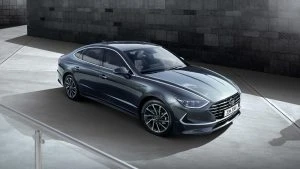
Hyundai Sonata
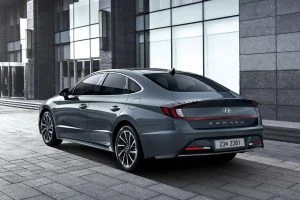
Hyundai Sonata
Hyundai’s latest Sonata sedan is a premium product that has gorgeous lines, sits 30 mm lower than before, and is 25 mm wider. The car’s short overhang, sloping roofline and low bonnet create a signature design that is appealing and head-turning. Also head-turning is Hyundai’s “state-of-the-art lighting technology” where the ‘Hidden Lighting Lamps’ appear to be of a chromic material when switched off and then become dramatically lit-up when turned on – very cool!
Head inside the new Sonata’s cabin and the ambient mood lighting illuminates the dash and doors. The car’s dash design is pretty, while a lower driver-focused dash, a big centre screen, a novel gear shifter, and rich leather seats give the classy upmarket interior the big tick.
The next-generation Sonata will launch in Australia in the second half of 2019, so if you like the look of it then you haven’t long to wait.
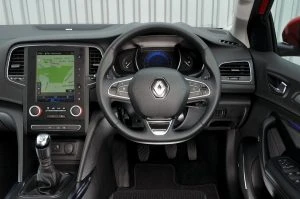
Renault Clio Interior
Moving to the exciting Renault Clio Hatch! Inside the brand new Clio’s cabin is a rewarding high-tech cabin that is pleasantly different with its elongated central touch screen and digital driver’s display. Seating space and comfort will be good, and on the practicality front, the Clio’s new rear has been designed to deliver a squarer boot with 391-litres of luggage carrying ability with the rear seats in place. That’s 40-litres more than the Volkswagen Polo, and almost 60-litres more than you get in the latest Toyota Corolla ZR.
Outside, the Clio’s exterior design is really smart with an F1-blade design incorporated into the front bumper, a larger grille and more pronounced air intakes. This Renault Clio has been tweaked and so becomes 14 mm shorter than the outgoing model and up to 30 mm lower in the roof. This has been done in an attempt to improve the car’s aerodynamics while delivering on a much sportier, more low-profile appearance. The new headlights are LED, with the same c-shaped graphics offered on the rest of the Renault range, while the rear lights have been revised to also include the brand’s signature ‘C’ keynote signature. Nice chrome highlights along the side and rear of the car, along with gloss black window pillars and hidden rear door handles keep the latest Renault Clio looking very smart and attractive.
Another new Clio trim option also boasts more sporty trimmings without changing engine power, so you can opt for this one and enjoy a racier styled new Clio Hatch with a honeycomb grille, a perforated leather steering wheel and aluminium touch points about the cabin without the added expense of a more powerful engine.
Powering the new Renault Clio is a huge range of petrol, diesel and hybrid powertrains. Renault Australia says it wants to launch the new Clio locally in 2020.
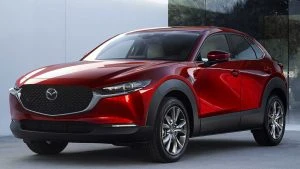
Mazda CX-30
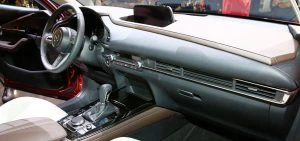
Mazda CX-30 Interior
Mazda Australia has a new compact SUV in the form of the Mazda CX-30 which sits between the CX-3 and CX-5 sizes, and Mazda considers this new model gives them an edge in the highly-popular SUV segment, as buyers look for models that suit their particular tastes and needs.
Mazda’s current compact SUV, the CX-3, has been successful in its segment. It’s currently the second-best seller and a more popular choice with private buyers. Mazda Australia’s head of marketing, Alistair Doak, says there’s been some negative media coverage on the CX-3 being too small, but consumer demand and the model’s success would suggest otherwise. He also goes on to say, “But having said that there are also some people we know that say the CX-5 is a bit too big, something in between would be even better… you see the dimension (differences) between the cars (makes for a) clear differentiator between a CX-3, CX-30, and CX-5 – which is ideal because it’s a natural story we can tell customers and we can show them the options. And we are all about choices and having options.”
Mazda’s elegant CX lines are shapely and attractive, and this line continues with the CX-30 model which is likely to use the new range of SkyActiv-X engines. These new engines further optimise the efficiency of the internal combustion engine and bring the benefits of a diesel engine – such as a higher compression ratio and better fuel economy over a petrol powertrain.
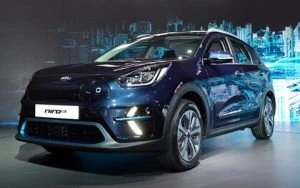
Kia Niro EV
Coming to Australia soon will be the latest all-electric Kia e-Niro. The exterior changes bring new bumpers, a new quad-LED ‘ice cube’ daytime-running light design, the option of full-LED headlights, new double-arrow LED lights in the front bumper, revised LED tail-lights, a new rear bumper, and silver-painted skid plate treatment with revised reflectors and fog-lights.
New features inside the Kia e-Niro compact SUV is a soft-touch dash top, gloss black trim with silver or satin chrome highlights, an optional 10.25-inch widescreen central display with UVO Connect online apps, and an available 7.0-inch driver’s instrument display. An 8.0-inch central touchscreen and 4.2-inch TFT instrument binnacle is standard. Two colour packs are also now available as part of the refresh, allowing buyers to specify Red-Orange accents which extend from the contrasting stitching to the dash trims, or a Plum pack that brings plum-coloured perforated leather upholstery with warm purple stitching, plum-coloured door armrests and satin chrome dash trim.
Kia’s e-Niro will be competitively priced but still offer some fine features like Lane Following Assist (0-180km/h) for semi-autonomous driving ability, autonomous emergency braking, lane-keep assist, driver attention warning, automatic high-beam, blind-spot monitoring, rear cross-traffic alert, and intelligent speed limit warning.
The brand new Kia e-Niro will form one of the two EVs Kia Australia plans on bringing to us shortly – with the other likely to be the new-generation Kia Soul EV.
Should You Buy Your Teen A Safe Car?
 I recently came across a couple of articles that had been inspired by some research put out by the British Medical Journal’s Injury Prevention* . This research looked at the type, size and style of cars driven by teenagers who were killed in car accidents over 2008–2012, and ended with a recommendation that “Parents should consider safety when choosing vehicles for their teenagers.” Automotive bloggers seemed to break out with the advice that parents should buy cars for their teenagers that had absolutely every safety feature, active and passive, under the sun.
Now, I am the parent of teenagers and young adults, both of whom drive. I know that heartwrenching feeling when you know that your beloved son or daughter is heading out solo onto the roads, where horrible things can happen. I’ve also had two of those phone calls that begin “Hi Mum, I’m all right but the car…” (In both these cases, the car in question was owned by the teenager in question.) I would be the last person to be reckless and to advocate putting your teenager in a tinny little piece of aluminium. Nevertheless, I’ve got one or two issues with those articles that other automotive bloggers have put out.
First of all, let’s look at that assumption that the parents are going to buy the car for the teenager – and the best thing is that you buy them one of the latest models with all the gadgets. My reaction to this was “What?” I don’t know what circles you move in, but even among the more well-heeled of my friends and acquaintances, very few of them, if any, are going to go out and plonk down a sum with five digits for a brand new SUV that will have the teenager’s name on the ownership papers although Mum and Dad are the ones forking out. Do people actually do that?
Society is seeing a few problems coming from young adults entering the workforce with the idea that they can get the latest, best and most expensive without having to work for it, also known as an entitlement mentality. My teenagers won’t and didn’t get something expensive of their very own without having to work for it and pay for it. This was my first issue with a lot of those other articles out there.
Buying a car for the family that’s a new one and that’s got the right safety features, that’s another story, however. I know that in our family, we did indeed go and purchase a big 4×4 with good safety features that our teenagers could learn to drive on. However, the purchase of this car came with a little speech that stressed the following points:
- The car in question is ours, not the teenagers’.
- Use of the car is a privilege, not a right.
- With privilege comes responsibility, such as keeping to the conditions of your provisional licence and paying for your own fuel.
Other families might like to add other things to this speech if following this course of action, such as expectations regarding running errands. You don’t want your teenager to turn out a spoilt brat who expects everything to be handed to him/her on a plate, so this sort of set-up is necessary. Even if you are paying for the car for your teenager or young adult, they should contribute in some way so that they understand the value of that vehicle and treat it with respect (especially in the matter of things like servicing, changing the oil, etc.).
There will, of course, come the time when your teenager or young adult wants a car of their very own with their names on the papers. Exactly what happens here will depend on your individual family and your circumstances. Some parents buy the new car for their teen or young adult outright – usually something second-hand. Others provide the funds for said car from the First National Bank of Mum and Dad with no interest. Others leave their teen or young adult to make his or her own way, which is what my parents did. I used bike, foot and public transport all through my tertiary education years, then once I was out in the big wide world of work, I took care of my own transportation needs.
If your teen or young adult (there really needs to be a word for your sons and daughters when they reach this stage of life – let’s refer to them as “young drivers”) is buying his or her own vehicle, it is very likely that this will not be one of the newest vehicles on the market for the simple reason that on the salary that one gets when leaving home and entering the workforce isn’t going to be enough to handle the repayments. This leads to my second problem with those articles that recommend that parents buy a car with all the active and passive safety gear for their teenagers.
You see, during the early years of driving, you’re developing habits that might stick with you for life or at least a very long time. If your car has blind spot monitoring, your young driver might get a bit slack about doing a head-check to make sure nothing’s in the blind spot. If the car has front and rear parking sensors or cameras, your young driver might rely on these completely for parallel parking and not know how to do this manoeuvre relying on just the mirrors (double this in the case of parking assistance). If your young driver learns how to drive on a car that “does it all for you”, then what’s going to happen when he or she purchases their own vehicle that doesn’t have said features? Your young driver won’t know how to drive without all the aids, and that really is an accident waiting for happen and, in the long run, is more of a hazard.
So what’s a concerned parent to do? How do you help your young driver not only stay safe but also learn how to be a good and skilful driver?
Let’s take a look at the original research again. This research found that the majority of teenagers in question who were fatally injured were driving smaller cars – little hatchbacks. Now, let’s face some facts: firstly, younger drivers are more likely to crash than older, more experienced ones (that’s biology and psychology); second, in a collision, a smaller car is going to come off worse than a larger one (that’s physics). Straight away, this lets you know that if you’re helping your young driver choose a car in any way, from buying it outright to merely offering advice, then steering your teenager towards a larger vehicle such as an SUV, ute or stationwagon is a safer option. There are the issues of fuel costs to consider, but there are some frugal SUVs out there.
The other thing that the research article found was that the teenagers who were killed on the roads tended to be driving vehicles that didn’t have certain features: ESC (stability control), airbags (especially side airbags) and side impact protection. No mention of blind spot monitoring, cameras, autonomous braking or lane keeping assistance. Just basic safety features that you’ll find in most vehicles from before 2006. Even marques that aim for straightforward simplicity such as Great Wall have these.
And that’s a relief in several ways. It’s good to know that it’s not that hard to ensure that your young driver is behind the wheel of something safe – something safe comes in the form of a vehicle that’s sizeable and has basic safety features such as ESC, side impact protection and airbags. And it’s really not hard to find a vehicle like this. It’s also good to know that putting your young driver into a safe vehicle doesn’t end up producing long-term problems with drivers who haven’t learned how to drive without assistance but who own cars that don’t provide that assistance.
Of course, if you are not quite in the “parents of teenagers” stage but the years of having a learner driver in the family are looming, then maybe it’s time that you looked at your family vehicle and possibly upgraded to a nice new car (that will have your name on it!) so that you’re ready for those years.
*McCartt AT, Teoh ER. Type, size and age of vehicles driven by teenage drivers killed in crashes during 2008–2012. Injury Prevention 2015;21:133–136.
In Praise Of Old-School Windows
 I’d find myself rather pushed to find a car that’s new onto the market that doesn’t have fast glass or automatic windows or whatever else you want to call them. You know the ones: the ones that have a little button, one on each door for the appropriate window, which gets pushed one way to make the window go up and the other way to make the window go down. There’s usually an array of similar buttons on the door of the driver’s seat, which controls all of the windows in one handy place. And if you push the button in the right way, it whizzes all the way up or down in one go.
If you remember electric windows when they first came out, they were very, very cool. The early types, however, had some snags, especially if you had small bored children (or slightly older bored children) in the back seat. If you weren’t careful, small children could operate the buttons and put the windows down all the way, letting freezing cold blasts of air into the cabin of the car and allowing the possibility of precious objects being dangled outside of the window and eventually dropped, requiring sudden halts and U-turns to retrieve Teddy after Teddy had had a flying lesson. The other snag was that small fingers could get pinched very easily as the window closed. Not so small fingers could get pinched as well. This happened to me and gave me a very painful insight into what the Medieval torture device known as the thumbscrew felt like. Had a black thumbnail that couldn’t be covered properly by polish for at least a week.
These problems were overcome by a few simple tweaks. The problem of small children opening windows was overcome by the driver’s side override button that shut off the other buttons, meaning that Mum or Dad was the one who controlled the level of the rear windows. The other important development was the introduction of a pinch-sensitive mechanism that detected if something was stopping the window going all the way up and wouldn’t keep trying to squeeze all the way home. These stopped fingers getting pinched but this mechanism is no good at all for long hair that’s been blowing in the wind or for silk scarves. Believe me, suddenly discovering that your hair is trapped in the closed window when you try turning your head is pretty painful, though not quite in the league of the old thumbscrews without pinch sensitivity.
So all’s well, right? Modern automatic windows are safe and convenient, aren’t they? So why am I hankering for the old-school windows that wound down with a handle?
The first thing that I miss about them is their precision. You see, when you had to wind it up or down manually, you could stop at the precise point where you wanted. OK, this was a pain when you wanted to go all the way from fully up to fully down – which is what fast glass is good at doing – but there are times when you just want a little bit of window open. Getting it exactly right so that you can let a bit of ventilation into the car while you nip into the supermarket but without offering an invitation to sneak thieves was pretty easy with manual windows but it can get frustrating with fast glass. You poke the button and it moves down to about three centimetres from where you want it, then you poke the button again and the window flies all the way down to the bottom. Then the reverse happens when you try to ease the window up again to stop at the right place. It probably takes a couple of goes until you get it right. Similar things happen when you want to do things like let enough fresh air in but not so much that a gale buffets the people in the back seat or you can’t hear what the other people in the car are saying. This really makes me wonder if it’s really worth having a mechanism that goes from top to bottom in one hit after all.
Next comes the fact that automatic windows work by electricity, not by magic. This means that in order to make the windows up or down, the key needs to be in the ignition so the car knows that it’s all systems go. If you are in a parked car and want to put the windows down to stop them fogging up (oh, put that dirty imagination away – I’m talking about waiting in the car while your kids are at football practice on a freezing cold day) then you have to switch everything on to do this. It gets even more annoying when you find that you’ve left the back window wide open and you’ve just locked the door. OK, even with old-school cars, you had to unlock the door (which you could do by reaching through said window if there wasn’t any central locking) and wind up the window but now you have to unlock, put the key back into the ignition and then put the windows up. Then as soon as you’ve dealt with that and locked back up again, you realise that there’s another window open…
The driver’s window lock switch can also be a nuisance at times. They are wonderful things when your children are small because you don’t want Teddy to have flying lessons, the interior to receive an Antarctic blast and the mechanism to be worn out as the windows go up and down and up and down during a traffic jam. However, if your rear passengers are teens or adults, the window lock is a pain. Uncle Alfie in the back seat has just let off after a meal of cabbage and pickled onions, and by the time Uncle has tried to surreptitiously let the fart out of the cabin, discovered that the window mechanism is locked and asked “Excuse me, can you open my window? I just farted,” it’s too late and the car cabin will smell of Eau De Uncle Alfie’s Fart for the next hour. It’s kind of like leaving the kiddie locks on the doors and is rather insulting to the adult passenger in question.
The other thing that really makes me hanker for old-school windows is when I drive along roads that have a sharp drop-off into water or deep water below a bridge. You see, if your car goes into deep water, you only have a very, very small window of time to open the windows before water hits the electrics and the fast glass won’t budge. In this case, you have to try breaking the window, which is easier said than done, as car windows are tougher than, say, your windows at home. The windscreen is especially tough, so don’t even try this. (They say that the edges of the window are easiest to break and that at a pinch, you can use the metal spikes of a removable headrest to do this). Manually operated windows keep on winding in water, so breaking the glass isn’t necessary. I’m getting the heebie-jeebies just thinking about this, as having the car going into deep water is one of my worst nightmares. Just so you know (and to remind myself), here’s what to do if it happens to you:
Lastly, if you or someone in your family is into doing their own car repairs whenever possible, it’s a darn sight easier to repair a manual window mechanism, as this is a screwdriver-type job. With an automatic window, you’ll need to know something about electrics and wiring things up, which most of us don’t, so it’s down to the local mechanic you go!
Besides, what on earth do younger people who have seldom seen manual windows do if they want to mime opening a car window during a game of charades or when playing theatre sports?
Safe and happy driving, especially near deep water!
 Level 2, 9 Help Street