

Author archive
Safe and Not-so-safe Cars

With good safety credentials being an important factor with any new car purchase, it was interesting to find out that a few new cars didn’t perform as well as I’d expected they may. The tests were carried out over the 2018-and-2019 period by the team at the Euro NCAP facility. The following are four of the worst 2018/2019/2020 cars you’d want to crash in. Then come the best current cars you’d want to be in if you were involved in a serious crash.
NOT SO GOOD:
Jeep’s Renegade 4×4 SUV, in the frontal crash test, showed it as being a bit weak in offering good support during the frontal impact. Your neck is an important part of your body, and it was evident that the systems weren’t quite up to speed. Also the pole test found the car’s structure to be weak in protecting the front seat occupant. Poor whiplash protection during a rear collision, and weak protection during the side pole test showed the Jeep Cherokee as being a bit light. This was its reason for scoring just the four out of five stars.
Sadly, the small Suzuki Jimny 4×4 only scored a three-star crash testing result. The structure isn’t up to the task of keeping its occupants safe in pole tests and frontal crash tests. Even the airbag didn’t have the pressure to prevent the dummy bumping its head on the steering wheel –ouch!
A big surprise came my way when I discovered that the Jeep Wrangler scored just a one-star out-of-five for overall safety capability during the crash tests carried out by the Euro NCAP team. The windscreen pillars and the footwall structures reached their full limit of protection – due to their serious deformation patterns when put through the frontal impact test. You wouldn’t want to be going faster than 40 mph!
Least safe is the Fiat Panda. It didn’t score any stars of the five available. Enough said!
VERY GOOD:
Euro NCAP calculate the best vehicles from their weighted sum of the scores in Adult Occupant, Child Occupant, Pedestrian and Safety Assist assessments for every car tested. According to Euro NCAP, the best-of-the-best in 2019 happened to be the:
Supermini: Audi A1 and Renault Clio
Small family car: Mercedes-Benz CLA and Mazda3.
Large family car: Tesla Model 3, BMW 3-Series and Skoda Octavia.
Small Off-Road/MPV: Subaru Forester
Hybrid and Electric: Tesla Model 3
Larger off-road: Tesla Model X and SEAT Tarraco – which shares its DNA with the Volkswagen Tiguan and Skoda Kodiaq.
There are some nice cars in the list above. It’s great to see Subaru still delivering the goods along with the German marques. Looks like Tesla has their cars well sorted, as well.
Last Ford GT cars Very Special
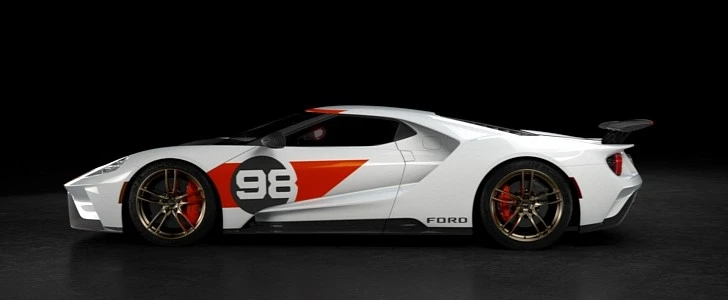
Ford GT HE
If you’ve got a load of money to spend on a supercar and want something really different and special, then why not go for the latest and last-to-be-built Ford GT supercars. The Ford GT remains the only American supercar to ever win at Le Mans. This beat Ferrari at its own game, and now the Ford Performance division has announced a very special Heritage Edition (HE) that has been inspired by the original model’s first long distance win at the 1966 Daytona 24 Hour Continental race.
The new Ford GT Heritage Edition adds some styling cues that are taken from the winning formula at Le Mans in 1966. It is a model developed as a tribute to the winner of the 1966 Daytona 24 Hour Continental race, which was captured in the 2019 film “Ford v Ferrari”. The HE features a striking Frozen White exterior paint job with an exposed carbon fibre hood. Shod with great looking one-piece Heritage Gold 20-inch forged aluminium wheels and red Brembo monobloc brake callipers, you have a an eye-catching combination to what is still one of the most desirable supercars on the planet.
Inside the Ford GT HE is black Alcantara material wrapping the instrument panel, headliner and steering wheel rim, while red paddle shifters and Alcantara performance seats add intense contrast and a special experience.

Ford GT HE
You can also get the Ford GT with even less unsprung weight, where there’s the option of 20-inch exposed carbon fibre wheels. You can also get the monobloc brake calipers lacquered in black with Brembo lettering in red – nice!
Adding the special Studio Collection package gives you a Ford GT that offers added exclusivity and design enhancements, which you can add to the newest Ford GT supercar. Boasting an all-new graphics package that highlights key styling elements, such as functional cooling ducts, and other unique exterior graphics that have been designed by the Ford Performance and Ford GT manufacturer, ‘Multimatic’. These clever design cues combine the combination of stripes and accents over the sexy GT exterior that invoke the emotion of speed as well as drawing your eye to some of the most prominent features of the classic GT style.
Just forty examples of the Studio Collection package will be built across the 2021 and 2022 model years, so to be one of the coolest Supercar drivers on the planet be in quick and don’t miss out!
Sadly, these will be the last new Ford GT supercar models to be produced, with production scheduled to wrap up in 2022.
Just for your information: the latest RWD, 7-speed automatic Ford GT comes with a twin-turbo, 3.5-litre V6 engine developing a whopping 482 kW of power at 6250 rpm and 746 Nm of torque at 5900 rpm. That’s enough energy to catapult you from 0-100 km/h in around 3.8 seconds, 0-200 km/h in 12.3 seconds, see you through the quarter mile in 11.8 seconds and on to a top speed of 330 km/h.
The raucous sound of the engine is sublime, the RWD handling spot on, and it’s so easy to fall in love with one. Buy one now, and the car is sure to appreciate in value – especially with this last run of GT cars, and their acquired exclusivity.

Ford GT HE
Road Trip Australia
One of the things that we can look forward to once everything settles back down to normal after covid is being able to fully appreciate Australia and its diversity. Instead of grabbing that best flight deal for an overseas trip, I reckon we could pick up the road map and get out and see Australia by road a bit more. Support the locals, you know…

The following are some of the best road trips in Australia; so take a look and be inspired:

1) Round the Perimeter
Doing the whole lap of Australia around the coastline would have to be the ultimate Australian road trip. The road trip follows around 15,000 km of our great Highway One, and it links seven of the major cities. You’ll get to explore and taste the menu that Sydney, Brisbane, Cairns, Darwin, Broome, Perth, Esperance, Adelaide, Melbourne and Hobart all have to offer.
If you can nab a 4WD for this road trip, then you’ll be able to take your time and head down some of the fun tracks that shoot off to the side. Around Australia will include everything from big city lights to sleepy coastal towns, lush green rainforest to dusty and dry red Outback.
One thing that you might like to factor in is that when you travel the northern part of Australia (Broome to Cairns) it’s best to do it in the April to September window to make the most of the good weather. During the wet season roads can be closed.

2) Torquay to Allansford, Victoria
One of the country’s most famous road trips stretches along the southern coast on Victoria. Travelling from Torquay to Allansford winds 243 km along some of Australia’s most stunning coastline. You’ll also head through rainforest, along sunburnt cliffs, by shipwrecks, and, you’ll also see the famous Twelve Apostles – but there is only eight of them now!

3) The Gibb River Road, Western Australia
If you want to tackle some 4WDing, then the Munja Track, in Kimberley is a super exciting adventure. The route was constructed in the 1960s to transport stock, and this 660 km road cuts right through from Derby to Wyndham. You’ll get to see magnificent and remote wilderness, some of our most ancient gorges, beautiful, thundering waterfalls, some sacred Aboriginal sites and so much more. Take a look at Bell Gorge, where you’ll find a multi-tiered waterfall cascading down layered sandstone into several pools. And, you can even swim!

4) Cairns to Cape York, Queensland
You’ll need a decent 4WD for this 1000 km drive that begins at Cairns and ends at Cape York. This is the road that gets you through to the Barrier Reef. There is loads of red dirt and the river crossings will have crocodiles. The lush rainforest is amazing, and there are 2 World Heritage areas (The Reef and the Daintree).

5) Perth to Ningaloo, Western Australia
Here is the road that has loads of beautiful secluded beaches and crystal clear water. It’s close to 1200 km in length and starts at Perth and ends at Exmouth. Western Australian beaches also have some stunning Coral Coastlines.
Love the sea? Then this is a trip for you. Western Australia is where the Indian Ocean meets the rugged Outback. You’ll get to see the Pinnacles Desert and the World Heritage Shark Bay. How about swimming with dolphins, manta rays and whale sharks? There is also the breath-taking gorges of the Kalbarri National Park – wow!
If you book this trip in the June to September window, then you’ll also be wowed with the colourful wildflowers that carpet the barren landscape.

6) The Great Alpine Road, Victoria
This route starts in Wangaratta and winds its way around 500 km through Victorian High Country to Metung in Gippsland Lakes area. On the way you’ll be travelling over Australia’s highest accessible sealed road, which takes in mountain ranges, deep valleys, wine regions and the sparkling waterways of the Gippsland Lakes region. This is a lovely scenic road that has some nice quaint historic towns along the way.
Victoria’s highest alpine village, Mt Hotham, is nice to visit year-round, with excellent downhill skiing and cross-country trails. You can also book in for a horse ride, and fish during the warmer months.

7) The Savannah Way
The Savannah Way is around 3700 km in length and it offers loads of adventure. It takes you from Queensland all the way to Western Australia.
Encompassing 15 national parks and five World Heritage along the way, this is the ultimate east to west road trip. Tropical rainforest, vast grassy plains, remote cattle stations, waterfalls, gorges, turquoise waters and ancient rock art; it’s all there. Boodjamulla National Park is one of Queensland’s awesome sights and experiences.
It’s advisable to carry a radio for when mobile reception isn’t the best, as you are in some faily remote country at times in the Outback.

8) The Nullarbor, South Australia
This is Australia’s straightest road trip: the Nullarbor Plain. It’s not hard to find, running 1256 km between the goldfields of WA and the Eyre Peninsula in SA.
It is a legendary flat plain that meets with the towering sea cliffs of the Great Australian Bight. It’s home to prolific wildlife, and you’ll be able to see emus, kangaroos, dingoes and camels along the way. It also boasts the world’s longest golf course!

9) The Pacific Coast, New South Wales & Queensland
If you haven’t done this trip, then it has to be on your to-do list. The Legendary Pacific Coast follows around 900 km from Sydney to Brisbane through the Central Coast, Port Stephens, Newcastle, Coffs Harbour, Ballina and Byron Bay. This is coastal Australia at its best, with it being home to a host of surfing beaches, charming seaside towns, pretty landscapes and national parks.
Take your time and venture off the main highway to find rich pickings of fun activities, boutiques and food.

10) The Grand Pacific Drive, New South Wales
This one’s a photographer’s joy; The Grand Pacific Drive is a 140 km scenic coastal drive taking you through rainforests, over the iconic Sea Cliff Bridge and through the coastal cities and townships of Wollongong, Shellharbour, Kiama and the Shoalhaven. This also has some of New South Wale’s most beautiful cliff faces.
Get yourself ready!
‘Automotive Mana’ and 2020 Dual-Cab Utes

The rise of the SUV is a noted phenomenon, but an equal marvel is the greater numbers of large dual-cab utes on our roads. The popularity of the dual-cab ute in Australia shows a trend that ain’t about to end just yet. On any given day if you take a drive down a popular road in Australia you’re sure to come across some pretty awesome super-size pick-ups. So what makes these vehicles so attractive? And what are the better dual-cab utes one can buy? Let’s have a look.
Let’s ‘cut to the chase’ and quickly realise that a large number of the dual-cab utes we see are driven by people with bigger egos. To use the Maori definition ‘Mana’ offers a politer label to go with the big ute ego. ‘Mana” means to have great authority, presence or prestige, and so if you are seen driving these massive utes, you’re likely to satisfy your larger ego with some real ‘Automotive Mana’ and add mud plugging tyres, a raised suspension, tinted windows, a snorkel and spot lights, too. Any big ute name like Toyota Hilux, Mazda BT-50, Nissan Navara, Ford Ranger or Mitsubishi Triton can have their utes equipped with these big ticket items.
Of course, if your work requires your need to own a big, beefy dual cab ute, then all the showy looks can be forgiven. Builders, landscapers, boat builders, contractors, farmers, engineers, they all need one! But hey, we’d all love one!
This leads me on to what makes these road behemoths so nice to own and drive. Here’s a short list of their great traits:
- Load carrying ability
- Towing ability
- Space
- Comfort
- Off-roading ability
- They’re built tough
- They’re safe
- Automotive Mana
Here are the best new Dual-Cab utes you can buy in 2020 that offer all the bells and whistles (Note there are other models in their line-up, but these would generally be more Spartan). All of the following models come with premium safety, 4WD capability, big towing prowess and premium luxury:

Ford Ranger: XLT, Wildtrak, Raptor, ($57–$77k)
- 3.2 litre TurboDiesel with 147 kW and 470 Nm, 6-speed manual and 6-speed auto, 0-100 km/h approx. 10 seconds, fuel consumption approx. 9 litres/100 km
- 2.0 litre TurboDiesel with 157 kW and 500 Nm, 10-speed automatic, 0-100 km/h approx. 10 seconds, fuel consumption approx. 8 litres/100 km

SsangYong Musso: Ultimate XLV, Ultimate Plus XLV, ($40-$44k)
- 2.0 litre TurboDiesel with 133 kW and 420 Nm, 6-speed manual and 6-speed auto, 0-100 km/h approx. 10 seconds, fuel consumption approx. 9 litres/100 km

Toyota Hilux: SR5, Rugged, Rugged X, Rogue, ($56–$63k)
- 2.8 litre TurboDiesel with 130 kW and 420 Nm with the 6-speed manual and 450 Nm with the 6-speed auto, 0-100 km/h approx. 11 seconds, fuel consumption approx. 8 litres/100 km

Nissan Navara: ST-X, N-Trek, N-Trek Warrior, ($54–$66k)
- 2.3 litre TurboDiesel with 140 kW and 450 Nm, 6-speed manual and 7-speed auto, 0-100 km/h approx. 10 seconds, fuel consumption approx. 6.5–7.0 litres/100 km

Ram 1500: Express, Laramie, ($90–$100k)
- 5.7 litre Petrol V8 with 291 kW and 556 Nm, 8-speed auto, 0-100 km/h approx. 7 seconds, fuel consumption approx. 10–13 litres/100 km

Ram 2500: ($140k)
- 6.7 litre TurboDiesel with 276 kW and 1084 Nm, 6-speed auto, 0-100 km/h approx. 8 seconds, fuel consumption approx. 15 litres/100 km

VW Amarok: TDI420 Core Plus, Highline 550, Ultimate 580, ($52–$73k)
- 2.0 litre TurboDiesel with 132 kW and 400 Nm with the 6-speed manual and 420 Nm with the 8-speed auto, 0-100 km/h approx. 10.5 seconds, fuel consumption approx. 7.5 litres/100 km
- 3.0 litre TurboDiesel with 165 kW and 500 Nm, 8-speed auto, 0-100 km/h approx. 8 seconds, fuel consumption approx. 9 litres/100 km
- 3.0 litre TurboDiesel with 190 kW and 580 Nm, 8-speed auto, 0-100 km/h approx. 8 seconds, fuel consumption approx. 9 litres/100 km

Mitsubishi Triton: GLX+, GLS, GLS Premium, GSR, ($41–$52k)
- 2.4 litre TurboDiesel with 133 kW and 430 Nm, 6-speed manual and 6-speed auto, 0-100 km/h approx. 10 seconds, fuel consumption approx. 8 litres/100 km

Mazda BT-50: XTR, GT, Boss, ($53–$64k)
- 3.2 litre TurboDiesel with 147 kW and 470 Nm, 6-speed manual and 6-speed auto, 0-100 km/h approx. 10 seconds, fuel consumption approx. 10 litres/100 km

Holden Colorado: LSX, LTZ, LTZ+, Z71, ($50–$58k)
- 2.8-litre TurboDiesel with 147 kW and 440 Nm with the 5-speed manual, with 147 kW and 500 Nm with the 6-speed auto, 0-100 km/h approx. 9.5 seconds, fuel consumption approx. 9 litres/100 km

HSV Silverado: 1500 LTZ Premium Ed. ($114k)
- 6.2 litre Petrol V8 with 313 kW and 624 Nm, 10-speed auto, 0-100 km/h approx. 5.6 seconds, fuel consumption approx. 12.5 litres/100 km

Isuzu D-Max: LSU, LST, ($49–$55k)
- 3.0 litre TurboDiesel with 130 kW and 430 Nm, 6-speed manual and 6-speed auto, 0-100 km/h approx. 8 seconds, fuel consumption approx. 8 litres/100 km

Jeep Gladiator: Overland, Rubicon, ($76–$77k)
- 3.6 litre Petrol V6 with 209 kW and 347 Nm, 8-speed auto, 0-100 km/h approx. 9 seconds, fuel consumption approx. 12 litres/100 km
Just for complete ‘Automotive Mana’ status, top honours would have to go to the Ram, HSV or Jeep Gladiator.
 Level 2, 9 Help Street