

Author archive
The Two Most Important Things When Buying A New Car

There are various things to think about when we want to buy a new car. Most importantly, the thought of how much we can afford needs to be right up at the top of the list of things that we need to consider. Here are a couple of the main points we should be pondering and committing to before we sign any dotted lines on the sales document.
What’s The Top Price?
Our budget and what we can afford needs to be the first point that we get clear in our minds. Having a figure that we will stick to sets the price ceiling for us, and this is the figure we take with us around the car sales yards. Any cars over our price ceiling can be omitted from our shortlist. This makes the task even easier, so those vehicles up to the price ceiling are definitely the ones we can enjoy drooling over, learning about, test driving, and even buying as our next new vehicle. This is, of course, where Private Fleet can help you!

What’s The Purpose?
What are we wanting/needing the new vehicle for? Is it because we need more space for a growing family? Maybe we need a new vehicle because it will allow us to carry our elderly parents/in-laws about town or on vacations. It could be that our trusty ute or van that we use for work has finally run its last race, and we need a replacement… fast. Knowing our main purposes for the new vehicle gives us an indication of the type of vehicle and body style we should be looking at.
What I mean is that it won’t be any good getting ourselves a new Toyota Camry hybrid sedan when we will need to take Buster – our large, long coated, and rather boisterous dog – to the local obedience class. Especially not if Buster is accompanied by his brother. A Skoda Ocatvia wagon, a Toyota RAV4, or a Honda CR-V SUV with huge rear boot space would much better to suit our needs – and Buster’s. In this example, even a ute or 4×4 SUV might be the best option, particularly if you love heading down to the beach or heading away on an outdoor adventure in the Outback with Buster and the whole family.
Another example of a purchase fail is if you ended up with a light EV van when you also needed the vehicle to tow a trailer or to cover larger distances far from the urban boundary. Towing really drains that battery quickly, and there’s nothing worse than being caught miles away from the nearest charging station.
Maybe we just need a solo commuter to get us across town to the office for work. The distance to work takes us a total distance of 23 km per day, five days a week, and that’s all you want the new vehicle will do. If this was the case, an EV or hybrid could easily make it onto the list of ideal vehicles. In this case, these sorts of vehicles are ideal for keeping the cost of running right down and the emissions nice and low. Something like a BYD Dolphin or Audi eTron, both of which are EVs, or a hybrid BMW or Toyota could do the trick. It’s all about the price ceiling, however, and there is a big difference between the purchase price of a BYD and the BMW.
Maybe we could even consider a small hatchback for a city commute or even a sedan, both which have a small internal combustion engine (ICE) or a light hybrid powerplant that boasts very good economy ratings but don’t cost much to buy new. In this case, the constraints on our budget and the low price ceiling may point us more towards something like a Suzuki Swift, Kia Picanto or Honda Jazz.
As to how luxurious, expensive, or even exotic our new car may be does depend on our price ceiling. And the price ceiling is what we will have worked out already before heading out on the hunt for a new vehicle. Most manufacturers have a wide range within their model line-up; some more than others. For example, Ford has a base version of its 2024 Ford Everest SUV called the Ambiente that costs around $60k new at the time of writing, a more luxurious Trend ($65–75k), Sports models ($67–82k), and two top of the range Platinum versions stacked with luxury for $84–91k.
If we do our homework, there is no reason why we can’t buy a new vehicle that will be suitable for our needs, be fun to drive, and even be in the colour we want!

New Cars Aren’t Always Super-Expensive!

If you are looking to buy a new car, and your budget allowed a price ceiling of $40k ($40,000), then there is a plethora of opportunity for you out there at the car lot. It has been interesting to observe the changing winds in the car industry. The onset of a wide variety of more affordable new electric vehicles (EVs) becoming available to buyers has meant that the opportunity to own a new EV is becoming much more attainable. There are still some EV issues that need to be seen to before living with an EV becomes a seamlessly easy way of life; however, for some people, the switch to owning an EV has been a good move. If you can charge your vehicle at home, and most (if not all) of your travel is short distances in a city/town environment, then you’re well on the way to being a happy EV convert. Or maybe you are reading this and are feeling smug that you are already a happy convert.
Definitely, there are also many more new hybrid vehicles (vehicles that use battery power to enhance the fuel economy of the internal combustion engine (ICE)) that you can buy. In my humble opinion, these are the best new vehicles to buy, particularly if you want good fuel economy and low emissions but spend time travelling between townships and cities. They offer the best of both worlds. Let’s face it: Australia’s EV infrastructure is improving but still has a long way to go before it is anywhere near perfect.
There are still some great new ICE vehicles that use petrol or diesel on the market for a decent price. Fuel economy has gotten better and better for these types of vehicles, so they still offer a new-car buyer a solid purchase. Thus, particularly if you are employed in any trade that requires travelling plenty of kms, an ICE vehicle or hybrid can’t yet be beaten on practicality. You only need to look at the latest new car sales list to read that ICE and Hybrid utes and SUVs still remain the top purchases.
OK, so what’s out there for under $40k (at the time of writing?
Hybrid Cars/SUVs
- GWM Haval Jolion SUV Hybrid
- GWM Haval H6 SUV Hybrid
- Hyundai i30 Sedan Hybrid
- Hyundai Kona SUV Hybrid
- MG3 Hatch Hybrid
- Toyota Camry Sedan Ascent Sedan Hybrid
- Toyota Corolla Hatch Hybrid
- Toyota Corolla Sedan Hybrid
- Toyota Corolla Cross SUV GX Hybrid
- Toyota Yaris Cross SUV Hybrid
- Toyota Yaris Hatch Hybrid
ICE Cars/SUVs/Utes
- Chery Tiggo 7 Pro SUV
- Chery OMODA 5 SUV
- Fiat 500 Hatch Dolcevito
- Ford Puma SUV
- GWM Ute
- Honda CR-V SUV
- Honda HR-V SUV
- Honda ZR-V SUV
- Hyundai i30 Hatch
- Hyundai Venue SUV
- Hyundai i20 Hatch N
- Isuzu D-MAX Cab Chassis SX High Ride Ute
- Kia Sportage SUV S
- Kia Cerato Hatch
- Kia Cerato Sedan
- Kia Picanto Hatch
- Kia Seltos SUV
- Kia Stonic SUV
- LDV T60 Ute Max Pro
- LDV D90 SUV
- LDV G10 Van+
- LDV V80 Van
- Mahindra PIK-Up Ute
- Mahindra PIK-UP Cab Chassis
- Mahindra PIK-Up Ute Light Truck S+ 4×4
- Mahindra XUV700 SUV 4×4
- Mazda CX-5 SUV
- Mazda 3 Hatch
- Mazda CX-30 SUV
- Mazda CX-3 SUV
- Mazda 2 Hatch
- Mazda 3 Sedan
- Mazda 6 Sedan
- Mazda BT-50 Cab Chassis XS Ute
- Mazda 2 Sedan
- MG ZS SUV Excite
- MG MG5 Sedan
- MG ZST SUV
- MG HS SUV
- Mitsubishi Eclipse Cross SUV
- Mitsubishi ASX SUV
- Mitsubishi Triton Cab Chassis GLX Ute
- Nissan Navara Cab Chassis SL Ute
- Nissan Juke SUV
- Nissan QASHQAI SUV ST
- Renault Captur SUV
- Skoda Kamiq SUV
- Skoda Karoq SUV
- Skoda Scala Hatch 85 TSI Ambition
- Skoda Fabia Hatch Monte Carlo Edition 150
- SsangYong Musso Ute ELX
- SsangYong Korando SUV
- Suzuki Swift Hatch
- Suzuki Vitara SUV
- Suzuki Ignis SUV
- Suzuki S-Cross SUV
- Toyota C-HR SUV GXL
- Toyota Hilux Ute Workmate
- Toyota Hilux Cab Chassis
- Toyota RAV4 SUV GX
- Volkswagen Polo Hatch
- Volkswagen T-Roc SUV City Life
- Volkswagen T-Cross SUV
EVs (Hatchback/SUV)
- GWM Ora Standard Hatch
- BYD Dolphin: Hatch
- MG ZS EV Excite SUV
- MG4 Excite Hatch
- Nissan Leaf Hatch

Some of us are on an even tighter budget. We would love a new a car, but… Well, here’s some good news:
Six new cars under $25,000 (All ICE)
- MG3 Hatch
- Kia Piccanto Hatch
- MG ZS SUV
- Kia Stonic SUV
- Suzuki Ignis SUV
- MG MG5 Sedan
These prices are typical, but have a chat with the helpful team here at Private Fleet, as we may be able to land you an absolutely stellar deal. Also check out our reviews to get more details.

ICE Batteries And EV Batteries
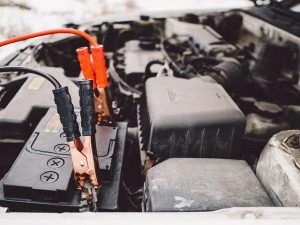
Anybody who’s left the lights on in their car overnight or helped a mate push-start a sulky ICE vehicle knows only too well that all cars have batteries, not just EVs. So you might be wondering about what the big deal about battery life and battery fires and battery range is all about. To understand this, it’s time to go back to basics and to look at what a battery is and how it works.
Your bog-standard battery in an ICE vehicle is a lead–acid battery – the lead is why it’s so heavy, and the acid is why the batteries are “interesting” to dispose of, as the acid in question is often H2SO4 or sulphuric acid. Car batteries were a very welcome replacement to the old-fashioned method of getting the motor started with a crank handle. These lead–acid batteries are rechargeable, as the petrol or diesel motor handily charges them back up. This is why you can drive for hours and hours with the headlights on at night without the battery going flat, but if you leave lights on overnight, it will go flat.
In a lead–acid battery, both the anode (the bit that produces the positive charge) and the cathode (the bit that produces a negative charge) are made from lead and lead dioxide, respectively. The electrolyte (the bit that gets the electrons flowing thanks to chemical reactions) is sulphuric acid. Hook this up to a circuit and the electrons whizz around it in an attempt to get into balance, creating electrical current that we can use to, say, create a controlled explosion to power a vehicle. Most batteries also contain separators that stop the anodes and cathodes touching each other, which can happen if dendrites (branching crystals) start to form. If you want to get really technical, a battery is made up of a lot of individual cells containing an anode, a cathode and the electrolyte. In fact, that’s why a battery is called a battery – it reminded the early inventors of an array of cannons or other weapons ready to fire. The batteries can last for years, especially if turned over regularly and cared for properly (and that’s another subject for another day).
The basic design of a lithium-ion battery (LIB) inside an EV is similar. It’s got an anode, a cathode, an electrolyte and a separator. In this case, the cathode is made from more exotic metals and oxides, such as lithium cobalt oxide, lithium nickel cobalt manganese oxide and lithium nickel cobalt aluminium oxide (try saying that quickly!), and their conductivity is improved by mixing them with conductive black carbon. The anode is usually made of graphite. The electrolyte has more lithium, specifically lithium salts dissolved in organic solvents that have plenty of the lithium ions that give the batteries their name. These batteries are a lot lighter than lead–acid batteries and can deliver a lot of punch. They also have a longer lifespan than other types of rechargeable battery, such as ni–cad (nickel–cadmium) batteries and don’t have the problem of “memory”.
The problem with lithium batteries is that the electrolyte is very, very flammable. The lithium is also prone to growing dendrites, which can cause short-circuits (and thus fires), especially if it’s charged too fast, overcharged or charged at too low a temperature. Lithium also gets prone to throwing a dramatic wobbly if it gets too hot or if the battery is damaged. It’s a case of the lithium’s strengths – its unstable chemistry that allows it to generate a charge – being its greatest weakness.
Lithium-ion batteries haven’t been around for as long as lead–acid batteries, as they only came on the scene in the 1960s and were popularised by Sony in the late 1980s. The lead–acid battery, however, has been around since the 1880s. In other words, it’s early days for lithium-ion batteries, and they’re working hard to improve the batteries and make them better.
But what happens when the batteries come to the end of their lives, which is inevitable? This is more of an issue with lithium batteries, as lithium is a much rarer metal, whereas lead is pretty common and humans have been playing around with it for millennia, although it’s now not used as much in common products (except for batteries) because of the health hazards.
The good news is that both types of battery can be recycled. It is possible for both metals – lead and lithium – to be cleaned up and used in new batteries. In fact, if you have an old battery of either type, then the best thing to do is to take it down to your nearest recycling centre and get it dealt with. Otherwise, both types can be a bit nasty, although the nastiness of lithium is more dramatic (fires) than that of lead (slow poisoning). Most lead in the batteries can be recycled; once again, the rate of recycling of lithium is a bit behind, most because it’s still a young technology. The acid inside a lead–acid battery can easily be neutralized or put to other uses, including making fertilizer.
4WD and AWD
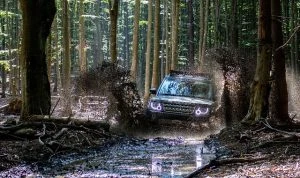
Getting the best grip on the road or terrain is what will get you moving forwards from A to B in the shortest time. Ever since the invention of the first cars, two-wheel-drive has been the mainstay for delivering the engine’s power out to the wheels. At first, two-wheel drive was usually via the rear wheels, as it was much simpler to run a drive shaft from the engine at the front of the car back to the rear wheels to get grip from the rear wheels and to let the front wheels have the job of steering the vehicle.
In saying that, there is also history of 4WD being experimented with back as early as the late 1800s in combination with a traction engine, and, of course, in World War II, the 4WD Willys Jeep was a game-changer.

Once mechanical engineering and quality improved over time, the concept of having the engine over the front axle and the front wheels as the driving wheels as well as for steering the vehicle lowered production costs. A combination of rear-wheel-drive and front-wheel-drive cars were available as a matter of course right up to the 1970s and 1980s. Through the 1990s up until the present day, it was more common to see front-wheel-drive cars for everyday driving.
However, it was the 1980s that proved to be a very innovative period in automotive design and mechanical engineering. The greatest advancement in road-going cars was arguably the use of four-wheel-drive to establish greater levels of grip. As racing and supercars demanded faster cars, the need to control all that power (and actually make better use of it) was essential for winning, especially as there was an ever-increasing number of high-performance cars being pulled out of roadside hedges or being wrapped around power poles.
Enter Audi. Audi’s Quattro technology marked a significant moment in high-performance cars’ and supercars’ history. The Audi Quattro’s technology was essentially the dawn of the modern supercar’s 4WD system, and when Audi entered the World Rally Championship in 1981 with their Audi 80 Quattro car, they were unbeatable. The second-place car was over twenty minutes behind the race-winning Audi!
What is the difference between 4WD and AWD?
This is a good question to answer, because there are numerous new cars of all shapes and sizes available with AWD or 4WD. Generally speaking, four-wheel-drive (4WD) is the older off-road system that has the power split 50:50 front to rear. Add a diff-lock into a 4WD system, and these are off-road kings. Four-wheel-drive can be disengaged so that just two-wheel-drive (2WD) can be used on easier terrain, including for when you’ve finished your off-road adventure and you just want to head back home on the tarmac with 2WD only.
The basic principle of an all-wheel-drive (AWD) system is that it can deliver the optimum level of torque to each wheel individually, thus giving the best possible drive and traction. AWD systems tend to be permanently engaged, but with the power split front to rear, along with individual wheels being variable according to what each wheel is sensing and therefore demanding at the time. AWD systems are more complex in that they use sensors which send precise information and values of each wheels’ speed, torque, wheel slip/spin, brake pressure, and steering input to the AWD’s central control system. The control system then adjusts the torque supplied to each wheel.
Land Rovers and many other new serious off-road vehicles use AWD systems with various diff-locking abilities, which also make them real off-road kings. Four-wheel-drive systems are simpler in nature and are thus simpler and cheaper to fix than more complex AWDs. That said, many manufactures like Subaru know how to make solid, dependable AWD systems for their cars and SUVs that are mainly aimed at everyday on-road use and trips up to the ski fields, but with the credentials for performing well even in some fairly serious off-road terrain.
If you live in a part of the world where gravel roads and rainy seasons collide, then an AWD vehicle with decent ground clearance should be parked up your driveway. If your day includes a trek out to the building site, feeding out to stock, or traversing any serious off-road terrain, then a heavy-duty 4WD or AWD vehicle will be your companion. The good news is there are plenty of these sorts of vehicles about, many of which can be bought new at a good price via Private Fleet.

 Level 2, 9 Help Street