

Author archive
A Shout-out To Formula One
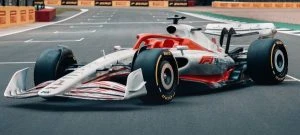
Formula One is an exciting motor racing competition that races the fastest regulated road-course racing cars in the world. It has been one of the premier forms of racing since its first official season in 1950.
Australia hosts one of the current racing locations in the Formula One Championship, the Australian Grand Prix, which is contracted to host Formula One up until 2035. Although the Australian Grand Prix has been held at many different locations since it was first run at Phillip Island in 1928, currently the Australian Formula One race is held at the Melbourne Grand Prix circuit, Albert Park. The next race scheduled to be held at the Melbourne Grand Prix circuit will be on 30th March – 2nd April 2023. Get you tickets now!
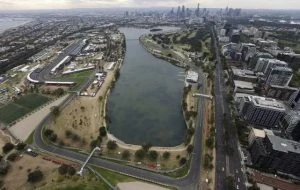
Albert Park, Melbourne F1 Grand Prix Circuit
There have been various changes to the Formula One racing rules since the races began. A major rule change in 2014 axed the 2.4-litre naturally-aspirated V8 engines in favour of the smaller 1.6-litre turbocharged hybrid power units. This change prompted Honda’s return to the sport in 2015, where they were the championship’s fourth engine manufacturer for the competition. Mercedes has emerged as the dominant force since that major engine rule change.
Renault came back as a team in 2016 after buying back the Lotus F1 team. In 2018, Aston Martin became Red Bull and Alfa Romeo became Sauber’s title sponsors. Sauber was rebranded as Alfa Romeo Racing for the 2019 season, while Racing Point’s part-owner Lawrence Stroll bought a stake in Aston Martin to rebrand the Racing Point team as Aston Martin for 2021.
In August 2020, a special new Concorde Agreement was signed by all of the ten competing Formula One (F1) teams, which further committed them all to the sport until 2025. This agreement also included a $145-million budget cap for F1 car development, which also supported equal competition and a sustainable journey of development into the future of F1.
Formula One has also launched a plan to become carbon neutral by 2030, and by 2025, all F1 events should become “sustainable”, which will include eliminating single-use plastics and ensuring all of the race’s waste products are reused, recycled or composted. 2022 sees all F1 cars increasing the bio-component of their fuel, using E10 fuel rather than the 5.75% Ethanol fuel that is currently used. The percentage of ethanol in the fuel is expected to increase again in the future. By 2026 we should see a fuel with 100% sustainability; this occurring at the same time that the new engine regulations come into force.
Some Interesting F1 Info
The modern Formula One car is mid-engined and hybrid-powered. They have a semi-open single-seater racing cockpit, and all four wheels are out in the open. An F1 car’s chassis is made up using mostly carbon-fibre composites, thus making it very light but also extremely stiff and strong. The whole F1 car, including the driver but not the fuel, weighs just 795 kg (the minimum weight set by the current regulations). If the construction of the car is lighter than 795 kg, it can be ballasted up to make the necessary weight requirement. Each driver may use no more than thirteen sets of dry-weather tyres, 4 sets of intermediate tyres, and 3 sets of wet-weather tyres during one race weekend.
For much of the sport’s history, qualifying sessions differed little from the practice sessions. The drivers would have one or more sessions in which to set their fastest time, with the grid order being determined by each driver’s best single lap time. Predictably, the driver with the quickest lap got first place on the grid, which is also referred to as pole position.
The Formula One race begins with a warm-up lap, after which the cars assemble on the starting grid in the order that each driver qualified. This warm-up lap is often also referred to as the formation lap because the cars lap the circuit in formation, with no overtaking allowed. The warm-up lap gives the drivers the chance to check the condition of the track as well as their car, ensuring that the tyres get a chance to warm up to race temperature, thus increasing traction out on the tarmac at high speeds.
The winner of the race is the first driver to cross the finish line having completed a set number of laps. The points system gives 1st place 25 points, 2nd place 18 points, 3rd place 15 points, 4th place 12 points, 5th place 10 points, 6th place 8 points, 7th place 6 points, 8th place 4 points, 9th place 2 points, and 10th place 1 point.
All points won at each race are added up, and the driver and the formula 1 constructor team with the most points at the end of the season are crowned World Champions. The points system occurs regardless of whether a driver stays with the same team throughout the season, or switches teams. Therefore, all the points earned by a driver during the season count toward the Drivers’ Championship title.
Who is driving for which team in 2022?
| Mercedes | Lewis Hamilton | George Russell |
| Red Bull | Max Verstappen | Sergio Perez |
| Ferrari | Charles Leclerc | Carlos Sainz |
| McLaren | Lando Norris | Daniel Ricciardo |
| Alpine | Fernando Alonso | Esteban Ocon |
| AlphaTauri | Pierre Gasly | Yuki Tsunoda |
| Aston Martin | Sebastian Vettel | Lance Stroll |
| Williams | Alex Albon | Nicholas Latifi |
| Alfa Romeo | Valtteri Bottas | Guanyu Zhou |
| Haas | TBC | Mick Schumacher |
Formula One is a very exciting high-stakes race to watch. High speed and loads of drama often play out in front of your eyes, so make sure you book yourself a ticket to the next Melbourne Grand Prix. And, if you’re wallet’s plump, why not get around some of the other amazing Formula racing locations around the globe come race day.
Destination Freedom and Vehicles for the Physically Challenged
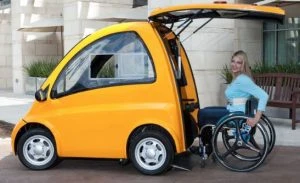
There are many wonderful people with some sort of physical disability that they’ve had since birth or from an incident later in life which caused the disability to come about. All are inspirational people.
Being allowed to drive when you are physically challenged offers you so much more independence and heaps more confidence. Driving offers a sense of freedom to do what you want whenever you can, so it gives you more opportunity to find a job and get to work, volunteer for others, and go to the other side of the continent solo, or with family and friends, when you want to just as you see fit.
Being physically challenged is on its own a significant hurdle to overcome on all fronts when it comes to being able to do life like a person with a fully functional body. There are many difficulties for a physically challenged person to deal with, and one of those is simply getting from Place A to Place B on time.
If you were/are a person with a physical disability who wants to be able to drive to your own Destination Freedom, then finding and owning the right vehicle that’s just right for you will be the first box to tick. Sometimes the vehicle may need to be modified to suit your own unique requirements. My Uncle Frank, a 2nd World War veteran who has since passed on, suffered a war injury from flying shrapnel. This brief fateful moment caused Uncle Frank to become paralysed in his left arm as well as partially in his left leg. He was still able to walk with a shuffle, drive a car (an always-shiny brown Toyota Corona) with an automatic gearbox, and give everyone a good laugh with his great sense of humour. A small bracket with a fixed swivelling knob was attached to the steering wheel of the car so that he could turn the car with ease, using his good hand and arm to steer.
Many other people have had accidents that even left them a paraplegic and confined to a wheelchair for mobility. Any accident can be life changing, none more so than a spinal cord injury. Yet still it is possible for these people to drive. A former New Zealand equestrian champion, Catriona Williams, who is now a tetraplegic after falling from her horse in 2002, still enjoys an independent life filled with fun. Enjoying adventurous road trips with family and friends is made possible with her modified Volkswagen Caravelle van, which has been set up for her to be able to drive securely from her wheelchair.
There are clever people who have the engineering skills enabling them to modify a vehicle for many people with physical challenges.
Some of the special equipment you can use to modify a vehicle include:
- Infrared remote control systems that enable easy access and operation of a vehicle from a wheelchair.
- Controllers for wheelchair movement (i.e. ‘Slip and Puff’ systems via sucking and blowing through a straw-like device.).
- Headrest indicators the indicators are activated by head movement on the head rest.
- Mini steering wheels that enable people with limited upper body strength to steer the car with ease.
- Joystick or foot steering, which can be combined for steering, acceleration, and braking.
- An array of hoists and roof racks for various reasons.
- Seatbelt modifications, harnesses, and special seating.
- A left foot accelerator pedal instead of a right foot one.
- Various hand controls that can of themselves incorporate up to seven unique functions – i.e., steering, high beam lights, horn, wipers, indicators etc.
These are just some of the possibilities. Pretty much any car can be modified, new or old. MPVs and vans are ideal for a person who is looking to drive the vehicle from their wheelchair. It’s awesome there are great opportunities out there for enhancing quality of life.
How Much is Too Much for EV Driving Range?

How long should an EV be able to travel on a full battery? ‘Neue Klasse’, from BMW, suggests that 1000 kilometres is about right. BMW’s New Class of vehicles are not far off the runway now, said to be arriving in 2025. And they are going to be the first BMWs-ever that have been designed from the ground up to be specifically all-electric, EV through-and-through.
That does raise an interesting question: How far should we expect our brand spanking new EVs to go on a full charge (a full tank of electrons instead of a full tank of gas)? Should we be able to drive from Sydney to Melbourne (877 km), Sydney to Adelaide (1374 km), Sydney to Cairns (2430 km), Sydney to Perth (3932 km), or just Sydney to Wollongong and back (about 175 km) on a full battery?
Most of us are probably sick of driving non-stop after 6–8 hours max in a day. So, say most of that was done at 100 km/h, then 100 × 8 hours would get you to 800 kilometres before you’d be needing a proper cup of coffee in a proper coffee cup! It would be then you’d want a rest and a sleep, right?
Perhaps Neue Klasse has got it bang on then. 1000 km would cover an all day blast up the coast from Sydney to Brisbane, which is approximately a total of 911 kilometres via the coastal route. Get to the end of that journey, and you could pull up at a mate’s place for tea, or a motel, and plug in your EV overnight ready for the long drive back home.
According to Thomas Albrecht (BMW’s head of Efficient Dynamics), in 2025, New Class EV BMWs are set to have “thirty-percent or more” range than what’s currently available now. That means that the brand-new BMW EV platform with lots of fresh pieces of technology, including 46 mm cylindrical battery cells, should push the Generation 6 batteries out to around 1000 km before they run out of electron juice. Even though BMW could go further than this 1000 kilometre range, Albrecht suggested that this would be the maximum that BMW will offer because they don’t think that such a long range is necessary.
BMW will debut the new Generation 6 batteries in the 2025 BMW 3 Series EV. How much do you think we should be able to get out of the battery packs in any new EV bought in 2025–2030? I’d be interested to know – remembering that battery tech and recharging times will likely have vastly improved by then.
Power Pole EV Charging Points
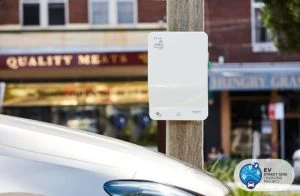
It is easy enough to transform your garage into a recharging point for your new electric vehicle (EV). There are other public recharging points around many of our main towns and cities now that are easily accessible. So, for a large number of relatively new EV owners, life is relatively straightforward when it comes to having to top up their EV with power. But what happens for those EV owners who live in an apartment that has no off-street parking or garaging for their car?
New commercial recharging stations of various types and in various situations are beginning to appear in Australia’s larger cities and their adjacent suburbs. You can find EV recharging points located at public buildings, service stations, kiosks, shopping centres, and even in an EV owner’s garage. The number and need for EV charging points is expected to undergo exponential growth as the demand for such recharging facilities grows along with uptake of EVs. Currently, one in four Australian households do not have off street parking. EV ownership for these people is a less attractive proposition. There is a need, therefore, to provide easy access to a recharging point for households who don’t have access to off street parking.
An Australian- and New Zealand-based utility services company called The Intellihub Group is in the business of providing innovative power metering and power data solutions to maximise digital and new energy services. One of the interesting projects that they currently on-the-go is providing power pole recharging for EVs. This is a perfect solution for the one in four households with no access to off street parking.
Intellihub is in the process of using local power poles in a trial for street-side recharging points, particularly catering to these less fortunate EV owners. According to Intellihub, there are significant gains to be made in the provision of these power pole recharging facilities for EV owners. Not only will the trial provide easy power access, but it will also help to understand the impact of EV chargers on the electricity network. Researchers will monitor how many people use the chargers during the trial and their impact on the electricity network.
Via the Australian Renewable Energy Agency (ARENA), $871,000 of Australian Government support has been given to Intellihub. Intellihub has contracted the first deployment of 50 EV chargers to be installed on street side power poles for a group of EV owners without off-street parking. These lucky EV owners live throughout New South Wales in either apartments, townhouses or units without any direct localized access to EV charging on-site.
The power pole project is a trial valued at $2.04 million, so it is also supported by Schneider Electric, the providers of the EV charging infrastructure and Electric Vehicle Supply Equipment (EVSE). Schneider Electric will manage the charging service for the trial. Origin Energy will ensure that 100% of all the energy required to charge the EVs in the trial project will be matched with the equivalent amount of certified renewable energy resources that will be added to the grid.
The idea of power pole charging an EV is not a uniquely Australian concept. Power pole charging is already being rolled out across the world. Some major global cities, including London, Toronto, Los Angeles, New York, and Hamburg are installing tens of thousands of power pole or streetlight EV chargers.
Power pole charging an EV in a city/town environment seems a rather straightforward solution to making living with an EV a whole lot easier. Intellihub CEO Wes Ballantine said: “It’s expected that as many as 10 per cent of new car sales in Australia will be electric vehicles by 2025. That equates to an extra 120,000 new EVs on our local streets each year. It’s likely that many of these car owners may be unable to charge their EVs from home. Power poles line most of our public streets and that presents an opportunity for the EV charging market. They’re an accessible, safe, and practical option for EV charging.”
The EV owners will use a third-party app to manage their recharging service. They will be able to get information about charging costs, time limits, billing, and other tools for interfacing with the electricity grid.
This is a big step towards a practical recharging infrastructure across Australia. It seems that owning an EV in a congested city/town environment might be getting a whole lot easier.
 Level 2, 9 Help Street