

Author archive
Spot the Difference?
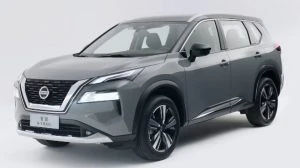
 Did you know that the Renault Koleos is very much a Nissan X-Trail? Were you also aware that the current BMW 7-Series is the platform for the new Rolls-Royce Dawn? These days car manufacturers are sharing a lot of the components that go into making a new vehicle. A lot of the electronic systems and computer chips are shared between makes and models, even engines and an entire body platform. As the costs of designing and building a complex new car rise, by getting together and pooling money, skills, assets, and sharing the costs of the new build, these are definitely clever ways for manufacturers to reduce their overheads, and the overall cost of designing and building a new vehicle.
Platform sharing between manufacturers and between models is, perhaps, more common than you may have thought; and particularly now more than ever. In some cases, the similarities between a particular car, truck, or ute and its platform-twin are obvious. However, at other times it’s not so easy to detect the resemblance.
A car’s platform is the base (including body shell, floor, and even some of the chassis and engine parts) on which it is built. Not only can these components be common to more than one manufacturer, but they can also be shared between models in a manufacturer’s line-up. The initial platform design and its production or engineering works can be shared across a number of different models. Kia and Hyundai are some of the best brands at doing this sort of thing, and so too is VW.
Sharing componentry between different manufacturers/brands has to be built on an existing good business relationship. So, when two or more automotive manufacturers with a good relationship have shared the same desire to save money, they can operate together and agree to share development costs and also essentially sell the same cars but under different badges. Renault and Nissan are great examples of this. Some of the most talked about illustrations of this occurring recently will have been the Toyota GT86 and the Subaru BRZ, which are essentially the same cars tarted up slightly differently. Also, the Toyota Corolla station wagon and the Suzuki Swace (a less known model here in Australia) are exactly the same car. Another illustration would be the awesome new Toyota Supra and BMW Z4 cars. Also, Volvo has platformed shared quite frequently over the years. The Global C-car Platform from Ford saw the Volvo S40 and V40 share much with the Ford Focus and Mazda 3. Well known Hyundai and Kia have utilized several duplications of platforms for their small automobile line-up since 1997.
Having a shared engineering platform, where manufacturers build a basic foundation that can be used across many of its own models is an advantage. The Volkswagen Group (VW), and the brands it owns, (Audi, Bentley, Lamborghini, Porsche, Seat and Skoda) are masters of this craft. VW has a common practice where they will build a smaller number of platforms, but the benefits come when they will then re-purpose these platforms across their own different brands. When VW designed and built the MQB (Modularer Querbaukasten) platform, it was shared across the Audi A3, Skoda Octavia, and Seat Leon. Also, one of its SUV platforms is shared and utilized by the Audi Q7 and Q8, the Bentley Bentayga, the Lamborghini Urus, and Porsche’s Cayenne.
BMW’s 7-Series is the platform for the immensely luxurious and expensive Rolls Royce Dawn. The new 7-Series is luxurious and sleek in its own right, but it is also much, much cheaper to buy – comparatively.
Some other new vehicles that are currently sharing platforms:
Cadillac CTS and Chevrolet Camaro
VW Polo and Skoda Scala
Mercedes Benz GLE and Jeep Grand Cherokee
Renault Koleos and Nissan X-Trail
Fiat 500 X and Jeep Renegade
Top Tips For Off-Road Driving
 The science of terramechanics is all very well (see last week’s post), but when you’re actually behind the wheel of a 4×4 and looking at a rugged bit of off-road track, you aren’t going to get out your calculator… and you probably don’t know all the specs and stats of the soil you’re about to drive over anyway. If you’re in this situation, what you need is some practical information. To help you with this, I’ve talked to one of the best off-road drivers that I know and have got his top tips for off-road driving.
Number 1: If In Doubt, Don’t
Sure, you want to get a thrill from taking your bush-basher off to bash some bush, but every vehicle has its limits. If the terrain looks a bit too gnarly and you’re not sure if your vehicle can handle it, then don’t risk it. It’s no fun getting stuck in the middle of nowhere, trying to use your muscles to free something that weighs at least a ton or more. It’s particularly not fun if you’ve killed your engine by getting water into where it shouldn’t be. Know your limits when it comes to approach angles, descent angles, ground clearance and water depth.
Number 2: Have Some Backup
If you’re heading out into the back of beyond, it’s a good idea to have a friend along, or at least let people know where you’re heading and roughly when you’re likely to be back – and preferably both. If you have another person along in another 4×4, then there’s another vehicle with lots of traction that can pull you out or off or up. Letting people know your plans is also helpful if something dire happens, as they can send out a search party. Locator beacons may be a step too far for some people, but at least make sure that your phone is fully charged (you may be lucky enough to get coverage).
Number 3: Control Your Speed Up And Down Hills
Heading up or down a steep and slippery incline requires some decent skill at controlling your speed. Descending requires pointing straight down the hill and a gear high enough to utilise the traction of your 4WD system. Too low a gear and you’ll quickly skate down the slope out of control. Braking while descending a steep, slippery surface will also cause the wheels to lock, followed by a very quick and bumpy ride to the bottom of the hill – if you haven’t turned A over T in the meantime. Ascending a steep and slippery slope requires strong acceleration straight up the hill the right gear to give you good momentum. If you can’t make it up, flick the gears into reverse and back straight back down the line you came up at a speed that won’t cause your vehicle to outrun the wheels, turning so that you get into a slide for a quick descent in record time. Unable to remember all that? Get an experienced driver to act as your offroad driving instructor the first two or three times… or five.
Number 4: When Approaching A Body Of Water, Make Sure You Keep Your Air Intake Out Of It
Can you breathe underwater? No – didn’t think so. You need oxygen to function. So does your engine (oxygen’s like that). If the water’s so deep it gets into your air intake, it will go into your engine and cause all sorts of hassles, which start with messing with the ratio of oxygen to fuel, and then continue from there. The water will make the parts seize up and your engine will die.
Most serious 4x4s have their air intakes in sensible places but it’s a good idea to know where it is exactly and avoid going through anything deeper than that – or even anything almost as deep as that, as waves caused by your wake and by the motion of going through the water can splash up. Test the water with a stick or by walking ahead and checking before you plough ahead (and, depending on where you are in Australia, keep an eye out for crocs).
Snorkels can be fitted to a 4×4. These things, which resemble an elephant’s trunk, put the opening of the air intake a lot higher – above the top of the vehicle itself in some cases. If you want to do a lot of river crossings, then one of these can be worth investing in.
Number 5: When Driving On Sand, Deflate Your Tyres
Let the air out of your tyres as this gives you more traction over sand (terramechanics in action again). This will increase the amount of surface area and spread the applied force and torque (and all the other factors) across it, meaning that your tyres will bite into the sand rather than digging a hole in it.
Number 6: Ensure that the 4×4 Function Is Engaged and Properly Locked In Before Tackling A Gnarly Patch
If your vehicle is a part-time 4×4, then don’t head into the rough stuff, put on the AWD function before you get started, not just before (or just after) you get stuck.
Number 7: Have The Right Tyres
We’re back to the terramechanics, but in this case, someone has already got out the calculator, namely the designer of the tyres. Serious off-roading requires the right tyre design with plenty of good tread. Slicks are no good for you here, and even some road tyres can’t cut the mustard. Naturally, you need to make sure that the tyres are inflated to the right pressure (which will vary) and that they’re in good condition. Mudgrip tyres are great for (you guessed it) mud!
Number 8: Pack Your Survival Kit
If you’re heading out into the wilderness in your 4×4, it’s time to release your inner Bear Grylls and be prepared for emergency situations – for you and your vehicle.
Your personal survival kit should include food and water (more than you think you will need for a day trip, just in case), clothing for all weather types, an emergency blanket and a sturdy pair of footwear (sports shoes are fine for driving in but are hopeless if you have to get out and walk through bush – swap shoes before you drive if you have to). You should also have a good first aid kit. Check out some more ideas for what should be in a survival kit from a good book or website (condoms for improvised water bottles, fish hooks and water purification tablets spring to mind).
Your vehicle’s survival kit should include a shovel for moving boulders, levelling out ruts and similar jobs. Tow ropes are also a must in case your friend needs to pull you out of somewhere. A chainsaw will often come in handy. Ensure that your spare tyre is where it should be, and pack a pump for the tyres that can be powered by your vehicle’s power outlet (formerly known as the cigarette lighter; my age is showing).
Number 9: Invest In A Winch
There are plenty of types of winch. Some are directly mounted on the vehicle so you can just hook the chain or rope securely round a solid anchor point from the winch on the vehicle. Others are manual winches, where you can anchor the winch from an anchor point beyond the vehicle and use the winch to pull the vehicle out of the stuck position.
Number 10: Make Sure You’ve Got Enough Fuel!
Terramechanics: The Science Of Off-Roading
 A lot of us have purchased, or have considered purchasing, a 4×4 vehicle. This could be because we like the benefits of extra safety or the visibility of the higher body. Or it could be that we want to go off-road in the vehicle and do a spot of exploring. However, when we get behind the wheel of one of these vehicles and head for the nearest dirt road or river, we don’t often stop to think about all the science behind what we’re about to do. The most we might think about are things like the power and torque needed – and possibly the basic physics involved in getting over or around a gnarly bit of terrain.
However, there’s a whole branch of science related to off-road driving, known as terramechanics. In fact, there’s a specialised scientific journal on the topic. Terramechanics has been a scientific topic since the 1950s, and the concept was introduced by a Polish-born engineer by the name of Dr Bekker, who was one of the key developers of the lunar rover vehicle used on the moon. However, much of Dr Bekker’s work was more down to earth – literally.
Terramechanics, in a nutshell, is the science of how a vehicle operates off-road on rough, uneven and soft terrain. It mostly considers the interaction between the wheels and the ground, although the science also acknowledges that things like the length of the wheelbase, the torque and the ground clearance are all very important factors. However, it’s what happens where the rubber meets the (off) road that gets certain people in white coats (probably dirty white coats) very excited.
Now, if you get right into terramechanics, the maths gets pretty complicated. If you’re like me, you probably left quadratic equations behind once you left high school. However, engineers and designers in the field of terramechanics use them all the time. I won’t get into the heavy-duty maths, but here, we’ll have a little look at some of the things that get thought of when the designers are coming up not just with new 4×4 models but also with the tyres that go on them.
Vehicle-related factors
Load: the weight of the vehicle plus what’s in it – probably you, a friend, the dog and something to eat.
Contact area: Exactly how much of the tyre is touching the ground. This is affected by the design of the tyre, the width of the tyre, how much air you put in the tyre and the condition of the tread.
Rolling resistance: Also known as friction.
Torque: You knew this one was going to be important, didn’t you? That’s why the torque – the measure of rotational acceleration (rather than linear acceleration) is always given in the specs of any vehicle.
Wheel width: Put simply, more contact area means more grip.
Wheel radius: There’s a reason why 4x4s have bigger tyres, and it’s not just for better ground clearance.
Terrain-related factors
Designers have to consider these factors when they design tyres and the vehicles. As anybody who’s done any off-roading will know, not all types of terrain are created equal, and the techniques and tyres that work well with, say, snow won’t work with sand.
In fact, a lot of what goes on in terramechanics considers the properties of the soil or the other terrain (snow and sand). You might think of soil as just mud or good plain dirt, but it’s pretty complicated stuff. It’s a combination of solids (the actual particles of soil), liquids (water) and gases (air), and it’s constantly changing even in a single place, to say nothing of how soil varies from place to place. I won’t bore you with all the different factors, what they mean and how they affect each other, but some of the most important ones that researchers have to specify when they run tests of new tyre designs or even whole cars are the following:
Moisture content: How much water is in the soil at any point. This affects the shear strength of the soil, which is very important in a lot of the formulae used in terramechanics to work out whether a wheel will lose traction or not. The shear strength of anything is its ability to stand up to a force that will make it slip sideways.
Porosity: How much air is inside the soil – these pores are where the water goes when you water the garden.
Particle size and shape: How big the minute particles of soil are and what shape they are has a big influence on how the dirt sticks together, holds moisture and compacts under pressure. Most of us have known since childhood that sand and clay are very different, and this difference is mostly down to particle size and shape.
Specific gravity: How dense a substance is. Yes, this is related to the specific gravity known to home brewing enthusiasts.
After considering these basic factors, things start involving complicated equations that make my head ache.
You know, I’m kind of glad that when I go off-road driving, I don’t have to keep all these factors and the science in my head – otherwise, I’d overthink everything all the time and wouldn’t enjoy the experience. An experienced off-road driver will be able to do by feel and “instinct” (i.e. right-brain thinking) what the terramechanics expert would have to calculate. All the same, I’m glad that there are people working hard to make sure that our vehicles and the tyres on them are the safest and best they can be.
The Rise Of The South Korean Motor Industry
 When I was a child, I hardly ever saw a car made in South Korea. Japanese cars, yes. They were everywhere. But cars from South Korea, no. However, after about 2000, I started seeing them everywhere. What was behind the big upsurge? Was it simply the case that I didn’t notice them on the roads, or was it that they weren’t around?
It’s certainly the case that today, South Korean cars are among the most popular best sellers on the roads. And it’s certainly true that the South Korean motor industry has absolutely mushroomed of the past 50-60 years. In fact, this is true of many industries in South Korea. Back in the 1950s, Korea had barely any heavy industry going. Today, it’s a work leader in a number of fields, including the automotive industry.
Before we go any further, quick note: to ensure that this article doesn’t fall into the TL/DR category, we’ll refer to “Korea” from here on out instead of South Korea. North and South Korea went their separate ways in 1953 at the end of the Korean Civil War, which was when the Korean motor industry got started. Given North Korea’s political stance, we don’t hear much about their cars…
Not that politics have nothing to do with the Korean motor industry. According to one historian on the topic, the Korean government played a long-term game, creating policies and strategies that guided not just the motor industry but other industry sectors (e.g., ship building) across the years.
From Zero To Hero In A Few Decades
The Korean motor industry got started in 1953 when the US military forces on bases in the South needed more spare parts for their Jeeps. They sent up a local assembly plant with the Jeep name to make these spare parts. The owners of the company also had the bright idea of using old oil drums left behind by the army to make the chassis for their own vehicles, known as the Sibal, which were very popular as taxis. And that’s where the Korean motor industry got started.
After the success of the factory for spare parts for Jeeps, other companies started looking at Korea as a location for production lines and factories – and Jeep kept on going. These were often owned by US and Japanese car companies. This went on until 1962, when the Korean government made a law meaning that foreign companies were only allowed to set up joint ventures that local automotive companies had a share in.
During this period, a surprising number of vehicles that we think of as Japanese or American were actually put together in Korea. Mazda, Nissan, Fiat and Ford were just some of them. In fact, Kia started off as an assembly plant for Mazdas, whereas Hyundai was originally a factory for producing Ford Cortinas.
However, the joint venture model wasn’t enough for the Korean government, as they wanted to stimulate the local economy and industry, and reduce the dependence on foreign companies. In 1973, they therefore switched to focus cars that were not just manufactured in Korea but developed there as well. Some of the companies began the process of developing their own products. To do this, they often copied what they had seen during the process of putting other vehicles together, with a few wee tweaks to make them unique. This often involved using licensed parts from companies outside Korea to ensure a good quality product before the final shift to coming up with their own innovations. And things took off from there!
Hyundai – A Case Study
Hyundai is a typical example of a Korean car company that went through all the stages of imitation and innovation. This company started in the late 1960s as an assembly line for the Ford Cortina. When the Korean government called for locally designed cars in the 1970s, they got licences from other companies for various technologies and developed a locally designed car, the Pony. This was followed by the Excel in 1980. Both of these used tech licensed by Mitsubishi. Because the Excel and Pony sold so well and competed with Mitsubishi, the Japanese company didn’t renew the license for any new tech. Wanting to develop further, Hyundai grabbed technological licenses from a number of different companies just in case, and also set up a training consultancy, where trainee developers headed over to Italy to learn the principles of top car design. After 18 months in Italy, these trainees came back to Korea primed with their new knowledge.
What they (and trainees from other Korean companies such as Kia and Daewoo) had learned worked well. In 1993, the Elantra was Australia’s best-selling vehicle. After Kia and Hyundai joined forces, sales of Korean cars grew even more, until, in 2010, the Sonata and Elantra got onto the list of 10 ton best sellers worldwide. In 2013, Hyundai earned more from car sales than BMW, Honda and Peugeot. In short, the Korean motor industry is a force to be reckoned with, and Korea is certainly one of the countries you should think of when you think of places where cars are made.
You may very easily have driven or owned a Korean car at some point; although I haven’t done so personally, various friends and family members have, and they found them to be sound, reliable and good to drive.
Where To (Or From) Next?
Korean cars may be here to stay, but one has to wonder who’s next? Where will our cars come from in the future? We’ve already seen a few of the Chinese players (LDV, Great Wall and its subsidiary, Haval) enter the Australian market – will we see some of the others? Geely already owns Volvo, so will we see more actual Geely vehicles? India’s another possibility, with a few Tatas and Mahindras already hitting Australian roads. Other Asian countries currently have factories assembling vehicles for other countries, so will Thailand, Vietnam and Malaysia take the same route as Korea has done? What about countries from beyond Asia – are we going to drive vehicles from Brazil’s Effa or Uganda’s Kiira? Given the trend towards EVs and the fact that much of the world’s lithium for car batteries comes from African nations, I won’t be the least bit surprised if African vehicles started appearing on the market around the world in the next decade or so.
 Level 2, 9 Help Street