

Author archive
The Fastest Wedge Of Orange In The Galaxy: The Bond Bug

It’s groovy. It’s bright orange. It’s a small car that aimed to capture the younger section of the automotive market that came out during a fuel crisis. It’s the Bond Bug. What’s more, it’s decidedly weird.
The Bond Bug isn’t like any other car found on the roads, and I very much doubt if you’ll see one on the roads of Australia, as only a few thousand were produced during its production run, which lasted from 1970 to 1974 (yes, this car is older than I am). Although the engine is fairly standard – a nice little 700 cc water-cooled inline four engine – it’s the styling that really turned heads and is still turning them. It wasn’t just the fact that the car had three wheels (which one motoring enthusiast described was either one wheel too many or one wheel too few). It also had a futuristic wedge shaped shape with a very space-age lift-up hood as well as two doors and pop-up lights. You could call it a two-door hatchfront instead of a hatchback. It seated two people on its black seats (bright orange and black – you could hardly get something more seventies than that!). It did have a boot that was able to get a small amount of luggage, such as a guitar, but that was about it. The bodywork was made from fibreglass, meaning that the vehicle was light, allowing for better fuel economy (but probably not safety!).
The looks were the brainchild of Tom Karen, a designer for the Ogle company who, among other things, designed the Raleigh Chopper bicycle, a very cool-looking bike that I vaguely remember the cool kids having when I was at primary school (if they didn’t have BMX bikes, that is). The Raleigh Chopper made a brief comeback this year, possibly to commemorate the death of Tom Karen in January 2023.
The Bond Bug was produced by Reliant. Reliant also produced another three-wheeled car, namely the Robin, which is best known as the three-wheeled car that shows up in the Mr Bean skits as the adversary of Mr Bean’s trusty little Mini. This (meaning the Robin, not the Mini) was also designed by Tom Karen.
In terms of performance, the Bond Bug wasn’t quite a supercar, shall we say? The 700ES variant boasted 23 kW of power when the curve peaked at 5000 rpm, and had 52 Nm of torque at the same number of revs. If you think that it could barely overtake a fairly speedy snail or a leisurely cyclist, the Bond Bug was capable of a top speed of 121 km/h and did the 0–100 km/h sprint (?) in 19.7 seconds. Needless to say, it had a rear wheel drive. The handling also left something to be desired.
If you think that the Bond Bug looks like something out of a sci-fi movie, you are absolutely right. In fact, Tom Karen worked with none other than George Lucas and used the chassis from a Bond Bug to create the Landspeeder that Luke Skywalker drives in the early scenes of Star Wars Episode IV: A New Hope (the anti-grav effect is done with mirrors).
Is Driving A Pain In The Neck?
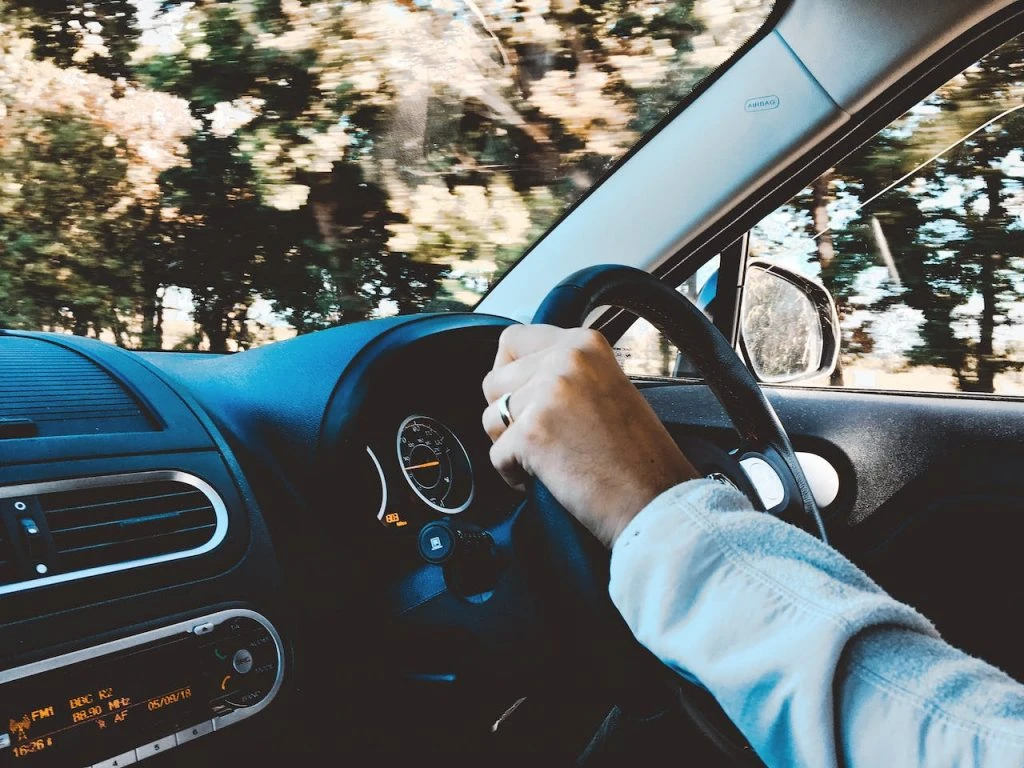
Does this sound familiar? You’ve been on the road driving interstate for hours on end. You finally get to your destination but as you go to move, and it suddenly feels like someone’s driving white-hot nails into your neck or shoulder. Sometimes, this pain can come on long before you reach your destination.
This sort of thing can be one reason why some people prefer to fly rather than go on long-distance road trips. However, if you prefer to drive, as a lot of us do, and you want to see the scenery up close as you travel, then you probably want to stop the long hours of driving becoming a literal pain in the neck.
What causes neck pain when driving? Two factors are at play here. The first is that your head is kind of heavy, and your neck has to have the muscles to support it – if you’ve ever seen or held a newborn baby, you’ll know that we aren’t born with the ability to hold up our big brains inside our big heads, and these muscles have to be developed pronto. The second factor is that when driving, we tend to keep our heads and necks in more or less one position the whole time: on the road ahead, with the occasional head-check of the wing mirrors. Being forced into one position for a long time causes the muscles to cramp. I don’t know if the heads-up displays found in most modern vehicles make the problem worse or not.
The issue of support is easy enough to deal with. For a start off, adjust your headrest. Most of us know how to adjust the lumbar support (if your driver seat has this; many do) and the angle of the seat to the right position. If you don’t know how to do this properly, the idea is to have your seat back at an angle so your hips and shoulders are stacked above each other (the seat and the back should be at an angle of 90–100°). If you like to slump or slouch back, your neck will have to go at an angle it doesn’t like for long periods so you can see ahead. Fixing the angle of your seat and making sure that your lumbar support is sitting nicely in the small of your back will go a long way to avoiding neck pain while driving. Also make sure that the head rest is touching the back of your head.
However, even with the cushiest of seats in the perfect position, your neck will get tired and sore after a while. This means that you may need to take other steps during long-distance drives to avoid your neck aching.
The best tips I’ve found for avoiding neck pain while driving are the following:
- Get a neck support pillow. You might feel that you look silly wearing something that looks like you’ve just had neck surgery, but at least you’ll feel a lot more comfortable. These pillows will take some of the weight of your head so your neck doesn’t have to work so hard.
- Adjust your hand position during long drives. Yes, we all know that 10 to 2 is the best position to have your hands on the steering wheel, but keeping your arms in this position will cramp the trapezius muscles (that’s a big group of muscles in your neck and shoulder). During a long drive, change your hand positions around.
- Chill out. Many of us tend to clench our jaws and tense our shoulders when we feel stressed. This leads to agonizingly tight shoulders. As you drive (assuming that you’re not in a high-pressure situation), do a quick survey of your neck, jaw and shoulders. Are you holding your stress in these parts of your body? Do a few deep breathing exercises as you drive to help dispel the stress.
- Massage. Use self-massage (with one hand on the back of your neck), a massage seat or a helpful passenger riding shotgun to give the muscles in your shoulders and neck a quick squeeze and rub.
- Move your neck. Even while you’re driving, you can move your neck and shoulders – without taking your eyes off the road. Shrug your shoulders and try to roll them. Do that neck roll and one-sided shrug you see tough guys and gals in the movies do before a fight. Slide your neck from side to side while staying level like a belly dancer. Tilt your head from side to side like a stereotypical Indian. Nod and shake your head. As long as you keep your eyes on the road ahead, you’re all good.
- Take a break! The fact that your neck is sore is a sure sign that you’ve been sitting in one position for too long. Your legs could probably do with a break as well. Pull over and stretch your legs. As well as all the neck exercises mentioned above, remember to move your arms and do a few twists of your spine as well.
Obviously, if the traffic is heavy or if you’re driving through the middle of the city, then you may not be able to do all of these. However, do what you can when you can, and you’ll find that driving is less of a pain in the neck.
Don’t Blame EVs For This Fire
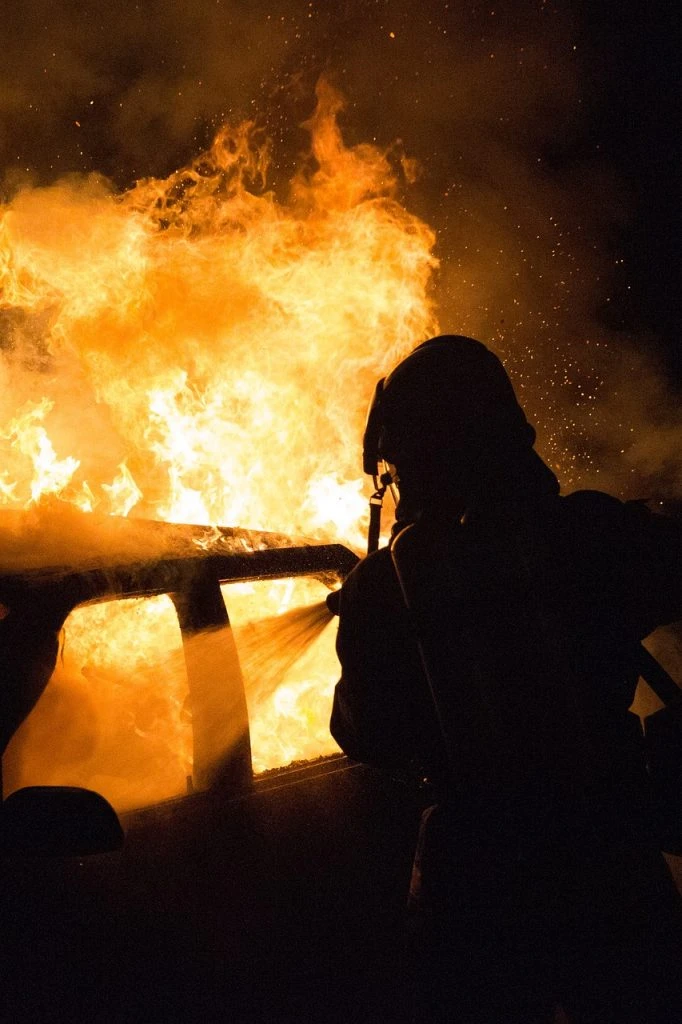
I’m not sure if you caught this one on the news recently but recently, Luton Airport in London was shut down because of a major fire that ripped through a full car park, writing off over 1000 cars. It wasn’t long until someone posted videos of this on YouTube and other social media, with at least one video – which went viral – either suspecting or outright blaming EVs for the fire and even claiming that this would kill the EV market.
Well, we all know that the social media is not the most reliable source of new, unless its news about your family members and friends that they post directly (and even then, it can be dodgy!). According to the officials investigating the fire, it looks as though a diesel car was to blame. All vehicles get pretty dramatic when fire is involved, either thanks to being full of a highly combustible substance (petrol or diesel) or prone to thermal runaway in the case of a short-circuit (in the case of EVs) or both (hybrid vehicles), so once the fire got started, every new car involved in the blaze made the problem worse. On top of that, the building didn’t have a proper sprinkler system. What were they thinking?
Were EVs involved in the Luton Airport car park fire? Well, given that London usually has a congestion charge but exempts EVs from this, I think it’s safe to say that a few EVs would have been caught up in the inferno. However, it looks as though they weren’t the cause. The claims probably arose because there have been warnings put out by several fire departments and authorities that lithium batteries are one of the most rapidly growing causes of fires. However, it’s not EVs that tend to get the firefighters called in. Instead, the more culprits are e-bikes and e-scooters that have been plugged into the charger for too long, resulting in the battery overheating and triggering thermal runaway.
EV fires are not particularly common because the designers know about the problem and have done their darnedest to prevent them happening. They are still working to ensure that the battery pack can’t be damaged easily, as anything that crushes or punctures the battery pack can trigger a reaction. The problem is that lithium battery fires burn differently from petrol or diesel fires (and a lot hotter), and the technique of putting them out quickly is different, and it’s something that firefighters may not have been trained in, although that’s changing as EV uptake increases – to say nothing of those annoying e-bike and e-scooter fires. This is partly because starving the reaction of oxygen (which works for combustible things) doesn’t work in the case of thermal runaway. The difference between the way ICEs burn and the way EVs burn is reminiscent of some of the advice given by Marmie in Little Women:
He has a temper, not like ours—one flash and then all over—but the white, still anger that is seldom stirred, but once kindled, is hard to quench.
It’s not the case that EVs are more prone to catching fire because of the batteries. Petrol and diesel cars can also burn nastily, though probably not the way you see them do in the movies, where even one bullet turns a car into a fireball. It’s just that EVs are different, and what causes them to catch fire can be unexpected, so people don’t know to avoid the risk.
So what can you do to minimize your risk of a fire in your new EV? Here are some tips I’ve come across:
- Watch out for sharp objects on the road. Physical damage to the battery can trigger thermal runaway – in fact, this is probably one of the most notorious causes of EV fires. Potholes can be quite nasty, so if you end up driving an EV through one of these, get it checked pronto. The same applies to loose stones. This is probably also the reason why EVs aren’t as popular in circles and places where serious bush-bashing happens and dirt roads are common, as the potential for damage is much higher.
- Keep the car at the right temperature. An EV is like Goldilocks – it doesn’t like to sit somewhere too cold (in which case, the battery will sulk) and it doesn’t like being too hot either. In a well-ventilated garage is probably the best, with air conditioning if you live in a particularly hot part of the country, or at least in the shade in summer.
- Avoid charging the battery to 100%. Stop short of the maximum. Overcharging is usually the root cause of fires in smaller lithium batteries (phones, e-bikes, laptops, etc.). It’s recommended to keep the battery level between 20% and 80%. This may mean that you have to be more vigilant when charging your vehicle and keep an eye on progress, either via an app or in person.
EV Etiquette
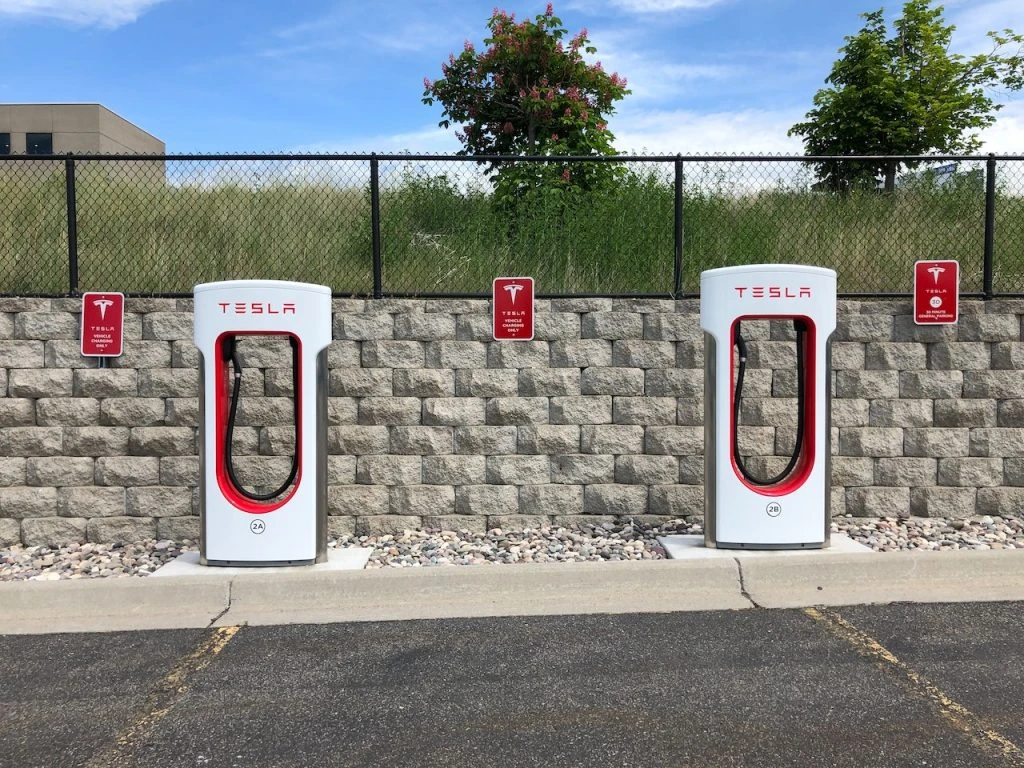
I recently came across a news article about another publicity-related EV road trip in the USA, this time involving the US Energy Secretary. I won’t go into the full details of the road trip in this article (you can read it here ) but it seems as though Ms Granholm was guilty of some very, very bad manners. Specifically, the people in this road trip convoy encountered the same problem as the CEO of Ford USA in his Route 66 road trip, namely that there was a bit of a shortage of EV charging points. You may be scratching your head at this point, as you’ve probably seen a few of these stations cropping up all over the show – they seem to be in the carparks of every second big box store. However, you have to remember that although there seem like there are plenty of them and they’re easy to find, charging up takes a lot longer than filling up. If you come along to a petrol station and you find that all the bowsers are taken, you won’t have to wait more than a few minutes until one comes free and its your turn. However, in the case of an EV charging station, you’ll have to wait for the other person to finish charging (which could be more than half an hour) and then you’ve still got to charge your own vehicle. This can put a serious dent in your working day if you hadn’t planned for that extra time.
The very rude solution found by Granholm et al. was to send an ICE vehicle ahead of the convoy to park in the EV charging space to reserve it, and they got away with this, as that particular state didn’t have a law against ICE vehicles parking in EV charging spots. However, it put quite a few backs up, especially for one family that came along with a grumpy baby in their EV really, really needing to juice up so they could run the air conditioning. Not a good look at all.
Of course, this highlights a problem with the infrastructure that it’s beyond you or me to solve. If governments are serious about encouraging the uptake of EVs, then they’re going to need to do something about charging stations (and capacity for electricity generation, but that’s another story). Nevertheless, given that EVs are probably here to stay, what can you do to ensure that you don’t become one of those drivers who gives EVs a bad name? Here’s a list of my top tips:
- Factor in the possibility of other people using the charger when you plan your trip and calculate the time needed. You may not be able to guarantee a spot at the DC fast charger.
- If someone gets to the charger before you do, don’t throw a hissy fit. They’ve got as much right to it as you do. Definitely don’t do anything pushy, like sending someone ahead to stand (or park) in the spot you want, or start a fight (yes, this has actually happened).
- Think of public charging points as emergency top-ups. It’s not like the situation with ICE vehicles where you can only fill up at the garage. So charge at home (and at work) as much as you can. If you don’t have to use the public charger, don’t.
- If you have to go slowly because you’re running out of charge and the nearest charging station is still a few kilometres down the road (what my ICE-driving brothers refer to as the Nissan Leaf Limp), don’t hold up traffic behind you. Pull over to the side and let them pass.
- Never unplug someone else’s vehicle from the charger while its charging, even if that car is unattended. Some apps may allow you to unplug a fully charged car, but if you don’t know for certain, then don’t do it.
- Don’t just park in the charging point, even if you are driving an EV. They are charging points, not EV-only car parks.
- Some charging points have time limits. Respect these.
- If you’ve left your car to charge while you do a spot of shopping, keep an eye on progress via the appropriate app on your phone.
- Above all, remember that although you have an EV and you’re doing it to save the planet, this does not give you the right to be a jerk to people who drive ICEs (and they don’t have the right to be jerks to you, either). Be proud of your choice, sure, but don’t look down on other people – they might not be able to afford an EV, or an EV might not suit their workplace, or they might be country bumpkins for whom EVs don’t really work. So be a good EV ambassador.
 Level 2, 9 Help Street