

Author archive
Space Saver Tyres; A Flat Option.
The last three decades have seen many innovations that have been placed into cars, trucks, and other forms of automotive motion. Anti-lock brakes, electronic stability control, airbags, even FM radio and CD/MP3 playing capability. Tyres have improved in size, water drainage, and grip levels. Then there’s the space saver tyre. Intended to be a weight saving device and providing an option should a main tyre receive a puncture, just how effective can one of these be?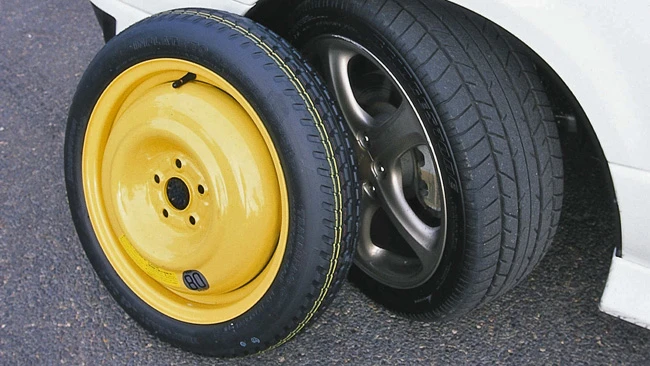
Given that many travel for decades without ever suffering a flat tyre or indeed any form of damage, having a space saver does make perfect sense. They’re lighter and by virtue of their name, simply don’t take up as much room, especially with the rise of larger diameter wheels and tyres. However, HOWEVER, it’s also fair to expect that most of the time, that when they get called upon for usage, that one is in an area not far from either home or a tyre retailer.
Herein lies an issue or two. First up they’re rated for a speed of fifty kilometers per hour. Maximum recommended velocity is eighty. Maximum recommended distance is 450 kilometres. That’s all fine when you’re in the built up areas surrounding your home, but when you’re three hundred kilometers away from home, in a car that’s not your own but a press review car, and one that’s ostensibly soft road capable, then there’s a problem.
Suzuki, like many car makers, fits its vehicles with a space saver. The Vitara All-Grip is fitted with Continental tyres and they’re 17 inches in diameter. Although it also comes with a switchable drive system, splitting torque to the rear wheels as well as the front, it’s not really intended for much else than tarmac with perhaps a bit of mud and sand work occasionally. Again, most people would do this within reach of assistance.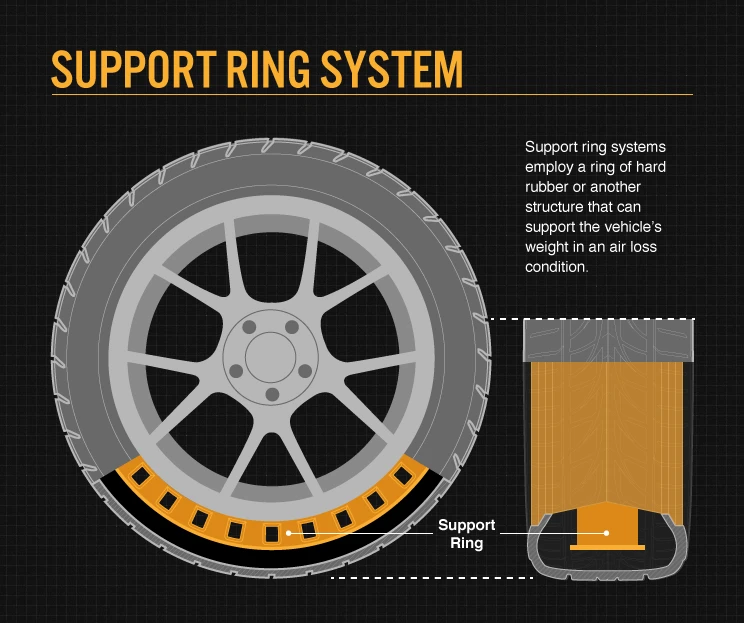
The Vitara was driven from the Blue Mountains to Canberra to visit the financial controller’s mother in hospital. Upon arrival it was noted that the right rear had a bottom flatter than a steamrolled pancake. What looked like a screw was later found to be a two inch on either side vee nail. What was also notable was that the Vitara’s handling did NOT exhibit any form of instability.
Thankfully a change of tyre had the Vitara suitable for driving. But remember, dear reader, that we’re three hundred kilometers from home and in between are roads rated from 100 to 110 km/h…Playing into favour was the time. Any later and finding a tyre store close with which to do a repair or swap would have been problematic, a problem that would have been instantly solved if a full sized spare had been provided. As it turned out, the inner side exterior sidewall had been scored enough to lessen the structural strength and thereby rendered it unuseable.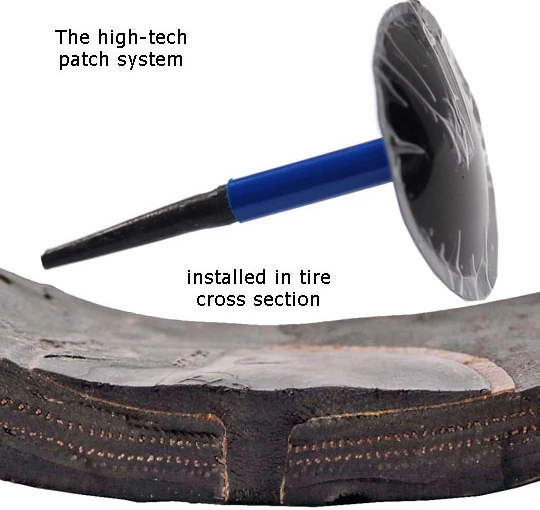
Further providence came in the form of the press contact and a Bob Jane’s within a safe speed fifteen minutes away. Again, if a full sized spare had been fitted neither a visit then nor an overwhelming ninety minute wait from entry to departure have been required. Consider, too, that if a place had not been available then a three hour return journey would have been at least four and with the end result, at minimum, being a space saver spare on the verge of unuseability.
So what options are there? The initial diagnosis was to fit a plug and patch. Potentially illegal, according to some. If it had been a “simple” nail, perhaps a can of that inflating and sealing goo might have helped. Stress that word “might”
What about fitting run flat tyres? Hmm…not an option unless you’re a royal or a communist country dignitary like Trump. They’re also severely speed and distance limited, with a recommended top speed of ninety kilometers per hour for a maximum distance of just eighty kilometers. Again, not suitable for long haul drives.
Then there are slightly different options like full sized spares on a steel wheel. Cheaper, but heavier. Nuff said. Full sized spare tyres that again are distance limited to their compound. Nup. What about the space saver itself? Well, as stated, speed and distance limited. BUT, and that’s a big but, bigger than a Kardashian’s actually, your car’s stability and braking systems can be negatively affected.
Emergency distance braking is increased. A study by the RACV proved conclusively that space saver tyres affect stopping distance. The vastly smaller footprint also means traction is compromised and contributes to instability under braking.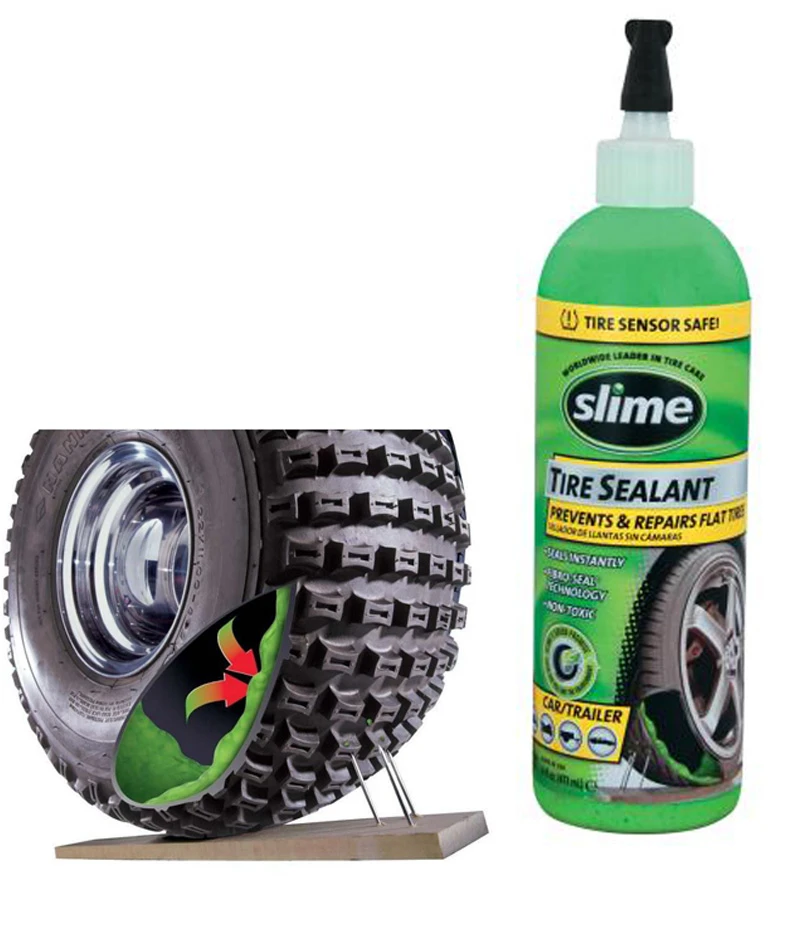
Simple solution: bin the space saver and fit a full sizer.
A Lotto Win Away: Aston Martin DBS Superleggera.
Iconic British car maker Aston Martin has unveiled their hotly anticipated Ferrari 812 competitor. It’s called the Aston Martin DBS Superleggera. Priced at US$305,995 it packs a supercharged 5.2 litre V12, punching out 533kW and a tree-stump pulling 900 Nm of torque across a mesa flat rev range of 1800 to 5000 rpm. Based on the DB11 AMR, that’s 63kW and 200Nm more than the donor block.
The car has a dry weight of 1693 kilograms and rolls on gorgeous black paint alloys at 21 inches of diameter. Pirelli P-Zero tires are the chosen rubber. The drivetrain has been uprated and provides a 0-100kph time of 3.4 seconds and will see the ton three seconds later.
Aston Martin has delved into the books of history with the name. DBS hasn’t been used since 2012 and Superleggera, Italian for “light weight”, goes back to the 1960s. To that end, Aston Martin have eradicated 121 kilograms of mass. It also, until 2012, sidelines the evocative Vanquish nameplate.
One of the design briefs was to visually spread the gap between AM’s model range. To that end, the DBS Superleggera has a more assertive grille and angrier looking headlights complete with angular LED driving lights. The grille is in a nosecone designed to increase down-force before combining with an extensively modified floorpan and rear diffuser to add up to a total of 180 kilos of down-force. Drag wasn’t sacrificed, with the same drag coefficient as the lesser down-force endowed DB11. There’s just 70kg here.
The profile is low, sensual, and definably Aston Martin is some elements. What’s new are the airvents leading from behind the trailing edge of the front wheels and edging back into the leading edge of the doors. The bootlid no longer displays the iconic Aston Martin emblem, it now proudly says the company name and sits between super slimline LED tail lights. This sits above a retuned exhaust, said to offer an extra ten decibels of what chief engineer Matt Becker says is “quality noise”.
There’ll be plenty of that on demand, with the traction control system being reprogrammed to cope with the extra torque and its delivery to the tarmac. Becker says of the reprogramming: “If you slide the car and you know how to drive, it gives you all of the information you’ll need about when to put your foot on or lift from the throttle.”
Aston Martin is targeting both its own existing Vanquish customers, but more specifically owners of the Prancing Horse. This car is part of Aston Martin’s “Second Century” plan, where a new model per year for seven years is released. This includes a convertible version of the DBS Superleggera due for 2019. Aston Martin expects to start deliveries before Christmas of 2018.
Private Fleet Car Review: 2018 Toyota HiLux Rugged-X and Rogue
It’s fair to say that sometimes a manufacturer will release a car that’s dressed up and sold as a limited edition in a cynically grinned cash-grab. Toyota‘s trio of body kitted HiLux four door utes, the Rugged, Rugged-X, and Rogue, are dressed up but Toyota says they won’t be limited editions. They’re actually a mid-life model addition to the range. 
 The drivetrain remains the same as the three are, unsurprisingly, based on existing models. A 2.8L four cylinder diesel with 130kW and 430 or 450Nm (depending on whether a six speed manual or auto is bolted to it) is standard for the three. The boss tradie aimed Rogue is auto as standard whilst the let’s get weekend dirty Rugged and Rugged-X can be bought with either a three or two pedal setup. The entry level Rugged manual starts from $54,990 and there’s a $2K premium for the slushbox. Rugged-X starts from $61,690 and again has a $2K auto price jump. Rogue is the same price as the Rugged-X manual.
  Economy was worse in the Rogue than Rugged-X, finishing on 10.5L/100km and the Rugged-X finished at 9.7L/100km. These figures aren’t far off the combined cycle figures of 10.9L and 7.9L/100 respectively from the 80L tank, but as both were used only in urban environments, the dollars start adding up. Plus, Toyota quotes the Rugged-X as being heavier than the Rogue in a dry weight comparison, at 2252 kilos versus 2147 kilos. Hmmm…..
 Rogue comes with a restyled front plastic bumper with driving lights locked away in a niche in each corner. Said niche is angular in design and strongly resembles one from Kia’s Sorento from the early-mid 2010s. Both Rogue and Rugged-X have a roll-bar with bespoke nameplate, towbar, bash-plates under the nose, and sidesteps. Here’s there’s a slight difference, with the Rugged-X having narrower all metal steps called rock rails, and Rogue getting wider plastic shrouded steps.
 Both Rugged and Rugged-X have a snorkel but again a visual difference. The Rugged has a proper bullbar fitted with integrated LED driving lights, with the Rugged-X a smaller steel front bar, integrated centre mounted LED light bar, and sharply framed corners for easier off-road climbing. At the rear there’s matt black covers for the leading edge of the tail lights. Headlights in the Rugged-X are lined with LEDs but the Rugged dips out.
 There’s additional common features for the two; under-body tow hitch points front and rear, an open rear tun with urethane protection for the floor and sides, a blacked-out tailgate handle, and Rugged bonnet decals. The Rogue is more subtle in the decaling plus has a lockable hard cover for the marine carpet lined tub. Rogue has 18 inch black painted alloys, Rugged and -X have the same styled 17s. The Rogue came clad in a pearlescent white, the Rugged-X test vehicle in a complementary to the decaling grey.
 Inside the Rugged-X is an interior that’s almost a clone of what’s found in the Rogue. Bar a difference on the floor with rubber mats versus carpet, and slightly different sill trim, the pair are identical, through to the dash design, features, and somewhat near compromise in rear leg room. Even though the three are all over five metres long in total length and have a wheelbase of three, the actual cabin sizes aren’t great and hopefully this is something an update addresses. In essence, the rear cabin is tolerable for anyone hovering at six feet or so in height but if the front seats are occupied by those at the same height and by necessity push the seats back, then…
 The dash itself is heavily driver focused. The tiller feels broader than it probably is, a pair of dials bracket a small info screen that plays a GIF on startup and shows info via a tab on the right hand spoke of the steering wheel. The dash itself is a three fold shape and seems to fade off into the distance on the passenger’s side. Neither side wraps around, they simply end abruptly at each door.
 A centrally mounted touchscreen, a different design to that found in the Camry and looking more as if bolted in rather than designed in, houses a CD player, DAB tuner (which was fussy in both cars by only displaying a select set of DAB stations), Bluetooth, and via USB and Auxiliary located ahead of the gear selector. The all over look is black on black, with more black thrown in for good measure. This may suit the Rugged, the -X could do with a bit more lightness, and the Rogue needs a broader colour palette full stop.
 Seating in the -X and Rogue is leather with a one setting heat button next to the USB port. Driver’s seats were electrically powered and excellent in actual comfort levels. But the pair miss out on some now seen as essential safety equipment. Although a rear view camera is on board, there’s no parking sensors there, no Blind Spot Alert, no Autonomous Emergency Braking and that ;ast one is crucial given the lack of real stopping urge in the Rugged-X, and only slightly more inclined in the Rogue. ESC is standard though, as are seven airbags and trailer sway control. if you do wish to tow, there’s a 3200kg braked towing capacity. Cargo carrying, however, is well under a tonne for both, with Rogue 826 kilos and 748 kg for Rugged-X.
 On the road the pair display distinctly different characteristics. The Rogue is more inclined towards being car like, the Rugged-X is typical four wheel drive with a looser rear end and a ride quality tending towards wallowy and pogo. The steering in the Rugged-X was rubbery on centre but backed off from that through left and right. The Rogue again felt more like a car in its steering. Drivewise, being based on the same mechanicals meant they accelerated better in Power, were as equally more sluggish in Eco, and were reasonably quick in normal driving. Hard acceleration had the transmission move through the lower, more closely spaced gears, quickly although the engine became thrashy above 3500 rpm.
  Light acceleration is better for the transmission, as changes were far smoother, and less inclined to be physically felt. More than occasionally though, the transmission was caught out by slowing and then accelerating, as one does coming to a give way line or roundabout. The indecisiveness would have the six speed slip back from third or fourth a cog or two then suddenly drop down again. It was also prone, on longer yet more gentle declines, to drop back a cog too far in an effort to engine brake.
 Only the Rugged-X was taken off-road, as the tyres fitted to the Rogue were more of a tarmac spec, plus the Rigged-X was more specifically kitted for the purpose. It’s here that the departure and approach angles also differ between the two. Rogue has 30 degrees, Rugged-X 28. Departure angles are 21 and 20 degrees respectively. On our favoured test track for off roading, a fire trail with a great mix of gravel, rock, mud, mud puddles, and some good inclines, the Rugged-X ate these up without a noise.
 High range four wheel drive was selected and that was all that was needed even on the sections where low range, Hill Descent Control (which was tested and worked as expected) and diff-lock would have been suitable. Ride and handling immediately became obvious as being more suitable for the varying kind of terrain, as the spongy leaf sprung rear enabled the Rugged-X to roll over obstacles as easily as tarmac.
 Toyota’s standard three year warranty applies, as does their roadside assistance and fixed price servicing packages.
At The End Of The Drive.
After the failure of the Toyota Racing Division experiment, one could cast a cynical eye over the Toyota HiLux Rugged, Rugged-X, and Rogue. With a potential design update hint with the Rogue’s front bar, both should attract a bit of eyeball action. But like a well plated dinner that is eaten in two bites, there’s more to these two than looks. Absolutely there’s that proven off road credential and the Rugged-X will fit the bill for rural and dirt applications admirably.
The Rogue’s off road ability will be the same but it’s more for a “if it’s needed” rather than a stylish looking foreman type vehicle. If the Rogue is to be the trio’s leader then a cabin lift is needed. The seats need a step up from the Rugged-X, and the trim levels need a hint of greys below and a white to beige/bone roof lining. And an extension to the cabin’s rear for better leg room is almost essential, as is the addition of rear parking sensors as standard.
Here is where to find out more: 2018 HiLux range including Rugged, Rugged-X, and Rogue.
Aston Martin Rapide AMR
Aston Martin is perhaps best known for a glittering range of two door hard top and convertible cars. Under the radar is the four door contribution to the super saloon family. The Rapide is a subtle four door design and has recently been upgraded to AMR (Aston Martin Racing) specifications. Powered by a naturally aspirated V12 with 433kW and 630Nm and transmitting that to the tarmac via an eight speed auto, the AMR will come with three trim levels. Standard, Silhouette, and Signature will roll on 21 inch diameter wheels clad in Michelin Super Sport rubber, a first for the iconic brand. Tyre sizes are 245/35 up front and 295/ at the rear.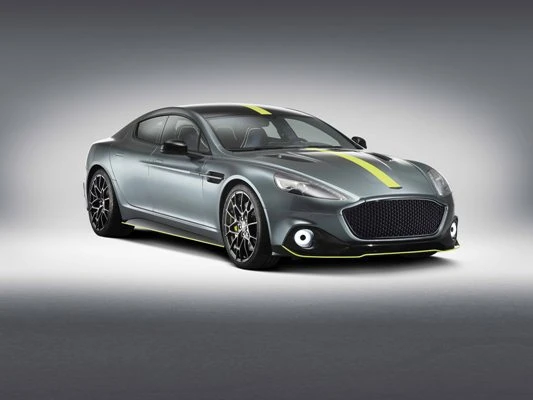
The five metre long Rapide AMR asserts itself with a large grille that evokes the track weapon Vantage AMR-Pro. Subtle aero hints come courtesy of the carbon fibre tail spoiler, front splitter, sill panels, and rear diffuser. Weight reduction is also further enhanced by fitting a carbon fibre bonnet, complete with engine bay exhaust vents.
The engine has been massaged by fitting larger inlet manifolds that pack tuned length intake runners, with the kilowatts breathing out via a new quad exhaust system. Stopping efficiency is enhanced by modified brake ducts, dust shields, and utilise the spoked design of the 21 inch alloys to funnel cooling air onto the 400mm six piston carbon ceramic front brakes. These are backed up by 360mm four piston rears.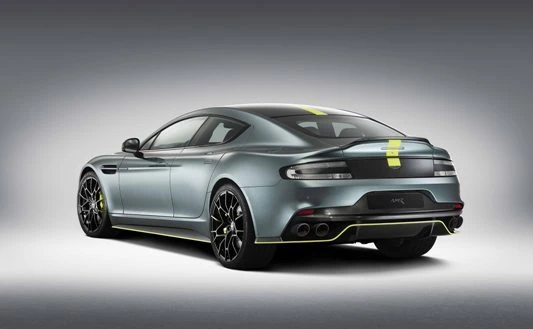
Being based on a racing design, the AMR Rapide sits 10mm lower courtesy of reworked suspension components. Aston Martin have gone over the front and rear double wishbones, fitted with stage three adaptive dampers, with plenty of Nurburgring evaluative work. To make sure the AMR looks the goods there’s a choice of four colours for the Standard and Silhouette. Mariana Blue, Scintilla Silver, Lightning Silver, and Onyx Black are complemented by AMR Lime Green highlights on the Standard’s sills, splitter, and diffuser, with the other gaining a China Grey or Clubsport White stripe.
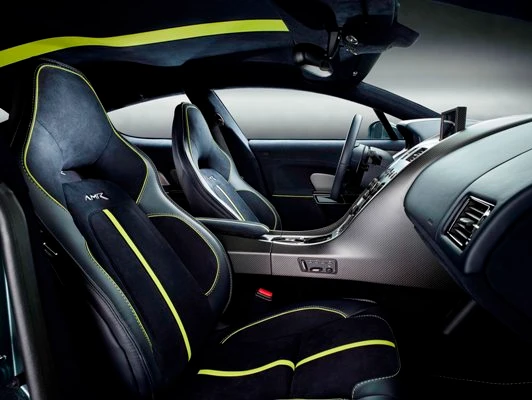
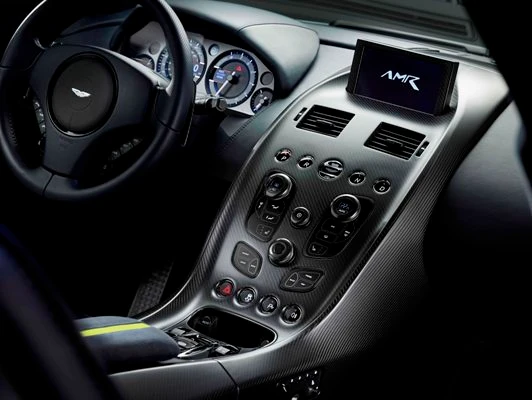
The Signature goes one step closer to a racing look with Stirling Green paint, Lime accents and stripe, backed by a combination of AMR Lime or Galena Silver stitching for all three versions. Driver, front passenger, and each rear seat passenger are cossetted in Alcantara seats which will have discrete AMR logos in Galena Silver stitched in, and there’s extra glamour with a full length carbon fibre centre console. Apart from visiting Aston Martin’s bespoke “Q Store” a buyer can specify the optional One-77 steering wheel as well. Digital radio, Apple CarPlay, and Android Auto will be standard, as will 700 watts of audio power.
Deliveries are scheduled to start from October 2018 worldwide. Contact Aston Martin Australia for details including pricing.
 Level 2, 9 Help Street