

Author archive
Toyota Takes Five, Warranty Wise.
Just days after Subaru announced they will be offering a five year and/or unlimited kilometre warranty, Toyota has joined the party. They’ve announced the introduction of the Toyota Warranty Advantage – a standard five-year manufacturer warranty for all new Toyota vehicles sold from January 1, 2019. For private buyers there’s an unlimited kilometres warranty, with commercial vehicles getting 160,000 kilometres.
Toyota also offers a 60 buy-back scheme. Owners of new vehicles are entitled to a full refund for any failure that prevents the vehicle being driveable within 60 days of collecting their new vehicles, and this 60-day money-back guarantee also applies where there have been multiple unsuccessful attempts to repair a vehicle. There is an added bonus; Toyota dealers will cover the cost of a loan vehicle and towing, if required, if a vehicle requires a warranty repair and is deemed as undriveable.
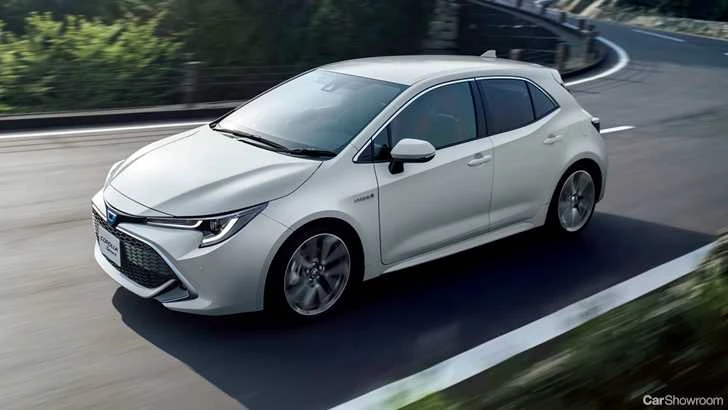
Like most companies, Toyota will now offer an extended warranty if a new car is serviced to log book specifications, of up to an extra two years. This also extends to hybrid cars and the battery systems with an extra five years and/or unlimited kilometres as long as an annual hybrid “health check” is carried out by Toyota from the fifth year onwards.
If there is a component failure due to a manufacturing defect, the coverage and apply past the Toyota Warranty Advantage period. This also covers, thankfully, Toyota genuine parts and accessories, with coverage up to five years and linked to the vehicle’s warranty coverage.
Sean Hanley, the Vice President of Sales and Marketing, said: “The Toyota Warranty Advantage demonstrates the willingness of Toyota and our dealers to provide excellent customer care that matches the enviable reputation of our vehicles for quality, durability and reliability. Our guests have told us that being able to remain on the road, with minimal disruption and inconvenience was most important to them.”
He also said: “Which is why we’ve taken the time to develop the Toyota Warranty Advantage, to ensure that we deliver what our guests are looking for – a consumer-focused warranty program that will ensure that Toyota owners feel confident and appreciated throughout an exceptional ownership experience.”
Toyota have also gone hard on capped price servicing. All new Toyota vehicles are also covered by Toyota Service Advantage, with a new Toyota HiLux costing just $180 (petrol) or $240 (diesel) for each of the first six scheduled services over three years or 60,000km (whichever occurs first). A new Toyota Corolla hybrid costs just $175 for each of the first five annual scheduled services over five years or 75,000km (whichever occurs first).
Contact your Toyota dealership for details.
Subaru High Fives! The Warranty, That Is.
Subaru has joined the extended warranty club, with five years and unlimited kilometres warranty now being made standard. As an added benefit, Subaru will extend the warranty of three years to five.
As Subaru’s website says: If you purchased your new Subaru before 1 January 2019 and during a campaign period which included an offer of a 2 year manufacturer’s extended warranty, your standard Subaru Warranty of 3 Years/Unlimited Kilometres will automatically have been extended to 5 Years/Unlimited Kilometres.
If your vehicle’s warranty is extended under the offer you will have received a communication from Subaru Australia confirming your vehicle is covered by a 5 Year/Unlimited Kilometre Warranty.
This brings Subaru into line with all but two manufacturers in the mainstream marketplace, with just Toyota and Nissan left holding the three year warranty line.
Any vehicle bought new from Subaru from January 1 automatically attracts the new warranty as well. Extra peace of mind comes in owner transferable warranty, meaning that if an owner of a vehicle with the five year warranty on-sells the car within that period then the warranty goes with the car.
The fine print can be found here:Subaru Five Year Warranty
Car Review: 2019 Renault Koleos Life
Renault’s push to gain more market share in Australia is working well if the 2019 Renault Koleos Life is any standard to judge by. Model shared with Nissan (the X-Trail), the Life is the entry level model of the Koleos range. Renault have sharpened the pencil and it’s available at a driveaway cost of $29,990. Power comes from a 2.5L petrol engine which is mated to a CVT, or Constant Variable Transmission. Peak power of 126kW comes in at 6000rpm, with peak torque on tap at 4400rpm. There are 226 torques to play with and most of them don’t come out to play until around 3000rpm. The CVT is an old school style in that it feels like a slipping clutch on a manual gearbox under full load. The tacho swings around to the 4000rpm mark before easing off. Freeway speeds sees the tacho at around the 2200rpm mark. It’s also old school in that there aren’t any pre-programmed steps for manual shifting. This also means no paddle shifts on the steering column.
 Renault quotes 8.1L per 100km for the 1552kg front wheel drive Koleos Life from the 60L tank. AWT saw an average of 10.1L/100km in a purely urban drive and that near enough matches Renault’s figure of 10.4L/100km. It’s fair to say that a good portion of that consumption would come from the acceleration part of the drive as the Koleos needs a reasonably heavy right foot if any rapidity for forward motion is needed. Although CVTs do tend to work best with low torque engines, in the Life it works against the engine’s characteristics by not having the “steps” more commonly found now.
 Where the Koleos picks up bonus points is in the ride and handling. It’s got a sweet tune to the suspension with a suppleness and confidence to the ride rarely felt in this kind of vehicle. It’s a composed setup at worst, a delight to be in at best. Rebound is controlled quickly, road intrusions are damped rapidly, and sits flat on most types of surface. The steering rack is fast in the initial twirl, but there is a sense of numbness in between. It’s light and perhaps over-assisted to boot. As a driving package, it’s not quite the whole being bigger than the sum of its parts, but it’s also not far off that. Cornering is a doddle, again thanks to the steering, and it sits nicely as it does so. The 225/65/17 rubber from Kumho contributes to the comfort and handling.
 The exterior is smooth, with plenty of curves front and rear. It’s a pretty car, if such a thing can be said about a mid-sized SUV. The signature part of the Koleos is the swooping LED line around each corner of the upper front end, starting with the top of the headlights, that slides down into the lower corners. The indicators are LEDs and are integrated into the overall design. It’s a stylish look, visually effective, and is an ideal counterpoint to the similar curvature designed into the rear.
 It’s a non-powered tailgate in the Life, not unexpectedly, but it’s an easy lift and exposes a 458L boot (seats up). That has an increase to 1690L once the seats are folded, and with a 770mm sill lift, isn’t the most difficult place to get a load into. Seating is comfortable to a fault, there is plenty of space for four, five at a pinch, and the plastics, although not soft touch, look good. It’s a “proper” key start, not a wireless fob, and unusually it’s a foot operated parking brake, an anachronism nowadays.
 What’s also a standout, and not always necessarily in a positive way, is where Renault place items such as audio controls and cruise control buttons. Where some companies have a stalk behind the steering wheel for cruise control, Renault has a similarly designed and placed stalk for the audio. And where some may have cruise control buttons on the steering wheel arms, Renault place the on/off switches in the centre console.
 The driver’s dash itself is a simple and elegant affair. A centrally placed full colour LCD screen is bracketed by two almost semi-circle dials showing temperature and fuel, whilst inside on the LCD csreen is an understated display option, with the drive modes to the left and variable info to the right. The centre stack is dominated by a large touchscreen with one interesting feature. Renault has programmed in a Distance Without Fuel Consumption display, a unique idea indeed. The overall design is balanced, uncluttered, and user friendly.
 Safety at this entry level is decent. A full suite starts the party, with the mandated braking and traction systems on board backed up by the Advanced Emergency Braking System. The Life misses out on front sensors but does get rear sensors. Tyre Pressure Monitoring is standard across the four level Koleos range. Life dips out on Blind Spot Warning however does get Forward Collision Warning and Lane Departure Warning. It does get a five star safety rating in the EuroNCAP ratings system.
Warranty is five years and is backed by capped price serving, which gives Renault owners four years of 24/7 roadside assistance if Renault services the car.
At The End Of The Drive.
Although sharing some basics with its Nissan sibling, the Koleos can be considered to be a more appealing vehicle in the looks department, and would need to be driven directly against the X-Trail to fairly compare the ride and handling. Having said that it definitely is a cushy ride and a responsive handler. At at a driveaway price of the $30K the Life is a great starting point. You can find out more here.
Private Fleet Car Review: 2019 Kia Optima Si
Kia’s once large sedan contender has been overshadowed by the Stinger, itself an excellent and vastly underrated vehicle. The Optima, though, remains the hidden gem in the bigger sedan family and the updated 2019 Kia Optima Si still impresses. The test car provided comes at a cost of $33,390, paint at $595 for premium paint, making the test car $33,985 plus on-roads. Power comes courtesy of a naturally aspirated 2.4L four for the Si or a turbocharged 2.0L four for the GT. Peak power is 138kW at 6000rpm, with peak torque a reasonable 241Nm. That comes in at 4000rpm, with a steady curve to there from idle. Powering the front wheels via a six speed auto that’s been slightly recalibrated for 2019, Kia quotes a combined fuel economy figure of 8.3L/100km from the 70 litre tank inside the 1540kg (dry) Optima.
 Rubber is from Continental, with Kia specifying their ContiPremiumContact5 at 215/55/17. It’s a grippy choice, with the front driven Optima making good use of the tyre’s adhesion. During the week’s review period, Sydney had both summer and winter driving conditions. The Continental rubber powered through both with equal levels of confidence. They also coped with the Si’s propensity to torque steer, an unusual sensation in an age where that quirk of front-wheel-drive cars is almost non-existent.
 Suspension is the proven combination of MacPherson struts up front and a multi-link rear. The suspension has been massaged for the 2019 Optima, with the dampers erring towards the sporting side, a choice that sporting drivers will enjoy. Others may find that a little too severe. Indeed, on Sydney’s mix of unsettled and undulating roads as opposed to the new and smooth tarmac found in roadworks, the Optima Si had no issue in equalising both into a comfortable and composed ride. The only time PF semi-wished for a softer setup was over the bedamned shopping centre and local residence speed restrictors.
 The setup provides a nimble and communicative chassis. Steering input is received and processed quickly, with rapid changes of direction. Body roll is minimal, and the overall feel of the body is one of connection, not isolation from the road and its varying conditions. The steering is also relatively free from bump-steer.
Overall drive response is perhaps also not for those that aren’t of a sporting bent. The throttle response is virtually instant, with a “light-switch” feel. Tap the accelerator pedal and the engine engages instantly; go off, and it responds by damping down the revs quickly. It does take a bit of practice to get the smooth and progressive acceleration less responsive systems have. It’s a free revving engine, too, eagerly spinning around and bringing with it a steady rate of urge. It’s a tad buzzy past 4000rpm but that’s a rarity in seeing those numbers in normal driving. The transmission is a simply gorgeous piece of engineering, with invisible, seamless, changes. There’s no real sense of transition between ratios at all, with zero forward and back bodily movement as the cogs swap quietly and efficiently. Kia’s efficiency in packaging is in abundance in the Optima Si. Inside the 4855mm overall length, (yep, just 8.4 centimetres shorter than a VF Commodore) is a 2805mm wheelbase. That’s just eleven centimetres shorter than the Commodore’s. This equates to ample leg room front and rear, a luggage space of 450L (SAE measurement, 510L VDA, and complete with full sized spare), and 1475mm shoulder room up front. Rear seat passengers have 1432mm shoulder room and 904mm leg room.
 The Si has manually adjusted seats up front, with the driver getting a two position lumbar support seat. Cloth is the material of choice all round in the Si and all seats are comfortable enough to have passengers egress after a long drive feeling fine. Kia’s worked hard to make sure the cabin is a good place to be, and the quality of the fit and finish is testament to this. The trim is black, with a leather look texture, and there are subdued uses of an alloy hued plastic. The Optima has the almost standard arch sweep at the upper edge of the dash., joining in one fluid line both sides of the cabin.
 Switch-gear is typically clinical Kia in layout and look. The touchscreen in the Si is a seven inch unit, the GT gets an eight inch setup. Audio is AM/FM only with no DAB tuner fitted to both. The Si also misses out on satnav. However there is Android Auto and Apple CarPlay with voice recognition, backed by Bluetooth streaming and the usual USB/Aux inputs. There are four cup holders and four bottle holders, map pockets, and back of seat pockets. Rear seat passengers also have a pair of charging sockets and air vents.
 The exterior received a mild refresh in 2018. The Schreyer grille now has an almost Maserati look to it, and the lower front bumper has been reprofiled with the lower intake now more angled in towards the corners towards deep-set cornering lights. The familiar angled headlights retain their LED driving lights and commence a long, sweeping, line to join the rear non-LED lights in the Si. The GT has LEDs here. The profile is a handsome coupe style and the test car came clad in Temptation Red.
 Safety is naturally of a high level with a five star rating. Lane Keep Assist and Autonomous Emergency Braking are standard, with the Si not receiving Rear Cross Traffic Alert. Dusk sensing headlights are standard, as are a pair of ISOFIX seat mounts. There are six airbags and the usual mandated safety equipment levels. Parking sensors front and rear take the edge off any parking problems in those tight shopping centre carparks.
 The seven year warranty is standard and Kia has a seven year fixed price servicing structure, with 15,000 kilometre or one year intervals. Year one/15,000 kilometres comes in at $289, with year four the most expensive at $559.
At The End Of The Drive.
The 2019 Kia Optima Si slides unhappily, it seems, into that niche of very good cars that are largely ignored by the buying public. Sedans on the whole are a class of car that were once loved but now sit, licking their wounds from an SUV mauling, in the shadows. The Optima itself, a handsome looker, a good drive, and well equipped, suffers from a number of factors in not having the sizeable presence it once had.
Head to the Kia website for more info.
 Level 2, 9 Help Street