

Author archive
Mercedes Adds The GLB To The Range.
In a possible answer to a question that no one has asked, being “just how many SUVs does the world need?”, Mercedes-Benz has introduced the seven seater GLB. It slots into a gap moreso in the alphabet than in its range by being placed between the GLA and GLC.
Mercedes say it’s the first of their compact SUV range to be offered as a seven seater. However they’re also at pains to point out that the third row should NOT be occupied by anyone over the height of 1.68m. That’s logical as virtually every seven style vehicle simply doesn’t suit taller people.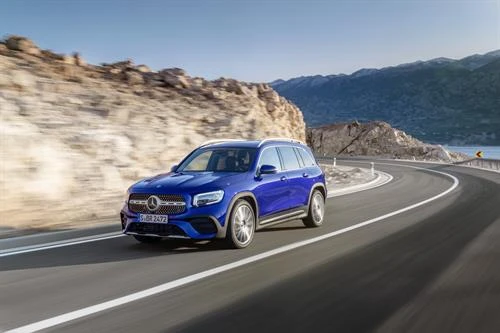 Power will comes from a pair of four cylinder petrol engines or a trio of diesels. A 1.33L petrol with 120kW/250Nm can be specified alongside a 2.0L with 165kW/350Nm. Economy is quoted as 6.2L/100km to 7.4L/100km, and emissions are rated as 142/169 grams per kilometre. Transmissions are a seven or eight speed auto. The pair will see 0-100 kmh times of 9.1 seconds and 6.9 seconds respectively.
The diesels are 2.0L in capacity, will offer 110kW in two versions, and 140kW in the other. Torque figures will be 320Nm or 400Nm in the higher output engine. Consumption is said to be 5.5L/100km. All three will power down through an eight speed auto and 0-100 times will be 9.0, 9.3, and 7.6 seconds respectively.
GLB will bring some cool tech. The driving assistance systems will, thanks to improved camera and radar systems, look up to 500 m ahead and can drive partially autonomously in certain situations. These could include, for example, conveniently adapting the speed before corners, crossroads or roundabouts using the Active Distance Assist Distronic with recourse to maps and navigation data. As a new function of the Active Steering Assist, among other things, there is also the intuitive Active Lane Change Assist.
There is the Energizing comfort control system. It networks various comfort systems in the vehicle, and uses musical and lighting moods plus a number of massage settings for a wide range of feel-good programs. The Energizing Coach recommends these programs according to the situation. Then if a driver or passenger is wearing a Mercedes-Benz vivoactive 3 smartwatch or another compatible Garmin wearable is linked, personal values such as stress level or sleep quality may improve the precision of the recommendation.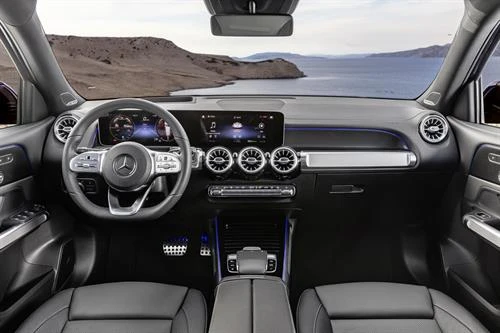 The intuitively operated infotainment system MBUX (Mercedes-Benz User Experience) is also here. There’s a powerful computer, brilliant screens and graphics, and the ability to personalise graphics. There is also an all-colour head-up display, navigation with augmented reality, learning-capable software, and the voice control which can be activated with “Hey Mercedes”.
The LED High Performance headlamps and Multibeam LED headlamps are available for the GLB on request. The latter allow extremely quick and precise, electronically controlled adjustment of the headlamps to suit the current traffic situation. As an option there are also front fog lamps with LED technology. They distribute the light more widely than the main headlamps and thus illuminate peripheral areas better. Their low position in the front bumper helps reduce the risk of dazzling.
4MATIC models include the Off-Road Engineering Package. In combination with Multibeam LED headlamps these models offer a special off-road light function. This makes it easier to see obstacles in rough terrain in the dark. With the off-road light the cornering light on the Multibeam LED headlamps is continuously switched on up to a speed of 50 km/h. This results in wide and bright light distribution immediately in front of the vehicle, allowing the driver to more appropriately judge their progress.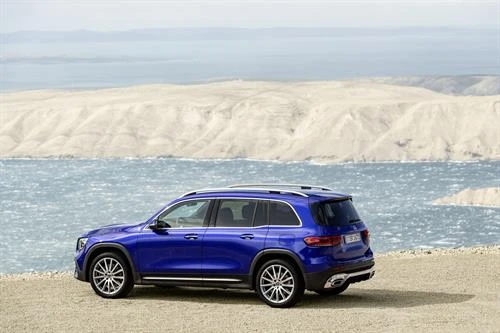 Contact your local M-B dealer for more details.
Private Fleet Car Review: 2019 SsangYong Tivoli ELX
This Car Review Is About: SsangYong’s Tivoli. SsangYong is the quiet third of a three tier car making setup from Korea. Nestled well below Hyundai and Kia, SsangYong currently have a three model range, and the Tivoli is the entry level to the brand. The Tivoli itself is based on the Kia Soul and is badged as EX, ELX, and Ultimate.
The ELX is a solid mid-level competitor in a very crowded market. Being based on the quirky looking Soul isn’t a bad thing either. SsangYong’s designers have done a good job of hiding the relationship with a heavily reworked interior and exterior. There’s no hiding that steeply raked windscreen though.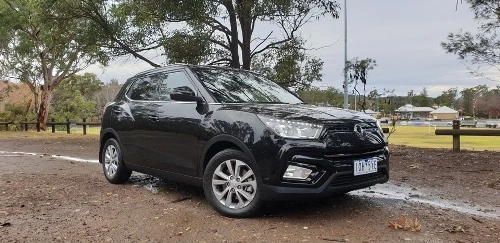 Power Comes From: Behind the bluff and upright schnozz that hides a diesel or petrol powerplant. Our test car had the 1.6L diesel, a slightly chattery but butter smooth item. There’s a huge 300Nm of torque on tap between 1,500rpm and 2,500rpm. Peak power is just 85kW and is available from 3,400rpm to 4,000rpm. The diesel comes in 2WD or AWD for the Ultimate, and is a six speed auto only for the oiler. Economy is, unsurprisingly, pretty good for the pert little five door. Urban driving is quoted as 7.4L/100km for the 2WD version. We saw a best of 7.6L/100km in the urban cycle. Combined is 5.5L/100km and that’s without the realms of possibility. Tank size compromises range though, at just 47-L.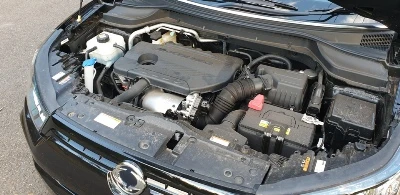
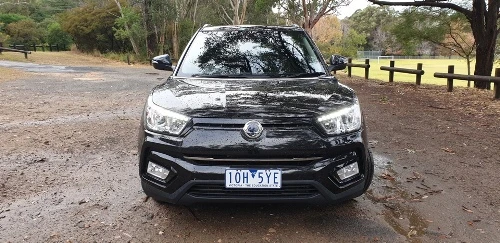 What’s It Cost?: The range starts at a miserly $22,990 driveaway for the EX, without premium paint. It’s $27,990 driveaway for the ELX diesel auto, with premium paint an extra $495. Outside one can choose six colours, the test car was Space Black. Inside there are three choices with black overall, brown (mocha coffee shade), and beige. The trim is on the seats and the doors.
What Does It Look Like?: Overall, the presence is restrained from the outside, innocuous even. The front end is very SsangYong family in look, with LED eyebrow driving lights in a swept back cluster design. The lower air intake surround is a horizontal “double Y” with black urethane underneath joining the front and rear. The tail end itself is a look that evokes the MINI Countryman’s styling and a bold C pillar joins the top to the bottom.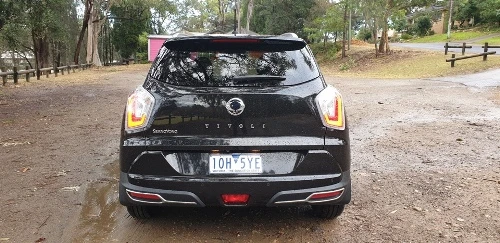 It’s compact in size to look at. Length is 4,202mm, height is 1,600mm with roof rails, and overall width is 1,798mm. What these numbers mean is good interior space for the 1,480kg (dry) Tivoli.
There’s some good looks inside too. The dash is the current Euro themed arch-type sweep from door top to door top and in the black-on-black it looks ok. The dash’s look is a mix of black textured plastics. There is a faux stitched look, a hood style binnacle, and piano black centre stack.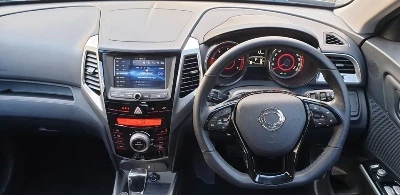 This holds the aircon controls which are soft-touch buttons. An old-school amber backlit display screen sits above a dominant fan speed dial. Unlike most other manufacturers, SsangYong haven’t gone down the path of a standalone touchscreen for the audio/satnav, with the Korean make staying with an embedded look here. Again there is no DAB and that peculiar predilection to have one radio station sound like a skipping record.
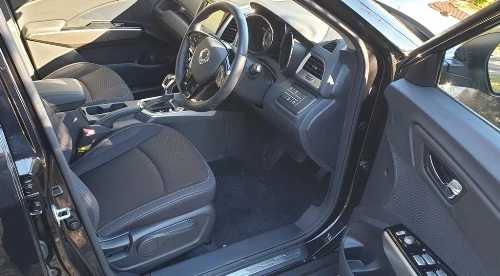 The driver faces a binnacle that has bright red backlit dials. These can be changed to five other backlights such as blue and yellow for that extra bit of personalisation. A monochrome centre screen shows wheel angle when parked. This is presumably to remind a driver which way they’re pointing when getting ready to move on.
Splashes of alloy look plastic add some colour to the black trimmed option. The seats are comfortable and not heated or vented in the ELX.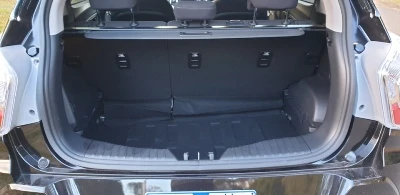
There’s the usual apps for the sound system, storage spaces front and rear, and a good amount of cargo space at the rear. There is a pair of 12V sockets, one up front and one for the rear.
Safety is high. AEB is standard, as are warning systems for forward collision and lane keeping. Australia doesn’t get the Euro spec traffic sign recognition system…yet.
What’s It Go Like?
It’s a hoot to punt around. There’s the barest hint of hesitation in the diesel from a standing start. The turbo very quickly spools up and there’s a rapid, smooth, but slightly noisy launch. The engine is a real old-school chatterer under load but there is no sense of vibration is any form. The gearbox is the same. It’s super quiet, super smooth, and rarely proved indecisive in its cog-swapping.
Off the throttle the engine is whisper quiet. There is a minimal amount of road and wind noise whilst coasting, and it’s again only when the go pedal gets the ask that the engine gets noticed. Mid range urge is sensational given the size of the engine. It’s relatively effortless in how it performs when compared to bigger cars with bigger engines. Ride is on the hard side however. The 205/60/16 from Kumho provide plenty of grip but that highish sidewall doesn’t do much in the way of aiding the suspension’s absorption. The spring and damper rates are almost adequate for smaller bumps but hit a traffic calmer at anything other than walking pace and it’s kapow.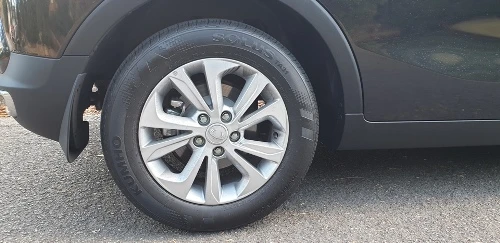 The rear corners will even “cock a leg” when in tight turns or at odd angles coming in and off some driveways. The upside is how it goes on the freeways. Undulating surfaces don’t exist, stability is high in windy conditions, and the steering, adjustable via a drive mode button, is well weighted. It’s responsive and ratioed so understeer is also kept to a minimum. As a driving package it’s far better than expected.
Warranty Is? Seven years. That’s also with unlimited kilometres, from front to rear. Srvices are 12 months or 15,000 kilometres.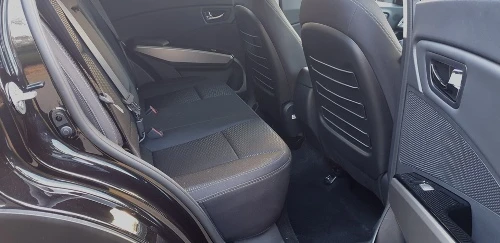 At The End Of the Drive: It’s a real shame that this quiet achiever is due to be discontinued. Although the forthcoming Korando promises to be just as good, the Tivoli could be kept as an alternative addition, much like many Euro makers seem to offer nowadays. And it’s at a price and trim point that would be a good alternative to quite a few others. And the Tivoli has just had an addition to the range in the form of the long wheelbase XLV.
Here is how you can find out more.
Private Fleet Car Review: 2019 Kia Cerato GT Sedan & Cerato Sport Hatch
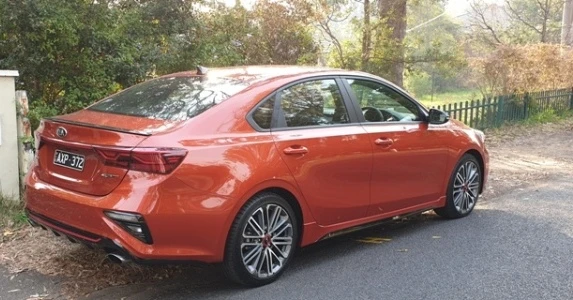 This Car Review Is About: The latest offerings from the long running Cerato range, specifically the restyled sedan and hatch bodies, in GT and Sport trim. There is the S, Sport, Sport Plus, and GT. The S and Sport can be optioned with a Safety Pack.
 Under The Bonnet Is: A choice of a turbocharged 1.6L driving a seven speed dual clutch auto in the GT, against a 2.0L non-turbo and six speed standard auto for the Sport and S. The GT gets the powerhouse 150kW turbo which delivers 265Nm of twist across a flat 1,500rpm to 4,500rpm “torque curve”. The Sport has a very good 2.0L, with 112kW and 192Nm at 4,000rpm. The S is the only version with a manual six speed available.
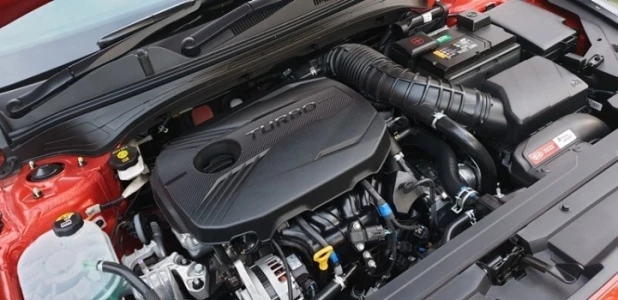 Economy for the pair is tight; the bigger engine is quoted as 7.4L/100km for the combined cycle, with the turbo 1.6L at 6.8L/100km. Our highway drives saw 5.8L/100km for the 1.6L Cerato GT sedan, the Cerato Sport hatch clocked a 6.9L/100km. Overall activity saw 7.4L/100 for the hatch as a final average on its return, with the sedan at 7.1L/100km. That’s running regular unleaded from a 50L tank.
What Do They Cost?: Kia says $32,990 plus on-roads for the GT sedan, $25,790 plus ORC for the Sport hatch, and if you opt for the Sport+, that’s $28,840 plus ORC. There are ten colours available, with the GT getting its own Sunset Orange shade. Paints classified as Metallic or Pearl are a $520 option.On The Outside Is: A choice of a sleek sedan or a sleek hatch. They’re essentially the same until the rear of the rear doors, and the hatch has a manual tail gate, a more pronounced taper to the rear roof line, and BMW-esque LED tail lights. Essentially, as the GT has a full suite of LEDs for both headlights and DRLs, whereas the Cerato Sport Plus has normal headlights and LEDs for the daytime running lights. Both ends, though, have the indicator lamps set below a driver’s line of sight, rather than being up in the head and tail light clusters.
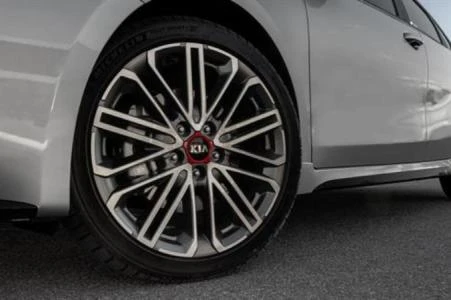
The GT also has specific wheels and tyres. 225/40/18s with Michelin rubber wrap ten dual-spoke design alloys. The Sport has 225/45/17 alloys of a similar yet different design. The spare is a temporary sized one with a steel rim.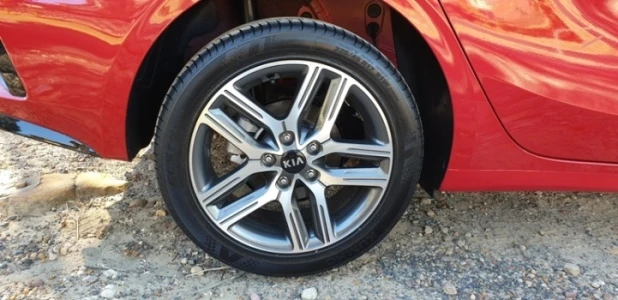
 Overall dimensions show just how big a modern small/medium sedan is. At 4,640mm in length, they’re bigger than the legendary EH Holden, which was 4,511mm. The Cerato’s height is 1,440mm except for the GT which is 5mm lower. The blocky EH stood 1,478mm. Where the classic Holden won was on weight. At 1,118kg it’s 200kg to 250kg lighter than the Ceratos.
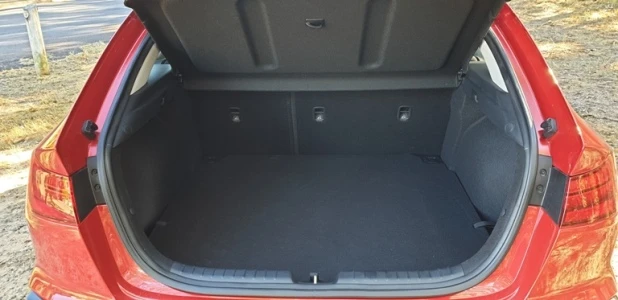
There’s a couple of other minor differences too; the Sport Plus gets body coloured wing mirror covers, whilst the GT has high gloss black covers. Both have heating for the mirrors. The GT has twin chrome tipped exhausts, and the Sport Plus a single well pipe. There’s also a slight difference between the sedan and the hatch when it comes to opening the boot lid. There is a release button on the key fob, and a lever inside. But there is not a tab on the bootlid to open the boot. Once open there’s another design hiccup. The rear seats don’t have a shoulder mounted seat release mechanism. To flip the seats in the sedan the boot must be opened, a boot mounted lever puller for either the left or right hand seat, then it’s back to the rear seats to actually fold them down. The hatch does away with this ridiculous idea by having a boot-lid mounted tab.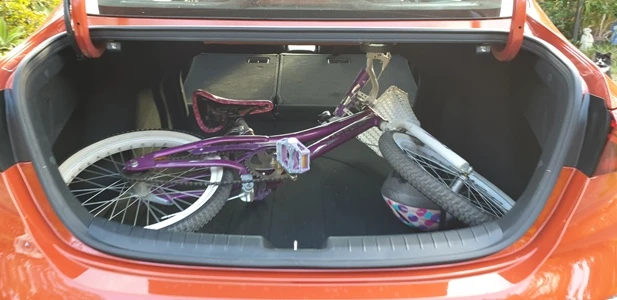
 On the Inside Is: A surprisingly low toned interior. The GT is black upon black, having only subtle red piping on the seats and alloy look plastics around the gear selector, air vents and dash strip, central steering wheel spoke, and door handles, to break up the black. Under the driver’s foot is alloy pedals in the GT. The Sport Plus as tested had a similar look to the dash but had a lighter shade of material from the doors upwards and a charcoal/grey cloth trim to the seats. The GT’s driver holds a flat bottomed steering wheel.
Actual plastics look and feel is cheapish. There’s little, if anything, to differentiate the upper echelon cars from the base model S in this respect, plus there’s a distractingly high level of upper dash reflectivity into the windscreen. The driver’s binnacle display is fully analogue and has a monochrome display screen, not colour. Sound comes from a six speaker system in the Sport Plus, an eight speaker setup in the GT, with DAB tuners across the range plus the now almost seemingly mandatory Android Auto and Apple CarPlay plus Bluetooth. There are four cup, and four bottle, holders in the cabin. Just the driver gets a one touch up/down window switch. The GT gets a wireless smartphone charging pad and it’s a slightly tricky design. A small bump in the plastic on the left hand side will stop a phone from being charged properly if it’s not placed in the holder correctly. There’s a pair of USB ports and a single 12V socket up front as well.
As is the norm now, a touchscreen of 8.0 inches in measurement, and a simple one to use at that, is mounted up high on the dash. Default look is map and audio side by side. As is Kia’s wont, the interface is intuitive and makes using the various functions, and changing settings, fuss free.
On The Road It’s: Not quite chalk and cheese. The turbo in the GT is a firecracker, with verve, fizz, fire and brimstone, belying the 265Nm, as it feels as if there are more. The dual clutch transmission is beautifully matched and the performance potential is huge. Surprisingly, the 2.0L seemed not far off the pace in regards to response and driveability. The smaller engine is a free spirited and easily spun unit however the 2.0L in the Sport was nearly as easy going in how it moved the analogue needle around the dial. The more traditionally oriented six speed auto was nearly as slick and smooth, but simply couldn’t match the bang-bang nature of the dual-clutch in cog swapping. Get and go in both is very good, with the torque spread of the GT’s engine making for a harder run from a standing start. There’s real excitement from the driveline as a straight line run sees the freeway limit reached in what feels like just a breath. The Sport’s 2.0L pulled hard too but in a side by side comparison would be noticeably behind. The dual-clutch also exhibited a trait peculiar to this kind of transmission. Anything from a mild press of the go pedal upwards has the brains of the ‘box working fine, go a little softer, or change from Reverse to Drive, and there’s that customary pause as the brains figure out exactly what the transmission is supposed to do before actually doing so.
 Handling on both was neutral; the weight of the steering in both was excellent and allowed for a clean judgement of how much input was required to have the nose go where it was desired. On one particular corner the front end would run wide but only at a certain speed and was easily brought back to a controllable level with a back-off and a brush of the brakes. Highway driving has the pair change directions nimbly and the steering & engine choices, left in the default Eco mode, was never needed to be in anything other than that. The GT has a Smart mode which runs between Sport/Eco/Comfort, and effectively learns on the fly as well, helping the on board computers to adapt to an individual driving style.
Ride quality definitely tends towards the harder style yet the GT’s 18 inch rubber doesn’t crash through to the cabin at all. The Australian fettled suspension is well sorted, with work performed on the sophisticated multi-link independent system going to a specific sports tune all-round Braking is superb with the front brake discs growing in size from 280mm to 305mm, making braking a sensory experience and providing millimetre perfect judgement. The Sport lacked little here too, with its braking setup virtually on par. The Sport also has a softer ride setup, and perhaps one that more buyers would choose over the tauter GT for around-town driving.
GT stands for Grand Tourer and so it is with the sedan really showing its mettle on longer runs. The very nature of the torque deliver and the responsiveness of the seven speed DCT suits a good punt and taken westwards along the Great Western Highway, and eastwards on the freeways towards Sydney show what a beautifully setup long distance driver it is. In seventh geqar and barely off idle in cruise mode, the GT is a delight. The Sport’s sixth gear takes the rev point higher and it’s here that the slight coarseness of the 2.0L becomes apparent. It’s not harsh, just noticeable that it’s not quite as turbine smooth or quiet. Of a final note is the aural extension of the engine note into the cabin for the GT. It’s a throaty and rorty sound, not unlike a worked over flat four. But it’s a generated sound, and played via the sound system. It’s a matter of personal taste and unfortunately not one that can be deactivated.
Safety Features Are: strong, naturally. AEB or Autonomous Emergency Braking, with Pedestrian and Cyclist detection, Forward Collision Warning, and Lane Keep Assist are standard. Rear View Camera with dynamic guidelines, Driver Attention Alert Warning, front and rear parking sensors, are also standard.
What About Warranty and Service?: Standard seven years, unlimited kilometres, and capped priced servicing, as per the information here.
At The End of the Drive. Kia has come a HELLUVA long way in the twelve years since AWT was selling cars alongside the brand’s then new cars. The level of technology, safety, the designs, and the change from a non-turbo range to the inclusion of a genuine sports oriented range, such as the Cerato GT, put Kia into a stronger position in the marketplace than it was a decade ago. In an increasingly competitive sales area, the Cerato GT stands out as one to choose from a drivers’ perspective. The Sport is the one for an around town lifestyle. The sedan and hatch have further information available.
Tesla Model 3 Pricing Confirmed For Australia.
Tesla Australia has confirmed the range and pricing structure for the forthcoming Model 3. Built upon a two model range to start, the Standard Plus and Performance, the new entry level range for the electric car makers starts at $66,000 plus on-road costs and government charges. Expected 0-100 time is 5.6 seconds, and expected range from the supercharger capable Model 3 Standard Plus is 460 km. The Performance is listed as $85,000 plus charges. 0 100 is 3.4 seconds and a range of 560km. 20 inch wheels roll around red alloy calipers, with a subtle carbon fibre spoiler providing extra stability when driving in Track Mode.
 Five colours will be made available for the expected August launch timeframe; Solid Black, Midnight Silver Metallic, Deep Blue Metallic, Pearl White and Metallic Red multicoats. The metallics are $1,400 and the multicoats $2,100 and $2,800 respectively.
The Model 3 will also receive the over-the-air software updates. A major update is the Autopilot facility, which enables the Model 3 to effectively drive itself albeit still under active human supervision. It enables the Model 3 to to steer, accelerate and brake for other vehicles and pedestrians within its lane. The Standard Plus also gets a 12-way 12-way power adjustable, heated, front pair of seats, with premium seat material and trim, an upgraded audio system, plus standard maps & navigation. There is also centre console with storage, 4 USB ports, and docking for 2 smartphones. Entry is via the Tesla keyfob or a new smartcard system. LED fog lamps, Automatic Emergency Braking, Automatic Emergency Braking, Forward Collision Warning and Side Collision Warning will be standard. Buyers of the Model 3 Performance will receive what Tesla denote as the Premium Interior Package. Live traffic notifications with satnav maps, a 14 speaker audio system with music streaming, heated rear seats complement the standard equipment in the Standard Plus. Both cars will allow for customisable driver profiles, and everything is set up from a spare looking dashboard, dominated by a solitary touchscreen in landscape orientation.
 An extra feature to be released later in the year is traffic light and stop sign recognition. This will enable the Model 3 to further enhance its autonomous driving ability, and it’s forecast that the Model 3 will be able to do so in a full city environment. The Autopilot feature is also intended to allow autonomous driving in situations such as vehicle overtaking and on/off-ramp driving.
The exterior design is one familiar to anyone with a Model S. The headlights are subtly redesigned for a more wrap-around look, the roof is a solidly tinted glass item, and the rear is a more traditional boot, rather than liftback, styling. Orders for the Tesla Model 3 are now open and available via the Tesla Australia website.

 Level 2, 9 Help Street