

Author archive
Kia Loses Its Soul, Finds Its Seltos Instead.
 Kia has released more details of its compact SUV to be called Seltos. Due for sale in the second half of 2019, the Seltos replaces the Soul but has strong familial looks to the outgoing car and more than a hint of SsangYong Tivoli. To be built in both India and Korea, the Seltos is said to be a showcase car of technology. Featuring a 10.25 inch touchscreen as the centrepiece inside, it has the ability to show a split screen and customize the screen to display up to three applications simultaneously. The driver, therefore, can choose to have a single display (such as navigation) or combine different elements on-screen.
Seltos will add in new feature lighting and an optional Sound Mood Lighting system, which will emit soft light from panels in the doors. This includes a unique 3D-patterned surface on the door panels. The Sound Mood Lighting system will pulse in time to the beat of music playing through the audio system and will allow a user to program from eight customisable colours and six themes to illuminate the cabin. The Seltos will also offer the UVO CONNECT telematics system. As more and more makers move into interconnectivity, UVO CONNECT blends the usage of smartphones and the car’s touchscreen.

Part of the technology brings live data such as traffic flow and information, weather updates, and something to look at in a points of interest for a good country drive, for example. An app will back this feature up, with data from trips and news about the Seltos itself. The UVO system is free to users for the first three years, and includes stolen vehicle notification and tracking, safety alerts, auto collision notification and emergency assistance. Sounds come from a Bose 8 speaker system and the driver has an 8.0 inch HUD for instant information in the eyeline.
Power is courtesy of three engines. A naturally aspirated 110kW of 2.0L, a turbo 1.6L with 130kW, and a diesel to produce 100kW from 1.6L will be available elsewhere with the Australian market to receive the turbo petrol and standard petrol. The 2.0L will drive a CVT and will be front wheel drive, with the turbo petrol an all wheel drive and seven speed dual clutch auto. Naturally the Eco/Normal/Sport modes will be standard.
The body itself share the same stocky stance as the Soul; there’s a steeply raked windscreen sitting behind a bluff and solid looking nose with Kia’s signature “tiger nose” grille and LED lights for the front and rear. Turn signal lamps have a deep 3D design and even the fog lamps are LED. The actual design is intended to show off a sense of assertiveness. This is emphasised by a solid shoulder line and character lines on the bonnet. Depending on model, the wheels and tyres are high-grip 205/60 R16, 215/55 R17 or 235/45 R18 tyres.
Contact Kia to prebook your test drive.
Shelby Outmuscles Dodge
The Ford Mustang Shelby GT 500 has been released, and if you’ve wanted the Superman like ability to change the earth’s rotation, this is the one for you. A handbuilt 5.2L V8, complete with super-strong forged conrods, a new water to air intercooled system that works alongside the supercharger, and appropriate electronic modifications, have laid out a powerful 566kW of grunt and an astonishing 866Nm of torque. This the end result of Ford’s quest to overcome the brilliant 527kW Dodge Hellcat. Sadly, it does look as if it won’t be available in right-hand drive.
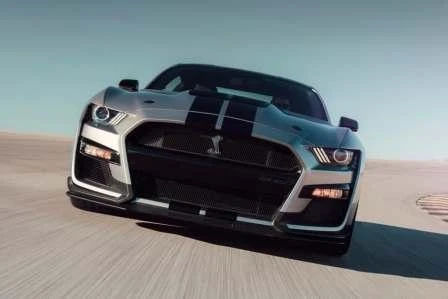
This monster gets its oomph to the rear wheels via a dual-clutch seven speed. Changes are slow (cough) at 100 milliseconds. Reflecting what Ford believe will be the main focus of the owners, three drive modes, Road, Track, and Dragstrip. All together, the upgraded engine, transmission, and electronics should see a 0-100 time of under three seconds, a figure Ford hasn’t yet confirmed. It tops out at 290kmh, and for those using the Dragstrip mode, a quarter mile of around eleven seconds should be expected. A line-lock system for drag use is included.
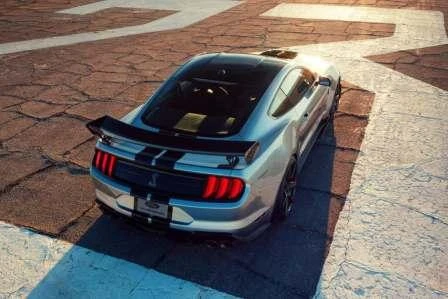
In order to tame the firebreathing machine, active damper suspension is onboard, with rerated coil springs and a redesigned geometry for the suspension components. Michelin Pilot Sport 4S rubber provide the fight in the grip section and wrap around Australian made carbon-fibre 20 inch wheels, and Brembo adds in the six pot stoppers. A new front splitter is fitted and the ends have a canard design for more aero flow. Outback is a GT4 wing that loads up a near quarter-tonne of downforce at speed. Need to lose weight? the rear bench seat is a delete option.
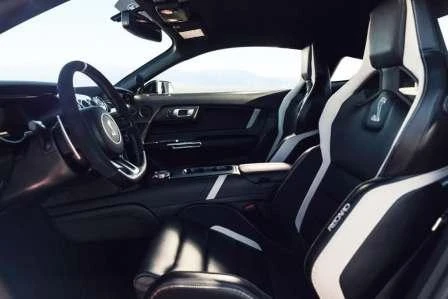
The interior isn’t forgotten, with a full digital instrument panel, 12 speaker sound, 8.0 inch touchscreen, and Recaro buckets with race harness fittings.
If you’ve the money and the right contacts, have a chat with Ford but make it quick. Cars like this tend to sell out in a blink.
Private Fleet Car Review: 2019 Hyundai Kona Highlander Electric
This Car Review Is About: Hyundai dipping a toe into the battery powered waters of electric cars. The Korean company has the Ioniq range of petrol/hybrid/battery, whereas the Kona has no hybrid option. With a range of around 460 kilometres, it’s more than suitable for daily running around in the urban environment, and so it proved during our week-long test.
What Does It Cost?: The range of Kona Electric starts at $59,999. That’s before government charges and dealership costs. The Highlander starts in the middle $60k range, and that puts it within the ballpark of the forthcoming Tesla Model 3. The car comes with a charge cable which plugs into a standard home power socket. For an extra couple of thousand Hyundai will supply an adapter box that gets installed at home. At a rate of around7.2kW per hour of charge, it trickle charges at a rate good enough to avoid range anxiety if plugged in overnight. In the week we drove it, it was topped up just twice. On The Outside Is: A car that is possibly overdone in styling to alert people to the fact it’s an electric car. The Tesla range, for the sake of inevitable comparisons, look like a normal set of cars outside, and have a distinctive yet still normal-ish look inside.
Front and rear lower bumpers have been restyled in comparison to the standard versions. There is a ripple, wave like, motif to them, and the front looses the centrally mounted driving lights. Somewhere in the front guards are cornering lamps, barely visible unless looking for them. Our test car was clad in a two-tone metallic Ceramic Blue and Chalk White body and roof styling, with a number of exterior colours and combinations available, at a reasonable cost of under $600 for the metallic paints. The wheels are bladed five spoke items, with the blades sporting a heavily dimpled design on one half of each of the slabby five spoked design. These reflect the nose of the Kona Electric. As there is no need for a traditional cooling system, the front has the air intakes replaced with a plastic insert that draws attention to itself by virtue of these dimples. The colour highlights these quite strongly too. This nose section houses the charge port, and here Hyundai has a solid win.
Press lightly and the cover pops open. Insert the Type 2 Mennekes charger device which is found in a sturdy bag in the undercover cargo section, attach to an extension cable, a green loop lights up, and charging is underway. To remove the charger requires nought more than a push of a simple press-stud. It’s more effective and far more simple than Tesla’s overthought system. The overall look is very close to the normal Kona but the dimpled look is probably a non-necessary addition. The dimpled wheels are unnecessary too. Normal looking wheels would have toned down the “look at me, I’m electric!” look.
On The Inside: The Kona Electric interior is more sci-fi than traditional in some aspects. The seats are vented and heated, with the car provided having white leather-look material which wouldn’t be suitable for younger childre.. The steering wheel is heated, there are cup and bottle holders, and a wireless charge pad for compatible smartphones, plus a USB port or two. All normal.
Then Hyundai goes to Star Trek inspired designs for the centre console. Its a floating or split level design and not exactly easy to get items into the lower storage section. The upper level is home to four buttons for engaging the drive, a tab for the heated steering wheel, another for three drive modes (Sport/Normal/Eco), and all in a somewhat chintzy looking silver. It’s horribly overdone, visually tiring, and goes past the point of sensible in pointing out to passengers they’re in an electric car. There are some good points: the drive modes change the look of the full colour LCD screen that is located inside an analogue dial. These, at least, look sensible and appropriate. There are different colours and looks to the kinds of information being displayed. There is also a HUD or Head Up Display for safer driving. The touchscreen is slightly revamped to take advantage of the propulsion system and has sub-screens that allow for personalisation and adjustment of the drive modes.
In regards to charger points for public usage, the onboard map system has these preprogrammed. That’s a good thing as this particular kind of charge point seemed to be a little spare on the group using certain apps. On The Road It’s: Soft in the suspension. It’s a well controlled softness, but it’s soft. There’s a lot of travel in each end, with the front exhibiting more sponginess than the rear. It really does feel as if it could do with a dialing up of the stiffness with a corresponding change in dampening to provide a still progressive yet tauter setup for a better ride. Hyundai say that something like 37 different damper combinations and a number of varying spring and anti-roll-bar setups were tried. However, it must be said that the suspension has to deal with 1700 kilos or so, which includes the floor mounted battery pack. That does help with handling by providing a low centre of gravity, so that softness, although the final result of the extensive testing, may not be to everyone’s taste.
There’s an unexpectedly high amount of road noise too. There’s a sensation of wind coming in via a door left open in respect to the noise level. The ecofriendly rubber adds to the ambient noise levels also.

 Acceleration is decently quick with a sub eight second 0-100 time, and there’s a gauge in the dash that tells you the percentage of normal, economical, and aggressive driving. Even with our drive routinely seeing hard launches, never did that aggressive driving gauge get above 2%.
To engage Drive, one places a foot on the brake pedal, presses the normal looking Start/Stop button, then presses one of the four drive buttons to get underway. Drive, Reverse, Park, Neutral are the choices.
Actual physical engagement of the drive gear is instant here, and the system does insist upon the brake pedal being used, for example, when selecting Drive from Reverse. Here Hyundai go a little more sci-fi in the aural side. There is an eerie whine, an almost subliminal sound that has people wondering if they’re hearing it or not, as it never goes beyond the level of a faint background noise.
There is a question mark about the drive system. The car reviewed was the Highlander model, meaning it came with the HUD in the dash, heating & venting in the seats etc. However the drive system was front wheel only. This meant that the front rubber would scrabble for grip off the line in those same hard launches.
There are three drive modes, which seem redundant for an electrically powered car. They’re activated via a selection tab in the console and Hyundai do provide personalisation of each for items such as climate control and recharge via the touchscreen. Regeneration levels are also changeable via a pair of paddles behind the tiller. These same paddles allow for bringing the vehicle to a full halt if the left paddle is held. The steering itself is heavier than expected in normal driving. That’s more to say it’s not as assisted as expected, feeling more akin to the front rubber being deflated by around 20 to 30 percent. All up, though, the Kona Electric, for all of its perceived deadweight, is nimble enough, with rapid and unfussed lane changing when required, a definitive sense of weight transfer when lifting off the accelerator, and the mid range urge is enough to raise a smile. Punch it whislt using the heated seats and steering wheel though, and watch that expected range figure drop, and rapidly.
It’s otherwise a delightfully enjoyable cruiser but “suffers” from a peculiar quirk. Although the electronic brains engage the drive systems almost instantly between Drive/Reverse, from a standing start there’s a small but perceptible hesitation before the actual drive kicks in. Think of that momentary lag along the lines of a diesel’s slight intake of breath. It’s an unusual sensation however once knowing it happens all of the time, adjustments on driving style make for smooth progress.
The brakes are an integral part of the drive system and they’re just on the fine side of grabby in normal driving. Downhill descents have them gently squeeze and you can feel the retardation the regenerative system endows.
Hyundai adds extra tech in the form of the smartphone app called Hyundai Auto Link Premium SIM. By tying in with the car’s telematics you can look at driving history, driving efficiency, general battery information, plus it allows a user to book a service remotely. Items such as hazard lights, or lock/unlock can also be performed by the app.
And The Safety? As expected, Hyundai’s full range of SmartSense active safety tech is here. AEB is standard, radar collision alert, Blind Spot Alert, Lane Keep Assist, and active cruise control are all here. The actual safety rating is five star.
Warranty and Services? Service intervals are once a year of every 15,000 kilometres. That second figure is appealing for some as it means they’re more likely to do less than the 15K…For those that aren’t frightened by range anxiety, and drive it as they would a petroleum fed machine, it’s a figure easily achieved. Hyundai have also capped the first five service visits at $165. Warranty wise there is a five year standard figure and the battery pack has eight years.
At The End of the Drive.
Hyundai is part of the growing band of brothers that have joined the fully electric powered car family. It’s a technology that has history against it, and the future on its side. But there’s no need for today’s cars to be made to look like something from 200 years in the future. Aside from the Star Trek meets Jetsons looks, it’s a capable enough chariot. Pricing is something that will change for the better but for now, it’ll have to do.
Hit up Hyundai here for more info.
Say Hello To The New Baleno and Colorado.
Suzuki Australia has announced that the Baleno has been given an update and will be available in Australia late this year. The new look Baleno GL will be here from August and the Baleno GLX variant available for purchase from September 2019. Pricing will remain incredibly sharp, with the Baleno GL and with a manual transmission starting at $15,990, the auto just $1,000 more, and the auto only GLX at $18,990.
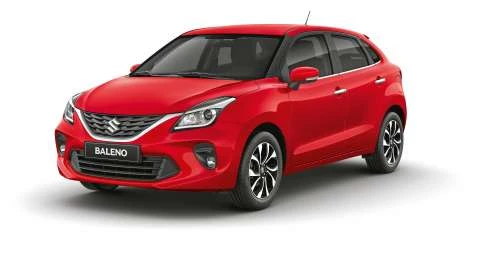
Key changes to the exterior design include a newly designed front grille, revised front and rear bumpers, whilst the 15” steel wheel hub cap and the 16” alloy wheel have received an updated look.
The updated Baleno GLX will also feature UV protection glass on the windscreen, upgraded headlight projectors from HID to LED, plus automatic headlight leveling. Metallic paint is a $500 option, and the colour range is: Fire Red, Arctic White, Granite Gray Metallic, Stargraze Blue Metallic, and Premium Silver Metallic. Interior changes are limited to a revised door trim colour plus all-new seat fabric design and colour. All engine configuration and specifications remain unchanged as per the current model.
Suzuki Australia General Manager – Automobile, Mr. Michael Pachota said the introduction of the updated Baleno will be key for Suzuki’s growth in the light car segment. “A welcome improvement has been introduced in the Series II with a sleek but aggressive sporty aesthetic, amongst other additions. The new look design successfully freshens up the Baleno and remains perfectly fit in our Suzuki model line-up for the Australian automotive market.”
He added: “Impressively, even with these improvements, current pricing is sustained and with the recent introduction of a 1.4 litre engine in the GLX variant, bringing the entire range below $18,900 RRP, will no doubt further increase our opportunity in the light car segment.”
The new look Baleno comes with Suzuki’s 5 year Capped Price Service (CPS) warranty program.
Holden have also updated one of their staples in the stable. The Colorado has a new addition and some extra features added as standard. The model designated as LSX is now the entry level to the Colorado family. Sitting at the top of the tree is the Z71 and this now hasrugged fender flares and a bash plate now standard on the flagship model. A convenient new ‘soft drop’ tailgate is also exclusive to the range topping Z71, while the mid-range LTZ 4×4 gains leather trimmed seats with the front ones now heated. The Z71 and LTZ now also receive a Duraguard spray on tub liner as standard.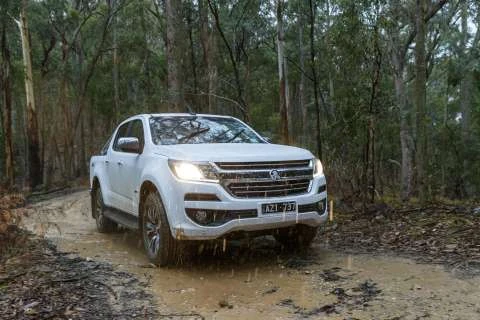
“The addition of the DuraGuard tub-liner means that MY20 Z71 and LTZ Colorado are the only pick-ups that retail for under $70,000 to feature this premium technology as standard equipment,” Andre Scott, the general manager of light commercial vehicle marketing at Holden, said. Careful research has also produced factory backed accessory packs, with Mr Scott adding: “Take the Tradie pack for example. It includes a towing package, side and rear steps, a roof tray, 12V auxiliary power, floor mats, canvas seat covers, weather shields, bonnet protector and cup holders – it’s enough to make sure any jobsite is done and dusted.”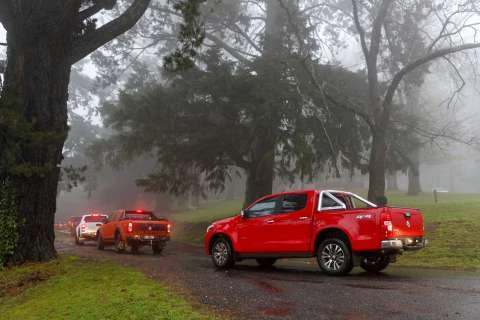
Contact Holden for availabiliy details.
 Level 2, 9 Help Street