

Author archive
2019 Toyota Land Cruiser VX Diesel: Car Review.
This Car Review Is About: The current FJ200 Toyota Land Cruiser in VX specification. There are four models: GX, GXL, VX, and Sahara. Under The Bonnet Is: A hefty 4.5L diesel fed V8 and six speed auto. Peak power is 200kW @3,600rpm, and a whopping 600Nm of torque between 1,600rpm to 2,600rpm. The torque is needed as the dry weight is over 2,700kilograms, with a Gross Vehicle Mass of 3,350kg. Toyota fits two fuel tanks, a primary of 93L and a sub-tank of 45L. Economy is quoted as 9.5L/100km on the combined cycle. Our final figure, after a country drive loop of 1,300km, was way off at 11.5L/100km.
 What Does It Cost?: The GX in plain white starts from around $84,600 for our location. The Toyota website allows for a suburb by suburb pricing comparison. The VX comes up with a starting price of $107,600 and that’s with a folding pair of third row seats. In Silver Pearl, as tested, it’s $108,106.
On The Outside It’s:Big. And heavy. Bumper to bumper it’s 4,990mm in length and rolls on a 2,850mm wheelbase. Height is 1,970mm and overall width is 1,980mm. Stoppers are family pizza in size at 354mm front and rear for VX and Sahara. Rubber is from Dunlop and the Grand Trek tyres are 285/60/18. These were given a solid workout. With talk of an update to the body being released somewhere around 2021, and the current body based back in 2007, it’s a familiar look. Subtle curves to the flanks, a rounded nose with self-leveling headlights sitting above a chromed strip, that itself sits above a set of LED driving lights. In between is a massive air intake lined with three horizontal strips. Out back is a horizontally split non-powered tailgate and some eye-catching lights. There was also a towbar fitted and Toyota says there is a 3.5 tonne towing capacity.
 On The Inside:The VX is showing its age. Faux black leather seats look fine but up front there didn’t appear to be venting or heating controls for the powered seats nor is there memory seating. There is a 4 zone climate control system, however, with rear seat vents and centre row passenger access for temperature and fan speeds. Rear seats are flip to the side, not down into the floor, which means there is some cargo room accessible but not as much as there could be.
 The dash for the driver is full analogue for the dials (easy to read) and does feature the now ubiquitous info screen operated via the tiller tabs. To the left is a 9 inch touchscreen with access to climate control, navigation, Toyota apps, AM/FM/DAB, and a CD plus Bluetooth. There are 9 speakers and it’s an impressive system.
No wireless charge pad for a smartphone but a sole USB and 12V port. Somewhat disappointingly, the centre console storage box wasn’t a coolbox nor did it seem to cool down by running the rear centre console airvents which have their air channels run alongside the box. That same centre console houses a pair of dials. One is four going to 4WD low range, the other is for the crawler mode. The cabin is roomy but cramped. Roomy because of the sheer size but cramped due to the aging layout. However a white/grey rooflining against a contrasting black lower section does make for an airy feeling, along with the large glasshouse. A sunroof helped too.
 Out On The Road It’s: A legendary vehicle that, when driven in varying environments, shows why it’s a legend. The timing of the review allowed us to take the VX out to the dusty central north town of Coonamble, via Mudgee and Dunedoo.
The run commenced with an easy two and a half hours to Mudgee, a beautiful and thriving town. Immediately the VX impressed with its easy going, loping, style. But it also showed the aging architecture underneath and the sloppiness of the steering on centre. The suspension gives the impression of wafting the big machine, with the Kinetic Dynamic Suspension System, fitted as standard, absorbing the varying tarmac terrains easily. North of Mudgee is the road to Dunedoo and again the VX Land Cruiser would make this an easy run. What wasn’t easy was the feeling of helplessness from seeing the dead wildlife and the sheer dryness of the countryside. This would only get worse and we headed north from the village to Mendooran and then Gilgandra. from here one can head north-east to Coonabarabran and Siding Spring Observatory in the stark Warrumbungle Ranges, or cruise north west to Coonamble.
 Increasingly apparent was the struggle between the farmers and Mother Nature. It’s clear that there’s water, but it’s much like a famous line from a song by America. In “A Horse With No Name” there’s a line: “The ocean is a desert with its life underground, and a perfect disguise above”….This is complemented by: “After three days in the desert fun, I was looking at a river bed, and the story it told of a river that flowed, made me sad to think it was dead.” The lines of trees that stretched away into the distance, with some of a lush green, and others of a desperate sign of hanging on, tell the story. And a constant in most areas was the tortured, parched earth either side.
 Coonamble itself is around 230km from the NSW/QLD border and around 80km from Pilliga, home to a bore water hot spring bath that’s been in operation since 1902. Here, too, are clear indications of how the drought has hurt the bush.
Our hosts in Coonamble were Scott and Jenny Richardson, Blue Mountains residents and living an Aussie dream by having their own pub. With Coonamble’s main businesses being based on sheep and wheat farms, there’s a lot of locals looking to quench their thirst. It also gave AWT a chance to meet and talk about life in a remote town. One of the locals, a dapper gent that had lived in the town all of his life, declared he didn’t entirely believe in climate change, and readily stated that he thought that there is something wrong with the weather as he’d never seen conditions as bad for so long. The road between Pilliga and Baradine gave us a chance to test the gravel handling capability of the Land Cruiser. Rutted, compacted, and with the big footprint of the VX needing constant monitoring, the suspension showed its mettle. Here and throughout the 1300 kilometres covered in two and a half days, the comfort level proved high, with minimum physical fatigue thanks to the way the VX simply ignored the road conditions. That loose steering feel also showed why it was loose; a light grasp on the tiller allows the front end to look after itself and required only minimal input to keep the Land Cruiser on the straight.
Baradine is directly north of the Warrumbungles and here the handling of the VX was tested. Although there’s plenty of rubber on the road, the sheer mass of the Land Cruiser showed that judicious driving was needed when it came to the turns and curves. The upper body movement would prove disconcerting and needing a mental adjustment in where braking points and steering inputs needed to coincide. Some turns marked as 75kmh needed to be driven at that speed in the VX, with others allowing a more natural flow, leaving the car to find its own way through the line from entry to apex to exit. Coonabarabran is in the same need for rain as Coonamble. Surprisingly, with the Siding Spring observatory complex just a short drive west on one of the volcanic plugs that makes up the Warrumbungles, it’s also affected by skylight from Sydney. Siding Spring is the largest astronomical complex in the country, playing host to a vast array of internationally operated sites and is the hub to the Solar System Highway. This is a virtual model of the solar system, with the inner four planets just minutes away from the mountain top, and Pluto is three hours drive away.
Heading west from Coonamble through the national park this road also tests handling and ride quality. Once on the western side of the extinct volcano, the road becomes sandy, gravelly, and has moments of tarmac as it winds its way to Coonamble. The actual drive experience varies; acceleration can be easy and gradual when needed. And that 600Nm comes into play when required too, with a surprising alacrity when pressed.
 Again the distinction between underground waterways, the bore water that makes up some of the water supplies, and the drier than the moon’s surface farmland, was palpable. Lonely sheep and cattle wandered almost aimlessly in vast dusty paddocks, yet, occasionally, patches of emerald green shone thanks to hard working pumps tapping the subterranean water supplies. Back in Coonamble and the signs that encouraged the locals to shop local became more and more frequent. The VX shows why the Land Cruiser is so ideally suited for this kind of drive. The torque of the engine and the gearbox’s ratios has the tacho ticking over at just 2,000 at better than highway speeds thanks to the six speed auto, and simply hauls the constant 4WD beast through the sand and gravel without a second thought. There’s no doubt that one of the transmissions that have an extra two or three cogs would help economy and drastically change the driving behaviour.
Although just six in the number of cogs thou shalt count to, it’s a slick, smooth, shifter. It’ll hold gear nicely on downhill runs, using the engine as a brake, and on acceleration, and as slow as it can be at times, shifts are mostly invisible. And sometimes the slide into sixth was perceptible but not overtly noticeable. Naturally Sports Mode is available but was not used, and neither are there paddle shifters anyway, hinting at the intended usage of the driveline. All through the drives two things shone: the muted burble of the V8 and the sheer lack of fatigue often found in other cars. Noise insulation is high, that aforementioned ride and comfort level too must contribute to the lack of weariness unexpectedly felt.
The return journey gave the VX a chance to stretch its legs and again it showed that for all of its prowess it’s still restricted in a couple of ways. It’s a big and heavy machine, and prone to diving under braking. It’s a big and heavy machine and needs to be gentled, not hustled, through quite a few corners. And that six speed auto does sometimes need an extra couple of cogs. The same trip also showed why the focus by the NSW Government and Highway patrols on speed will never reduce the road toll. On a sweeping left hand corner south of Mudgee, a two lane section with double white lines, one particular driver took it upon himself to pass a line of traffic into a blind corner. There was oncoming traffic that could be seen from the head of the queue but not from where this boofhead started from. Somehow, somehow, nothing occurred. No, he wasn’t alone in his dangerous driving, with plenty of other examples seen.
 At least there is a decent amount of safety kit inside the VX. There are airbags front to rear. Blind Spot Detection is standard and is Rear Cross Traffic Alert. Front parking sensors are also standard.
When it comes to servicing and warranty, a driver can book a service via the myToyota app. Toyota offer a standard five year warranty which can be extended to seven if the car is serviced at a Toyota dealership.
At The End Of the Drive. It’s been said that Australia is largely responsible for the success of the Land Cruiser, and in a drive such as this that covered suburban and deep country, it’s close to heaven for this kind of vehicle. The low revving V8 is ideal for long distance hauls, the comfort level showcases just how important fatigue reduction is, and then there is the off road ability that is almost unquestionably a leader. However it’s that same soft and wafty suspension that counts against it in some areas, economy wasn’t close to the combined figure, and that mass…..Right here is where you can find more.


Who's Hugh? An Aussie On The Rise Barters For The Future.
Go-karting is one of the avenues that many high level drivers have used to enter motorsport. Be they a V8 Supercar driver or in the F1 family, karting is in the bloodline of many. One of the high profile Australians in motorsport, Daniel Ricciardo, started in karting. There’s a “new kid on the block” in the form of Hugh Barter. Aged 13, Barter already has close to a decade’s worth of karting experience, and is looking to drive in the upper echelons of motorsport. Hugh was admitted to the AWC Motorsport Academy earlier this year. The academy has joined with former V8 Supercars driver Marcus Ambrose to help train and coach the “next generation” of drivers.
Hugh’s path to the academy has included the Rotax Pro Tour. 2019 sees him in his second year in the Junior Max class, a category recognised around the globe for junior drivers. The tour kicked off in Port Melbourne and proved to be a challenge first up. Round 2 of the tour and Round 1 of the Australian Kart Championship in Ipswich, Queensland, showed promise in each of the heats however mechanical issues arose and took Barter out of contention in most of the heats. These hiccups has Hugh start in 11th in the round’s final race, and it all came together with the chequered flag seeing Hugh across the line in 1st.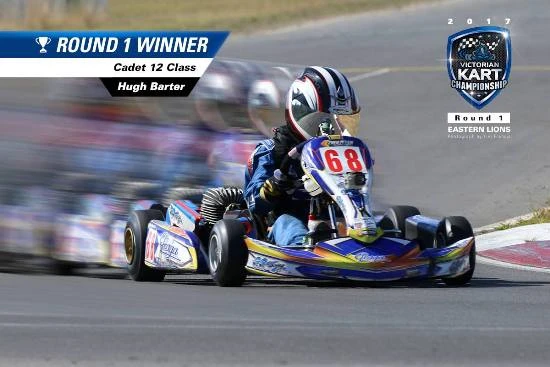
Rounds at Eastern Creek and Newcastle had good results, with high placings getting Barter up into the top 3 of the championships. Extra experience came with Barter running two different karts. KA4 Junior Light Class and KA3 Junior Class are configured for different weight and grip levels. This flexibility has paid dividends with the rest of the season seeing Barter improve and gain some valuable points to finish overall in 5th in the Pro Tour over halfway into the season and was in 2nd in the Karting Championships.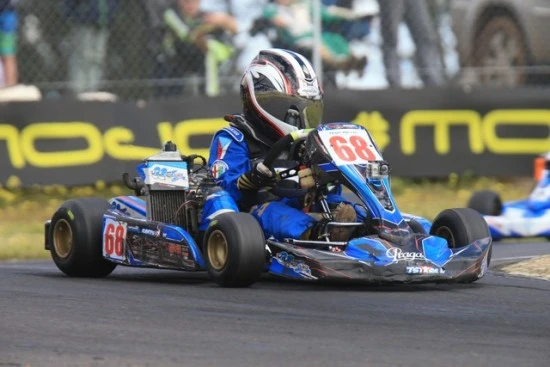 Puckapunyal in Victoria played host to Round 4 of the Rotax Pro Tour and Barter was in a new kart from Praga. Immediately there was improvement and the weekend finished with Hugh up into 3rd overall.
Results in his career so far now have Hugh Barter ready to head to Italy this month to represent Australia in the Rotax World Titles. With his experience in both time and the different classes, Barter is looking to use this trip to further his ambitions in motorsport. You can follow his progress via hughbarter.com.au
2019 Toyota C-HR: Private Fleet Car Review.
This Car Review Is About: The 2019 Toyota C-HR. It can be seen as an alternative companion to the RAV4. Alternative because it’s a different option, companion becuase it’s a five door SUV that seats five. It’s a two-model range, with the Koba as the other entry.  Under The Bonnet Is: A turbocharged 1.2L petrol engine. There is a manual transmission or CVT for the entry level, CVT only in the Koba. Opt for the CVT and it’s front wheel or all wheel drive for a choice. Peak power is 85kW between 5,200rpm to 5,600rpm. Torque is a bit more useable, with 185 of them between 1,500rpm and 4,000rpm. Economy is quoted as 6.3L/100km on the combined cycle. On our urban drive we saw a best of 7.4L, and a worse of 7.9L/100km. Recommended fuel is 95RON. There is no paddle shift in the base model, just the transmission selector for manual shifting.
 What’s It Cost?: Toyota’s website says the 2WD starts from around $30, 500 in Hornet Yellow. Head to a metallic colour and that goes to just over $31K. The AWD will start from around $34,700. You’ll get a five year and unlimited kilometre warranty. Servicing can be booked via the myToyota app.
On The Inside Is: A reasonable amount of standard equipment and safety features for the ask. It starts with something basic but useable in the shape ofI an auto dimming rear vision mirror. There are auto headlights, dual zone aircon, but no DAB in the overly boomy audio system. The 6.1inch touchscreen system has a CD to make up for the lack of digital radio, plus USB & Bluetooth connectivity. Satnav and voice activation are also standard is the ToyotaLink app function. SafetySense is the name Toyota give to their suite of driver aids, and the C-HR has Lane Departure Warning, Auto High Beam, Blind Spot Alert and Rear Cross Traffic Alert. Autonomous Emergency Braking and Active Cruise Control are standard as well, as are seven airbags.
 Trim material in the C-HR is black and black. This may make the interior somewhat claustrophobic for some, as there is a hunchbacked look thanks to the rear window line being steeply sloped. There is some triangular shaped embossing in the roof lining which matches the interior light above the manually operated front seats and mirrors the rear light design.
  For the driver there is a sense of having their own office space. the dash sweeps around from the window to the centre stack, and this faces towards the driver’s seat. Trim here is of a piano black and there’s some smartly integrated buttons for the aircon controls.
 On The Outside It’s: Not unpleasing but definitely one example of beauty is in the eye of the beholder. This is down to the profile. The rear roof line slopes dramatically forward from the tail lights, which can compromise interior headspace for taller people. There’s a huge roof-lip spoiler too, which in the Hornet Yellow is noticeable. The wheel arches and guard are pumped out from the body and these are defined by strong crease lines coming down from the windscreen and rear window.
Overall length is 4,360mm, with a wheelbase of 2,640mm. Height is 1,565mm and width is 1,795mm.
The rear doors have a severe upwards kink to meet the roofline which means it looks like boot space is compromised. However, there’s enough boot space to house a week’s shopping for a family of four. It’s a high floor though, meaning a bit more of a lift to get items in. The front end bears (bore) a striking resemblance to the now outgoing RAV4 and features a triangular LED driving light cluster inside the angular headlight design. Alloys are 17 inch in size and on the C-HR have a design that somehow emphasizes the spinning when underway.
On The Road It’s: One of the few vehicles with a CVT that benefits from using the “manual” part of the gear selector. Programmed with seven ratios to mimic a standard auto, it’s far more responsive to using it manually. Use the C-HR in auto and it becomes what a 1.2L engine suggests. It suggests nothing special, it suggests sluggish, needing a heavy right foot. Move the lever to the right, pull back for M1, hit the go pedal, and tip forward for upshifts, and it comes alive. Forward movement seems to have far more sizzle and pizzaz than leaving the transmission to do it all by itself. Changes are swift, crisp, and really allow the driver to take advantage of the torque delivery. The engine itself is quiet though, with no audible appeal and neither is there anything at the exhaust’s end to suggest anything exciting. No rasp, no fizz, no….well, anything.
Ride quality though is average at best. The MacPherson strut front seems indecisive; should I be soft or should I bang on bumps? The steering rack didn’t help. There would be input at the same velocities having more response than others. The trailing arm double wishbone rear end also had issues, with a harder than expected setup banging away on otherwise normally non-intrusive bumps.
 On the road the steering feel is numb. There’s no real sense of communication from the front and although it’s not a guess where it’s pointing proposition, it doesn’t really provide a chance to converse with the front either. The Bridgestone Dueler rubber wasn’t a fan of the wet too. The front end had noticeable push-on understeer on wet roads, meaning that throttle usage had to be carefully weighed up. The AWD mode is automatic, meaning the driver can’t select any drive mode at all. There is a graphic for the driver that’s displayed on the 4.2 inch driver’s display screen. It’s a combination G-Force and drive apportion graphic, and a hard launch shows the drive being sent to the rear wheels and easing off in conjunction with the accelerator being eased off.
At The End Of The Drive: The C-HR is, for AWT, a conundrum. It’s a vehicle that offers an alternative but at the point of being why so. The RAV4 does everything the C-HR does and now offers a hybrid. But in terms of market alternatives Toyota have to have something that competes against what Mazda, Hyundai, Nissan et al have. the problem here is that the C-HR is a case of doing nothing terribly bad, it simply doesn’t do anything outrageously special. Make up your own mind here.
Updates And Freebies For Triton, Eclipse Cross, And Colorado.
Mitsubishi has released details of its 2020 updates for the Triton, and Holden has confirmed some special servicing costs for the Colorado.
Any buyer of a Colorado that is delivered between October 1 and December 31 will receive free scheduled servicing for seven years. It covers all LS, LSX, LTZ and Z71 4×4 vehicles, and this will save owners over $3,000. This is up and over the standard five year warranty for the Colorado. This offer also applies to Holden’s seven-seat SUV’s Acadia and Trailblazer. 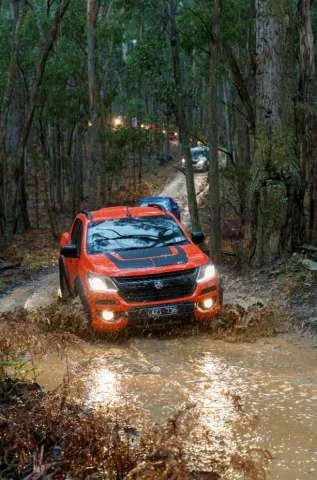 The Triton range has been given a tickle, with the GLS and GLX+ models receiving a rear diff lock as standard. The GLS now has keyless start as standard and the double cab GLX+ now gets a air circulator for the rear seat passengers.
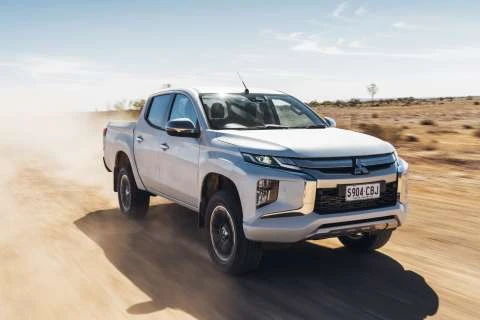 In the driveline section, Mitsubishi’s Easy-Select 4WD is fitted to the GLX+ model. With the twist of a dial 2WD, 4WD high range and 4WD low range are made available. Move up to the GLS and GLS Premium the Super-Select 4WD-II offers 2WD and 4WD high range, plus what Mitsubishi calls 4HLc (lock up) and 4LLc (lock up in low gear). The electronics are programmed to provide Gravel, Mud/Snow, Sand, and Rock capability And when equipped with 18 inch wheel and tyres, ground clearance is 220mm. This gets added to the 31 degree approach angle, 23 degree departure angle, and “break over” angle of 25 degrees.
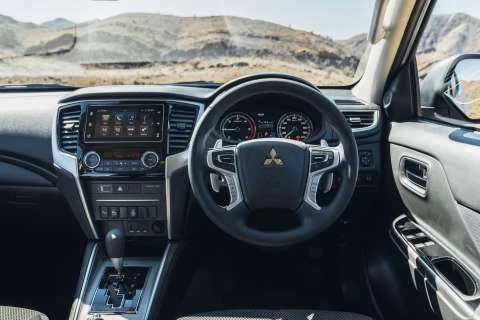 Pricing for the Triton range starts at $22,490 4X2 GLX Cab Chassis 2.4L Man Petrol (RRP). This is the only petrol engine in the range, with the 4X2 GLX Cab Chassis 2.4L Man Diesel clocking in at $25,990. The Club Cab 4×4 GLX Cab Chassis 2.4L Man Diesel starts the second tier at $35,490, with the dual cab range starting with the 4×2 GLX ADAS Pick Up 2.4L Auto Diesel at $36, 290. before topping out with the 4×4 GLS Premium 2.4L Pick Up Auto Diesel at $51,990.
The Eclipse Cross has been given some extra fruit, especially for the LS. Here it’s been given all wheel drive and S-AWC or Super All Wheel Control. Part of the system involes AYC, Active Yaw Control, which controls the brakes and power steering to regulate torque split between the left and right. The top of the tree Exceed gains black headlining and illuminated front door trims. The limited run Black Edition, which is fitted with a front skid plate, black front bumper and radiator grille, black interior and black spoiler, is also fitted with variable auto rain-sensing windscreen wipers, dusk sensing headlamps with auto high beam, fog lamps and forward collision mitigation.
Paint options for the Black Edition are Starlight, Black, Red Diamond and Titanium. Costs are $690 for the metallic & pearlescent paints, however they’re free on Black Edition vehicles. Prestige paint is $890 or $300 on Black Edition. All models have these colour options except for the Black Edition: White, Starlight, Sterling Silver, Titanium Black, Lightning Blue, and Red Diamond. 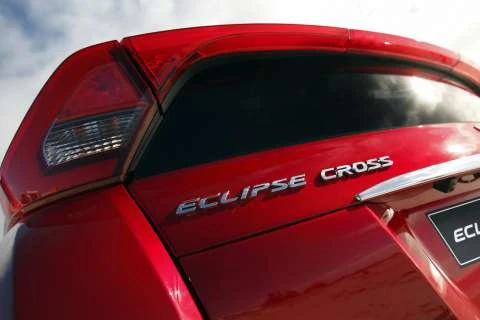 The range starts with the ES 2WD & CVT at $29,990, the LS 2WD is $31,990 with the AWD version at $34,490. the Exceed 2WD and 4WD versions are $36,690 and $39,190. The Black Edition is $31,690 and is 2WD only. All prices are RRP and exclude on-roads.
 Level 2, 9 Help Street