

Author archive
Koenigsegg Gemera Is All Four The Experience.
It’s regarded as a seismic shift when a car maker, renowned for their dedication to producing hyper-luxury two seater vehicles, produces one that will carry four passengers, and endows it with the same quality as the rest of the family. Swedish based manufacturer Koenigsegg is well known for their production of upper-level vehicles, and has established a reputation for making the quickest, most luxurious, uber-performance and luxury cars on the planet. The Gemera, made from the Swedish “ge” or give, and “mera” or more, is a new expression of the company’s desire to deliver only the best, and then keep going. In this case, it will go until just 300 units have been produced.
At a cost of USD$1.7 million, Gemera is powered by something a little unexpected. A twin-turbocharged three cylinder petrol engine is the main component of the drivetrain. At just 2.0L in capacity, on its own it’s good for 600 brake horsepower, or around 450kW. It works in partnership with three electric motors. There is one each for the rear wheels, and one for the engine’s crankshaft. Koenigsegg have given the small engine its own name. It’s called the TFG, or Tiny Friendly Giant.
Each rear engine makes 500bhp, and torque is a mammoth 737.5 lb-ft, or 1,000Nm. The front mounted e-motor produces an extra 400 bhp and 368.78lb-ft/500 Nm to power the front wheels, making an individual amount of 1,400 bhp, and stepped down to 1,100bhp when working with the 2.0L engine. The battery is rated at 800V. In all, Koenigsegg say the final power output is 1,700bhp/1,270kW and 2,581lb-ft/3,500Nm of torque. The Gemera’s dry weight is just 3,780 pounds/1,715kg.
Top speed is unspecified, with Koenigsegg stating only that it will reach 248mph/400kph in record equaling pace. The sprint to 62mph/100kph really is a sprint. 1.9 seconds is all that is required. Range on a purely electric drive is up to 30 miles/50 kilometres and a full top speed on electric power only is up to 186mph/300kph. Total range is said to be around 620 miles/1,000 kilometres.
Koenigsegg have an eye of the future when it comes to fuel usage. It’s a flex-fuel engine, capable of running on Gen 2.0 ethanol or a CO2 neutral methanol like Vulcanol or any mix thereof. When doing so it is rated as being as at least CO2 neutral as a pure electric car. Whilst these “next generation” fuels are being further developed for better access, the Gemera can also be driven on E85 and in worst case normal petrol. With all-wheel drive, all-wheel steering, and torque vectoring (plus a Wet/Normal/Track drive selector), and a huge 118 inch/3,000mm wheelbase, Koenigsegg have opened up two critical areas; the ability to seat four, and to provide superlative handling. The rear-wheel steering adds in rapid response and increased agility, and then there’s the small car turning radius. High speed running provides extra directional control. Helping the ride and grip are a choice of (standard) Michelin Pilot Sport 4S 295/30 ZR21 and 315/30 ZR22 tires, with the other choice being Michelin’s Cup 2 R. Wheels are Koenigsegg’s third-generation Aircore carbon fiber wheels with optional center locking.
In a design sense, the Gemera is a strict two door vehicle. To allow access to both front and rear seats, the fronts of the doors hinge to allow vertically aligned opening. Given the doors have the side intrusion bars and windows, it’s an astoundingly clever piece of engineering. The A-pillars are blacked out to render them almost invisible and the rear seats are located to still provide plenty of forward looking view. It’s an impressive car to see in the flesh. It’s low, and long, and broad. 195.8 inches/4,975mm gives it an imposing presence, the 51 inches/1,295mm in height the slinky looks, and the 78 inches/1,988mm of width the space inside. For reverse views, there are high definition cameras on either side of the Gemera. There is a pair of screens for the driver to access information. One is placed behind the steering wheel and on the column, and one to the driver’s right. Each of the tabs on the carbon-fiber wheel have haptic feedback. It’s a practical vehicle too; Koenigsegg have built in eight cup holders, with one each of the four pairs heated. And each seat, heated, by the way, is carbon-fiber in structure, adding to the weigh reduction regime. The interior is bespoke luxury, with a choice of leather or Alcantara interior with custom contrast stitching.
Ceramic brakes provide excellent stopping power and again, weight reduction over steel discs. Each corner has double wishbones and adjustable gas-hydraulic shock absorbers. There is an electrically powered ride height adjust system for an extra 1.5 inches/35mm for the front. Just in case, there are a pair of fire extinguishers. Koenigsegg’s future proofing with Level 2 Autonomous Driving. Adaptive Cruise Control Lane Keep Assist, and Park Assist and standard, naturally, as is a helicopter-eye’s view for the 360 degrees worth of camera vision.
It’s the company’s first four door car. It’s pure beauty standing still. As a complete package, Koenigsegg have tagged the Gemera as the world’s first Mega-GT.
Hyundai Gives Veloster The N Treatment.
With a 1.6L turbo four and seven speed dual clutch transmission, (DCT), the Hyundai Veloster Turbo & Turbo Premium are a pair of performance oriented hatches that hover between warm and hot. Hyundai’s “N” Division has now waved their wand over the quirky four door, and added an eight speed wet clutch, the N DCT, with some interior and exterior enhancements to the pert Veloster. Although Hyundai don’t specify which engine is fitted, it does say that the zero to one time is down to 5.6 seconds.
N DCT has electronic actuators, which improves the change speed, plus, says Hyundai, focuses more on the driver engagement. The N DCT has a NGS, a Grin Shift mode, which allows a small but noticeable increase in torque thanks to the turbo running overboost and shaking hands with the N DCT to increase response for up to twenty seconds. The wet part of the N DCT comes from the use of a specific oil inside the clutch mechanisms. This increases lubrication, adds more cooling, and increases the DCT’s lifespan.
Additionally, N Power Shift (NPS) engages when the car accelerates with more than 90 percent of throttle, thereby mitigating any reduction in torque by using upshifts to deliver maximum power to the wheels. This gives the driver a responsive feeling of dynamic acceleration when shifting. The N-gineers also understand that a driver will want to exploit road conditions, and the N TSS, or Track Sense Shift, partners the computers with sensors to “read” the road, and adjusts for the road conditions, selecting and shifting the gear that the system determines is just the right one.
Another mode, N PS, Power Shift, engages when the car is launched hard and 90% and above of the torque, also working the gears to ensure proper usage of power and torque.
The Veloster N is a customer focused, nay, a driver focused car. There is the addition of Rev Matching, Launch Control, and the aforementioned Overboost. Downhill runs? rev matching brings the engine into line with the velocity and the gears, reducing wear and tear on the brakes. Racetrack work has the engine exploring the full range of revs and talks to the eight speed N DCT to maximise performance.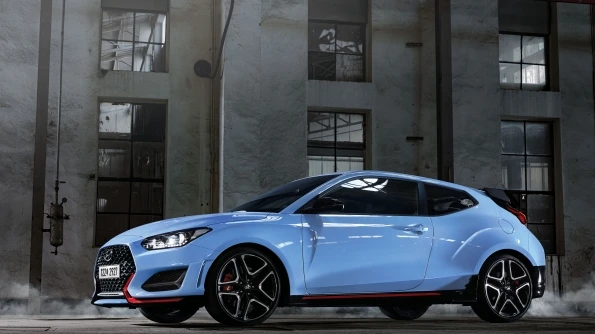
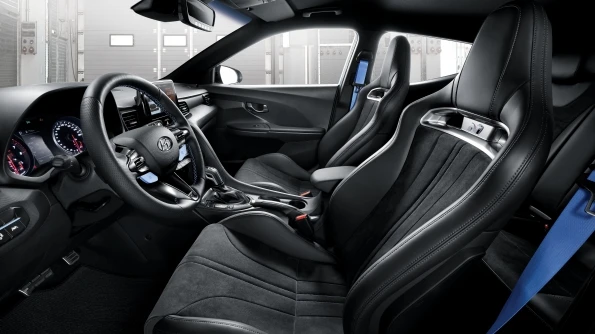
Head inside and there’s some cool options. Veloster N can be specced with N Light Sports Bucket Seats. The seats are wrapped in soft, suede-like Alcantara, a cool to the touch and grippy material, to firmly hold the driver in position when the car is taking corners at high speeds. There’s been some weight reduction; by utilising a thinner design around two kilos have been removed. There is an internally lit N logo in the seat, located up in the backrest section.
At the time of writing, Hyundai Australia isn’t planning to bring the Veloster N to Australia, however the N DCT will be available from 2021 inside the i30 N and i30 Fastback N models.
2020 Hyundai Veloster Turbo Premium: Private Fleet Car Review.
 This Car Review Is About: The quirky and different Hyundai Veloster. It’s finally received a much needed makeover and it looks more like a member of the Hyundai family than the odd-one-out visage of the now superseded model. It’s a three model range, with Veloster, Turbo, and Turbo Premium, the model reviewed. The Veloster is also a dedicated 2+2 seater.
How Much Does It Cost?: Hyundai’s website has drive-away prices, with $33,253 as a starting price for the entry level, $39,443 for the Turbo, and a starting rate of $43,048 for the Premium. The website appears to indicate zero extra charge for metallic paint. The Premium comes with a two tone roof option with Phantom Black or Tangerine Comet as the choices. Under The Bonnet Is: A 1.6L engine in capacity, complete with 150kW and 265Nm of torque. Both turbo models offer a seven speed dual clutch auto or six speed manual. The entry level Veloster runs a 2.0 Atkinson cycle non-turbo four and has a six speed non-DCT auto along with the manual. Those 265 Newton metres are available from 1,500 rpm to 4,500 rpm. Economy is quoted as 9.1L per 100km for the urban cycle, 5.6L/100km for the highway, and on the combined it’s 6.9L100km. That’s from the 50L tank in a chassis weighing 1350kg.
On The Outside It’s: Still the 2+1 plus hatchback rear shape. It’s been flattened, has the Hyundai signature tail light design of three strips in their individual enclosure, and it looks fantastic lit up. That’s with tinted lenses as well. The front loses the slightly bulbous headlights and now has the slimline LED lit setup. Wheels for the Premium are 18 inch in diameter and are a dark grey metallic colour. Rubber comes form Michelin’s Pilot Sport 4 range and are 225/40 in profile. It’s a pert little thing at just 4,240mm in length. It’s not tall at 1,399mm and offers plenty of shoulder room with a very handy 1,800mm of width. The wheelbase is 2,650mm and that adds to the sporty look and handling. Adding to the looks are the body additions front and rear. Up front a semi-gloss grille sits over a honeycomb grille air curtain, with subtle chrome highlights. The rear diffuser has extra width over the others and is complemented by a dark metallic finish on the lower bumper that sits around the centrally mounted twin exhausts. A small yet nifty touch is a hidden rear hatch opening button that’s integrated into the wiper housing and the locating of the left rear passenger door opener inside the rear door pillar structure.
On The Inside It’s: New Hyundai. That means classy fit, finish, and soft touch materials. Hyundai also show the other brands how to do it right with heating and venting for the front seats, a classy looking Performance Gauge screen with turbo pressure, G-Force meter, and torque output. This is accessed via an 8.0 inch touchscreen with DAB, Android and Apple app access. This tops a centre stack which is…busy to look at. It’s a little heavy in its layering, and the bottom layer which is the USB/Aux inputs are substantially more inset than the uppermost. For the driver a Head Up Display is fitted, and the binnacle below houses a pair of analogue dials. Naturally there’s the ubiquitous colour info screen and the tabs for this are on the right hand spoke of the tiller. It’s also a right-hand stalk for the indicator however Hyundai have fitted an intermittent mechanism for blinking. State laws in Australia ask for “sufficient indication” and a blinker that flashes just three time simply isn’t enough safe warning.
The gear selector has a red plastic insert on the rear and it looks as if it needs to be pressed, but it’s a fixed item. The selector itself is a straight forward and back mechanism, not a squiggly line as some do. There’s also Hyundai’s Drive selector button, and in Sport Mode (or tipped into Manual gear selection, which makes using the paddle shifts worthwhile) it brings a rev counter dial into the HUD’s information. Rear cargo is just, just, big enough for a weekly shop. The mechanisms to fold the 50:50 split-fold rear seats are on the shoulders of them however because the right side seat doesn’t have a door, it’s a touch fiddly to access and operate, And when folded the bottom of the seats don’t sit flush with the floor and the metal hooks stand proud. These, though, did come in handy by stopping a flat bottomed item from sliding, and the cargo net fitted also helped. Actual space is 303L seats up, and 1,081L seats down.
 The seats are set low due to the Veloster’s overall height. There is still decent room though, with the dimensions of 936mm and 911mm front and rear for head room, 1,433mm and 1,378mm shoulder room front and rear, providing better than expecting space to enjoy the cabin and the drive.
 On The Road It’s: An absolute hoot to drive. 265Nm doesn’t sound a lot, but coupled with a well ratioed auto and a relatively lightweight body, there’s more than enough zip to delight. Hyundai’s really spent some time working on the DCT’s biggest issue, and it’s one all companies have: lag between swapping from park to Drive or Reverse, and having the gear engage. However, practice shows that the lag can be minimised and it’s about how long the vehicle is stationary.
In a three point turn, so from Park to Drive to Reverse to Park, by bringing the Veloster Turbo to a complete stop quickly, it helps the DCT re-engage the chosen gear just that much more quicker and makes for a smoother progression from that moment of Neutral to gear.
Press it hard and there is some scrabbling of the front driven wheels before grip, or the traction control nanny, steps in to settle things down. Forward acceleration is good enough for the whole package but it’s not quite a neck-snapper as anticipated. What wasn’t also anticipated was the faint but audible “phut, phut” as the DCT does its thing and the engine lets the world know via the twin pipes. It’s an understated note and deserves more volume. Steering is rapid, light in the feel, and tenacious in how it has the front wheels responding to its command. That fore-mentioned three point turn is made a doddle to perform because of it, and on the highway the response is welcomed too. Feedback is plentiful and perhaps a little too much so for the untrained.
Suspension tune is firm, and the concrete ripples on sweeping bends ensure that every flake of paint has its height sent through to the driver’s hands via the steering wheel. It bang-crashes on the normal speed-humps yet soaks up the highway undulations without fuss. The weak spot of the Veloster is the brake feedback. There’s a harder than required shove to getting stopping done, and the pedal has a softer than expected feel when doing so.
What About Safety?: No problems here. Lane Keep Assist is on board and it’s perhaps a little too heavy handed, with the tiller all a-twitch in the driver’s hands. The intervention is, for our mind, just that too aggressive, it needs a smoother pull to straighten the Veloster Turbo Premium up. Torque vectoring is standard, as is Blind-Spot Collision Warning (BCW), Driver Attention Warning (DAW), Forward Collision-Avoidance Assist (FCA) including City / Urban (camera) and Interurban / Pedestrian & Cyclist detection (camera & radar). There is also High Beam Assist (HBA), Rear Cross-Traffic Collision Warning (RCCW) and Smart Cruise Control (SCC).
And The Warranty Is?: Five years and unlimited kilometres, with servicing costs and details here. At The End Of The Drive. It’s a far prettier car than the original, still has plenty of squirt, and handles as a sports oriented car should. It’s definitely roomy enough inside, however the heavy design of the centre stack, the insistence of the Lane Keep Assist to make its presence known, and the soft brakes pull the 2020 Hyundai Veloster Turbo Premium down a couple of notches. Don’t take that as saying it’s not fun to drive, it is, and it’s a lively drive too. Just as a sports oriented vehicle should be.
Kia To Get Extra Sting?
It’s not confirmed for Australia however Kia has appeared to confirm their ballsy Stinger sedan/five door coupe is to get more mumbo. Currently packing a 2.0L turbo four or the punch you in the guts 272kW/510Nm 3.3-litre twin-turbo V6 engine, it’s being spoken that the car will receive the bigger 3.5L V6 as found in siblings Hyundai and Genesis.
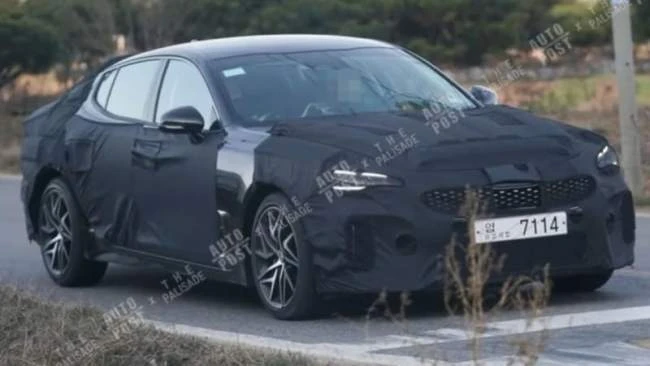
Inside the Genesis G80, this mill produces 279kW and 530Nm. The turbo four may also be given some fettling, with a 2.4L version said to offer 223kW and over 420Nm. That’s in comparison to the current 182kW and 353Nm. There is also a milf facelift to the exterior and it’s as yet unconfirmed if much will be done to the interior, although it’s likely there will be.
Kia Australia, however, currently have a different perspective, with the head of PR, Kevin Hepworth, being quoted as saying: “”We are not anticipating any engine changes”. In this context, an extra 200cc offering just 7kW and 20Nm means most buyers would be highly unlikely to tell the difference. Considering that the sedan market is shriveling slowly (although in Europe it is regaining ground under the onslaught of SUVs), should Kia go ahead with that and make that the only powerplant choice, it leaves Kia Australia with either onselling the Stinger with the slightly bigger engine, having Kia pare back the outputs, or, and more unlikely, have Aussie spec Stingers come here with the 3.3L and 2.0L.
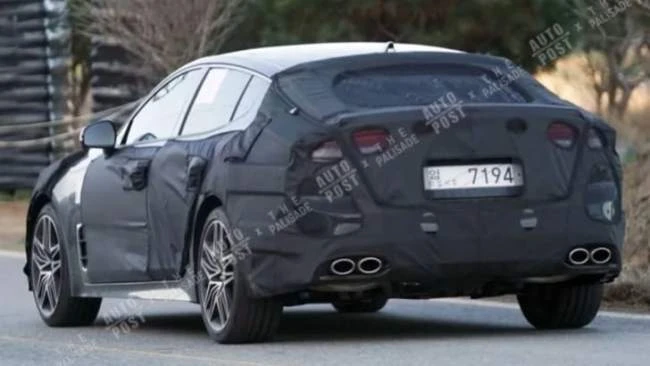
Sales figures for the Stinger indicate the V6 is the preferred engine, with around 98% of the 150 to 200 Stingers moved per month being powered by that, and of those a huge 81% are for the top of the range GT. The other factor coming into play is the Australian dollar exchange rate. It’s highly likely that the 2.0L four would be dropped and the 2.4L, if offered, would not be taken up on a cost basis reason.
 Level 2, 9 Help Street