

Author archive
2021 Isuzu D-Max X-Terrain: Private Fleet Car Review.
This Car Review Is About: Isuzu’s substantially overhauled D-Max, specifically the 4×4 capable and top of the range X-Terrain. It heads a solid list of 4×2, 4×4, cab chassis, extended cab, and four door utes, all with the same 3.0L diesel and six cogger manual or autos. Info on the range and engine updates can be found here. How Much Does It Cost?: At the time of writing, Isuzu have a drive-away price tag of $58,990. Then there is the extensive list, over fifty, of options available.
Under The Bonnet Is: A revamped 3.0L diesel and six speed auto, driving a switchable two or four wheel drive system, with low range and a locking rear differential. Peak power is 140kW, but it’s the peak torque of 450Nm from 1,600rpm to 2,600rpm that does the important stuff.
Economy was good with our final figure of 9.7L/100km on our 70/30 urban to highway split close to the quoted figures from Isuzu, as the pure urban figure is 9.8L/100km, and highway 6.9L/100km. Isuzu’s combined figure is 8.0L/100km from a 76.0L tank. Towing capacity, by the way, is 3.5 tonnes. Dry weight is 2,30kg with a payload of 970kg. On The Inside It’s: A considerable step up from the previous model. There’s a more luxurious feel, a better look, yet some noticeable omissions.
Our time with the X-Terrain coincided with Sydney’s notoriously fickle late spring weather. Temperatures varied by twenty degrees Celsius, so the absence of heating and venting for the leather appointed seats was striking. However, they’ve been redesigned so there’s more sense of sitting in, not on, and the support level laterally goes up as a result. However, only the driver’s seat is powered for adjustability.
There is also no smartphone charge pad, only the driver’s windows switch is one touch, and the DAB tuner’s sensitivity isn’t the best going, with dropouts in areas no other vehicle we’ve tested and packing a DAB tuner having similar issues. Touchscreen size is 9.0 inches and Isuzu say it’s a pixel heavy count, at 144 pixels per square inch. The touchscreen interface for the audio needs polishing, as does the home screen look. It’s somewhat irksome that Isuzu has gone to a lot of trouble to “rebuild” the D-Max yet some basics have been overlooked. This is a top of the range vehicle, but yet… On the upside is the app connectivity and dash display design. It’s unlike virtually everyone else in look, yet it’s easy to read, and easy to use thanks to the steering wheel tabs that scroll information on a full colour LCD screen. The analogue dials are also clearly read, as are the no-nonsense tabs in a strip below the touchscreen. An added pair of pluses are the rain sensing wipers and auto headlights.
The dash itself has angles built into the soft-touch plastics that evoke the angles of the exterior of the D-Max. This includes the creaseline from the left air vent down and across the double glovebox design, with an upper and lower split. There’s a lidded storage locker on the upper dash that has been improved, in the sense the locker mechanism works all the time, every time. The very handy cup holders that pop out from under the left and right air vents remain. Drive is selected via a basic looking pistol grip lever, surrounded by piano black that echoes the material surrounding the touchscreen. The steering column is rake and reach adjustable. Leg room for the front seats is 1,075mm, with the rear seats in the four door ute at 905mm. 1,460mm shoulder room is what is found up front, meaning comfort levels in this aspect are high. Having rear seat air vents and a USB socket, plus a coat or shopping bag hook on the back of the front passenger seat raises the ante too.
 On The Outside It’s: Clad in a brilliant Cobalt Blue (on the test car), and there are three bespoke colours (two shared with the LS-U) including Volcanic Amber specifically for the X-Terrain. The most noticeable change from the previous model has been the enlargement of the grille which now extends further downwards, and the horizontals which have been flipped 180 degrees. The end plates now look more like teeth, adding an aggressive look.
Headlight design sees a slimming down of the design, and it brings a more assertive look, somehow evoking an eagle or a hawk. The rear lights also have been reprofiled, with a sharper overall look. The aggressive styling continues with strakes in the housing for the driving lights. On the test car was a lockable and rolling tray cover with the rear bumper, fitted with a towbar, having three steps to access the tray.
A stylish rollbar flows back from the roofline, and in a graphite grey plastic (with red highlights) it matches the roofrails and a pair of lower rear quarter aero-foils. Sidesteps and and wheel arch flares finish the package. Rolling stock sees black painted alloys wrapped in Bridgestone Dueller H/T rubber. They’re a good size at 265/60/18. The X-Terrain itself is a good size, measuring a full 5,365mm in total length, 1,785mm in height, and a broad 1,870mm on a 1,570mm track. Wheelbase is up too, from 3,095mm to 3,125mm. Wading depth is now up to 800mm thanks to a redesigned engine bay air intake.
On The Road It’s: A little underwhelming in one respect. There’s noticeable understeer in 2WD, the Duellers lose just enough grip to squeal as they push wide too. The auto suits the engine’s characteristics much better than the six speed manual we tested in the SX recently.
Being a diesel, it does mean that the torque delivery at low revs means it’s an unstressed, easy going, highway spinner. That breathlessness comes in more for suburban driving, especially when pulling away from a set of traffic lights and trying to clear traffic. It’s not the zippiest of engine and gearbox combinations, nor is it the quietest, feeling a little lacklustre in comparison to, say, a Kia Sorento 2.2L and eight speed, which has a similar overall weight. Move away from a suburban stop sign and it pulls cleanly and effortlessly away for the speed zone as the throttle sensor keeps revs lower than accelerating from the aforementioned lights..
The auto is smooth, with up and downshifts mostly invisible. Downhill runs had the transmission holding gear, and again mostly worked well enough, changing up when a human also would have made the change.
Ride quality, considering it’s a commercial oriented vehicle, isn’t horrible. It’s well tied down for the most part, with nicely controlled rebound from the rear leaf sprung suspension, and a well balanced, tauter, double wishbone front end, in comparison. Steering weight is well matched to the ride too, with enough effort required to move the new electronically assisted steering to not feel over-light and thus lose steering feel.
Being four wheel drive capable, there are some big numbers for the angles. Get off road and an approach angle of 30.5 degrees, a departure of 24.2 degrees, and a breakover of 23.8 degrees make for some exceptionally capable dirt eating. Something that stood out, and not entirely in a positive way, was the determination of what the Forward Collision Warning system felt to be a dangerous situation. There’s some recalibration to be done ans it would alert the driver to an object ahead however the brake was already being employed. At other times it would read an object that was turning left or right and therefore no longer a potential issue.
What About Safety?: There are now eight airbags throughout the cabin. In between the front pews is a centre mounted airbag, a segment first. A reverse camera is standard, along with parking sensors at either end. AEB is programmed for speeds above 10kph and has pedestrian & cyclist detection. Lane Keep Assist is standard and works best for speeds between 60 to 130. Forward-collision warning, lane-keeping assistance, lane-departure warning, blind-spot monitoring and rear cross-traffic alert are also fitted.

What About Warranty And Service?: Isuzu’s warranty offers six years or 150,000km, plus they’ll lob in seven years of roadside assistance provided services are done at the dealerships. Service intervals on the new D-Max remain 15,000km or 12 months, covered initially by a seven-year capped-price servicing program. This totals $3374 over that period, with the most expensive service (at 90,000km) costing $749.
At The End Of The Drive. It’s a much improved machine that Isuzu has given the marketplace, and the results are already flowing, with sales of the 4×4 version over 1,500 in November 2020. It takes on the HiLux and Ranger, and outsold the Triton too.
It’s a better looker, the interior has a more upmarket feel, but it still needs some more polishing in a couple of areas for features seen in other marques but not here, such as heating/venting for the seats, or perhaps offering electrical adjustment for the front passenger seat, not just the driver’s. As an overall package, it’s a better option that before, and the coming months will tell the tale sales wise. It looks the part, and pricewise it is poised to take aim at the two above it quite nicely.
BEV & E-GMP Are The Way Forward: Hyundai.
In a major step forward in the electric car industry, Hyundai Motor Group has unveiled its new Electric-Global Modular Platform or E-GMP. It will produce a BEV or Battery Electric Vehicle in a dedicated move to create a core platform to develop the technology. To be launched in 2021, the program will form the basis for Hyundai’s next Ioniq, a dedicated BEV from Kia, and potentially other models for the brands. E-GMP is intended to be a bespoke platform for the company’s BEV range, having benefits such as increased development flexibility, powerful driving performance, increased driving range, strengthened safety features, and more interior space for occupants and luggage.
Driving performance will allow a sport-oriented model to achieve sub-four second 100kph times, whilst the platform can accommodate SUVs, sedans, or Crossover Urban Vehicles. By using a system called modularisation, it makes for better building and cost amortisation. The chassis design can be shrunk or stretched to accommodate the battery placement and therefore ensure weight distribution is always as appropriate as possible. A five-link rear suspension system, which is typically used for mid and large sized vehicle segments, and the world’s first integrated drive axle (IDA), which combines wheel bearings with the drive shaft to transmit power to the wheels, enhance ride comfort and handling stability.
The structure will be ultra-high strength steel for rigidity, with hot-stamped steel parts adding to the torsional strength. Energy absorption can then be designed into the structure as needed. This includes the front of the chassis where the A-pillar can deform to spread energy from an impact and thereby diverting kinetic energy from the floor mounted battery and front engine.
Short overhangs maximise interior packaging, and assisted by the flat battery floor, means any vehicle can be tweaked to suit a specific use target. this could include seating layout and positioning for leg room.
Drive will come from an integrated, single module, unit, which is able to raise the rotational speed by up to 70% over existing units. The module is comprised of a motor, EV transmission, and an inverter. A smaller size means less weight and yet efficiency isn’t compromised.
“Today our front-wheel driven Hyundai and Kia BEVs are already among the most efficient ones in their segments.” said Albert Biermann, President and Head of R&D Division for Hyundai Motor Group. “With our rear-wheel driven based E-GMP, we are extending our technological leadership into segments where customers demand excellent driving dynamics and outstanding efficiency.”
Fayez Abdul Rahman, Senior Vice President of Vehicle Architecture Development Center for Hyundai Motor Group: “E-GMP is the culmination of years of research and development and brings together our most cutting-edge technologies. Our BEV line-up will evolve and be strengthened by this innovative new platform.”
Extra cooling has allowed Hyundai to redevelop their battery system. It is denser and more compact, with up to 10% more density in comparison to what is currently available. Linked to the engine unit is the inverter power module that uses Silicon Carbide material. This enhances efficiency by two to three percent and then allow a range extension from that battery of up to 5%. The battery module itself will be a standardised model, with a pouch-type cell structure that can be tailored as per design specification.
Drive itself will be predominantly rear wheel oriented. All wheel drive configuration on the E-GMP platform will be available. Hyundai will employ a EV transmission disconnector that “talks” to the front motor if fitted, and can switch, on the fly, between two and all wheel drive. As charge point infrastructure changes, Hyundai has future-proofed with an investment in a European based network, IONITY. The name also fits the IONIQ branding for Hyundai’s current EV range. IONITY currently offer 308 high power charge points that can charge at up to 350kW. There are 51 extra stations under construction with a view to offering 400 points by 2022.
E-GMP bring some forward looking tech. Charging at 800V is standard, with a switch to 400V available if necessary. The system has a patent on the technology as there are no additional equipment requirements to “step down” or “step up” the charge. A fully charged battery can provide over 500km of range, and can charge to 80% in just 18 minutes and in five minutes provide up to 100km of range.
There is also a new ICCU, or Integrated Charging Control Unit. This brings what is called V2L, or Vehicle To Load. Instead of a single path, being from a charge source to the BEV, a E-GMP vehicle can discharge to another electricity requiring source from 110V to 220V including another EV. Maximum output is rated as 3.5kW which Hyundai says could power a 55-inch TV for up to 24 hours.
Sibling company Kia is also part of the program, employing its “Plan S” strategy. One key aim is 20% of their vehicles to be EV in sales by 2025 and they are aiming to have seven dedicated BEVs by 2027.
Auto Bounce Back: Is the Slide Over?
Australia’s two and a half year run of decreasing sales has come to an end, says the Federal Chamber of Automotive Industries. Sales for the month of November, 2020, were recorded at 95,205, an increase of 10,497 sales or 12.4 per cent on November 2019 when 84,708 sales were recorded.
Year to date (YTD) however shows that sales are still well down on 2019, with 978,628 sales last year, whilst 2020 has recorded 821,316 so far.
Toyota continued its imperious march over its competitors, with November figures of 23,204 sales, ahead of Mazda with 9,053 sales, Hyundai with 6,903 sales which just pipped Ford with 6,613 sales and Mitsubishi with 5,488 sales.
The top five selling models for the month were the Toyota HiLux with 5,038 sales, the Ford Ranger with 4,260 sales, the Toyota RAV4 with 3,800 sales, the Toyota Landcruiser with 2,947 sales and the Toyota Corolla with 2,774 sales.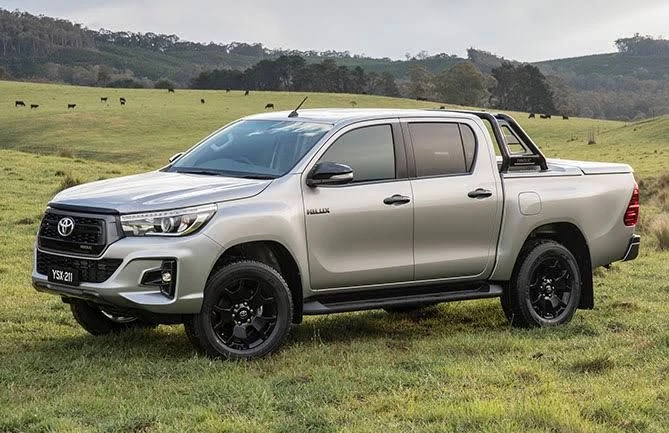
SUVs continued to outsell other vehicle types with a 52.5 per cent share of the market for a total of 50,016 sales. That’s an increase of 26.5% over November 2019. 20,711 Passenger Vehicle were sold and that’s down 10.1 per cent from November 2019, for a 21.8 per cent of the total market. Light Commercial vehicles claimed 22.3 per cent of the market with 21,252 sales, up 11.5 per cent from November 2019.
Inside the passenger vehicle segment, 94 vehicles were pure electric, 2,912 were hybrids, whilst 33 were the plug-in hybrid or PHEV type. in the SUV segment, the breakdown is 84, 3,975, and 102. All three categories in these two segments show increases varying from some to substantial.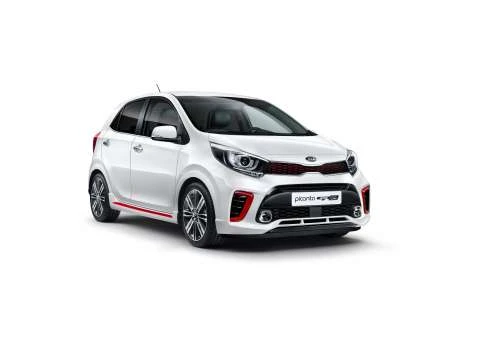
For the Micro car segment, Kia’s Picanto (433) continues to dominate, with MG’s MG3 taking the gold in the sub-$25K light cars (632) ahead of The Toyota Yaris and Suzuki Swift (482 and 446). For the small sub-$40K, Hyundai’s i30 was 2nd on 2,047, with the Kia Cerato 3rd on 1,625.
The medium sub-$60K saw Skoda’s Octavia in 2nd, well behind the Camry (286 vs 1,283) and ahead of the Mazda6 (161). BMW’s 3 Series continued to dominate the plus-$60K sector (461) over the Mercedes-Benz C-Class (353).
People movers and the Kia Carnival more than doubled the sales of the Honda Odyssey in the sub-$60K sector (268 to 107) whilst in the Sports Car sector the Mustang sold seven per day to move 230 in November 2020.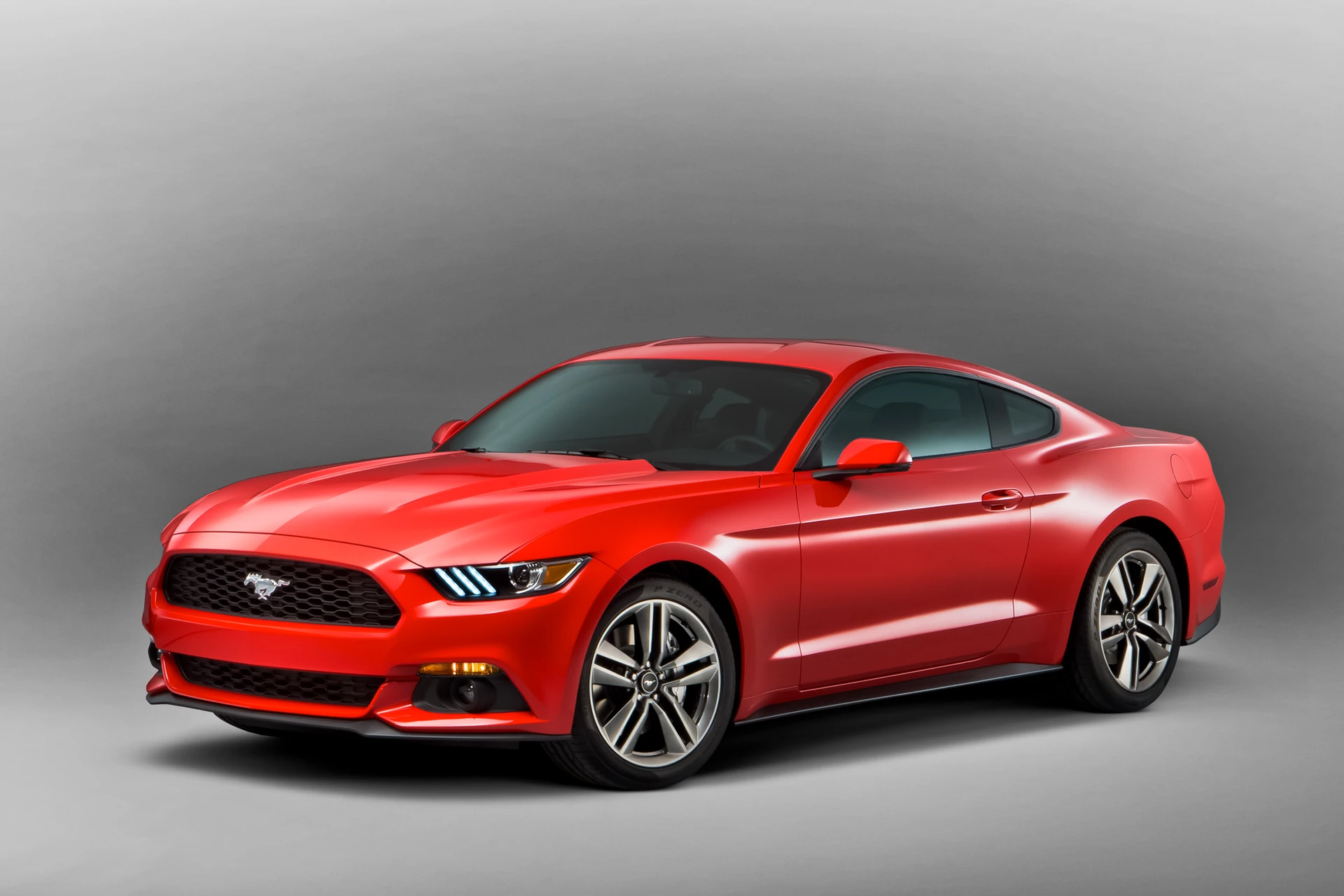
Moving to SUVs and in the light SUV segment it’s Mazda’s CX-3 doubling the newly released Yaris Cross (1,562 to 794) whilst it’s a hard fought battle in the sub-$40K small SUV. It’s a virtual tie between the Mitsubishi ASX over the Hyundai Kona (1,465 to 1,453) with the MG ZS having a win over the Kia Seltos and Mazda CX-30 (1,133 to 1,058 and 1,038).
Things are a little more spread out in the plus-$40K, with RAV4 (3,800) over Mazda’s CX-5 (2,412) and Hyundai’s Tucson (1,995). Subaru’s soon to be updated Forester found 1,502, just ahead of Nissan’s X-Trail at 1,405.
Toyota’s aging Prado continued to find appeal with 2,602 in the sub-$70K large SUVs. It’s well ahead of the Isuzu MU-X (848) that outsold the Kia Sorento (796) and Mazda CX-9 (743). In the same size but priced at over $70K, the new Genesis GV80 moved 21 but the winners were BMW’s X5 (366) and Audi’s Q7 (229).
Information courtesy of the FCAI and VFACTS.
2021 Kia Picanto S Manual: Car Review.
This Car Review Is About: The baby of the current Kia range, Picanto. A pert five door hatch, Picanto is available in either S or GT-Line specification. It’s also one of the cheapest new cars currently available to buy in Australia.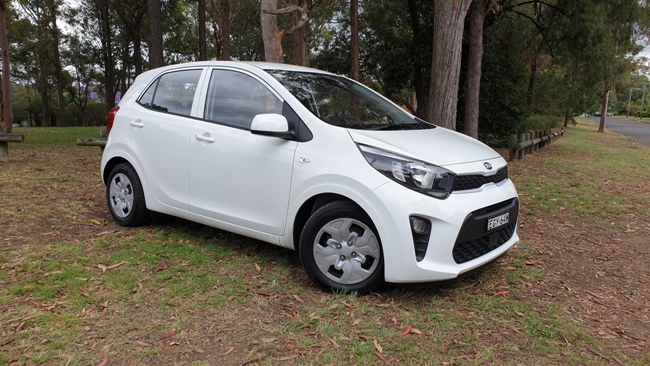 How Much Does It Cost?: Kia has the Picanto S, in manual transmission and 1.2L engine spec, at $16,990 and in non-metallic Clear White. The specification sheet supplied by Kia says there are no options available aside from the exterior colours such as Sparkling Silver, Honey Bee Yellow, or Aurora Black Pearl at $595.
Under The Bonnet Is: A 1.25L petrol four and a five speed manual in the review vehicle. There is an auto available with just four ratios available. That engine is the only option with the turbo 3 cylinder reserved for the Rio GT-Line. Peak power is 62kW (6,000rpm) and peak torque is 122Nm at 4,000rpm. Economy is a strong part of the Picanto’s appeal, with a combined figure of 5.0L/100km (manual) from the 35.0L fuel thimble. Our final overall average was a very creditable 6.0L/100km with a best of 4.4L/100km seen.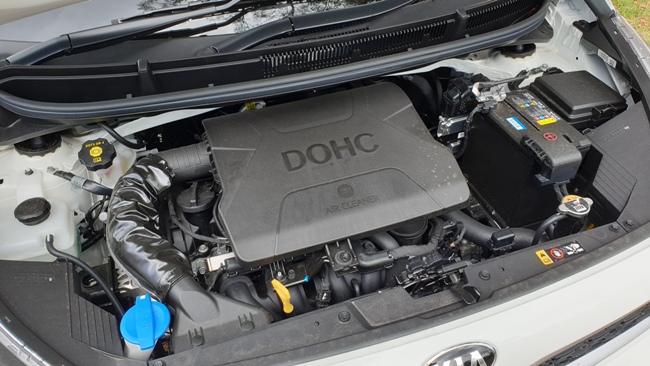 On The Outside It’s: Not as visually appealing as the GT-Line. The Picanto S has a wheel and tyre package of 175/65/16 with steel wheels and plastic covers. The front bumper has halogen driving lights that come on with the ignition, with the bumper jutting forward from the headlights and tiger nose grille. There are no LEDs here, it’s pure old-tech front and rear on the slightly boxy body. The Clear White emphasises the more cubic shape of the Picanto when it’s sans GT-Line enhancements.
 On The Inside It’s: Dominated by the now ubiquitous stand alone touchscreen. At 8.0 inches in size it’s well amongst the standard sizes and features smartapp compatibility. Both Apple and Android are wireless and have voice recognition. Sound is good without being muddy. There is also a USB and 3.5mm socket in the lower front centre console.
The driver’s display is also familiar with a 4.2 inch colour display and analogue dials. An intriguing feature is the screen rolls lines upwards as the vehicle moves along and the driver changes gears.
Plastics throughout tend to the hard side; there is no soft touch on the binnacle, console, door tops, to add a touch of comfort. The upper section of the cabin is trimmed in a light grey material to counterbalance the largely black lower section. Seats are cloth covered, manually operated, and comfortable enough for the Picanto’s natural home, short suburban runs. Front seat leg and head room is adequate, as is rears eat head room, but taller people will find the rear pew a little claustrophobic. And nominally a five seater, the rear seat is not suitable for three adults. Luggage space echoes this at 255L (seats up) with 1,010L available with seats folded.
 On The Road It’s: Suitable for purpose. The 1.2L engine is by no means a firecracker, with alacrity not a word in its dictionary. That may sound harsh as even with four aboard, it pulls well enough although noticeably blunted compared to having just the driver aboard. Even with the free-spinning engine being wound up, it’s enough for moderate acceleration only. It also makes it a questionable choice as being the only engine option for the GT-Line version.
We’ve noted previously the soft springing for the clutch and gear selector; there is little to no weight in the lever and a very gentle one finger movement is enough to see the first to second to third and so on happen. The clutch is the same, there is no real pressure here at all. However, there is an upside to this and it’s that the Picanto S manual slots into the space needed for a learner driver.
It’s ideal for a new driver because that combination of soft clutch and lever won’t be intimidating and the pairing make for the ideal training mechanism. This applies to the somewhat woolly steering and soft suspension setup. The Picanto S bottoms out easily to the bumpstops, meaning some serious speed reduction or driver planning is required to lessen the bang thump. The miniscule disc and drum brake combo do a decent job of hauling up the petite Picanto, and work great with the down-changing of the gears coming to a set of lights or a stop sign.What About Safety?: Autonomous Emergency Braking with Forward Collision Warning is standard, however there is no Blind Spot Warning, Lane Keep Assist, or Rear Cross Traffic Alert. These may seem a major omission however it brings back to the driver their responsibility to not be trained to rely on electronic aids.
What About Warranty And Service?: The standard seven years warranty and capped price servicing applies. Total cost over the seven years is $2,806, for an average cost of $400 per year or just $7.70 per week. Years two, four, and six are where the costs climb higher than the others. At The End Of The Drive. For less than $18K (with metallic paint) the Picanto S manual is ideally priced to be a first new car or a supplementary car. It’s a city car, a suburban car, and fulfills this design brief perfectly. It’s comfortable enough for the city environment, has the basics at a suitable level for tech and entertainment, and provides a reasonable ride and handling package. It’s the sort of vehicle that, when expectations aren’t of a super level, it meets those expectations perfectly.
 Level 2, 9 Help Street