

Author archive
Private Fleet Car Review: 2017 Kia Sportage Si Premium.
Kia’s Sportage is one of the brands oldest nameplates for the Australian market. From its somewhat rough and ready, if competent, beginnings in the 1990s, it’s morphed into a handsome, bluff nosed, popular machine in the mid sized SUV market.
Available in 2017 as a four trim level range, covering Si, Si Premium, SLi, and GT-Line (formerly Platinum), there’s three engines, one transmission, and two or part time all wheel drive options. Private Fleet takes the entry level but one 2017 Kia Si Premium front wheel drive home for the week. The cost is $31510 with premium paint (a grey hued colour called Mineral Silver) at $520. Sportage comes with a choice of 2.0L petrol, 2.4L petrol, or 2.0L diesel. Power outputs for the diesel and bigger petrol are just a kilowatt apart, at 136 kW and 135 kW respectively. The Si and Si Premium has the 114 kW 2.0L four (plus the diesel is an option for the Si). Torque wise it’s a steady climb, from 192 Nm, 237 Nm (both at 4000 rpm) and a handy 400 Nm (1750 – 2750 rpm) for the oiler. For the Si, Kia says economy is 10.9L/7.9L/6.1L (per 100 kilometres, urban/combined/highway) from the 62 litre tank. Our final figure was 8.4L of unleaded per 100 kilometres in a mainly urban environment. Sizewise it’s well situated in the mid sized SUV bracket, with length at 4480 mm, overall width of 1855 mm, a wheelbase of 2670 mm and a ride height of 172 mm. Spare wheel is a full sized alloy.
 The sole transmission available is a six speed auto. There’s no paddle shifts available in the Si or Si Premium however there’s the now almost mandatory Sports shift or manual selection via the gear lever. For the most part it’s smooth enough but did exhibit occasional jerkiness and indecision. The auto would also downshift, from sixth to fifth and sometimes fourth under light throttle on slight slopes. On bigger slopes such as the Great Western Highway’s climb up from the river plain, it’s expected it would drop back, and did so easily, plus would hold that gear with only the throttle responsible for rev changes. In normal driving upshifts were slick, quiet, however light throttle on a cold engine seemed to have the cold also annoying the transmission’s electronics, with the hesitancy and judder found in older style autos.
 Give the Si Premium a solid push on the go pedal and it does drop back easily, as mentioned. What you’ll also get is the mechanical keen from the 2.0L as it winds its way rapidly through the rev range. The 114 kilowatts comes in at 6200 rpm and the engine certainly gives no sign it’ll struggle to reach those numbers. Acceleration is decent enough however there’s a sense that more could be on offer but doesn’t reach the front driven 225/55/18 rubber from Nexen. The 1560 kilogram kerb weight may be one reason. Braking is good, with the 305 mm vented fronts and 302 mm solid rears responding quickly and effectively every time the beautifully balanced and communicative brake pedal is pushed.
 The McPherson strut front and multi-link rear suspension tie the Sportage down well. Although it theoretically could do some soft roading, tarmac is its natural friend and the two go well together. There’s a sense of balance in the way the Si Premium handles itself, with the tight corners for the Old Bathurst Road that snakes its way up from Penrith in Sydney’s west despatched as easily as the dips and undulations on the freeway system that rings the western parts of Sydney. Kia’s engineers spend a lot of time refining the spring and damper settings for Australian spec roads and it shows.
The Sportage is rarely fussed about the road surface, is quiet on all but the coarsest chip surfaces, and seat of the pants feedback tells you that even in quick sideways movement that it’s as composed as if it were standing still. The steering is quick at about 3.5 turns lock to lock, light in Normal mode, not much difference noticeably in Eco and feels a bit heavier, with more feedback in Sports, to round out the driving package. It helps move the Sportage from lane to lane quickly and without a sense of mass shifting direction, making for an almost sporting car drive. Apart from the tyre and wheel size between the Si and Si Premium (225/60/17 for Si), there’s also front parking sensors and electro-chromatic rear vision mirror to differentiate. The Premium also picks up LED DRLs, rain sensing wipers, driver AND front passenger Auto up/down window switches, dual zone climate control, Auto defog system, and illuminated vanity mirrors. Seat trim is a black and charcoal grey weave for the cloth with the front pews manually adjusted for height and seat back angle via levers. The rear seats fold down flat via side mounted levers and provide up to 1455 litres of cargo space, up from 460L with the seats up.
 The black plastics throughout the cabin have a warm texture to them, with a sweep around the bottom of the windscreen not unlike a new Jaguar. The steering wheel hub has the same feel whilst the smoother plastics are that almost suede feel to the matt fiished buttons and suurounds. The seven inch colour touchscreen, which features satnav, another item the Si alone doesn’t get, sits between the central air vents and there’s an alloy look to the surrounds.
 There’s bottle holders in all doors, cup/bottle holders in the centre console and a small storage locker in the console as well. The driver’s dial binnacle houses a 3.5 inch monochrome screen with information such as trip, fuel economy, service status, accessed via tabs on the steering wheel. There’s plenty of rear seat leg room, even with the front seats pushed back and enough for most front seat passengers when that seat’s pushed forward. All over and around, it’s typically high quality Kia.
 The touchscreen has a pseudo radio “dial look”, good quality sound, Bluetooth and Auxiliary/USB campatible, but notably no CD slot. In place of that is voice activated Apple CarPlay and Android Auto. When in Reverse, the camera provides a clear enough picture but it’s not as clear and sharply defined as others available.
  There’s also a pair of 12V sockets at the front of the centre console and one at the rear, allowing for extra USB ports if needed. Aircon controls are simple to use, clean to look at, and the Synch button lights up when it’s a mono zone control, meaning temperature adjustment is for both right and left seats.
 Outside, the Sportage is stubby tailed, long bonneted, with a steeply raked windscreenbehind Kia’s signature Schreyer grille, and rear window, with a thickish C pillar and profile that reminds one of the original Sportage. The update in 2016 lost the angular and sloped headlights, changing them to an insert style that flows from the more upright nose back along the bonnet shut line.
 The Sportage designers may have taken inspiration from a classic sci-fi film for the design of the inner headlights, with the look not unlike at all the tri-lensed aliens from War Of The Worlds. The front bumper also has inserts for the globe lit daytime driving lights in each corner, matching the height of the rear’s indicator cluster located low in the rear bumper, not higher up inside the rear light cluster, a staple of the Sportage design.
 Naturally there’s plenty of safety on board in the form of six airbags, traction control, DBC or Downhill Brake Control and HAC (Hill start Assist Control). Only the GT-Line gets Blind Spot Detection, Lane Change Assist, Forward Collision Warning System, and Lane Departure Warning System. Servicing is yearly or 15000 kilometres plus capped at a cost of around $2756 over the seven years.
At The End Of The Drive.
Kia Sportage range stands up to be counted in a very crowded market. It’s a car that’s full of class and oozes plenty of style. Consider sibling Tucson from Hyundai, Mazda CX-5, Ford Escape, Renault’s brilliant Koleos, VW Tiguan and you get the idea of what it’s up against. With a strong list of standard equipment, a free revving petrol engine (and the diesel’s pretty damned good), a comfortable drive, and that seven year warranty, it acquits itself with dignity and poise. Kia’s 2017 Sportage range deserves to be on your radar when looking out for a new mid sized SUV.
For specifications and more, head over to :Kia Australia’s website and Sportage
Car Review: 2017 Kia Soul
Kia’s Soul is one of those cars that slips under the radar for no really good reason. Who knows if it’s the perception of the brand or of the name or the look, but it’s grossly unfair to disregard this car. Full stop.
Yes, it’s squarish. Yes, it looks somewhat odd, like the two or three other squarish designs. However, it’s roomy, effective, and a surprise. A mostly good surprise. Here’s a look at the 2017 Kia Soul, with the test vehicle fitted with a few extras. The 2017 model has undergone a mild facelift inside and out as of October 2016. It’s recognisably Kia inside, with a look familiar to anyone that has spent time in one of the brand’s car. Outside, it’s a change to the grille & air intake, front bumper, fog lamps, reflectors, and wheels. The interior gets a five inch screen for the audio system, with RDS (Radio Data Service) not included, the FlexSteer drive system with associated engine mapping and steering changes, a centre dash refresh, and changes to the seat coverings and door trims.
 It’s smaller outside than the design would have you believe, with an overall length of just 4140 mm and a wheelbase of 2570 mm maximises interior space. Overall width is decent at 1800 mm with shoulder room aplenty for four aboard. There’s one wheel size; 17 inches is the diameter and rubber comes from Nexus at 215/55. The spare is a spacesaver.
 The test car came clad in Inferno Red on the body and a Cherry Black roof, a $910 option cost over a single colour choice. Any single metallic is now just $620. A Clear White and Red roof combo will also be cost effective at $390. The review car came fitted with carpeted floor mats ($160), dash mat ($93 and superb at reducing windscreen reflection), an embossed and moulded cargo bay liner ($147), weathershields for the windows ($296) and an alloy roof rack set ($552) for a total cost of $1249 over the $24990 base cost and metallic paint. It’s a boxy shape, yes, but curvaceous enough to not be a completely hard edged look either. The window shields also aided in softening the edge plus it sits high enough in looks to almost be taken for a kind of SUV.
 The engine is a 112 kilowatt petrol four at two litres capacity. Peak torque of 192 Nm is available at 4000 rpm, 2200 below peak power. The sole transmission choice is a six speed auto with a decidedly dual clutch feel in change under way, yet lacks the roll forward found in DCTs. Kia rates the 2.0L engine as consuming a combined figure of 8.0L per 100 kilometres driven, 6.2L/100 km on the highway and a far too thirsty 11.0L/100 km in the suburban jungle. The tank holds just 54 litres and it’s this fuel figure that is one potential reason why the Soul hasn’t had the penetration it otherwise may deserve.
 Due to a last minute change of circumstances, the Soul became freed up to be taken away to Bega, the cheese capital of Australia and no doubt inspiration for many Monty Python related gags….Over a period of 54 hours, from departure to arrival back at PFCR HQ, the Soul faced strong head and cross winds, from south of Sydney on the Hume through to Canberra and the plains south of there, through to the road east from the driver’s delight of Brown Mountain. And return. After a round trip of 1111 kilometres, the final average fuel consumption was 8.4L per 100 kilometres. It wasn’t until returning the Soul that the claimed figure of 8.0L/100 km was seen, and that was on an unusually quiet freeway run.
On a similar run 12 months ago, we achieved sub 5.0L/100 km in a revamped small SUV from a niche Japanese brand. A smaller engine, turbo charged, and diesel…An 11.0L urban figure in a small SUV style vehicle just doesn’t cut it any more.
What did work, for the most part, was the six speed auto. Quiet, smooth, from stopped to go and under way. The only times it felt uncertain was in sixth at around 110 kmh on the slightest of uphill slopes, where you could feel the transmission “drag” against the spin of the engine, feeling as if it wanted to do something but didn’t know exactly what that something was. Otherwise, it’s reasonably geared, with 110 kmh seeing 2400 rpm on the tacho. But overtaking meant a solid press on the go pedal you’ll see the tacho needling zinging around well over 4000 rpm, also contributing to the fuel consumption. It’s typical Kia on the inside, meaning a well laid out dash and console, mostly matt black plastic for the dash, easy to use controls, and superbly comfortable seats (needed after a long country run). The driver sees a dash of red and black, with a centre circle, located inside the speedometer central location, showing information such as overall fuel consumption and trip meters, accessed via the standard steering wheel tabs. The speed and rev counter are analogue still, as are the temperature and fuel gauges to the right side. Cruise control and audio are also located on the tiller as are the bluetooth phone tabs. There’s a semi-circular motif embossed into the doors and some characterful designing for the airvents at each end of the dash. They sit directly underneath the horizontally located speakers and have one thinking something pagoda-like. The ovoid theme is continued with the gear selector and touchscreen both surrounded in a similar motif.
 As a drive, it’s engaging. The steering ratio is quick, with around 3.5 turns lock to lock and is ideal for shopping centre car parks or roadside tight parking thanks to its electronically assisted lightness. Ride quality is very good, with a slightly tighter rear than the front. The suspension is the tried and true McPherson strut/torsion beam combination and works well enough on the road. It’s nicely tied down as well, with rebound a short travel and that’s it with no pogoing. On the highways south of Canberra it was smooth sailing, even on some of the slightly unsettled and rutted surfaces, and crossing some cattle grids in Bega had plenty of rattatatta into the cabin but no body movement. On the long sweepers on the Monaro Highway it was flat and composed, with no body roll evident.
 Light braking of the 1375 kilogram mass plus passengers had the Soul easily controlled whilst hard braking via the progressive pedal saw little dive at the front. Hard acceleration saw no torque steer and the barest hint of a list of the nose. Slower speed corners were easily controlled either by a little less throttle in and a touch more out or a brushing of the brakes to settle the nose. The broad footprint aids in stability and the 215/55 tyres provide plenty of grip.
 With a cargo space (seats up) of 238 litres, there’s enough for a couple of overnight backs, until you lift the cargo space floor and see three compartments located underneath. Seats down, it increases to 878 litres. There’s bottle holders in all doors and a pair of cup holders in the centre console, plus a pair of 12V sockets bracketing a USB port and 3.5 mm socket. Standard equipment such as Auto headlights, speed related locking, rear view camera, sensors front and rear, tyre pressure monitoring and the suite of airbags and driving aids complete the picture.
 At The End Of The Drive.
At a tick under $27K the Soul is not expensive. Consider the seven year warranty and fixed priced servicing as well. Over seven years your service costs will be $2688.00 or $388 per year. Or, just over a dollar per day…It’s well featured, is comfortable drive and to ride in, and there’s plenty of room inside.
So why doesn’t the Soul have a better perception? You’re not spoiled for choice with just the one trim level available. It’s an unusual look in an environment populated with slick looking SUVs of various sizes and shapes or sleek European sedans. Is it the fuel economy?
Perhaps.
So it could be a combination of suburban thirst and a styling that is perhaps a little too unusual? If you were to ask the junior members of the PFCR family, it’s the latter…yet they observed that from inside you couldn’t see the outside. Sage advice for any prospective buyers that would be missing out on a thoroughly competent vehicle.
As a certain Akubra wearing former TV host used to say: “Do yourself a favour” and try the Soul. Here’s where you can go to check it out and book the test drive: 2017 Kia Soul
BMW Goes Back To The Future With M4 CS.
BMW Australia has released details of the forthcoming M4 CS. With a whopping 338 kilowatt engine and packing a torque punch of 600 Nm, the hot two door will start from $211,610.00 with an expected release date of late 2017.
It’ll sit at the top of a refreshed M4 range, comprising the M4, M4 Pure, M4 Competition and also sources elements from the limited edition M4 GTS.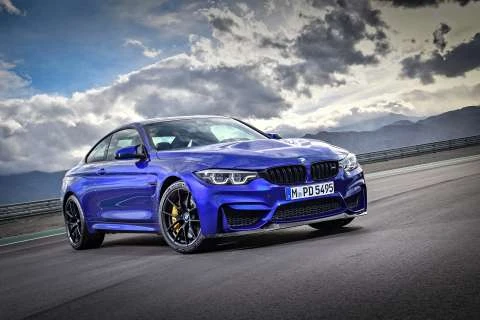 The CS also harkens back to the 1960s, with the CS nomenclature first seen on the beautiful 3200 CS of 1962. It swapped to the 2000 CS in 1965, and the evocative 1971 E9 Series 3.0 CS. The current version uses BMW’s legendary straight six powerplant, with a 3.0L capacity. There’s two mono-scroll turbos strapped to the engine, which features a rigid closed-deck cylinder block, forged crankshaft and arc-sprayed cylinder walls, the six-cylinder is light and strong with minimal friction loss and outstanding high-rev capability, all the way to a 7,600rpm red-line.
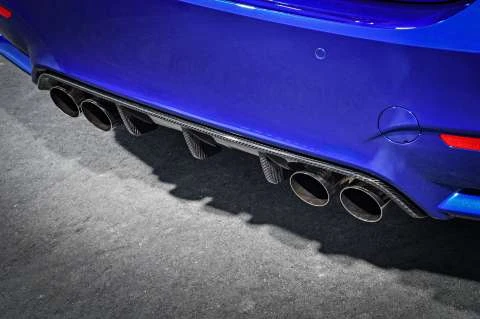
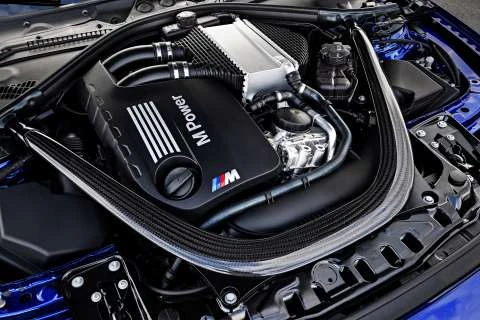 The turbos dump unwanted air via a dual-branch sports exhaust system with quad 80mm tailpipes which adds an aggressive acoustic while keeping back pressure as low as possible. Electronically-controlled exhaust flaps further contribute to exhaust volume and gas flow depending on the vehicle’s load state and selected drive mode.
Changes in the engine’s electronic management system leads to a 7kW power increase over the M4 Competition, with 338kW available at 6,250rpm. Vitally, peak torque is improved by 50Nm to a round 600Nm, a match for the legendary M4 GTS. According to the BMW M dynamometer charts, the M4 CS peak torque figure is generated from 4,000rpm to 5,380rpm.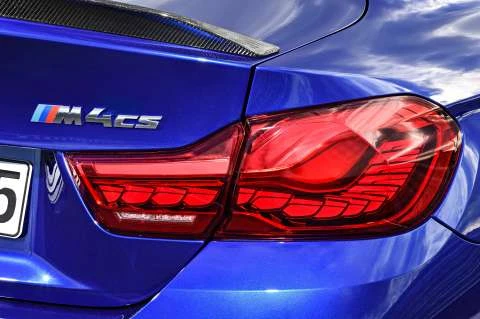 There’s a specific chassis tune for the M4 CS, with the aluminuim based structure allowing a driver to choose from Comfort, Sport, and Sport+. Up front is a lightweight double-joint spring strut layout, with the five-link axle featured at the rear. All suspension links and wheel carriers are made from forged aluminium. The M4 CS will ride on 10 spoke forged alloy wheels, with the front being 9 x 19 inches and weighing just 9 kilos, whilst the rears will weigh just under ten kilos and be 10 x 20 inches in size. Brakes are four piston fronts and twin pistons at the rear.
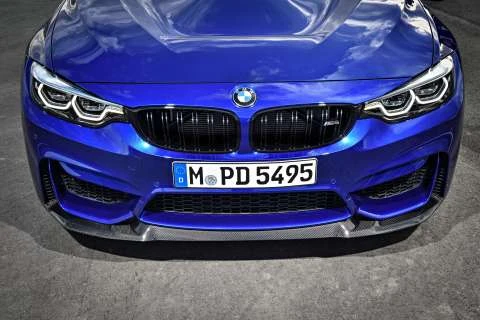 The whole car weights under 1600 kilos thanks to lightweight carbon-fibre and carbon fibre reinforced plastic (CFRP), with an exposed carbon fibre diffuser that is specific to the CS and helps to substantially reduce front axle ‘lift’. The twin headlights are LEDs, the bonnet is CFRP, as is the roof and weighs six kilos lighter than a steel roof. The rear diffuser is also CFRP and is borrowed from the M4 GTS as is the exclusive Organic LED rear lighting system.
 It’s more track and sports focused inside than a regular M4, but there’s still plenty of luxury, with Alcantara trim on the door armrests, passenger side dash tim which includes an etched CS designation, on the centre console and mixed in with leather on the seats. A leather wrapped tiller is available as a no-cost option.
There’ll be a Head Up Display with M specific content, BMW’s Connected Drive Services, hands free Bluetooth, digital radio and parking distance control for the front and rear sensors. Two metallic paint options – Black Sapphire and San Marino Blue – are available as standard equipment, while the non-metallic Alpine White is a no-cost option.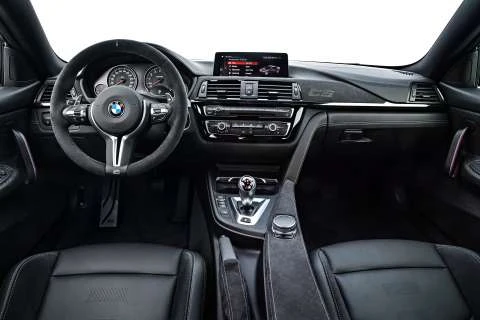 In addition, two special BMW Individual paint finishes are available for $4,400*, the bespoke Lime Rock Grey and the Frozen Dark Blue II.
M Carbon Ceramic brakes, roller rear sunblind, sun protection glazing, a headlight washer system, TV function and Apple Car Play integration are also optionally available.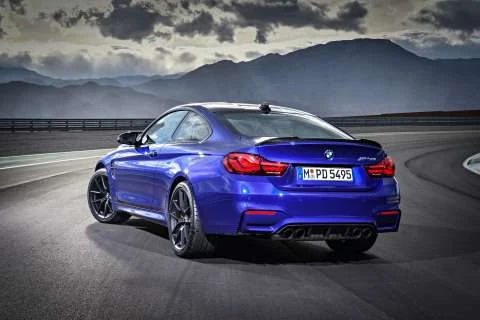
For more information head to BMW Australia and you can follow BMW here: BMW Group on Facebook
(With thanks to BMW Australia for information and images.)
Van Review: 2017 Mercedes-Benz Sprinter 313 Transfer Minibus
Private Fleet offers a huge thanks to Blake at Mercedes-Benz Vans Australia as we take a look at a light commercial passenger vehicle. The first vehicle to be reviewed is the 2017 Mercedes-Benz Sprinter 313 Transfer Minibus. The Sprinter Transfer Minibus is, well, a Minibus variant of the Sprinter van and it is, visually, one big unit. Available with a low (as the review vehicle had) or high roof, at 2524 mm or 2818 mm, it’s lonnnng at 5926 mm. Width? 1993 mm or 2426 mm with the (heated) mirrors included. Seating capacity is twelve, with driver and two up front, and two/three/four mix behind, with all seats fitted with belts and there’s a fire extinguisher and emergency escape panel as well. Even the wheelbase is huge, nearly as long as some small cars are at a total length of 3665 mm. There’s a sense of irony for the uninitiated when M-B state that this is a medium wheelbase model…
 The heart and soul of the Mercedes-Benz van range is the engine and transmission combination. The Sprinter 313 Transfer is no exception, with a seemingly small Euro 5 compliant 2.2L diesel and seven speed auto driveline. Peak power comes in at 3800 rpm with 120 kW on offer, with peak torque just 360 Nm between 1400 to 2400 rpm. Bear in mind, though, it’s a seven speed auto and at 110 kph, the tacho is sitting on 2200 revs, smack bang in the peak torque figure.
The transmission is a superb unit. Gear changes are physically imperceptible, with only the engine note, a restrained yet noticeable diesel thrum, and the flick of the tacho needle, giving away the ratio has swapped. On the go on the highway and freeway, it’s an effortless cruiser and it was a delight to drive.
Acceleration is reasonable, with entering a highway from a standstill requiring a bit of planning and some driver skill. What this means is having an understanding of the ability and limitations of a vehicle that is good but not great at getting off the line. One simply shouldn’t expect that they can pull into traffic and do so in front of oncoming vehicles.
Braking is a delight, with a feel that wouldn’t be out of place in a family sedan and betters many of the passenger oriented cars a driver can buy. There’s real, genuine, feedback at the slightest pressure and a beautifully weighted feel from start to finish, enabling you to haul up the 2.5 tonne plus cargo easily and faultlessly.The sheer size of the Sprinter is also something a driver needs to consider in the handling aspect.  It’s beautifully car like and the driver sits behind the front wheels but turning the steering wheel has the feeling of sitting directly above them, such is the agility of the Sprinter. For someone not accustomed to driving something of both the wheelbase and length, turns and corners need to be taken just that little bit wider and that little bit slower.
 Overall though, the Sprinter 313 Transfer delights in its ability to make a driver feel as if they are actually driving something smaller, lighter, more wrapped around them. This translates into a tight 13.6 metre turning circle, barely larger than passengers cars can deliver. Even the wheels are passenger car in size, with 16 inch diameter steelies wrapped in 235/65 rubber.
  However, there’s exterior safety lights fitted in the flanks which reminds you that you’re driving a Minibus, not a car. Access to the interior is via the front doors, with a step up and handle at the top of the door that’s integrated into a carry shelf; barn style rear doors, and a sliding door on the left flank with a step that comes out and retreats automatically when opening and closing the door. The sliding door requires a little extra effort to ensure it closes properly however, but opens up to over 1500 mm to ensure totally easy access for anyone. The rear doors also open lightly, and there’s a step fitted at the rear. Interior height maxes out at 1820 mm so there’s plenty of headroom for just about any person.
 The driver’s position is close to a metre above the tarmac, with the aforementioned step and handle easing access. Once seated in the tartan style cloth covered seat, there’s plenty of forward and side vision, with the wing mirrors giving a wide angle of view. In contrast, the interior rear view mirror is almost useless with such a narrow field of view. Somewhat surprisingly, there’s no rear view camera nor rear (or front) parking sensors.
  What there is a dash that’s clean, mostly uncluttered, designed for commercial use with cup holders up near the window, a storage locker in upper centre that’s almost large enough to fit an LP record, deepset pockets in the doors and removable panels underneath for extra storage. The sunshades have a clip that ensures they sit fastened tightly and are part of the same structure that provides some upper area shelf space.
 The centre section of the dash houses both the aircon controls and the audio system which is linked to controls on the smooth looking tiller. There’s Bluetooth compatibility, an easy to read 5.6 inch non touchscreen and a most clean layout. On the right hand side is a keypad, exactly the same as found on a telephone and this is the only section that makes it look somewhat untidy. The tiller also is home to tabs for information on a display screen between the speedo and tacho, presenting a range of information including what ultimately proved to be a final fuel consumption figure of 9.4L/100 km. What was interesting during the drive was watching the range figure change in an upwards trajectory in cruise mode. A starting range of 520 kilometres on pickup had, after an 80 km drive to base camp, over 900 km available.
 The aircon itself is reasonably easy to use, with the dial for air direction being quirky by not being as easily understandable as the rest. Airflow was powerful when the dial was wound up, plus there’s a aircon unit on the roof that feeds into a set of vents in the rear of the 9.0 cubic metre capacity cabin. Safety, when underway, is taken care of by a suite of car-like electronic aids, such as traction control, brake assist, brake force distribution, electronic stability control and a pair of airbags up front. Finally, there’s the standard three year or two hundred thousand kilometre warranty, 24/7 roadside assist and a specialised service plan including a 12 month or thirty thousand kilometre service interval.
 At The End Of the Drive.
Aside from the much vaunted passenger car range that Mercedes-Benz has built its well deserved reputation upon, their light commercial range also has much respect. With this particular people mover sitting at around $66K driveaway, it’s much cheaper than expected and cheaper than quite a few SUVs. Yes, it’s not the answer to everyone’s people mover question but with car like handling, plenty of room, an engine and transmission combination that works just so well, the 2017 Mercedes-Benz Sprinter 313 Transfer Minibus makes for a tempting alternative when it comes to looking for something to ship the family (and kids for weekend sports) around. This link will take you to more information about the Minibus and from there you can navigate to the rest of the range: 2017 Mercedes-Benz Sprinter 313 Transfer Minibus
Once again, a big thanks to Blake at Mercedes-Benz Vans Australia.
 Level 2, 9 Help Street