

Author archive
Flying At Ground Level.
A certain British car show once had a story about a car powered by an engine sourced from a WW2 fighter plane. It was a spectacle to behold with flames, sparks, and smoke being emitted as it was piloted around the show’s test track.
British based John Crowhurst is one member of a very select group that has similar thoughts to the builder of that car. John, formerly based in South Africa, has found an engine that comes from the same basic aeronautic background, however it’s a British engine, not German.
During WW2 the Merlin engine powered planes such as the iconic Spitfire. Rolls-Royce sourced parts from engines that had been in crashed aircraft with the hope of being able to use them for something else during the war. A home was found for the project by using these parts as the basis for an engine that was called Meteor.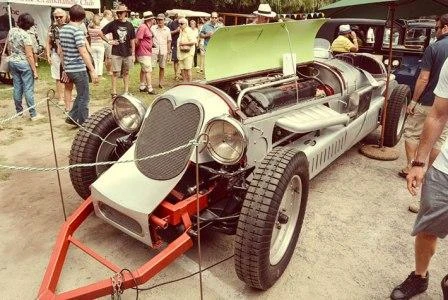
The Meteor engine was built for and used in tanks and was used until 1964. One of these has been repurposed to be the powerplant for a handbuilt car that John, sadly, can’t legally drive on UK roads.
It’s a V12 configuration, something that fans of Jaguar or Aston Martin can appreciate. But it’s the capacity that gives pause for thoughts. Consider for a moment that a Holden 5.0L engine was 308 cubic inches. John’s beast is 27.022 litres or a whopping 1648ci!
Naturally something this big needs a good (great?) cooling system and John has fitted a set of tanks that have a total of 70 litres worth of fluid capacity. This is where the Australian based Davies, Craig have joined the party. Two of the biggest electronic water pumps that Davies, Craig have, the EWP150, were sent to John and have been fitted, one at the rear and one at the front end for the radiator.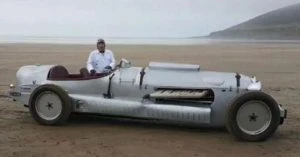
The car itself is built on a ladder chassis with tubular components forming the upper body structure. It’s strong but flexible enough to deal with the 631 horsepower and 1449 lb-ft (470 kW and 1964 Nm).
John’s naturally quite happy with this laments that, in his extensive sponsor list, he doesn’t have a fuel supplier. Why? At around 100 km/h or 60 mph it uses a litre of fuel every mile.
At least it won’t overheat thanks to the two Davies, Craig EWP150s!
The Holy Hand Grenade Of Antioch.
Followers of Monty Python will get this once some more has been explained. Perhaps this will help: “The number thou shall count to shall be three. No more, no less.” Still from the same film and reference point but what exactly has this to do with cars?
Easy.
Some cars allow the indicator stalk to be gently touched and it will automatically flicker three times. No more. No Less. Unfortunately, for the three point seven percent of Aussie drivers that know how to indicate, this is how many times around thirty percent of that three point seven will flash. The rest are heavily weighted towards none at all and the tiny remainder will indicate to the legal standard, being (in the case of changing lanes) before moving from their current lane to having ALL of their vehicle in the new lane.
Those that indicate, begrudgingly it seems, will do so three times. Most of the times this finishes with barely half of their car in the new lane but more often than not they either haven’t begun to move or they are about half way across. On a recent 1200 kilometre round trip from Sydney to the south coast of NSW and back, the number of drivers of cars, trucks, and buses (alarmingly the latter two should be professional drivers) that indicated to the state standard would be about fifteen percent of the total vehicle traffic seen.
Here’s the link to the NSW legislation: NSW road legislation
You’ll note how many definitions of changing direction there are, including merge lanes, T-section roundabouts, and the like. Head to points 47 and 49. These are the two pieces that the state governments and territories seem to refuse to acknowledge are a root cause of our road toll.
Howso?
Cars are designed and engineered with some basic basics in place, such as where the indicator and washer/wiper stalk are located. Go sit in your car, place your hands at the nine o’clock and three o’clock positions. Stretch your fingers. Those fingertips will reach two stalks in the vast majority of vehicles. One of those, when moved up and down, will engage the indicator system.
Now here’s where it gets tricky….the idea of that lever is pretty simple in concept yet seems to befuddle and confuse the horrifyingly large amount of Aussie drivers. Most will only use it like the countdown to pulling the pin on the Holy Hand Grenade of Antioch, in that the lights on one side of their car/truck/bus will flash just three times.  No more. No less. However, when used as per the legislation a miracle occurs, a miracle that may, if our governments and territories can tear their myopic gaze away from the one point one billion dollars of revenue generated by that wonderful driver propelled ATM, speeding fines, go some way to increasing driver engagement with the knock-on effect of drivers being more aware and therefore less likely to crash and die.
Indicators flash more than three times. Car makers need to change that to five, at least.
This has the drivers around being made more aware of what the driver indicating has in mind and therefore a higher level of probability they’ll stay away from that vehicle. And by being more engaged in driving that driver may notice the car sneaking up on their left or right, the truck driver slowing down in front, the mini-bus about to exit a petrol station, and have more time to do the right thing.
But while our pollies feel that speeding is the sole cause of fatalities and ignore asking our boys and girls in blue to enforce the basics of driving, our fatalities and injuries list will continue to disimprove.
The hand grenade is in your hands.
Mercedes-Benz X-Class For The Tradies Is Here.
Along with German sibling Volkswagen, Mercedes-Benz now offers a four door utility vehicle. Called the X-Class it’s got a starting price of $45,490 plus on roads. With an effective trickle style media campaign underway there’s already over 8000 registrations of interest in their new vehicle. As is to be expected, M-B will offer an almost bewildering range of variants. There’s will be a choice of two models called the X 220d and X250d, two diesel engines offering either 120kW or 140kW, a six speed manual for each or a seven speed auto for the 250d.
The 220d will be given either a rear wheel or all wheel drive system, with the 250d coming in AWD only. A high output V6 will be available by the end of 2018, with 190kW and 550Nm of torque.
There will be three trim levels: Pure, Progressive, and Power, designed to appeal to three distinct lifestyles and working groups. Underneath will be the tried and true, and fettled for Australian roads, double wishbone front and multi-link rears, with both ends riding on coil springs. This aims to provide a harmonious balance of safety with any load and a comfortable ride.
Safety won’t be an issue with the X-Class receiving a five star ANCAP rating thanks to seven airbags, Autonomous Emergency Braking, Lane Keeping Assist, plus a 360 degree camera in the Power and optionable on the Progressive. It’ll have a significant on-road presence with a 5340mm length, 1920mm width and 1829mm height. The front end features a stand-out Mercedes-Benz emblem inside a twin louvre grille, a M-B family look to the lower front bar, and a powerful stance at the rear.The tray will hold a standard Australian spec pallet and towing of up to 3500 kilograms is factored in. Whilst working hard it’ll cosset driver and passengers in three trim levels inside including two leather and two roof lining colours.
 The Pure will be aimed at the working driver and will roll on 17 inch steel wheels. They’ll be able to access media via a seven inch touchscreen. The Progressive driver has 17 inch alloys, colour coded bumpers, heat insulating glass in the windscreen, and Garmin integrated navigation through the seven inch touchscreen.
 Power drivers will have their new ute fitted with 18 inch alloys, man made leather interior, parking assist via M-B’s PARKTRONIC system, and an eight speaker digital audio system.
A range of option packs will be available across the range for the 2018 Mercedes-Benz X-Class.
https://www.facebook.com/MercedesBenzVansAustralia/ and @mercedesbenzvans_au on Instagram can be followed for more information as well as contact Mercedes-Benz dealerships.
Is It Worth Holden On?
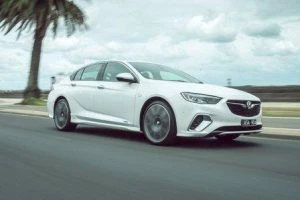
A recent post to Private Fleet’s facebook page has given rise to plenty of passionate, robust, thought provoking discussion. The subject? Holden and the new Commodore.
It seems there’s a couple of factors that have sparked what appears to be mostly “against” comments; largely, the fact there’s no V8 and that it’s front wheel drive. Yes, we know there’s the all wheel drive, but that’s only available with the V6. Only occasionally does the fact it’s no longer a locally manufactured product crop up, such as this: ” Doesn’t matter if designed in Australia, what mattered is assembled in Australia so that Australians have jobs. Is it any wonder our welfare bill is going up. Now most of car price goes overseas just like a lot of our income tax does.”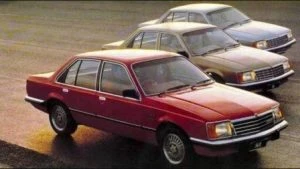
And that is a fair point. Harking back to our interview with then head of PR at Holden, Sean Poppitt, he’d said that workers were being as much assistance as possible to find different roles or be given a payout once manufacturing ceased. But it did mean that the manufacturing side of the skill-set workers had has either been lost or relocated to an area that’s not using that skill-set.
But back to the car itself. It seems that many feel that their loyalty has been questioned by Holden’s decision to shut shop and continue with the nameplate. Again harking back to Poppitt, he said that the reason the name was kept WAS because of feedback from Commodore owners.
Loyalty can also give rise to misguided faith, as seen here: “Serves them right, close Australian factories and still have the hide to call imported cars a Holden and think we won’t notice.” This could very easily be seen as overlooking all BUT the VF Commodore from Holden were and had been imported cars for a couple of decades at least, as opposed to the 1970s with Toranas, HQ through to HZ Kingswoods and the Commodore VB and VC being built here.
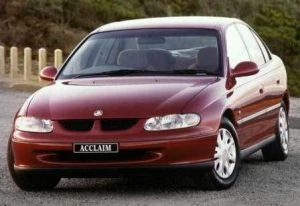
Then there’s the look of the ZG. Somewhat smaller overall than the VF, with looks more similar to Japanese maker Mazda’s 6 than the bloky, broad-shouldered, VF, there’s been comments about how it doesn’t look like what we’ve had over forty years: “The car is ugly and does not resemble a Commodore and the once loyal consumers are turning to superior Japanese and european manufacturers to get what they want.”
Let’s look at this in a bit more detail. The VB through to VK were effectively the same, before a re-skin for the VL. Then there was the complete overhaul for the VN, a bare facelift for the VP, before the VR and VS. Along came the VT and VX, then the facelifted VY and VZ. Where could we say the VT resembled the VB or the VY resembled the VL?
Regardless of the opposing points of view it’s clear that a substantial amount of disquiet is out there in regards to the ZG Commodore. As the four words used sagely go: only time will tell.
 Level 2, 9 Help Street