

The Hot Sports Cars Of 2024
Most people who love driving have dreamed about owning or at least driving a sports car at some point in their lives. Some sports car greats that come to mind are the Porsche 911, BMW M4, Subaru WRX, Ford Mustang, Alfa Romeo Giulia Quadrifoglio, and even Tesla cars. We often hear about Toyota leading the new car sales charts, with Australians also loving the Ford Ranger and other great new utes, along with Mazda SUVs. But what about those of us who love to own and drive a sports car? What are the more commonly sold new sports cars been recently? Let’s take a look.
Our focus here is on the common sports cars, not the crazy wild exotics that tend to be reserved for the rich and possibly famous – the sort of things that most of us can only dream about. We’ll keep things within the bounds of the possible and look at the sports cars that keen Aussie drivers actually purchased.
Helping to shed some light on this question comes from the data that were released by the Federal Chamber of Automotive Industries (FCAI). What’s on their list? Of all the sports cars bought new for under AUD $80,000 last year (2023), 1573 Subaru BRZ Coupes were sold. This made it the number one sports car choice in Australia. The stylish BRZ just pipped the ever-popular Ford Mustang, with 1475 new Mustangs added to our roads last year.
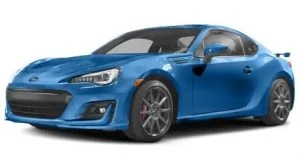
Third spot went to the lovable BMW 2 Series Coupe, which would have to be my personal pick of the bunch. BMW enticed 1164 of the sports car buyers of 2023 to own a new 2 Series Coupe. That’s very impressive for BMW. Interestingly, the Subaru BRZ also beat out its almost identical twin, the Toyota GR86 Coupe sports car, which managed to attract 1144 sales throughout 2023 and popping the GR86 into fourth spot – this was only 20 units shy of the BMW’s tally.
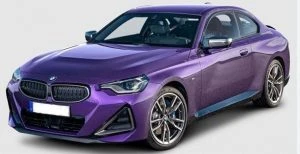
After the tightish competition among the top four sellers, there was a bit of a gap between fourth and fifth place, with sales in the triple figures rather than in the thousands. Surprisingly, at least for me, was that the incredibly popular and stylish Mazda MX-5 had to settle for fifth place getter (653 sales). Also, the quick and fun-to-drive Nissan Z car came in sixth place, with Nissan being able to shift 449 sales.
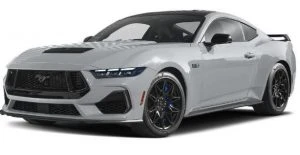
It is worth mentioning that Ford does have the next-generation Mustang rolling out onto its showroom floors as we speak. This may well be the reason why fewer of these cars were sold last year, as those intending to own a new Mustang may have been holding out to purchase the new model. And who wouldn’t want to spend their money on a new Ford Mustang with all that legendary performance and style? Check out our review of it here.
Silly Features That Never Made It

In most modern cars, you can find a selection of neat features to make the task of driving easier and more pleasant. Some of the ones I particularly like include active cruise control, ambient lighting, steering wheel mounted audio controls, reversing cameras and Bluetooth connectivity so my phone and car talk to each other. I guess most of us have our favourite driver aids.
However, over the over 100 years that the car has been around, manufacturers and designers have come up with some features that flopped, mostly because they were plain silly ideas. We’re not talking about things that have been phased out because they are no longer in high demand, such as cigarette lighters (which have morphed into 12-volt power outlets), or because they were a bit iffy in terms of safety (such as bench seats). Instead, we’re talking about ideas that were totally nuts. Here’s the looniest ones that were put forward by designers with a straight face.
In-Car Toilets
In the late 1940s, an inventor named Louie Mattar customized his Cadillac so that he could go on a long-haul trip of around 6000 miles without stopping, even to refuel. While most of us would be more interested on how you manage to get something that goes for that long without refuelling, which wouldn’t be silly, quite a few designers in the 1950s considered installing one of the other things that Mattar put in his customized car: a toilet. Yes, a toilet that the driver or passenger can use without leaving the car. However, this proved to be impractical, considering how easy it is to simply pull over at a public loo, or café or garage – or, in remote and rural areas, a handy bush.
Flamethrowers
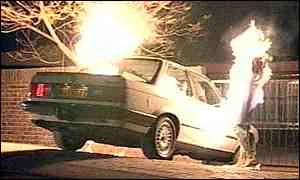
Yes, seriously. In the late 1990s, when violent crime was a real problem in Johannesburg, South Africa, one inventor decided that the best way to protect drivers from carjackings was to install aftermarket flamethrowers that could be activated in self-defence. This was designed to use gas to create a fireball that didn’t damage the paint. The laws at the time allowed South Africans to use deadly force in self-defence, and the fireballs sent out by the “BMW Blaster” weren’t lethal; they “merely” blinded the would-be carjackers. The downsides were that (A) a matching fireball was released from the opposite side of the vehicle, potentially injuring innocent bystanders and (B) flamethrowers have been outlawed by the United Nations. The invention won the Ig-Nobel Peace prize for 1999 and the rumour is that 25 BMWs received this “upgrade”.
http://news.bbc.co.uk/2/hi/africa/232777.stm
Children’s Partition
Another one from the 1950s, back when rear seatbelts (and possibly seatbelts full stop) weren’t really a thing, and kids who monkeyed around in the back seat while the car was moving were threatened with “Don’t make me stop this car!” Some designers thought that perhaps it would be less distracting (and pleasant) for the driver to ensure that the children were neither seen nor heard, courtesy of a privacy partition of the sort found in very posh limousines. However, most parents preferred to know if their kids were screaming, fighting or giving each other black eyes in the rear seat, so this idea didn’t catch on.
Automatic Seatbelts
This one’s from the 1970s to the 1990s when more automatic features were becoming popular. One that didn’t catch on was the automatic seatbelt. An automatic seatbelt worked by taking the shoulder strap from the back of the seat and fastening itself onto the B-pillar when the engine started or the door closed. The user had to buckle up a lap belt him/herself. This idea was very exciting, and in 1977, a law was passed in the US that stated that by 1983 all new cars should either have automatic seatbelts or airbags. The first commercial vehicle to have these automatic seatbelts was the 1975 Volkswagen Golf, and many other manufacturers had offerings with this safety feature, including Hyundai and Toyota. However, the downside was that a seatbelt that isn’t permanently fixed to the B-pillar isn’t as secure as one that is, and users still had to clip in the lap belt separately. They also didn’t play nicely with child seats and were a pain for getting in and out if you were carrying anything. As someone with long hair that occasionally gets pulled into the slot of ordinary retractable inertia seatbelts, I imagine that these automatic seatbelts would have been a right pig for people with long hair. So airbags were the safety feature that won out.
If anybody has experience of a vehicle with an automatic seatbelt, let us know in the comments what you thought of them!
Joystick Steering Systems
Although the original horseless carriages of the late 19th century sometimes used a rudder system rather than a wheel, the steering wheel has become the one we’re all familiar with. However, during the 1990s, Saab decided to fit its some of its 9000 models with a joystick steering system. Fortunately, not all Saab 9000s had them and plenty had the ordinary wheel. The joystick was too easily knocked and wasn’t precise enough. This was particularly an issue, given that the Saab 9000 was pretty responsive when you put your foot on the accelerator (I used to own one, and I rather miss the way that it could dart into the gaps at the intersections like a hummingbird spotting a tasty new flower…).
Coffee Machines
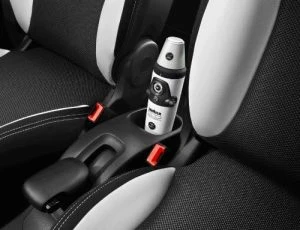
Although coffee doesn’t originate in Italy, all the words we use at the local coffee shop are Italian (latte is the Italian world for “milk”, for example). So it’s not surprising that Fiat, in 2012, attempted to include a real working compact espresso machine that sat in the centre console in its 500L models released in Europe. It was, however, short-lived, probably because it took up the driver’s armrest, and comfort won out over the convenience of coffee on the go, and possibly because hot liquids and sharp corners are not a happy combination. However, there is still part of me that thinks that this idea isn’t so silly and wouldn’t mind one.
Australian Car Sales Continue The Upwards Swing.
VFACTS and the FCAI have released the sales figures for March of 2021 and it’s good news. March 2021 saw 100,005 units moved, an increase of 18,315 over March of 2020. In a year to date sales sense it’s 263,648, up from 233,361 for the same time last year.
SUV sales were up 32 per cent and Light Commercial vehicles were up by 28 per cent. Eight of the top ten selling vehicles for the month were SUVs or Light Commercials, driven by increasing demand from the Private buyers.
Category wise, the passenger segment went down from 21,783 to 21,360. The SUV figures were 51,705 compared to 39,162 in March 2020. LCVs were 23,255, up from 18,165 in March 2020.
In the Passenger car segment Hybrids saw a slight increase, with 2,658, up from 2,441 in March 2020. Hybrid SUVs also saw an increase, with 2,190 in March 2020 up to 3,890 this year. PHEV SUVs doubled from 119 to 258.
For the Light Cars (under $25K), MG’s MG3 took the crown, with 1,238, an increase of over 30%. Third place was a real battle with Suzuki Swift (471), Kia Rio (452), and Suzuki Baleno (432) making a good sales fight, whilst in between was the Toyota Yaris on 636.
Small Cars (under $40K) and Toyota’s Corolla was under pressure from Hyundai’s i30. The Corolla moved 2,892 against 2,514. Third was tight with the Mazda3 just pipping the Kia Cerato, with 1,577 to 1,453. In the plus $40K range it was a battle between the German duo of BMW and Mercedes-Benz. The A-Class stole first on 358, just nudging the 1 Series on 340. The 2 Series Gran Coupe took third on 222.
For the Medium segment it was the Toyota Camry out in front in both the under and over $60K bracket. 852 units moved, ahead of the BMW 3 Series on 567, and the Mercedes-Benz C-Class on 364. Camry, though, was down substantially from 2020, with 1,332 last year.
Kia’s Stinger continued to win the Large Sedan, with 173, down by just two from last year. Porsche’s new Taycan, a fully Electric Vehicle, entered with 161, six ahead of the Mercedes-Benz E-Class.
Kia also outclassed the competition in the People Mover segment, with the Carnival reaching 616, up from 475 in March 2020. Honda’s Odyssey consolidates second with 162, up from 130.

Volkswagen snared third with its new Multivan for 121. In the over $60K segment it was Mercedes, Mercedes, and Toyota, with the V-Class (42), Valente (24) and Granvia (22), duking it out.
There’s been a change in the Sports car segment though. Ford’s Mustang still sold the most with 130 in the under $80K segment, however was outsold by the Mercedes-Benz in the over $80K by the C-Class Coupe and Convertible on 139. The 4 Series from BMW snared 110 for third in both segments.
Moving into the SUV segment and in the Light SUV category Mazda’s CX3 pummeled the opposition in the sub-$40K bracket with 1,744. Toyota’s Yaris Cross slid quickly into second on 846. For third it was another tight battle with Volkswagen’s T-Cross (655) edging out the Hyundai venue and Kia’s new Stonic on 636 and 624.
For the under $40K Small SUVs the Chinese made MG ZS stole the show on 1,510. Hyundai’s recently revamped Kona saw 1,462, just ahead of the Mazda CX-30 on 1,225. Nissan’s Qashqai was the only other entrant into the 1,000 club, squeaking in on 1,003.
Above $40K and Audi’s Q3 found 852 homes, ahead of the Volvo CX40 with 416. 279 and 249 went to Germany, with the X1 from BMW and GLA-Class from Mercedes. Mazda’s CX-5 gave the RAV4 a shake in the Medium sub-$60K, with Toyota selling 3,522 over the Mazda’s 3,022. Nissan’s X-Trail performed solidly for 1,932, just ahead of Subaru’s Forester with 1,439. Mitsubishi’s Outlander 1,085, just ahead of Honda’s CR-V on 972.
In the plus $60K bracket, only Mercedes cracked the 600 mark on 607 for the GLB. The GLC-Class wagon was a distant second with 374, with Audi Q5 on 336. The Lexus NX and BMW X5 went nose to nose on 295 and 291.

In the Large SUVs and under $70K it was Subaru’s outgoing and incoming Outback with 1,341, ahead of the 1,211 for Toyota’s Prado. 1,179 is the number for the Isuzu M-UX. Mitsubishi’s Pajero Sport sold 886, whilst their ancient Pajero, due to be cancelled at the end of the year, sold 292.
Over $70K and it was the X5 on 309. Behind it was some close infighting with the Lexus RX (185), Range Rover Sport (181), and GLE-Class wagon (176) providing stiff competition for each other. Above that it’s a two horse race in the Upper large under $100K, with the LandCruiser and Patrol on 2,244 and 305, selling nearly eight times as many than the full field in the over $100K bracket.
In the ute segment, the 4×4 pickup and cab-chassis bracket had HiLux on 4,068 ahead of Ford Ranger with 3,710, continuing the Japanese brand’s number one position. Mitsubishi’s 4×4 Triton moved 2,223 for third. Isuzu’s D-Max was fourth on 1,338, ahead of the Mazda BT-50 and sibling under the skin, on 1,177.
Notable in those figures is the rise of the sharply priced Chinese built MG range, and the continued growth of non-PHEV Hybrids. Overall for March 2021, Toyota sold 21,319, with Mazda on 10,785. They were the only two brands to see double-digits for the month. Hyundai continues to outpace its Korean sibling, with 6,852 over 5,802. Mitsubishi moved 6,430 whilst Nissan sold 4,559, under the 5,977 of Ford. MG? 3,303 and ahead of Honda.
FCAI Sees Tunnel’s Light As Sales Increase
The Federal Chamber of Automotive Industries, the FCAI, has released the new vehicle sales figures for February 2021. 83,977 vehicles were sold in February 2021, which is up 5.1 per cent on February 2020. Sales for that month saw 79,940 vehicles sold.
This positive result was reflected in the increases seen for N.S.W., W.A., S.A., QLD, and the N.T. Victoria was down by 8.7%, Tasmania by 3.9%, and the ACT by 38.3% compared to February 2020. Year to date sales of 163,643 vehicles is up 7.9 per cent on the same period in 2020.
SUV sales continued to dominate the market with sales of 42,651 vehicles and representing 50.8 per cent of the total market for February 2021. Light commercial vehicle sales represented 23 per cent (19,326) and passenger vehicles 22.9% (19,194).
On a marque basis, Toyota had a 21.9% market share, Mazda 9.9%, Hyundai 7.4%, equal with Mitsubishi and just ahead of Kia, and Ford on 7.0%, and 5.6%. Nissan clocked 4.6% with fellow Japanese maker Subaru on 3.1%. VW had 3.6 whilst Chinese owned and built MG also saw 3.6%. February sales saw a continued shift in preference by buyers to move away from passenger vehicles. Sales fell 15.3% in February 2021 compared to sales in February 2020. Sales of SUVs were up 8.6 per cent and sales of light commercials were up 24.3 per cent. Hybrid SUVs continue their inexorable climb, with 2,713 sold in February 2021, against 2,546 for the same period last year, and 5,456 from January 1st compared to 4,018 last year. PHEV sales were also up, with 149 and 275 against 92 and 149 on a month and year to date basis.
Toyota’s RAV4 lead the way in the category, with 2,750 against the Mazda CX-5’s 2,048. It was a scrap for third place with Mitsubishi’s Outlander (1,178), Nissan’s X-Trail (1,151), Hyundai’s Tucson (1,062) and Subaru’s Forester (1,009) duking it out. In the large SUV category and at sub-$70K, Toyota’s Prado won comprehensively with 1,407. Isuzu’s MU-X saw 745 sales for 2nd place, edging the outgoing Subaru Outback on 608. FCAI chief executive, Tony Weber, said the result showed that confidence was continuing to grow in the market. “During the past four months we have seen an increase of 10.6% in new vehicles and this has been reflected with strong growth in NSW, Queensland, Western Australia, South Australia and the Northern Territory in February 2021. The sales reduction in Victoria can be attributed to the COVID 19 restrictions that were put in place during the month.“We remain confident that this trend of growth will continue in an environment where business operating conditions continue to normalise.”
Toyota was the leading brand in February with sales of 18,375 vehicles (21.9 per cent of the market), followed by Mazda with 8,322 (9.9 per cent), Hyundai with 6,252 (7.4 per cent), Mitsubishi with 6,202 (7.4 per cent) and Kia with 5,871 (7 per cent).
The Toyota Hilux was the best-selling vehicle in February 2021 with sales of 4,808 vehicles, followed by the Ford Ranger (2,900), the Toyota RAV4 (2,750), the Toyota Landcruiser (2,521) and the Toyota Corolla (2,427).
Kia’s revamped Carnival continued to dominate the People Mover sub-$60K segment, with 606 sales for a massive 62.5% market share, with Honda’s Odyssey on just 127. Mercedes-Benz listed 28 in the plus-$60K market for the V-Class. Purely electric passenger vehicles have seen a mild increase, with 119 for February 2021 against 86 for the same time in 2020. It’s the same on a YTD basis with 197 to 165 for 2020. For the electric SUV segment, it was a better result, with 139 to 60 for a month comparison, and 352 to 97 on a YTD basis.
 Key Points:
• The February 2021 market of 83,977 new vehicle sales is an increase of 4,037 vehicle sales or 5.1% on February 2020 (79,940) vehicle sales. February 2020 and February 2021 each had 24 selling days and this resulted in an increase of 168.2 vehicle sales per day.
• The Passenger Vehicle Market is down by 3,466 vehicle sales (-15.3%) over the same month last year; the Sports Utility Market is up by 3,378 vehicle sales
(8.6%); the Light Commercial Market is up by 3,784 vehicle sales (24.3%); and the Heavy Commercial Vehicle Market is up by 341 vehicle sales (13.8%) versus
February 2020.
• Toyota was market leader in February, followed by Mazda and Hyundai. Toyota led Mazda with a margin of 10,053 vehicle sales and 12.0 market share points.
(Information courtesy of FCAI)
 Level 2, 9 Help Street