

Are You Naughty Or Nice Behind The Wheel?
 Even if it’s a very, very long time since you believed in the white-bearded guy in the red suit who makes a list and checks it twice, you’re never too old to stop caring about whether you’re naughty or nice. Especially when you’re behind the wheel of a car.
There’s something about being enclosed in a bubble of metal and glass that makes you feel isolated and in your own little world where you don’t have to worry about others. However, this is an illusion or possibly a delusion. It’s not just that we can see you picking your nose or singing badly when you’ve stopped at the red lights. Even when you’re driving, good manners – being nice – are important. You certainly aren’t the only driver on the road.
Mahindra Pik-Up Gets Update for 2018.
Some brands in Australia’s car industry seem to sail under the radar. Sometimes that’s a good thing as it gives the canny and investigative buyer a chance to stand out from the crowd. There’s also a sense of brand loyalty amongst those that do buy, and so it is with Mahindra. The Indian based conglomerate has released an update to the sturdy Pik-Up two and four door ute, covering the drivetrain, exterior and interior, and safety. The trim levels are named S6 and S10.
Drivetrain.
It’s a two body range, the dual cab and single cab (and S6 and S10 for both), with two and four wheel drive available for both. That’s available via a six speed manual attached to a small but grunty Euro V compliant diesel. The capacity is 2.2 litres, and peak power is 103 kilowatts. The important name and number is torque and there’s 330 of them, between 1600 to 2800. That’s smart engineering as it means driveability is enhanced in a real world situation.
In the 4WD versions, it’s a Borg-Warner transfer case putting that torque to the dirt through all four paws plus there’s an Eaton system that will lock the rear diff if slippage is detected.. Tank size is a massive 80 litres, not far off the Jeep Grand Cherokee’s 93L. Economy for the four door is quoted as 8.8L/100 km. There is a single cab due in 2018, with economy slated to be 0.2L/100km better. Towing is rated as 2500 kilograms, braked. Interior.
There’s the visible and invisible. Mahindra have upped the safety stakes, with ABS, collapsible steering column, Electronic Brake Distribution, front airbags as standard. For the family, there’s ISOFIX seat anchor points also as standard. Visibly there’s a six-inch touchscreen in the S10 (CD/MP3 campatoble head unit for the S6)which displays the reverse camera, along with cruise control and satnav, climate control, auto headlights and wipers. The driver’s dash display receives a 3D effect on the analogue dials for better visualisation. There’s an upright design to the dash itself, ensuring plenty of leg room for the driver and passenger, as do the rear sear passengers thanks to some well thought out packaging.
 Exterior.
The Pik-Up has always had a solid, bluff, look, and this stays. However, the S10 gets a classy mix of black chrome grille with subtle chrome highlights, a reshaped lower air intake for better engine breathing and aerodynamics, with both grille and intake receiving a visual update thanks to black mesh, and a subtle increase to the Mahindra badge.
There’s LED driving lights for the completely restyled headlights in the S10 and restyled foglights as well. Tyres will be P245/75 R16. Release Information and Pricing.
As of December 2017, there will be the 4×4 S6 single cab chassis at $26,990 driveaway. A 4×2 version will be available in early 2018 at $21,990. The 4×4 S6 dual cab will come with either a cab chassis or factory fitted “well side tub” at $26,490 and $29,990 respectively. The S10 trim level and tub takes it to $31,990. There’s a huge range of options available such as snorkel, tow ball set-up, and winch compatible steel bill bars, with more to come in 2018.
Goldilocks Goodyear* And The Three Tyre Pressure Bears
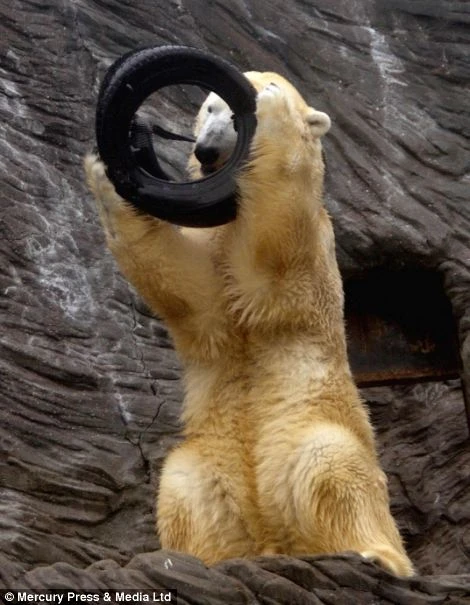 Getting the tyre pressure right is a bit of a Goldilocks process – it can’t be too hard or too soft, but has to be just right. If you don’t get it right, it could result in an accident that leaves you looking like you have indeed had an encounter with three grouchy, hungry grizzly bears. Or it could turn your vehicle into a beast with one heck of an appetite for fuel. (On a complete sidetrack, wouldn’t Ursus or the word for Bear in some other language make a great name for a 4×4?)
Car Review: 2018 Mitsubishi ASX XLS Diesel AWD
Mitsubishi has a long and proud history with off road capable vehicles and continues that with the ASX range. Private Fleet spends time with the top of the range 2018 Mitsubishi ASX XLS, complete with the same 2.2L diesel as found in the Outlander, and seven speed CVT plus a six speed manual lower in the range. The range itself also offers a petrol 2.0-litre engine, and will power down via the front wheels or come with an all wheel drive system. It’s a mid-sized five seater, in the same bracket as theToyota RAV4. Mitsubishi is offering driveaway pricing deals at the time of writing, with the range starting at an easy on the wallet $24,990 for the LS 2WD petrol. Our test car is priced from $39,990.
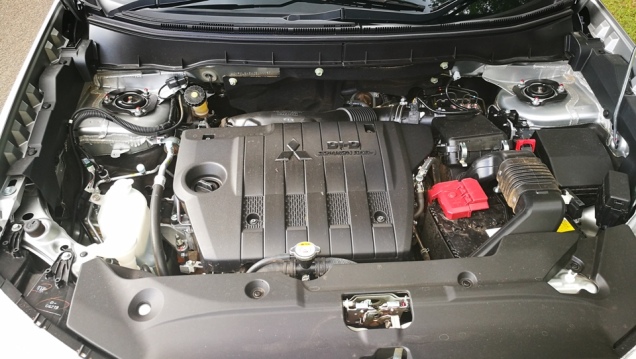 The engine is good for 110kW, and 360Nm between 1500 to 2750 rpm, making normal driving as easy as blinking. The CVT is well sorted, taking the right foor command and turning it into forward motion easily. The torque allows quick acceleration however doesn’t seem to be as comfortable with overtaking as Suzuki’s Vitara. Economy is good too, with a final figure of 5.9 litres of diesel consumed per 100 kilometres.
Inside, the ASX clearly shows its family oriented design, with leather accented cloth seats, digital radio, a sliding cloth screen for the full length glass roof, plenty of bottle and cup holders, USB charging ports BUT dips out on rear seat air vents and ventilation for the from seats, an almost unforgivable oversight for the Australian market. The plastics are hard to the touch, needing a more modern feel with padding and a softer feel where padding isn’t required.  Also, the ovoid design of the console is now showing its age, needing a move to a more human encompassing design. However, cargo room is also looking good, with room for shopping, bags for the weekend way and suchlike, with 393L available with the rear seats up and increasing to to 1143L with the seats folded. Being a compact car in overall length, rear leg room is slightly compromised, with anyone from 180 cm and up maybe feeling a little cramped, but there’s plenty of head and shoulder room, front and rear.
 Apple CarPlay and Android Auto are available, as are DAB/AM/FM (no CD) as is Bluetooth streaming via the 7.0-inch touchscreen. But the reliance on the two smartphone apps means no built in sat nav, even though GPS, showing the coordinates but no navigation, is there. And currently the apps have to be accessed via the phones being connected with cables, a somewhat clunky method and untidy as well.
 Being the top of the range means loading up with plenty of safety features and the ASX XLS gets the supreme pizza, with Forward Collision Mitigation, Lane Departure Warning, and Euro style flashing brake lights for the Emergency Stop System. Autonomous Emergency Braking is not yet fitted to the range however. A reverse camera is standard across the range, as are the ISOFIX child seat mounts and pretensioning seatbelts, Hill Start Assist, and seven airbags including driver’s kneebag.
 Level 2, 9 Help Street