

Opening The Door To Motorsport.
Motorsport in Australia is thriving in some areas, not so in others. There’s categories and events that many would not be aware of, yet they’re at full strength. The one make Hyundai Excel series is one, FoSC or Festival of the Sporting Car is another. State level motorsport country wide is flourishing with the champions of the next generation out there in their Formula Vee, Formula Ford, perhaps their Formula 3 or Formula 4. There’s young ladies and gentlemen campaigning in a near fifty year old Holden HQ from Barbagallo to Baskerville, and veteran drivers such as John Bowe racing in all sorts of cars at all sorts of events.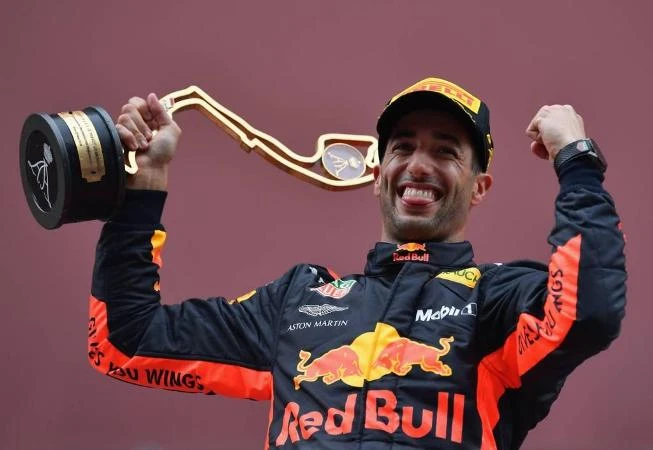 Molly Taylor is driving her rally specced and prepped Subaru in rallies around the country, and of course we have just seen Perth’s Daniel Ricciardo win at the Monaco F1 GP, and Will Power creating history by being the first Australian to win the Indy 500. Underlying all of these events is one crucial component. The officials working in front and from behind the scenes.
A huge proportion of how a motor sport event is built and staffed is thanks to officials that give up their time to be a part of the world’s biggest family. The family of motorsport. I recently wrote an article for Australia’s biggest aftermarket spare parts for classic cars company,Rare Spares article , where I talked to three people at various stages of their motorsport careers. Each of the three will state unequivocally that they simply can NOT go racing without the volunteer trackside officials.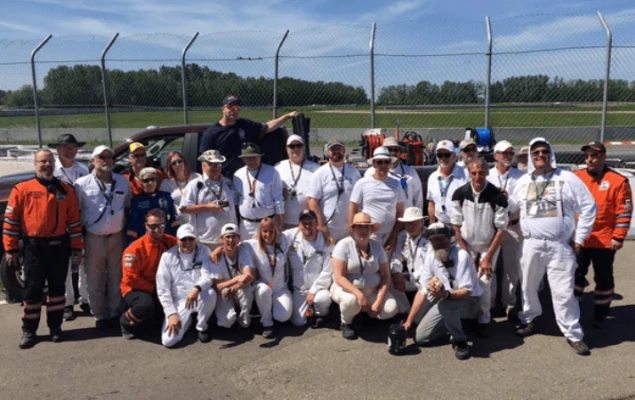 Here’s some points of view from those that are the steel behind motorsport.
Private Fleet Car Review: 2018 Haval H9 Ultra.
Haval‘s H9 is the latest and largest entry from the Chinese based car maker. Available in two trim levels, the Lux and Ultra (aka Premium), they’re well kitted, aren’t terrible to look at either inside or out, and well priced too.  The Lux starts at $41,990 and the Ultra at $45,990 with both being drive-away. The only real options look like external paint and interior colours.
Both have a turbocharged 2.0L petrol engine, eight speed auto, and weigh over 2000 kilograms. This equates to an official fuel consumption figure on the combined cycle of 10.9L of 95RON per 100 kilometres from the 80L tank. Around town the Haval H9 Ultra, weighing 2250kg plus fuel and passengers, delivered a pleasing 12.5L/100km from the 180kW/350Nm engine. Towing capacity is 2500kg.
 The 4826mm long machine seats seven and the rear seats are powered. Activated by toggles which much be held to have the seat go from top to bottom and reverse, it’s a slightly painstaking way to get an extra two bums on seats. There are illuminated alloy side steps shrouded in plastic, LED strip lighting inside which can be changed at the touch of a button, the doors have LED puddle lamps that cast the Haval logo in red. Up front there’s “bendy” headlights and the LED system shines a crisp white that provides plenty of safe forward looking distance.

 Outside it looks like a pumped up version of a early noughties X-Trail thanks to the vertical lights at the rear. At the front there are stylish hints of Toyota LandCruiser and Prado. There’s a fair size comparison too, as the H9 stands and spans 1900mm in height and width. It’s an imposing sight to see, both in a shopping centre carpark and on the road parked.
 The interior features acres of leather. The (heated for Ultra) steering wheel, front, middle, and rear seats are leather, the front seats are heated in the Ultra, and the rear section has its own climate control system. The Lux has manually adjusted cloth seats, the Ultra’s are powered, have memory settings and a massage function.
 The third row seats in the Lux are manual, and the second row in the Lux miss out on heating as well. The Ultra also gets a full length glass roof and the front section is a movable sunroof. These are operated by a dial above the driver and passenger, and seem counter-intuitive in the direction of rotation to operate the roof. It’s a pleasant place to be and the seats themselves in the Ultra were very comfortable, supportive, and the massage function worked well enough too.
 The cabin the Ultra had was of black and bone. It’s a nice contrast as the bone tended more towards the white shade, not the beige shade as seen elsewhere, and suited the silver the revieww car came with. However the smoky grey faux wood trim in the review car is a matter of personal preference. The dash itself is clearly laid out and easy on the eye, with a sensible design layout, a centre LCD screen with changeable information displays and red highlighting.
  Haval add a small strip style display about the touchscreen in the centre of the dash that displays height, barometric pressure, tilt angle, and compass direction. The audio system is from Infinity and although not fitted with DAB, the touchscreen system proffers AM/FM and some very clean sound through the ten speaker mix. Switch gear is mostly cleanly laid out however the climate control button labelled Mode doesn’t quite bring up what is expected appears to work and the Synch between driver and passenger isn’t as clear either.
 Being as big as it is, it’s no surprise the H9 has plenty of shoulder, leg, and head room inside. Although the wheelbase is a surprisingly shortish 2800mm, the overall width and height give plenty of head, leg, and shoulder room. All round vision is good thanks to plenty of glass making for an airy cabin and there’s plenty of forward vision thanks to the height the driver sits at.
There’s a full suite of airbags on board sans driver’s kneebag. Haval aren’t alone in this though. Safety tech is of a high level such as front and rear parking sensors, Hill Start Assist, Hill Descent Assist, Blind Spot Alert, Tyre Pressure Monitoring, Lane Departure Warning, but no Autonomous Emergency Braking. The head rests in the front seat are crash programmed to move forward and cradle the heads of the front seat passengers. Out on the road that 350Nm and two plus tonnes don’t seem to promise anything other than a lumbering performance. Thankfully that’s not quite the case. A gentle push of the go pedal has the H9 move away softly and with increasing velocity nicely however a decent prod will have the big machine somewhere between “this is ok” and “wow, that’s pretty good”. The eight speed auto will drop quietly down a cog or two and having eight ratios does mean there’s better drivability when needed.
Car Sales Top 10

New car sales are still buoyant in Australia, with many buyers happily spending on an upgrade. According to the Federal Chamber of Automotive Industries (FCAI), the total vehicles sold in April, including passenger cars, SUVs, light and heavy commercial vehicles and the national government fleet was 82,930 units. Of these units the Toyota Hilux re-claimed first place as the top-selling vehicle, with 3596 sales in April. How much of the car sales pie do Electric Vehicles take out? Let’s have a look at Australia’s top 10 models sold in April 2017:
The Green Hell.
Every country has a racetrack that is loved, respected, and wanted to be raced upon by anyone from armchair console players to professional drivers. Australia has Mount Panorama, The US perhaps Laguna Seca as the pick. Britain has a few including Silverstone, and then there’s Germany’s Nürburgring.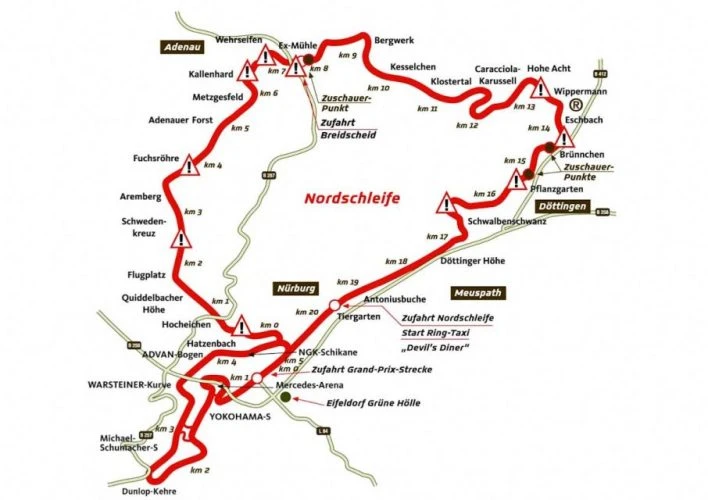 The location is steeped in history and can trace its origin back to the 1920s. Races were held on the roads and run under the auspices of the ADAC (Allgemeiner Deutscher Automobil-Club e.V). The Eifelrenen was an annual race that started in 1922. Held on 33 kilometres of public roads the mounting toll of damage and fatalities from this and other forms or racing lead to the founding of the original Nürburgring in 1927.
The original circuit had 187 bends and a distance of 28.265 kilometres. Bugatti driver Louis Chiron managed the quickest time and averaged 112.3 kilometres per hour. However, due to ongoing safety concerns, in 1929 it was decided to race only on the 22.8 kilometre Nordschleife for major races such as Grands Prix. The Südschleife, or South Ring, would host motorcycle and minor races on its separate 7.747 kilometre surface.
 Level 2, 9 Help Street