

Buy A New Car
2017 Renault Megane GT & Renault Megane Zen: Private Fleet Car Review.
Renault‘s Australian renaissance continues to build momentum, with the all new Koleos and Megane range attracting plenty of positive comment. It’s fair to say that the GT and Zen Megane cars should be on your radar, and here’s why, as Private Fleet drives the Renault Megane GT and Renault Megane Zen.
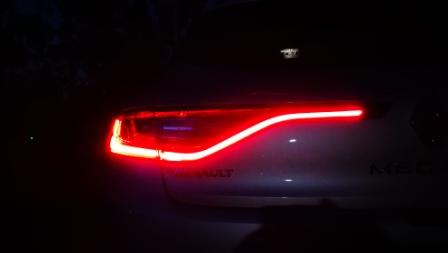
 The Megane is a sweet looker, with a curvy overall shape and an extra bit of sheetmetal at the rear to emphasise the profile. Both have LED running lights in a hockey stick shape, LED rear lights and the GT takes that further with LEDs powering the main front lights. It’s compact outside, at 4359 mm in length and runs on a 2670 mm wheelbase, which offers 180 mm of rear seat knee room.
 Shoulder room for the 1814 mm wide (mirrors folded) pair is 1441 mm up front and 1390 mm in the rear. Front and rear track are almost identical at 1591 mm and 1586 mm. It’s a slightly bigger car, this fourth generation Megane, than the previous version, with the wheelbase 29 mm longer for an increase in overall length of 57 mm.
 Up front there’s a duet of petrol engines, with the Zen packing a mere 1200 cc four cylinder, with 97 kilowatts and 205 Nm. The turbocharged GT has 151 kilowatts at 6000 and a hefty 280 torques at 2400 rpm from a 1.6L powerplant. Both run on standard 95RON and power down via a seven speed dual clutch auto. From the fifty litre tank, Renault quotes a combined fuel consumption figure of 5.6L/100 km and 6.0L/100 km. Around town it’s just 6.8L/100 km or 7.8L/100 km.
 The GT is marked as 4Control, with subtle badging on the B pillars. This makes one wonder if it’s four wheel drive; no, it’s four wheel steering, with a rear wheel steering setup adding to the amazing agility of the five door hatch. It’s engineered so it’ll turn the rear wheels in the opposite direction to the front at either 80 kph or 60 kph, depending on which drive mode you’ve selected.
 Above those speeds the rears will turn in the same direction as the front. Does it work? Oh yes sir, it does. So do the brakes, in that unlike too many there’s real feedback, real bite, as soon as the pedal is touched. Distances between you and the car in front can be more finely judged with a variation of pressure, not relying on something to happen with a depression of an inch or so before action happens.
With the car riding on GT specific springs, dampers, and roll bars to the rest of the range, and combining with a super responsive steering system, lends the GT a sporting prowess that isn’t at odds with its seemingly cheapish $38K price. Turn in is crisp, sharp, and understeer is relegated to the file marked “No Longer Applicable”. This is thanks to a computer system that analyses steering angle and input 100 times per second. Not only is the GT a sharp handler, it rides better than the Zen.  The lower spec car has 16 inch alloys, the GT rolls on 18s. Rubber is 205/55 for the Zen and 225/40 for the GT. The GT is sometimes jittery, but rides across imperfections better than the Zen, with the Zen more prone to bump steer and road intrusions, plus just that little more float from undulations. It’s by no means a bad handler in its own right, but backed against the wall by the brawnier GT, the differences are apparent.
Naturally the GT is better at getting underway, particularly with the dual clutch auto’s habit of thinking momentarily before engaging Drive from Reverse or from a standstill. Having said that, the Zen gets up and runs well enough for its engine size once the transmission has hooked it. There’s a faint buzz from the drivetrain as it does, the sound of the engine rising and falling along with the almost imperceptible changes, and suddenly you’re well and truly at highway speeds. Then the GT takes that and increases the grin factor with Launch Control… Rorty is a word used to describe a mechanical noise that emanates from the engine bay and also the exhaust. The GT has it in bucketloads. As good and as enjoyable as the Zen is in its driveability and handling, the GT amplifies that, enhances it, sharpens it, to the point that the smile you have becomes a grin of sheer enjoyment, visible from Mars. Turn in is precise, accelaration is electics, the aural sensation is sexy, the support of the blue trimmed bucket seats is amazing, and all come together to provide a drive experience for the senses. The Zen isn’t off in the aural caressment stakes, though, with enough of a growl to please most.
 When not fanging the cars around, you can enjoy the interiors. There’s proper soft touch materials on doors and dash, lacking, for example, in Jaguar’s much vaunted F-Pace. There’s adjustable screens for the dash and the centre touchscreen, satnav for the GT, a bigger 8.7 inch screen in the G as opposed to the Zen’s 7 incherT. Both have touch sensitive aircon controls; touchscreen for the GT and the same setup in the Zen as seen in the Koleos, with a strip built into the console. There’s heating for the seats in the GT which is unneccessary given their blue suede and cloth covering. Bluetooth? Natch.
 The Zen is simple black and charcoal cloth with contrasting white stitching, with a plastic trim on the doors not unlike the spotted pattern as seen on a whale shark. Both also have the quirk of placing audio on a separate stalk to the lower right of the steering column and cruise control in the centre console. The GT raises the stakes by having LED strip lighting and it’s at a level of intensity to not overwhelm the eyes during a night time drive.
 Both equal up in items such as Auto headlights, rain sensing wipers, 434 litre cargo which maxes at 1247L with seats down, push button Start/Stop and all four windows one touch up and down. Audiowise, both get great sound, with the GT a 12 speaker Bose system. There’s plenty of punch in the Zen’s 8 speakers though, with DAB available here as in the GT.

 Renault now offer a five year, unlimited kilometre, warranty, five years roadside assistance, and fixed price servicing for the first three services, providing the best of peace of mind.
At The End Of the Drive.
Renault are well poised in Australia to make a seriously positive impact on our crowded market. The Megane range has been spearheaded by a (soon to return to Australia) RS version however there’s more than enough in the 2017 range to appeal to drivers across the board. Up against tried and true entries from Korea, Japan, and European rivals, the Megane stands out as a worthwhile consideration. And starting at a sub $25K driveaway price, it enters this hotly contested market with plenty of value to back up a great driving experience. Go here Renault Megane for 2017 for the info you need to know.
2017 Peugeot 2008 Lands On Aussie Roads.
The French Revolution continues, with Peugeot unveiling its revamped 2008 SUV. There’s been a streamlining of the range, a change to a sole engine/transmission combination, and some trim changes. Here’s the way the range shakes down.
The engine is a turbocharged three cylinder, at 1.2 litres of capacity. That’s bolted to a Japanese sourced six speed auto and it’s this combination that will be the only engine and transmission available in a three model range. The names will be Active, Allure, and GT-Line, with the latter replacing the Outdoor that also offered a diesel and manual.
 The undersquare 12 valve engine will produce a peak power of 81 kilowatts at 5500 rpm, and peak torque is a healthy 205 Nm at 1500 rpm. That’s good enough to see a 0-100 kph time of 11.3 seconds for the near 1200 kilogram vehicle. Peugeot rate the fuel consumption and tested in the real world as 4.8L/100 km for the combined cycle from a 50L tank using 95RON. There’s also an adaptable drive system, with Normal, Snow, Mud etc available via a dial in the centre console.
 The facelift isn’t extensive but side by side it’d be noticeable compared to the outgoing models. There’s a new grille which will be a signature look for future models. Peugeot’s design team have imbued the headlights with a feline look, with a black and chrome finish. The tail lights have been slightly revamped, with a more noticeable claw look. All cars will be fitted with roofrails, adding some extra height and topping out at 1556 mm. Ending the roof on the 4159 mm long 2008 is a roof spoiler and the range will be enhanced by a new colour, Ultimate Red.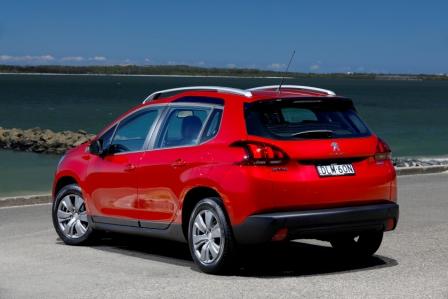
 Standard equipment will cover items such as reverse camera, parking sensors, Stop/Start, MirrorLink and Apple CarPlay. The Allure and GT-Line will also be equipped with Active City Brake and City Park, a self parking system, plus auto head lights and rain sensing wipers. The Active will roll on 16 inch alloys, with 195/60 rubber, whereas the other two go up an inch and slightly wider at 205/50/17. There’s a full sized spare but at odds with the others in 185/65/15 profile.

 At the time of writing, the GT-Line will be made available some time after the release of the Active and Allure. What the two cars at launch will offer is comprehensive. Hill Start Assist, Emergency Brake Assist, all power windows are one touch, heated and folding door mirrors, and seven inch touchscreen. The Active dips out on satnav as standard but can option it in. Leather trim for the tiller is common but on the park brake in the Allure only. A panoramic glass roof is also an option for the Allure as are heated seats (no ventilation for the Aussie market is an oversight.) Cargo is reasonable, with 410L which increases to 917L with the seats down.
 Pricing remains, understandably, sharp, at $26490 for the Active, an increase of $1000 but with extra equipment. The Allure remains the same price at $30990 and gains extra kit, and the GT-Line is slated to come in at $32990, with all prices at a Recommended Retail Price. Head to www.peugeot.com.au for details and to book a test drive.
2017 Jaguar F-Pace R-Sport: A Private Fleet Car Review
If one were to hop into the fabled time machine of H.G. Wells and travel back to the early part of the 21st century, you’d find that the letters S, U, V, were part of the alphabet and hardly seen in each other’s company. You’d also find that many luxury car makers would sniff at the idea of an all wheel drive capable vehicle being part of their stable. Note “all wheel drive”, not “four wheel drive”. Flash back to 2017 and there’s hardly a car maker of any decent size that doesn’t have an SUV. One such maker, a British brand known more for the slogan of “Grace, Pace, and Space”, has joined the SUV party albeit one with a slightly odd name. Built around the basic looks of their two seater sports car, the Jaguar F-Pace has the leaping cat well and truly poised to make a serious indentation on the SUV market share. With four standard models and one limited edition run (as of early 2017), a range of engines, and a list of options almost too big to comprehend, the Jaguar F-Pace R-Sport was the vehicle supplied to Private Fleet in February 2017.
 There’s a lot to like, up front, about the R-Sport. Captain of the team of likes is the monstrous 700 torques being twisted out by the diesel fuelled 3.0 litre twin turbo V6 fitted. There’s a 2.0 litre diesel as the standard with 132 kW and a not indecent 430 torques, or a supercharged 3.0 litre petrol, with 250 kW/450 Nm. Sir will take the 700 Nm, thank you. Along with the torque that’s enough to rip the cape from Superman’s shoulders, you get a surprisingly good fuel economy. Surprising because although the F-Pace looks a mid sizer, there’s a gross vehicle weight of 2570 kilograms. Jaguar quotes a combined figure of 6.0L of dino juice for every 100 kilometres driven from the 66 litre tank, 5.6L/100 km on the highway and a still better than impressive 6.9L/100 around town.
 Private Fleet’s time with the F-Pave R-Sport coincided with a visit to the central west NSW town of Dubbo. Some 340 kilometres from AWT HQ, a country drive with four aboard and luggage seemed an ideal way to test the mettle of the Jaguar metal. The return was 7.3L per 100 kilometres, a fair result considering the cargo inside. That also involved some necessary overtaking and it’s here where that torque comes into its own. It kicks in, as a peak figure, at just 2000 rpm, with something like ninety percent available at around 1600 rpm, and that’s about where legal highway speeds sees the engine’s revs.
  However, there’s some conditions here. The starting point is the eight speed auto the F-Pace has, then factor in choosing either Drive or Sports via the vertically rising dial in the centre console. THEN you have four drive modes including Dynamic Plus, accessed via two console toggle switches. Not only does it tighten up the suspension, the gearbox and engine settings are changed to provide a quicker response, a sharper response, a surge of warp speed response. It’s exhilarating and breath taking and makes for a far safer driving experience than a leisurely “I think I can” move.


 It’s a well packaged car, the F-Pace, with an overall length of 4731 mm, with a wheelbase of 2874 mm. Front and rear track sit well inside the overall width of 2070 mm with 1641 mm and 1654 mm. Inside there’s plenty of usable room with front headroom at 1007 mm and rear heads get 977 mm.
 That cargo space has a nifty trick, with the floor on one said the standard interior carpet, but when rotated 180 degrees has a firm plastic surface for items such as scooters or bike.
 The F-Pace also techs up with Adaptive Dynamics, which measures up to 500 times a second the driving style and body movement of the car You can then option up the Configurable Dynamics system, allowing a deeper measure of personalisation for gearbox changes, throttle mapping and steering feedback. Technology is a hallmark of Jaguar nowadays, with (optional) configurable mood lighting, keyless entry which includes waving a foot under the rear bumper to raise the powered tail gate leading to 508 litres of cargo, adaptive headlights, InControl Touch Pro (as fitted) which is a pair of widescreen oriented LCD screens at 12.3 inches for the multifunction driver’s screen and 10.2 inch console touchscreen which includes smartphone/tablet style pinch and move for the navigation.
 There’s famed British audiomaker Meridian onboard, with 825 watts of thumping audio along with digital radio, a CD/DVD drive, and 10 gb hard drive space for your tunes. Ahead of the driver is the (optionable) super clear, laser lit, Head Up Display, showing speed, speed zones, driven gear and even navigation. The laser tech makes it both easier to read and easier on the eye. Aircon is controlled either via the touchscreen or, smartly (and something a few other makers should take note of) via soft press tabs which are clear and beautifully legible.
 There’s a downside, though: the rear seat passengers get their own controls which, in the test car, seemed to control the front seats…and a major bugbear in that the superbly comfortable and looking sports style seats DON’T. HAVE. COOLING. Any and all Australian spec cars with leather seats should have ventilation. Even Renault’s Koleos Intens has ventilation. Also, the door, dash, and centre console plastics are hard, with nary a touch of give. Then there’s locating the seat’s memory buttons where, logically, the power window switches should go, and vice versa.
 The touchscreen has icons laid out across the bottom, allowing a quick access to a certain function, unlike manufacturers that have everything hidden inside a primary folder. It makes using the screen far easier. There’s also a screen for when you’re in full Dynamic, offering extra information such as a G-Force sensor and allows for more personalisation.
 Where the F-Pace R-Sport will win your heart is on the road. Let’s start with that number, 700. That torque figure makes driving in all dry conditions an absolute pleasure. Even with a light foot the torque simply reaches out and grabs the eight ratios by the neck, bending them to its need. It’s almost effortless, and wonderfully quiet inside the cabin, as the tacho swings around as does the speedometer.
  That’s in Eco and Normal modes. Gently push the selector down and clockwise into S, tap the drive mode button into Dynamic, sit back, press the go pedal, and feel your soul compress into a neutrino as the F-Pace gathers its thoughts for a nano-second before launching itself towards the horizon. Dynamic also firms up the steering and suspension, which has the effect of providing even more feedback and flattening the road further.
 Under normal conditions, the R-Sport is sure footed, adept, with each corner riding over road irregularities with minimal bodily intrusion. Sure, you’ll know what each wheel and tyre is doing, and you’ll feel the movement of the suspension as each corner works alone. Dynamic ups that feeling, with shorter travel yet an unexpected decrease in bumps and thumps. On the twisted and bent road surfaces west of Bathurst, this quality became invaluable and has an unexpected but very welcome side effect: it decreases the tiredness level of the driver. These same roads showed how well tuned the engineers have the car. Although sitting up high, as you do in an SUV, there’s no feeling of that, and you’ll feel confident in the way the car hangs on in long sweepers, unsettled and corrugated surfaces, and when the need is called for, how effective and quick the brake pedal tells you the pads are on the disc. All round, the F-Pace R-Sport stamps itself as a driver’s car.
 At The End Of The Drive.
The F-Pace has garnered acclaim and plaudits world wide, and with good reason. It’s a heavy-ish car, but superbly agile; the diesel is mutely powerful and will hasten the F-Pace along at indecent speed; and it’s beautiful to look at both inside and out. The technology on board is user friendly and non-confrontational, which is both appealing and amps the safety factor by not having eyes off the road for longer than neccessary.

What niggles there are, are just that. Niggles. It’s a comprehensive package and in R-Sport trim, provides a balance between economy, luxury, and room. The modern equivalent of Jaguar’s old calling phrase, perhaps?
For further information on the Jaguar F-Pace, go here: 2017 Jaguar F-Pace
2017 Renault Koleos Zen & Intens: A Private Fleet Car Review
Renault’s 2017 Koleos has undergone a huge transformation compared to the model it supercedes. Based on Nissan’s X-Trail it’s bigger, brawnier, smarter and a whole lot prettier. Built on a three model and four trim level range, being the Life 4×2, Zen 4×2 and 4×4, and Intens 4×4, Private Fleet backs up the mid spec Renault Koleos Zen 2WD against the top of the range Renault Koleos Intens All Wheel Drive.
 The heartbeat of the Koleos is a fuel injected 2.5L petrol engine. Yep, no diesel. And if you’re looking for a traditional manual or auto, fawgeddit. It’s a CVT and a somewhat seemingly slippery one at that. What you’ll get is 126 kW (6000 rpm) and 226 torques (4400 rpm), hauling a mass of between 1550 and 1700 kilos dry.
  Renault quote a towing weight of 2000 kilos as well, along with an urban cycle consumption figure of the Euro5 compliant engine of 10.4 to 10.7 litres per one hundred klicks. That drops appreciably on the highway, down to 6.4 to 6.9. A Wheel Thing found 7.7L/100, admittedly on longer and free flowing suburban drives, from the 60 litre tank.
 It’s around town that the CVT’s faults are, naturally, most apparent. They’re prone to feeling like an old school manual slipping clutch at the best of times but this one’s even slipperier. From a standstill it becomes a raucous and almost overbearing roar as the engine gets up to 4000 and then varies in note as the transmission’s built in steps kick in. Note, too, there’s no paddle shifts to ease the pain although there is the mandatory sports shift on the geat selector. It genuinely feels that there’s a lack of gearbox traction when really pressing hard, however the Zen seemed more amenable to a lighter pedal pressure than the Intens, possibly due to the weight difference. What is also baffling and contradictory is the sensation of watching the speedo numbers change faster than the seat of the pants says they should.
 It’s a handsome car, the 2017 Koleos, and far prettier than the previous model. Where that was sharp and angular, the incumbent is fluid, rounded, smooth. There’s LED tail lights and daytime running lights in a C shape, along with LED headlights for the Intens. In profile it’s well proportioned, with a pleasing balance from bonnet to tapered rear. the Intens gets a powered tailgate as well. In fact, it’s a hard thing to find any angle of the Koleos that isn’t good to look at. The Intens gets a full length glass roof adding to the airiness of the feel of the interior. Consider a 4672 mm overall length and 2705 mm wheelbase, along with over 1400 mm shoulder room front and rear plus 290 mm knee room for rear seat passengers.
 Both cars come with blacked out insides and vary in a couple of key areas. Renault, unlike far too many makers, include ventilation for the front seats, not just heating, inside the Intens. There’s mood lighting in the Intens, however both get changeable themes for the driver’s LCD screen and centre dash display, of which the Zen has a different look to the Intens to help differentiate. Both have a swag of controls built into the touchscreen, such as aircon, DAB radio, even Blind Spot Alert and Tyre Presure Monitoring.

 The overall look is classy, user friendly, but not without quirks. For example, Renault have located the Cruise Control buttons in the centre console and have a separate stalk for audio under the right side of the steering column. Although not exactly ergonomic to look at, once used a few times it becomes second nature to use. Both cars appeal with their looks, with a luxury feel that mirros more expensive luxury SUVs. Cargo varies from 458 litres to 1690 litres with the seats folded and Renault have recognised the value of family by having two USB ports and an extra 12V socket under the rear aircon vents.
 Another winner for both is the ride quality. For a car of its size, it’s surprisingly well damped, taut enought to hold corners without roll and compliant enough to absorb most road irregularities. There’s even, oddly, enough oomph initially to chirp the front tyres in the Zen, backed up by a modicum of squeal when pushed in corners compared to the Intens. It’s a fluid and well balanced ride, with even the cursed speedbumps dialed out nicely, whilst hilly switchbacks saw the pair almost in sports mode, such was the grip and ride quality. Steering itself was well balanced, with good weight although not overly communicative in the Zen compared to the Intens, even though both should feel the same as both are fitted with the same 225/60/18 rubber.
 To further sweeten the deal, Renault offers as standard a five year warranty, five year roadside assist and three services at a capped price along with an attractive starting price of just $33990 driveaway.

At The End Of The Drive.
Renault is on a clear winner with the Koleos, especially with the Intens. A fabulous ride, a good looker, good mix of trim and equipment, a surprisingly quick mover, and good economy make the Koleo range a very attractive proposition and a worthy alternative to those seen as a more popular choice. To check out the four levels of Koleos, go here: Renault Koleos information


 Level 2, 9 Help Street