

Buy A New Car
Car Review: 2017 Kia Picanto.
There’s small cars, and there’s micro cars, and those that sort of slot in between. Kia’s Picanto is a small car that defies its external size to offer a well packaged and uncommonly roomy interior, all the while looking like it would fit into the tray of a four wheel drive ute. Private Fleet explores the funky 2017 Kia Picanto, priced at (at the time of writing), $16230 driveaway with metallic paint (Pop Orange on the test vehicle). And when PF says Picanto, it means Picanto. To paraphrase Chief Engineer Scott from Star Trek:The Next Generation’s brilliant episode “Relics”: “There’s no bloody S, no bloody Si, no bloody GT Line”. What you get is a single trim level, a 1.25 litre four, a five speed manual or archaic four speed auto, which is what the test car was fitted with. The little engine that could delivers 66 kilowatts at 6000 rpm and 122 Nm which peaks at 4000 rpm.
 The fuel thimble holds just 35 litres however fuel consumption for the auto is rated at 5.8L/100 km for a combined cycle. As it’s a city car in intent, figure on 7.9L/100 km around town. If you do decide to drive outside of the big city, it’s rated for 4.9L/100 km. That’s from a dry weight of five kilos under the tonne. We finished on 6.6L/100 km in a mainly city environment and generally with one aboard.
We said it was small. How does 3595 mm long, 1595 mm wide, 1485 mm tall, and a huge (relatively 2400 mm) wheelbase sound? Sounds horrible, right? But it’s that wheelbase increase (up slightly from the previous model) that provides ample legroom up front, enough for reasonable comfort for two adults in the back, and enough shoulder and head room for four without constant body contact. There’s even enough room to slide in 255L of cargo space with the comfortable rear pews up. What’s not small is the ability of the Picanto to deal with varying driving conditions, thanks to the brilliantly Australianised specification for the suspension. Kia’s engineers have tweaked the McPherson strut front and coupled torsion beam rear even further, and what is delivered is nothing short of surprising. It’s fair to expect a small car, riding on 175/65/14 rubber (wrapping steel wheels with alloy look wheel covers) from Nexen, to hop/jump/skip around on anything other than billiard table flat surfaces.
 Nope. You’ll get a car that’s composed, unflustered, sometimes even displaying indifference to broken or breaking up surfaces. Toss the little machine into a long flowing curve and there’s a subtle shift of balance as the car resettles. It’s nimble, adept, and sure footed.
There is a bit of crash from the front as you roll over the damnable shopping centre speed humps, but there’s no ongoing motion, simply an acknowledgement of a minor irritant. The electrically assisted steering and overall size play a major part in making this environment easy and liveable to deal with, as is moving it around on the tarmac. A smooth and fluid transition from lane to lane is also what this Picanto will deliver. Like most cars of this size, it will understeer when pushed hard, scrubbing the tyres, but really only in tightening corners and when taking advantage of the chassis dynamics. If there’s a downside to the driving experience, it’s fingers pointed at the transmission. No, not because it’s harsh, unforgiving, stuttery as it’s completely the opposite in being smooth, quiet, responsive. It’s the number four. As in ratios. As much of not being a fan of CVT as we are, the small torque output would be ideally suited to one of them. A further option to explore would be to look at what niche small car maker Suzuki has done. They’ve engineered some pokey small capacity turbo engines and have bolted them to six speed autos. Straight up it improves the driveability of the car, the usefullness of the engine and by having the extra ratios, economy hovers around the 6.0L/100 km mark.
 The interior is markedly improved from the previous model, with a seven inch touchscreen mounted up high in the centre console, Android Auto and Apple CarPlay compatibility, reverse parking sensors and reverse camera, supportive cloth covered seats, a driving position that is comfortable enough, cruise control, and classic Kia ergonomics. Tech wise there’s auto headlights, globe lit driving lights, Bluetooth, and a USB and 12V socket in the front centre console.
 A noticeable feature or two of the Picanto’s interior is the resemblance to a couple of icons. One is the cluster that holds the dial based aircon controls, looking like a controller from a games console from Japan. The other is the broad sweep of the dash that terminates at either end with two air vents that bears more than a passing resemblance to a 1950s Cadillac’s tail.
 The trim itself is a mix of textured black plastic, alloy look highlights, and splashes of piano black around the touchscreen. The cloth trim has a subtle charcoal and light grey trim and complements the roof lining’s grey shade. The rear cargo space is trimmed with the standard hard wearing carpet and leads to a space saving spare. Storage inside is adequate with two cup holders in the centre, bottle holders for the doors, and there’s even a coat hook in the rear.
 The outside lifts the Picanto onto another level, with a striking sweep to the headlights, a determined and assertive font design, a pert and tight rear and in profile shows all four wheels pushed as far as practically possible to the corners. There’s potential in the exterior design, potential…..
 Naturally there’s six airbags, driver aids in the form of stability managements, hill start assist and the like, 2 ISOFIX child seat mounts, plus the standard seven year warranty and capped price servicing for seven years. Maximum cost is at the four year or 60000 kilometre mark, with a current scheduled price of $493.
 At The End Of The Drive.
We see potential above what the Picanto already delivers. It has the potential to become a cult classic car thanks to the fabulous chassis underneath, funky and eyecatching looks, and simply needs a more sporty engine and transmission combination, and a mild fettling of the body, to be a cult classic city car. Head over to Kia Australia’s Picanto to check it out for yourself.
Private Fleet Car Review: 2017 Kia Cerato Sport.
Car makers have a habit of badging a vehicle and calling it a Sports model. Holden did it with the SV6 Commodore, Ford’s Falcon XR6, Toyota with the Camry and Aurion…generally it’s cosmetic and that’s it. Kia has jumped on the sports wagon and added one to the Cerato family as the 2017 Kia Cerato Sport. It’s priced at $24790 RRP plus metallic paint (Snow White metallic pearl on the test car) at $520. Mechanically you get Kia’s free spinning two litre petrol four. It’s good for 112 kilowatts (6200 rpm) and 192 torques (4000 rpm). It’s a six speed auto in the test car. The ratios see around 2250 on the tacho for the state limit in Australia of 110 kph. Economy is claimed to be, from a fifty litre tank of standard unleaded, 9.9L/100 km for the city, a more reasonable 5.7 L/100 km for the highway, and a combined figure of 7.3L/100 km. Private Fleet saw a best of 6.2L/100 kilometres on a jaunt to the upper south coast of NSW and back.
 Externally you get a lithe, slippery, sinuously shaped 4560 mm long body with a solitary Sport badge on the left rear, the addition of a small bootlid spoiler above the 421 litre boot, sweet looking alloys and Nexen rubber of a 215/45/17 profile, with the overall look of a wheel and tyre combination failing to look as if they fit and fill the wheelwells. Perhaps 18s and a 50 series tyre would look more as if they’d fill the hole, but at what cost for ride quality? The Schreyer grille is a touch more upright and adds a visible extra toughness.
 To add to the Sport, you get a black valance for the rear bumper, globe driving lights in the front (no LED driving lights, they’re reserved for the top of the range SLi) and a number of features shared with the models either side, the S and Si, such as front and rear parking sensors, mirror mounted indicator lights, and folding heated exterior mirrors. The headlights slide deep into the fenders and have a white plastic insert that does nothing for lighting but breaks up the look to provide a bit more visual appeal. However, they’re not as sharped edged and attractive as sister car, Hyundai’s Elantra. The rear lights have also been given a slight makeover, with the look now more akin to a Euro style car.
 Internally it’s standard Kia; great ergonomics, clean layout and easy to read dash and console controls, cloth seats (shared with the S and covered in a harder wearing weave), a man made leather wrapped driver’s binnacle, 2 twelve volt sockets and USB, plenty of leg room inside the 2700 mm wheelbase and shoulder room in the small mid sized sedan thanks to an overall width of 1780 mm.
 Airconditioning is controlled by old school dials; old school they may be but there’s nothing simpler than a dial with pictures to tell you how hot/cold, how much blowing speed and where it’s going. Naturally there’s Bluetooth and a reverse camera to complement the six airbags plus there’s Apple CarPlay and Android Auto on board.
 Audio and satnav are controlled via a seven inch touchscreen and it’s here where technology niggles. From Start, the screen shows a warning message and requires human intervention to agree and move forward. I’m not a fan of such a program, whereas a timed delay before reverting to the radio screen would be more appropriate. The satnav is brilliant in look and usage, showing a proper geographical perspective for the surrounding lands, and can be zoomed/expanded via the radio tuning knob on the right hand side.
 The driver faces a simple two dial layount, with speed and engine rev counter taking pride of place and fuel & engine temperature in two small sectioned locations to the bottom. In between the main dials is the info screen, with servicing intervals, speed, economy, trip meters and more available via the steering wheel mounted tabs. Again, typical, user friendly, human oriented Kia. The dash design overall hasn’t changed much, with the ovoid, curved, look and sweeping vertically oriented lines breaking up an otherwise somewhat slabby black plastic look.
 The six speed auto in the test car didn’t exhibit anything out of the ordinary nor was it the slickest, smoothest, transmission around. Hesitant and jerky sometimes from low throttle start, sometimes sweet and unfussed, barely noticeable in changes at speed, easily self changing on slight slopes and descents to holding a gear too long on a downhill or uphill run and requiring manual intervention. There’s three dive modes (Sport/Normal/Eco) and only rarely was Sport called upon for it’s quicker shifting. A mixed bag and not one of the best nor worst around and not really deserving of a Sport moniker.
The ride itself though is a delight and shows off the fettling Kia’s engineers have added. It’s well damped in the McPherson strut front/coupled torsion beam rear, with smaller lumps and bumps quickly dialled out, quick rebound from bigger dips and undualtions, however there was a sideways skip occasionally on some unsettled surfaces. The front benefits from uprated springs, adding a poise and nimbleness in turn-in. Tyre pressures were crucial, too, with 36 psi having the Cerato Sport feeling taut, grippy but also a touch skatey in tighter corners. Around 32 psi would provide the ideal balnce for ride and handling. You get a sense of agility, confidence, and tactility though, with a feeling that it’d require some serious issues to lose grip. But the electrically assisted steering is perhaps a little too eager to help, lacking real feedback and communication, with numbness on centre and an artifical weight once wound left and right plus a sense of twitchiness requiring the driver to add in minute corrections as you pedal along.
Acceleration is adequate without much sparkle, meaning a good press of the go pedal to move the 1309 kilo plus cargo is needed. Seat of the pants says around 8 to 9 seconds to 100 kph. The engine is smooth and never feels stresed as it climbs through the numbers but will sound a touch harsh and metallic as it gets over 4500.
The Cerato Sport gets the basics in electronic safety, such as Vehicle Stability Management, Hill Start Assist but being closer to entry level it misses out on Lane Change Assist, Rear Cross Traffic Alert, Lane Departure Warning and the like. However there’s the embedded seven year warranty and fixed price servicing, with a maximum cost of $487 in the fourth service. At The End Of The Drive.
The cynical part of society would question adding a Sport nomenclature to a vehicle that basically isn’t. One would look for a turbo engine, perhaps a close ratio manual, a sports style front dam and side skirts. But, as mentioned, other makers have a standard car, added a bit of plastic and left the engine and transmission untouched. Kia’s Cerato Sport is pretty much this but slightly less, lacking side skirts and a definable Sport look. The cynical part of me would say that the firecracker turbo engine from the lamented Pro Ceed GT and the quad LED driving lights plus a standalone boot lid spoiler would be a look more befitting of a car to wear a Sport badge…
To make up your own mind and book a test drive, here’s the link to the 2017 Kia Cerato sedan
Kia Australia Releases Pricing For The Highly Anticipated Stinger.
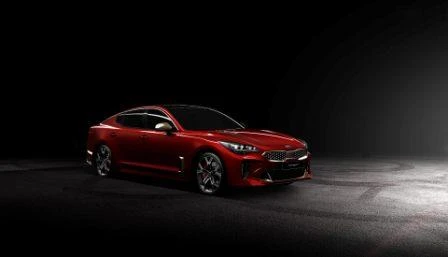
Kia’s highly-anticipated Stinger performance GT will hit the Australian market with a sub-$60,000 recommended retail price. The Stinger, one of the most highly anticipated cars of 2017, will provide a top-end performer at a realistic price across the full 3.3-litre bi-turbo V6 range. With 272kW of power and 510Nm of torque the Stinger is capable of a launch control assisted 4.9 second 0-100km/h sprint and a low 13 second standing quarter.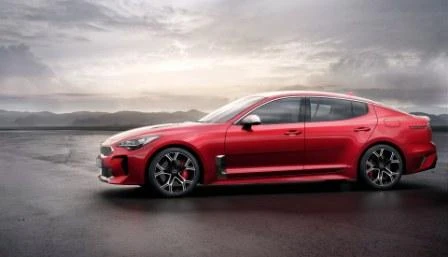 Starting at $48,990 for the S, through $55,990 for the mid-spec Si and on to $59,990 for the fully-loaded GT, the Stinger brings the style, the refinement and the power usually available only to owners with substantially deeper pockets.”It was critical for us to bring this car to as wide an audience as possible … something I believe we have achieved with the pricing we have been able to settle on,” Kia Motors Australia Chief Operating Officer, Damien Meredith said.
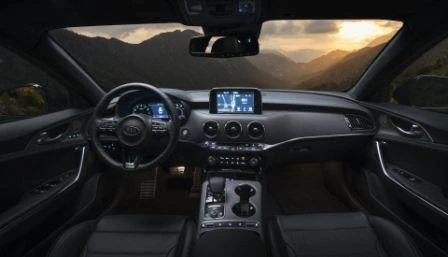 “From the outset it was a goal to get a bi-turbo V6 into the market under $50,000. We have done that with room to spare.”Mr Meredith said the decision to announce 3.3-litre pricing ahead of the Stinger’s October arrival was to provide confidence to the substantial number of buyers who have shown faith in putting down a deposit without knowing a final price.”Almost all of the confirmed orders are for the 3.3-litre, so it makes sense to provide those customers with as much clarity as we can while they wait to take possession of their new cars.”
 Pricing for the 2.0-litre model is in the final stages of being settled and will be released as soon as it has been finalised. Go here to register your interest:Kia Australia Stinger registration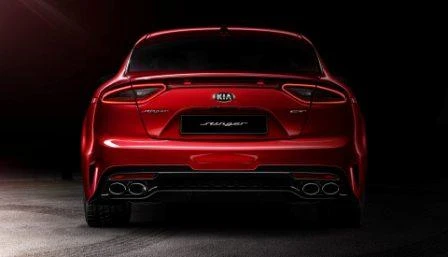
With thanks to Kia for images and content.
Private Fleet Car Review: 2017 Kia Sportage Si Premium.
Kia’s Sportage is one of the brands oldest nameplates for the Australian market. From its somewhat rough and ready, if competent, beginnings in the 1990s, it’s morphed into a handsome, bluff nosed, popular machine in the mid sized SUV market.
Available in 2017 as a four trim level range, covering Si, Si Premium, SLi, and GT-Line (formerly Platinum), there’s three engines, one transmission, and two or part time all wheel drive options. Private Fleet takes the entry level but one 2017 Kia Si Premium front wheel drive home for the week. The cost is $31510 with premium paint (a grey hued colour called Mineral Silver) at $520. Sportage comes with a choice of 2.0L petrol, 2.4L petrol, or 2.0L diesel. Power outputs for the diesel and bigger petrol are just a kilowatt apart, at 136 kW and 135 kW respectively. The Si and Si Premium has the 114 kW 2.0L four (plus the diesel is an option for the Si). Torque wise it’s a steady climb, from 192 Nm, 237 Nm (both at 4000 rpm) and a handy 400 Nm (1750 – 2750 rpm) for the oiler. For the Si, Kia says economy is 10.9L/7.9L/6.1L (per 100 kilometres, urban/combined/highway) from the 62 litre tank. Our final figure was 8.4L of unleaded per 100 kilometres in a mainly urban environment. Sizewise it’s well situated in the mid sized SUV bracket, with length at 4480 mm, overall width of 1855 mm, a wheelbase of 2670 mm and a ride height of 172 mm. Spare wheel is a full sized alloy.
 The sole transmission available is a six speed auto. There’s no paddle shifts available in the Si or Si Premium however there’s the now almost mandatory Sports shift or manual selection via the gear lever. For the most part it’s smooth enough but did exhibit occasional jerkiness and indecision. The auto would also downshift, from sixth to fifth and sometimes fourth under light throttle on slight slopes. On bigger slopes such as the Great Western Highway’s climb up from the river plain, it’s expected it would drop back, and did so easily, plus would hold that gear with only the throttle responsible for rev changes. In normal driving upshifts were slick, quiet, however light throttle on a cold engine seemed to have the cold also annoying the transmission’s electronics, with the hesitancy and judder found in older style autos.
 Give the Si Premium a solid push on the go pedal and it does drop back easily, as mentioned. What you’ll also get is the mechanical keen from the 2.0L as it winds its way rapidly through the rev range. The 114 kilowatts comes in at 6200 rpm and the engine certainly gives no sign it’ll struggle to reach those numbers. Acceleration is decent enough however there’s a sense that more could be on offer but doesn’t reach the front driven 225/55/18 rubber from Nexen. The 1560 kilogram kerb weight may be one reason. Braking is good, with the 305 mm vented fronts and 302 mm solid rears responding quickly and effectively every time the beautifully balanced and communicative brake pedal is pushed.
 The McPherson strut front and multi-link rear suspension tie the Sportage down well. Although it theoretically could do some soft roading, tarmac is its natural friend and the two go well together. There’s a sense of balance in the way the Si Premium handles itself, with the tight corners for the Old Bathurst Road that snakes its way up from Penrith in Sydney’s west despatched as easily as the dips and undulations on the freeway system that rings the western parts of Sydney. Kia’s engineers spend a lot of time refining the spring and damper settings for Australian spec roads and it shows.
The Sportage is rarely fussed about the road surface, is quiet on all but the coarsest chip surfaces, and seat of the pants feedback tells you that even in quick sideways movement that it’s as composed as if it were standing still. The steering is quick at about 3.5 turns lock to lock, light in Normal mode, not much difference noticeably in Eco and feels a bit heavier, with more feedback in Sports, to round out the driving package. It helps move the Sportage from lane to lane quickly and without a sense of mass shifting direction, making for an almost sporting car drive. Apart from the tyre and wheel size between the Si and Si Premium (225/60/17 for Si), there’s also front parking sensors and electro-chromatic rear vision mirror to differentiate. The Premium also picks up LED DRLs, rain sensing wipers, driver AND front passenger Auto up/down window switches, dual zone climate control, Auto defog system, and illuminated vanity mirrors. Seat trim is a black and charcoal grey weave for the cloth with the front pews manually adjusted for height and seat back angle via levers. The rear seats fold down flat via side mounted levers and provide up to 1455 litres of cargo space, up from 460L with the seats up.
 The black plastics throughout the cabin have a warm texture to them, with a sweep around the bottom of the windscreen not unlike a new Jaguar. The steering wheel hub has the same feel whilst the smoother plastics are that almost suede feel to the matt fiished buttons and suurounds. The seven inch colour touchscreen, which features satnav, another item the Si alone doesn’t get, sits between the central air vents and there’s an alloy look to the surrounds.
 There’s bottle holders in all doors, cup/bottle holders in the centre console and a small storage locker in the console as well. The driver’s dial binnacle houses a 3.5 inch monochrome screen with information such as trip, fuel economy, service status, accessed via tabs on the steering wheel. There’s plenty of rear seat leg room, even with the front seats pushed back and enough for most front seat passengers when that seat’s pushed forward. All over and around, it’s typically high quality Kia.
 The touchscreen has a pseudo radio “dial look”, good quality sound, Bluetooth and Auxiliary/USB campatible, but notably no CD slot. In place of that is voice activated Apple CarPlay and Android Auto. When in Reverse, the camera provides a clear enough picture but it’s not as clear and sharply defined as others available.
  There’s also a pair of 12V sockets at the front of the centre console and one at the rear, allowing for extra USB ports if needed. Aircon controls are simple to use, clean to look at, and the Synch button lights up when it’s a mono zone control, meaning temperature adjustment is for both right and left seats.
 Outside, the Sportage is stubby tailed, long bonneted, with a steeply raked windscreenbehind Kia’s signature Schreyer grille, and rear window, with a thickish C pillar and profile that reminds one of the original Sportage. The update in 2016 lost the angular and sloped headlights, changing them to an insert style that flows from the more upright nose back along the bonnet shut line.
 The Sportage designers may have taken inspiration from a classic sci-fi film for the design of the inner headlights, with the look not unlike at all the tri-lensed aliens from War Of The Worlds. The front bumper also has inserts for the globe lit daytime driving lights in each corner, matching the height of the rear’s indicator cluster located low in the rear bumper, not higher up inside the rear light cluster, a staple of the Sportage design.
 Naturally there’s plenty of safety on board in the form of six airbags, traction control, DBC or Downhill Brake Control and HAC (Hill start Assist Control). Only the GT-Line gets Blind Spot Detection, Lane Change Assist, Forward Collision Warning System, and Lane Departure Warning System. Servicing is yearly or 15000 kilometres plus capped at a cost of around $2756 over the seven years.
At The End Of The Drive.
Kia Sportage range stands up to be counted in a very crowded market. It’s a car that’s full of class and oozes plenty of style. Consider sibling Tucson from Hyundai, Mazda CX-5, Ford Escape, Renault’s brilliant Koleos, VW Tiguan and you get the idea of what it’s up against. With a strong list of standard equipment, a free revving petrol engine (and the diesel’s pretty damned good), a comfortable drive, and that seven year warranty, it acquits itself with dignity and poise. Kia’s 2017 Sportage range deserves to be on your radar when looking out for a new mid sized SUV.
For specifications and more, head over to :Kia Australia’s website and Sportage
 Level 2, 9 Help Street