

Buy A New Car
Private Fleet Car Review: Holden Trax LS Turbo
This Car Review Is About: the Holden Barina based SUV called the Trax. This review is on the LS spec with turbo engine. It’s part of a three trim level range (LS, LT, LTZ) with all but one the 1.4L turbo. The range starts with a LS and 1.8L and is priced at $23,990 plus on roads. At the time of writing the LS 1.4L was available at $24,490 driveaway. The Engine Produces: 103kW and 200Nm, plus a figure of 6.7L per 100 kilometres (combined) from a 53L tank filled with 91RON. Our final figure in an urban drive was 8.3L/100km. Drive is through the front wheels and a six speed auto.
 On The Inside It’s: a reasonably comfortable place to be. Cloth seats are snug and although fully manual are easy to adjust. The doors open wide enough to make getting onto the seats a doddle too. Because it’s a compact machine, at 4,264mm long and a 2,555mm wheelbase, leg room for the rear seat is adequate at 907mm, not startling and dependent on the front pews not being occupied by taller people. Front leg room is fine for all but the the giants, at 1037mm. Shoulder and hip room is also adequate and front seat head room is great at 1,005mm. The Trax helps the front seat passengers by not having a centre console storage bin, just a standard cup holder style.
 Barina origins mean the dash is the asymmetrical look found in that car. There’s a old-style looking LCD screen to the right, the speedometer dial in the centre, and the fuel and rev counter on the left. It’s a simple looking unit and as a result offers nothing more than what you see, except for the LCD’s switchable info screens operated from the right hand side of the tiller.
 The dash itself is Euro styled, with the current sweep around in an arch from door to door running at the base of the windscreen. It’s a finer looking plastic and visually more appealing than that found in the Arcadia. Faux alloy rims the air vents at each end, forms a U-loop for the centre display and vents, and highlights the steering wheel arms and centre stack verticals. The aircon controls in the LS are dials, meaning the temperature can be adjusted finitely but airflow isn’t as finely controlled. These sit above a small nook that has USB/3.5mm/12V sockets.
Audio is AM/FM only, with no DAB, which is increasingly seen in the Trax’s opposition. Smartphone mirroring in the form of Android Auto and Apple CarPlay are here. On the Ouside: It’s a strong resemblance to the Barina, if more a breathe in and hold look. It’s ovoid in the overall design, with curves everywhere especially on the front and rear flanks. 215/60/17 tyres and wheels underpin those curves. Up front are integrated LED driving lights that curl nicely around the outsides of the clusters. Driving lights are in their own housings at each corner of the lower front bumper. Out back is a manual tail gate, with an opening to just enough room to get a week’s shopping into, with 387L expanding to 1270L with the 60/40 rear pews folded.
Tail lights are a triple layered affair and blend nicely with the bulbous rear guards. There’s also a resemblance, in a way, to the Trailblazer and Colorado up front, and nothing at all in respect to the Equinox and Acadia. There are eight colours to choose from, including the Absolute Red the test car was painted in.
 On The Road It’s: Missing something. It’s not a big machine, and the 1.4L isn’t an outright powerhouse, but 200NMm comes on stream at 1,850Nm. Performance, what there is of it, is blunted, muted, initially First impressions were that the tyres were under-pressured, dragging back the LS Trax. It simply didn’t feel as lively, as exuberant, as it should have. It takes a while to feel as if there’s something living under the bonnet. Get to around 1/3rd travel of the go-pedal and once the revs are above 2,000 the hidden life of the engine is revealed.
Suspension is short travel and tight, to the point the Trax would cock a rear corner in certain situations. None of those were at anything more than 10kmh, thankfully. It’s an odd sensation but it pointed towards the ride and handling the Trax LS had. Smooth on smooth roads, jiggly and unsettled on unsettled roads, tracks straight and true otherwise. The front is a tad softer than the rear though and this helps in the front end’s tracking nicely. It’s a slightly numb steering feel, prone to understeer, but it’s predictable, controllable, telegraphing just where the pert nose will go with no chance of misinformation being sent to the driver. What also isn’t sent to the driver is the Acadia’s vibrating seat platform should the onboard sensors detect anything the system deems worthy of sending a signal to the vibrating seat. That’s a long way of saying that the driver is better equipped to deal with driving situations in front of them because they’re not momentarily distracted by a seat going crazy beneath them.
Steering is well weighted and the brakes are also well balanced, with extra bite over the 1.8L that comes with drum rears. the turbo four has discs.
What About Safety?: No AEB, and the LTZ is the only one that gets Rear Cross Traffic Alert and Blind Spot Alert. all three do get a lo-res reverse camera, six airbags, and the mandated driver aids and Hill Start Assist.
The Warranty Is: Five years/unlimited kilometres, with three years free scheduled servicing. At The End of the Drive.
The Holden Trax is apparently due for an update in 2020. It needs it and needs it badly. Not because it’s an unpleasant car, far from it. However when up against cars in the same sphere, it’s immediately dated. Holden’s Traxis available here.
Private Fleet Car Review: 2019 Holden Acadia LTZ 2WD
This Car Review Is About: The 2019 Holden Acadia in LTZ 2WD trim. It’s the big and American styled machine that replaces the Captiva. It has four doors, fat flanks, a dropped jaw front end, and a V6/auto combination that spins the front driven tyres at the slightest hint of provocation. It’s a seven seater, by the way. This Car Costs: $53,490 is the current sticker price according to the latest pricing guide. $57,490 is for the all wheel drive version. At the time of writing, Holden is moving the LTZ 2WD for a driveaway price of $54,990 for a Summit White body, or $55,565 for one in metallic. That includes free scheduled servicing for three years and a five year warranty.
The Engine Is: a 3.6L V6 with Stop/Start tech mated to an generally super smooth nine speed auto. It’s essentially the same pair to be found in the Commodore. Economy was average, with a final figure of 10.0L/100km. Peak power is 231 kilowatts, with peak twist of 367Nm coming in at 5000rpm. On the Inside It’s: One of the most mundane looking looking interiors currently going. A dull, slabby, semi-gloss, fine-grained black plastic with no visual appeal whatsoever dominates the front seat area and it’s little better heading rearward. The driver and front seat passenger stare at a dash that has a generic a look as can be found. There are silver coloured air vent surrounds at each end, a basic looking centre dash screen and vents with a silver surround sit above a generic looking aircon control cluster, and a pair of seat heater buttons are inserted in either side of a nook for a smartphone charging pad. Front seat passengers also get a different take on heated seats in that either the bottom or back and bottom of the seat can be selected.
 There are vents in the roof for the centre and rear seat passengers. The rear section gets its own controls and again, they’re GM generic. They do work and well enough for the centre seat passengers to make no negative noises. Said rear seat passengers have the wonderfully simple pull strap system to raise and lower the pews, and the rear gate is powered and comes with the same height adjustable feature found in the LTZ-V. There is also rear section aircon controls which, admittedly, is a rarity seen in this class of car.
 The touchscreen for the radio is, at least, well laid out in regards to usage. Although it’s a typical GM look, it is easy to read, easy on the eye, and relatively easy to use. However there was a glitch with the digital tuner. After powering up the car, there were times where the screen indicated it was searching for a signal yet would play the last station. At other times it would not play a digital station at all but would be fine when selecting FM. This is the same glitch as noted in the LTZ-V, which means either it’s a glitch that can’t be fixed or Holden is unaware of the problem which is unlikely.
 On The Outside It’s: Possibly why it seems to not have lit up the sales charts. Take a look at the offerings from Ford, Toyota, Mitsubishi etc. None of them are as overtly apple pie as the Acadia. That’s made evident by simply driving around and keeping an eye out for them. A heavy front end, broadened flanks at the rear passenger doors, a perhaps too solid C pillar and a fussy design here too. Wheels are 6×2 spoke alloys, with Continental Cross Contact LX Sport rubber at 235/65/18.
 It’s a clear three box design with the bonnet, front and centre seats, then a separate section for the rear. It’s not an entirely cohesive look.
On The Road It’s: A weird mix. Off the line, from a standing start, the front driven rubber will easily chirp with no more than a gentle push of the go pedal. But thanks to its bulk, that’s about as exciting as it gets. That peak torque needs a lot of spin to really be effective in pulling the front wheel drive machine around, and as good as the gearbox is in utilising the torque, there simply needs to be either more of it, or have it come in lower. There is actually an easy fix for that, though, and it’s a one word answer. DIESEL. Yup, there is no oiler in the range and that’s thanks to the country of origin.
Underway it’s super quiet, refined, and smooth in its operation. Go for an overtake and again that dearth of torque become apparent. The same applies for anything remotely uphill, and soon the cogs are nine, eight, seven…..
 Although Holden’s own engineers have worked on the suspension tunes of the Acadia range, with “FlexRide” dampers on the LTZ, it’s more an American floaty, wafty, spongy ride, even with the big rubber. On the up side, it never bottomed out in the suspension travel, but the plastic strip on the chin did scrape too often on mediocre intrusions. Rebound is well controlled, it’s simply a matter of feeling the springs are too soft up and down.
 Handling is, well, like the interior. It’s ok. Response is not slow, and it’s not sports car rapid either. The latter isn’t surprising, of course, but the front end could do with a quicker how d’ye do when the tiller is twirled. Body roll is experienced but is also not as bad as expected.
Another weak spot is the way the brakes respond. Or, correctly, don’t respond. There’s dead air for the first inch or so, it seems, then a not spongy but not hard travel and retardation is simply too slow for a vehicle that weights around the two tonne plus mark. What About Safety? Autonomous Emergency Braking, bundled with pedestrian and cyclist detection, starts the list. The LTZ-V has a higher sensitivity when kit comes to reading the road ahead that the LT and LTZ. Blind Spot Alert is standard, Rear Cross Traffic Alert is standard, and Lane Keep Assist and Lane Departure Warning are also standard. A driver’s kneebag, along with front, side, and curtain airbags complement the five standard and two ISOFIX seat mounts. Pack in 360 degree camera views, semi assisted parking, and front sensors, and the Acadia LTZ wants for nothing in regards to keeping the internals safe.
 The Warranty Is: Five years or unlimited kilometres, with 5 years roadside assist if serviced at Holden dealerships. Website has a capped price quotation system.
At The End Of The Drive.
For a car that is intended to be Holden’s saviour, the Acadia range falls short. This is partly evidenced by the sheer lack of them on roads compared to their opposition from Ford, Toyota, Mitsubishi, and Korea. There is little spark and it falls short of lighting the candle. Having an interior look that is outweighed by entry level cars half its price, no diesel, a lack of genuine tech appeal, a softish ride that may not be to the liking of potential buyers and a rear cargo that simply doesn’t look as wide as Holden’s other seven seater (which comes with a diesel and is therefore more suitable for purpose), plus an exterior unrelated to anything else in the family, means the 2019 Holden Acadia LTZ has a very sharp stick with which to push stuff uphill. It does nothing bad, but it simply does nothing special.
The Top Five From The Last Five
Picture Australian roads in the mid 1970s. It was the era of Holden, Ford, and Chrysler. Japanese brands such as Subaru and Toyota were known of, Korean cars simply didn’t “exist”, and four wheel drive capable utes were the end product of after-market conversion companies. European cars were largely luxury types or sports cars, with Jaguar and Mercedes-Benz up against Porsche, whilst Volkswagen was best known for its “people’s car” still.
The Kingswood and Falcon duked it out with the big Chrysler Valiant, sedans and wagons, like “light” and “heavy” beer were the only choices.
But it was also heading towards the days of the so-called oil crisis. Emissions were also becoming something that would be under the microscope, and European designs would soon start to filter their way through to the Aussie marketplace.
Punk music was just starting to grow, Queen were thriving, and a small film called Star Wars has people queuing around street corners.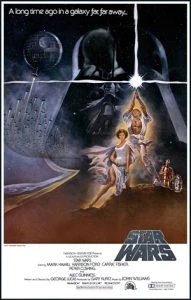 Times and tastes have changed over the last forty years or so. Technology has made substantial differences to how we enjoy viewing, watching, listening, and driving.
2014 Top Five.
Toyota already had a reputation for building solid off road cars. They were known for cheap to run, if not exciting to drive, small cars, and in 2014 their Corolla was the number one selling car. Competitor Mazda also grew from a good yet uninspiring range, bar the exciting and thirsty EX-7, and in 2014 their Corolla fighter, the Mazda 3 (once known as the 323 and shared with Ford as the Laser) ran a VERY close second. How close? 43,735 “Rollas” were sold in 2014, against 43,313 3s. Toyota claimed position number 3 in 2014. Their HiLux 4×2 and 4×4 utes, in two and four door configurations was making steady progress through the sales charts and finished ahead of Hyundai’s i30 five door hatch. The once almost unstoppable Holden Commodore would take fifth in 2014.
2015 would see a change in the rankings with not one, but two, utes in the top five. Toyota had consolidated first again, with the Corolla still of big appeal at just over 42K vehicles finding new homes. Mazda’s 3 had gone backwards considerably, with 38,644 in new driveways.
HiLux would be third yet again in 2015 but had lost close to three thousand sales. In fourth it was Hyundai’s tidy i30 but in fifth, and with sales going up by about the same HiLux went down, was Ford’s overhauled Ranger. 29,185 Rangers were sold, up from 26,619 in 2014.
2016 was a watershed year for the Australian automotive manufacturing industry. The largely home grown Falcon was no more and Ford Australia had ceased local manufacturing. The top five in 2016 was a case of the same yet different. HiLux had been given a makeover, with a more assertive and blokey styling. This was enough to propel it to the top of the charts for 2016, and how! 42,104 versions were sold, an increase of just shy of seven thousand. Corolla made it a Toyota one-two with the i30 taking bronze again. Ranger increased sales by nearly eight thousand to finish fourth on 36.934, with the Mazda3 in fifth, down by over two thousand to 36,107.
Best selling cars of 2017.
Well, it was a battle of the utes this year. The tsunami that was HiLux in 2016 continued, with an increase of nearly five thousand from 2016. 47,093 of them were purchased. Ford’s Ranger shouldered through the Corolla range and with 42,728, silver on the podium was Ford’s for the taking. It was a tussle of the small cars for third, fourth, and fifth, with Corolla, Mazda3, and the i30 taking the minor placings. i30 had collapsed, with just 28,780 being sold compared to 2016’s 37,772. 2017 would also see Holden and Toyota pull down the shutters on their local manufacturing operations.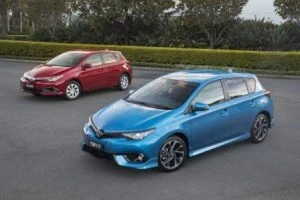
2018’s Best Sellers.
Australia’s love affair with the Commodore, and sedans in general, was well and truly over. But that love for the HiLux was increased even further, with the chunky machine seeing 51,705 rolling out of showrooms. In December of 2018 alone, 3871 were sold.
Ford’s Ranger had undergone a facelift in 2017 and that momentum continued to have the brawny Australian designed machine shift 42,144 units. This was close to seven thousand units ahead of the Corolla, with its own 2017, edgy looking, facelift not diminishing appeal. 35,320 Toyota Corollas were bought, well over four thousand more than the Mazda3. In fifth was the bridesmaid’s bridesmaid, Hyundai’s i30. However, in 2018, more attention was on the i30N than the others, which means a climb to fourth for 2019 may well be the case.
Of note is Mitsubishi’s Triton. A facelifted version was made available in early 2019, and 2018 saw 24,896 sold. Holden’s Colorado didn’t crack the top ten in comparison.
Tell us what you think of the current state of Australian car sales, and which brand grabs your fancy by getting in touch via our blog and social media connections.
Car Review: 2019 Renault Trafic Crew Life LCV
This Car Review Is About:
The 2019 Renault Trafic Crew Life LCV (light commercial vehicle). It’s a long wheelbase version with a dedicated passenger cabin. Renault have it, at the time of writing, at a stellar $47,990 driveaway. Under The Bonnet Is:
A surprisingly torquey twin-turbo 1.6L diesel. At just 1500rpm there is 340Nm, and peak power isn’t bad either. At 3500rpm there is 103kW, although by then it’s run out of puff. The transmission fitted to the review vehicle is a slick six speed manual, driving the front wheels, that’s geared to take advantage of the torque early on to get it under way. There is no auto option. Economy is rated as 6.2L/100km, and the final figure of over 420km for a quarter tank (80L volume) consumed speaks volumes. And that’s with a dry weight of 1,736 kilos.
On The Outside It’s:
A van. Yes, it’s stating the obvious but sometimes the obvious is all there is. From front and rear perspectives its virtually cubical. From a side profile the long wheelbase (3,498mm inside an overall 5,399mm)is readily apparent, as is the elegantly profiled nose, complete with bonnet. This makes accessing the engine easier and provides a higher measure of impact protection. Front overhang is 938mm, with a rear overhang of 968mm.
The body in white highlighted the tinted windows fitted to the left and right hand side sliding doors which aren’t remotely operable. The windows themselves house slightly tricky sliding windows, and pull down sun shades. Overall cargo is rated as six cubic metres for the standard LWB, four metres for the crew cab version.
The alloy wheels are 17 inches in diameter and are wrapped in commercial spec, yet very comfortable and grippy, rubber of 215/60 profile from Dunlop.
The non-powered tailgate is surprisingly easy to lift, with a balance point requiring little effort in order to raise it. There is also an embedded pullstrap to help lower the door.
Both driver and passenger door mirrors have a number of wide angle mirrors to back up the reverse camera and rear sensors.
On The Inside It’s:
Got seating for six. There’s adequate room up front for three, even with the protuberance for the gear selector. Underneath the centre and left seat are storage compartments which are accessed by lifting the squab. The driver’s storage has a tool kit.
The other three seats have plenty of room all around, and behind them was a bulkhead separating the passenger section from the load bay. There was just enough body flex to have the bulkhead mounts squeaking quite a bit.
Although clearly a commercial vehicle, Renault’s ergonomics cant be faulted, for the most part. The gear selector housing has some impact on the centre seat passenger, but that’s unavoidable as it’s also ideally placed to fall naturally to hand for shifting.
The starter button is quite visible, so there’s no hunting around. Switchgear is just where the body feels it needs to be, and the left mounted indicator (with auto headlights) is a fingertip away. The floor is easy to clean rubber, with driver and front passengers stepping up easily.
A handy touch or two are the inbuilt mobile phone holder and upper dash storage locker. The phone holder is engineered to twist and to extend in height with the push of a button.
The seven inch touchscreen is easy to operate and read, and there is the pleasant addition of digital radio. However, much like the Megane recently reviewed, the tuner sensitivity isn’t on par with that from other manufacturers. Having said that, overall sound quality from the door mounted speakers, partnered with a pair mounted above and behind the driver and left front passenger, delighted in their depth and clarity.
On The Road It’s:
More car like in ride and handling than it had the right to be. The front wheels are ahead of the front seats but felt as if they were directly under them. With such a long body and wheelbase there was an expectation of dragging tne rear wheels on curbs in corners. It simply didnt happen. Somehow, the knowledge of where each corner was became almost intuitive vey quickly. Not once did the length of the Trafic Life pose an issue.
Driven in the environment it was, a predominantly urban drive, and with one to four aboard, plus a week’s load of shopping, the 1.6L engine never seemed as if it would struggle in this specific kind of usage. If used in a purely commercial way, that would probably be a different story.
But that’s where the low gearing for first and second worked so well. Below 1300 or 1400 revs, the Trafic Life had little. Life, that is. But once tbe turbo spooled up there was a rapid change in tne nature of it, and the 340 torques introduced themselves with a flourish.
Further up the gears and in both town and highway driving, the Trafic Life was rarely found wanting. The engine management system has an anti-stall feature, and once or twice at traffic lights this kicked in, enabling the get-away otherwise wanted.
It’s a superb highway cruiser, and around the urban drive cycle, fourth or fifth was all that was required. Braking, too, was wonderful, with an easy to judge feel, and plenty of speed reduction quickly.
Actual ride quality was enjoyable, with a firm, but not unpleasantly so suspension setup. Matched with a quick steering rack and driven hard through the tight and twisting turns on one particular Blue Mountains thoroughfare, the Trafic Life demonstrated just how well thought out and engineered the underpinnings are.
What About Safety And Warranty?
Front and side airbags, daytime running lights, Hill Start Assist, and the mandated traction aids are standard. Renault doesn’t list AEB or distance sensing cruise control. Warranty is listed as 3 years, unlimited kilometres, with annual or 30,000 kilometre service intervals.
At The End Of The Drive.
PF handed back the 2019 Renault Trafic Life with regret. It’s a better than expected family vehicle, economic to drive, comfortable whilst doing so, and has an easy to maintain interior. In colours other than the plain white our review vehicle came in, it’d also be a reasonably handsome looker on road. And at under $50k driveaway its a screaming bargain as a people mover.
For more details on the Renault Trafic range, here is where you can find them.
 Level 2, 9 Help Street