

Buy A New Car
2020 Toyota Corolla Sedan Is Here.
Toyota has released details of the forthcoming Corolla sedan. Due to be released by the end of November, the range and pricing is as follows. Ascent Sport petrol manual: $23,335, Ascent Sport petrol CVT: $24,835, Ascent Sport hybrid CVT: $26,335, SX petrol CVT: $28,235, SX hybrid CVT: $29,735, and the ZR petrol CVT: $33,635. All prices are manufacturers recommended and not inclusive of government and dealer charges.
All CVT equipped models will feature a solid safety package. Lane-trace assist with steering assist, plus lane-centring functionality and all-speed active cruise control, with the manual Ascent Sport featuring high-speed active cruise control and lane departure warning that has steering assist. Rear camera and seven airbags will be across all models, whilst the SX has Blind Spot Monitor and the ZR will received a Head Up Display. Toyota’s SafetySense package is standard. This includes autonomous emergency braking pre-collision safety system with daytime and nighttime pedestrian and daytime cyclist detection, auto high beam, and road sign assist. The Corolla Sedan will feature, for the first time, a hybrid drivetrain. This will be available on the Ascent Sport and SX versions. A new 2.0L petrol engine can be specced for all three trim levels, with a six speed manual or a CVT with ten preset manual shift points in the Ascent Sport. It will be connected to the CVT as standard in the SX and ZR. Maxiumum power is rated as 125kW and peak torque is 200Nm. 6.0L/100km and 6.5L/100km for the CVT and six speed manual respectively.
Choose the hybrid and the petrol side is a 1.8L engine and what Toyota call a e-CVT. Power is rated as 90kW. It’ll drive the front wheels, with all four corners to have low rolling resistance rubber. All up, Toyota quoted 3.5L100km. Emissions are rated as just 81g/km.
Toyota will add dusk sensing LED headlights, rear lights, and daytime running lights to all versions. Alloy wheels and climate control will be standard across the range except for the manual Ascent Sport. This will have manual aircon. For those that use them, Android Auto and Apple CarPlay will now be standard and accessible via an 8.0inch touchscreen. Bluetooth and Siri eye-free functionality will also be standard. Go hybrid and it’s a keyless Start/Stop.
The SX Corolla sedan will have a new three-spoke tiller with paddle shifters. Wireless smartphone pads are standard in the SX along with DAB and satnav. The ZR goes up a notch with a full glass roof, 18 inch alloys, and the front seats will be heated. Again, Australia misses out on venting, an oversight for our climate in summer. The driver’s seat will be 8 way power adjustable and audio is via a JBL 9 speaker system. Outside is a restyle that brings the sedan’s look closer to the needle nosed hatch, whilst the rear has been refreshed as well.
Servicing costs have been aligned with the hatch, meaning every Corolla has capped price servicing that costs just $175 per service with 12-month/15,000km intervals. Contact your Toyota dealer to book a test drive.
2019 Hyundai Elantra Sport: Private Fleet Car Review.
This Car Review Is About: The latest version of Hyundai’s long running Elantra, formerly Lantra, nameplate. It’s a small mid-sizer sedan and recently was given a mild facelift. It’s a sister car to the Kia Cerato and comes in a four tier, two engine, manual or DCT auto range. The range consists of Go, Active, Sport, and Sport Premium. Under The Bonnet Is: A 1.6L turbo in our test car, with a seven speed Dual Clutch Transmission (DCT), with manual shift options driving the front wheels. There’s a fair bit of oomph available here, with 150kW @ 6,000rpm, and torque of 265Nm between 1,500rpm to 4,500rpm. It’s EURO V compliant and runs on standard E10 unleaded. Our overall average was 7.1L on a mainly urban cycle with Hyundai quoting 7.0L/100km for the combined, a far too high 9.9L/100km on the urban, and 5.8L/100km for the highway. On one highway run the fuel meter appeared to indicate just 4.9L/100km.
The other engine is a 112kW/192Nm 2.0L MPI and a six speed manual the other transmission. Fuel tank is 50.0L. How Much Does It Cost?: The Go kicks off the range at a very nice $20,990 driveaway for the manual, $2K more for the auto. Premium paint is $495. Add $5,000 for the Active before the Sport starting at $32,600 and the Sport Premium at $35,200.
On The Outside Is: A familiar shape, with a refreshed front and rear. It’s the front that has received the most attention and it’s a personal taste thing. It’s not unpleasing, by any measure, but there are a couple of angular aspects that seem at odds with the otherwise curvaceous body. The front lamps have been refined to a sharp triangle with LED driving lights housed within. the Sport also has a full suite of LED main lights. The sharpest point on the triangle now goes inside the “Cascading Grille” which sits between “Z” shaped supports, which on the Sport house the indicator lamps. The bonnet runs back to a steeply raked windscreen before finishing in the familiar coupe-style rear windowline. The rear lights have also had the makeover wand waved, with these also slightly sharper and a leading edge further into the rear flanks and bootlid. A pair of side skirts and a pair of crease lines on each side add some extra visual appeal. The windows themselves are shallow yet from the inside still offer plenty of breadth for vision.
Our test car came supplied with truly stunning alloys, with a crossover two by ten spoke design in silver and black. Michelin supply the Pilot Sport 225/40/18 rubber and they’re superbly grippy and absorbent. Sheetmetal was in Pearl White. This colour perhaps highlights the lithe profile of the Elantra, masking its surprisingly long 4,650mm length. That’s helped by a diminutive 1,450mm height. There’s plenty of shoulder room (1,427mm/1,405mm) thanks to 1,800mm in width. On The Inside Is: An interior familiar to anyone with exposure to the Korean brands. However, in the Sport, Hyundai have gone for a bit of spice with red leather on the seats and door inserts (a $295 option), a flat bottomed leather clad steering wheel with red alignment stripe, and alloy pedals. The red looks and feels great, and breaks up an otherwise solidly black colour scheme. By the way, the seats are manually adjusted, not powered, nor are they vented or heated. The Sport is push button Start/Stop. When it comes to indicating, here there’s something that isn’t 100% safety conducive. The spec sheet says the indicators are a soft touch setup, with 3, 5, or 7 flashes. We fully support a setup that has no option than on or off, as far too many drivers don’t provide the required “satisfactory indication” in lane changing. This also applies to the headlight switch. Auto should be the minimum, with no Off option.
 The dash is as cleanly laid out as you can get, with space between tabs and buttons, white print on the black background, and an in-dash, not on-dash, eight inch touchscreen. the driver’s dials are analogue, bracketing the now standard info screen activated via steering wheel controls. The aircon controls have had their housing revamped and to use them is an exercise in simplicity. Underlying the screens and tastefully chrome trimmed air vents is a strip of carbon-fibre look material joining each side.
 Familiarity comes in the form of a pair of 12V sockets and a USB port directly below the aircon controls, a U-shaped surround for the gear selector and a button housed here for the drive modes. There are air vents but no USB ports for the rear passengers. They also have up to 906mm of rear leg room, with 947mm of head room. Cargo space is a minimum of 458L and the boot is operated via the key fob.
 The audio system is DAB compatible and the speakers are from Infinity. It’s an impressive setup and really showcases the clarity of DAB in full reception areas. Naturally Bluetooth streaming is standard, as are the Android Auto and Apple CarPlay apps. There is no smartphone charge pad (Premium has it) and no electric parking brake. That last one, personally, isn’t a deal breaker. What is a niggle is the boot lid release mechanism. Although the fob has a button, it’s also supposedly engineered to wireless release the lid by standing behind the car for a hands-free operation. This, though, has to be enabled via the Menu system in the car. A few tries and not one successful activation. The interior handle also failed to pop the lid. When opened though, the cargo floor can be lifted to reveal the space saver spare.
 On The Road It’s:Fluid in the way the engine and transmission work. The caveat here seems to apply to just about every DCT driven of late: it needs to warm up before it’s as smooth and slick as the technology promises. In this car, from a cold start, it was noticeably jerky and hesitant, and also exhibits the typical gap between engagements of Reverse to Drive or Park to Drive. Getting off the line also showcased the issue with DCTs, with minimal engagement seeing a slow pace before the clutches engage.
Once everything is working, it’s as it should be. And, again, the gears are better for changing by using the manual shift option. It’s a crisper, more reactive, change, and the computers even allow changes at lower rev points from the engine. That 265Nm doesn’t seem a lot, but considering a 2.0L turbo averages 350Nm, and the weight of the Elantra Sport starts at just under 1,400kg, it’s plenty to keep the performance percolating. It’s a free and willing spinner, the 1.6L, and well proven in other cars across the Hyundai and Kia range.
The three drive modes were largely ignored as Normal, the default, is far better than adequate. Eco would suit any long distance highway drive but Sport, ironically, is virtually redundant unless punting the Elantra Sport in a track day environment. The steering is fingertip perfect, with a weighting that is Goldilock’s porridge. The same applies to the suspension. As always, Hyundai’s engineers spend months sorting spring and shock combinations, and it shows. The MacPherson strut and multi-link rear are supple, compliant, reactive to body movement instantly meaning body roll is non existent, and the usual minor road imperfections are disappeared. It’s deft and adept, and offers sharp handling without compromising comfort. Rough roads have the short tyre-wall Michelins humming through noise, but on the newer and smooth blacktop, it’s quiet. The Sport lives up to its name with these tyres, with maximum grip in the tighter corners, and almost non-existent understeer at normal driving velocities. Go harder in legal situations and there’s no doubt at all that these tyres will be there and have your back. this same exuberant driving allows the free spinning engine to breathe and dump its spent gasses with a bit of rasp. It’s subtle but adds a bit of aural backup to the Sport nameplate.
When it comes to safety, the active Lane Keep Assist is perhaps a little too willing to move the tiller. It’s not a gentle pull, it’s a toddler’s impatient tug on the trouser leg, and can catch lesser experienced drivers unaware. However it’s easily switched off via a tab near the driver’s right knee.
What About The Safety?: Along with the aforementioned Lane Keep Assist, Blind Spot Collision Warning is standard, as is Forward Collision Avoidance Assistance for city and urban drives. The spec sheet doesn’t state that Autonomous Emergency Braking or Smart Cruise Control are available.
Warranty And Service Are?: Five years as standard for the warranty however Hyundai are (at the time of writing) offering a seven year warranty. Hyundai also offer prepaid servicing which is factored into the purchase price. The Hyundai website has more information. At The End Of the Drive: It’s a great four seater and an excellent family car. There’s plenty of performance, grip, and the edgy good looks complement the drive, plus draw the eye. The DCT is a corker when warmed up and using the manual shift but still has the same DCT hiccups found anywhere these gearboxes exist. It’s well priced and with the added (at the time of writing) appeal of an extra two years warranty, should be on the shopping list for anyone looking for a very competent small to medium sedan.
2019 Toyota HiAce LWB Petrol/Crew Cab Diesel/ SLWB Diesel Hi-Roof.: Private Fleet Car Review.
This Car Review Is About: Toyota’s completely revamped HiAce range. There is a choice of petrol or diesel, manual or automatic, long wheel base or super long wheel base, panel or crew cab. We were lucky to back to back to back three different versions. There is the LWB V6 petrol van, LWB diesel crew cab, and hi-roof diesel super long wheel base.

 Under The Bonnet Is: A 2.8L diesel, 3.5L petrol V6, and six speed autos in the vehicles tested. There is a six speed manual available but for the LWB panel van version only. The free spinning V6 produces 207kW (6,000rpm) and 351Nm (4,600rpm). The diesel has 130kW (3,400rpm) and either 420Nm for the manual (1,400rpm – 2,600rpm) or 450Nm (1,600rpm 2,400rpm) in the auto. Economy is quoted as 8.2L/100km for the petrol auto LWB, 8.4L/100km for the auto Crew Cab, and the same for the SLWB diesel auto van.
 What Does It Cost?: The range starts at $38,640 for the 3.5L LWB and $48,640 for the same engine inside the SLWB. The diesels are $42,140 for the LWB van, $47,140 for the crew cab, and $52,140 for the SLWB van. That’s before on road costs and dealership fees.
On The Outside It’s: Big. Boxy. Has a bonnet. That’s about it. Oh, the hi-roof has a ….. high roof. It’s 2,280mm in height which makes it 80mm too tall for some shopping centre car park entries. Otherwise there is 1,990mm for the panel and crew cab vans. Overall lengths are over five metres. The LWB is 5,265mm and has a 3,210mm wheelbase. The SLWB is 5,915mm in length and has a wheelbase of 3,860mm. Width is 1,950mm.

 There’s no doubt that Toyota’s designers and engineers worked hard together to ensure the design is familiar and efficient, with a profile not dissimilar to the previous model from the rear to the front doors. It’s that bonnet that showcases the change in design, with the extra frontal safety it brings and a balance to the weight distribution. Both sides of the van have sliding doors with a soft touch close. Glass is standard, changing that for steel is optional.
Up front is a nose that stands proud of the rest of the body and houses a squarish grille and surround, squarish headlights, and even squarish wing mirrors. This echoes the overall body before the long rectangles of the tail light cluster. The LWB petrol has grey plastic panels (body colour optional), with the Crew Cab and SLWB had body coloured panels. Rubber is from Bridgestone and is 215/70/16 on steel wheels with plastic covers.
On The Inside It’s: A revamped driver’s cabin with an easy to read dash display, steering wheel tabs, and Toyota’s easy to use 7.0 inch touchscreen system. The seats are all cloth covered, and the Crew Cab has a centre console tray. The SLWB and the petrol van have painted metal and sheet wood interiors on the doors and rear panels. There’s tie down hooks and in the SLWB enough space to double as a Sydney apartment. It also has two storage shelves above the driver and passenger. Volumes for the new HiAce are decent. The SLWB is 9.3 cubic metres, with the LWB rated as 6.2 cubic metres. The payload for the SLWB is 1,175kg for the diesel, with the petrol somewhat oddly higher at 1,295kg. The LWB auto diesel is 955kg, and the diesel crew is 875kg.

 Dimensions are rated as 2,530mm in cargo length, 1,760mm in width, 1,268mm between the arches, and 1,340mm in height for the LWB van. Inside the SLWB it’s 3,180mm, 1,760mm, 1,268mm, and a decent 1,615mm in height. The Crew Cab is the same for height and width as the LWB.
 What was a surprise was how car-like it was in layout and features. For example, DAB audio is onboard along with the CD player, USB ports and 12V socket. The driver’s 4.2 inch information screen is colour, not monochrome, and there’s a good list of safety features.
 The Crew Cab has 9 airbags, with the LWB petrol and SLWB diesel both scoring seven. The love continues with an active Pre-Collision Safety System with day AND night time pedestrian detection, plus day time cyclist detection. Lane Departure Alert, Rear Cross Traffic Alert, plus Blind Spot Monitor are also here. THEN there is Road Sign Assist to add in plus a reverse camera with guidance lines and a nifty feature here too. A second camera is linked to the rear vision mirror and shows rear vision without Reverse gear. What hasn’t changed is one small yet familiar detail. On the passenger side and in its little nook behind the sliding door is the jack and tools for it. That essentially hasn’t changed for four decades.
 On The Road It’s: A car disguised as a van. Yep, that’s the easiest way to describe the way it rides and handles, even with the compromise light commercial oriented rubber. Yes, there is some grip issue occasionally, but that’s more a minor hiccup. The suspension is MacPherson struts meets a leaf sprung rigid axle, and it works admirably. Comfort levels on road are high, as a result, with a well controlled ride. However, it’s not recommended to drive these on windy days. That flat and boxy profile makes an excellent sail for catching wind.
 Steering is an unusual feel and not in a bad way. The driver’s seat is some 1,200mm behind the front wheel’s centreline yet it’s calibrated so that it feels as if the driver is sitting directly over the top. The ratio is quick, too, with what feels like a variable ratio setup. This makes a three point turn seem less onerous that what it can be, especially with long wheelbases.
Naturally there’s plenty of drumming from road noise. As there’s little to no insulation, the road noise gets very easily transmitted up and into the cabin. The SLWB especially has the driver feeling as if a pair of noise cancelling headphones are required. The petrol V6 has some serious urge and will launch the 2205kg (dry) van easily and with alacrity. It wasn’t tried but with traction control turned off, it’s a fair bet it would spin the rear driven wheels into a cloud of smoke. It’s silky smooth and spins without issue. The diesels pull hard, naturally, yet don’t seem to have the same electric urge expected. And being ahead of the driver their chatter is muted.

 What About The Warranty? Here is what Toyota says.
At The End Of The Drive. They were and continue to be a familiar shape on Aussie roads, thanks to one particular telco giant’s constant order base. This latest version, complete with car-like ride and car-like features, can do naught but reinforce why it’s been a mainstay of Light Commercial Vehicles (or Large Capable Vans) for four decades or so. The pricing is pretty decent here too, and that goes a long way to cementing the HiAce’s status as the go-to vehicle for this class.
Check out more, here.
Women and Their New Car

According to recent Forbes research, 62% of new car buyers in America are women. They also suggest that 85% of new car buys are influenced by women. Australia can’t be too far behind these stats, either. But when it comes to spending habits, men and women are still vastly different, with very different priorities for their money. Research shows that men are more likely to splash out and buy big, whereas women focus more on lifestyle which also means being comfortable with spending money on a new car without the guilt. These spending habits and goal orientations do also align with what sort of cars women and men generally buy.
Think about this for an example. Just over 90% of those purchasing a Ferrari are men. Men tend to love big, fast cars more and are image conscious, like to focus on style and are more likely to be turned on by a car’s technology. On the other hand, generally speaking, most women tend to be more concerned with how reliable and safe their new car will be, the car’s style and colour, and whether it will fit her needs.
A few years ago Autogenie did a bit of research from a random sampling of around 6000 brand new vehicles that were purchased back in 2013, and it was consistently divided between male and female buyers. The study noted that women bought small cars and SUVs, while men preferred to buy sedans and ute’s. Interestingly, the most popular vehicles that were purchased by male buyers were the Ford Mondeo, the Ford Ranger ute and the Toyota Hilux ute. Women new car buyers preferred buying the Mazda6, Toyota Kluger SUV and Holden Barina city car.
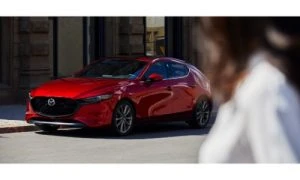
Mazda3 a Winner With Women
The study also revealed that both male and female new car buyers liked the Mazda3. Both the Mazda CX-5 and Volkswagen Golf made it to the best five most accepted models that men and women liked equally. Among the male buyers, the larger Holden Commodore was well-accepted, finishing as the 4th most wanted model. On the other hand, female customers preferred to buy smaller cars, and these were the Mazda3, Hyundai i30 and VW Golf.
But let’s, for moment, take the gender comparison out of what drives a buyer to buy a particular type of new car, and we find that everyone has different priorities for purchasing a new car. The car’s fuel economy, purchase price, looks, interior space, and the number of luxury items and gadgets will all be factors which will tip the scales toward buying one new car from the other.
The ways people are buying new cars are also changing. A lot more people now use online reviews and online guidelines to get an idea about vehicles they would, or might like to, buy. Particularly women are turning to their social networks — both online and offline — for vehicle recommendations, according to Cars.com research. Women like to turn to their friends and family for recommendations of what new car to buy because they don’t have a specific car in mind that they want to get.

Hatch, Sedan or SUV?
Women are looking for a vehicle that will fit their lifestyle, so they will need something for hauling their big dogs to the beach or something for traveling safely on back roads or something that’ll make the city traffic and tight spaces less stressful. Women focus on safety, reliability and comfort. They’re also less brand loyal than male new car buyers. These findings have been backed up by J.D. Power research. Men will be more common to place performance and style on their car want list, as well as the latest technology like panoramic moonroofs and multimedia systems.
Buying a new car is always exciting. During August, in Australia, the top-selling cars (in order from most bought to least) were: Toyota Hilux, Ford Ranger, Toyota Corolla, Hyundai i30, Toyota RAV4, Mazda3, Toyota LandCruiser, Mazda CX-5, Mitsubishi Triton and the Nissan X-Trail. I wonder which ones were bought most by women?
 Level 2, 9 Help Street