

Author archive
New EV SUVs
We still seem to be desiring the SUV over other shapes and styles of car. This is for reasons that I can understand; things like safety, space and ride comfort tend to be found in spades when you travel inside a decent-size SUV. Because we are likely to go through a period of history where the EV may well rule the road, are there any SUV-type EVs available now? EVs aren’t selling like hot cakes just yet, but there some EV SUVs bigger than a pint-sized Honda E that you might be interested in. It turns out that, actually, there are some pretty decent EV SUVs available to the buyer loaded with cash. As yet, they aren’t the cheapest vehicles on the planet, particularly if they are of the premium luxury brands, but it’s nice to know that if you did have the money, and wanted a spacious and desirable luxury model, they are already being sold out on the market.
Tesla has the jump on its competition, and they already have a decent wodge of EV clients under their wings. Because it was pretty much the first EV manufacturer to design and build a decent EV, it was Tesla who soaked up the early adopters of Tesla’s EV technology, and it was these buyers who were very keen to align and embrace the new EV technology early on. What is happening now, is that because other manufacturers are only now getting fully into the swing of EV technology, the keenest buyers have already been wooed and taken by Tesla, so, for instance, if you are an Audi e-tron or Jaguar I-Pace, you have a slightly harder job of getting your buyers because you have to actually entice them away from their luxury ICE vehicles and into one of their EV variants.
Tesla Model X
Let’s first give credit where credit is due, and let’s talk about the Tesla Model X EV SUV. The Model X can come with an optional six seats, the middle row boasting full-on Captain’s chairs. The five-seat Model X is the standard guise. I love the falcon-wing doors; they look so cool and make life very easy getting in and out of the car – even in tight parking spaces with as little as 11-inches on either side. Tesla’s Model X cabin is nice, big, and comfortable. Up the front, there is a big infotainment display screen on the dash. This is as big and as good as it gets in any car. The roof/ceiling is also a huge display screen, which is tinted so that the glare from the sun is minimised. The Tesla feels extremely modern but also, at the same time, quite a simple car that is fun to live with. It has funny features like a Fart Mode, which is an emissions testing mode that allows the car to perform fart sequencing and farting whenever it requires to do so. People outside don’t escape the sounds either. This feature does leave one in hysterics – you have been warned! The Tesla Model X is very different to anything else on the road, and that makes it a unique drive. Out on the road, the Tesla Model X is quick, and its ride does a pretty good job of soaking up the bumps. There are better handling cars like the Audi e-tron and Jaguar I-Pace, however.
- Twin electric motors
- 100kWh battery
- Weight: 2459 kg
- Range: Claimed at over 500 km, real world driving more likely to be around 300 km.
- 310 kW of power
- 660 Nm of torque
- Top speed: 250 km/h
- 0-100 km/h: 4.9 seconds
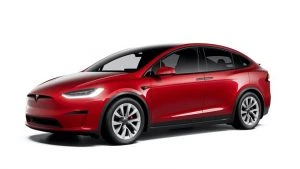
Tesla Model X
Audi e-tron
Audi’s new e-tron has five seats, all rather comfortable and impeccably crafted. The touchscreen system is classy, right up-to-date, and detailed. You do have plenty of menus to work through before finally getting to where you want to be in the infotainment set-up. On the road, the Audi e-tron is exceptionally well-sorted. It feels really tight around the corners, smooth and very quiet. Though EVs are generally heavy vehicles, the e-tron disguises its mass very well, indeed. There is plenty of well thought-out storage compartments throughout the cabin, and on a day-to-day basis this is a nice EV SUV to live with.
- Twin electric motors
- 95kWh battery
- Weight: 2490 kg
- Range: Claimed at around 385 km, real world driving more likely to be around 300 km.
- 300 kW of power
- 664 Nm of torque
- Top speed: 200 km/h
- 0-100 km/h: 5.7 seconds

Audi e-tron
Volvo XC40
Volvo’s XC40 Pure Electric Hybrid is a smaller luxury EV SUV. Safety features include autonomous emergency braking, run-off-road assist and up to Level 2 self-driving in heavy traffic situations. It’s available with AWD and uses a nice silent, smooth electric set-up. The Volvo’s version of an EV SUV is a gem. The XC40 looks and feels very modern, and the XC40’s cabin is impressively spacious. Standard equipment levels are high and include a 12.3-inch digital instrument panel with configurable EV-specific displays, panoramic sunroof, heated front power seats, and inductive charging for your smartphone. Also standard, is the full suite of Volvo safety features, including lane keep assist, blind-spot and cross-traffic alert, and rear collision alert. The 460 litres of boot space opens up to 1336 litres with the rear seats folded down flat. These can be bought new for around $85k, making this a well-priced premium luxury EV SUV that is comfortable and swift.
- Twin electric motors
- 78kWh battery
- Weight: 2158 kg
- Range: Claimed at around 418 km, real world driving more likely to be around 300/350 km.
- 300 kW of power
- 659 Nm of torque
- Top speed: 180 km/h
- 0-100 km/h: 4.7 seconds

Volvo XC40 Recharge Electric
Jaguar I-Pace
In my opinion, the Jaguar I-Pace wins the EV SUV beauty contest. From every angle it looks nice, athletic, and the perfect blend of old and new design. Even with its GT lines there is a nice amount of space inside the EV Jag. To drive, the Jaguar I-Pace is wonderful. It feels very crisp through the corners and it even has a satisfying growl that flows through the speaker system as you plant your right foot and accelerate hard. Compared with its rivals, the new Jaguar I-Pace weighs in at a comparatively light 2.0 tonnes. This is a lovely EV SUV and is probably the one I’d prefer most of all the snobbish EV SUVs currently on sale.
- Twin electric motors
- 90kWh battery
- Weight: 2068 kg
- Range: Claimed at around 420 km, real world driving more likely to be around 300 km.
- 294 kW of power
- 695 Nm of torque
- Top speed: 200 km/h
- 0-100 km/h: 4.5 seconds
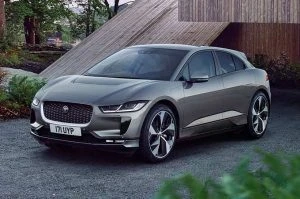
Jaguar I-Pace
BMW’s latest iX and Mercedes Benz’s EQC are some other luxury EV SUVs worth a look at. And then some other considerations that are substantially cheaper than the premium EV SUVs mentioned above would be the small Mercedes-Benz EQA and the very good MG ZS EV, Hyundai Kona and Kia Niro.
Some big reasons why you’d want to change to a EV SUV right now would be the driving smoothness, the driving silence, self-driving safety features, and the potential for saving money at the “pump”. I think it was Top Gear who recently suggested that, on average, the running costs of one of these were on a par with an equivalent petrol car capable of 73 mpg (3.2 litres/100 km). That’s if you were to do most of your charging at home and not at public charging stations.
A Case for Hydrogen-Powered Cars
What’s to like about hydrogen, and hydrogen-powered cars? We cannot see taste or even smell hydrogen, yet hydrogen makes up over 90% of matter. The stars and the sun are made up of hydrogen gas. Here on earth, hydrogen forms compounds; compounds are a mixture of elements that we find on the Periodic Table (That’s the big poster found in every science lab at school, which has 120 – or so – little squares with letters that make up the organised Periodic Table with all the known elements in our world.). Hydrogen is found in almost every living thing. Hydrogen gas is used to make chemicals such as ammonia and methane. Hydrogen is in the water that we drink (H2O). Some car manufacturers and scientists have been beavering away developing what is known as hydrogen-powered cars.
Before the car was even invented, hydrogen power had been around and in use in various forms since the 1800s. It was used widely for gas streetlamps back in the day. It was a Welshman, Sir William Robert Grove, who invented the first fuel cell back in 1839. When you use hydrogen in a fuel cell, the only thing you produce is electricity and water!
So, hydrogen-powered cars are vehicles that contain tanks of hydrogen fuel that then combine with oxygen from the air in a process that delivers power to the car for motion. The beauty of the hydrogen-powered vehicle is they produce only water as a waste product.
In a little bit more detail, a hydrogen fuel cell inside a hydrogen-powered car works like this… The fuel cell has a proton exchange membrane that uses compressed hydrogen and oxygen from the air to produce electricity. The hydrogen goes into the membrane at one end called the anode, while oxygen goes into the membrane at the other end called the cathode. A platinum catalyst, which is positioned on the anode end of the membrane, splits the hydrogen into positive protons and negatively charged electrons. The proton exchange membrane takes only the positive ions, while the electrons are fed into a circuit to make electricity. It’s this electricity which is used to drive the car’s electric motor[s]. These electric motors are what provide the driving for the hydrogen-powered car to give them speed and power!
At the cathode end, the positive ions are travelling along the membrane and combining with oxygen from the air to make water (H2O). This water drips out of the car’s exhaust/tailpipe. If you are driving your hydrogen-powered car through a desert and need some water, then you could believably drink it. Now, how green is that!
How can we produce hydrogen for vehicles? Without going into too many details here (I’ll save that for another blog), hydrogen can be produced in mass from a renewable electricity system that uses generation plants like hydro dams, solar power and wind power generators. This purpose-made hydrogen is known as green hydrogen. Australian mining company, Fortescue, has been talking with government recently regarding the creation of a hydrogen production system for Australia as early as 2023/24.
Tiwai point, which you’ll find on the Southern-most tip of New Zealand (NZ makes up Australia’s two biggest islands!), is currently being used as an aluminium smelter. The NZ government is in talks for designing and consenting to converting this smelter into a green hydrogen production plant even as early as 2023.
I think the hydrogen-powered vehicle makes a lot of (green) sense. It would cut down on the need for an endless supply of new battery packs that EVs require, which are made from preciously rare earth’s resources (e.g., lithium, nickle, cobalt…), and the energy and space to dispose of the spent battery packs would be a problem.
Of course, we would need to build up a network of hydrogen refuelling stations across Australia to power this new type of vehicle. This network-building will be easy enough and relatively cheap compared to the massive and costly EV network/upgrade. Green hydrogen fuelling stations could simply be added onto any petrol/diesel refuelling station currently in operation across Australia. This would also ease the changeover period for the general public.
If you are wondering what hydrogen-powered cars might look like, do take a look at the new Toyota Mirai, for an example.

Toyota Mirai

The Things We Do in Our Cars

I was thinking about the different demands that we all put our vehicle through on our daily drives throughout a year. It got me thinking about all the changes that can happen to us inside 12 months – whether the weather seasons change dramatically, families get larger or smaller, job promotions happen, we can change jobs for whatever reason, building renovations happen, moving house occurs, we make new friends, we start a fitness schedule at the gym, we try out a new sport across town, go fishing, go for that caravan trip around Australia and what not… Our lives are fun and full of regular tasks that we both love or put up with, have jobs that we stick with or change, are full of people that come and go and people that we just love to be around and who will always be a part of our life. The cars we drive regularly, are often a reflection of our lifestyle and can tell us a story about who we are and where we are in life.
With this ticking through my thought processing, I started to think about the changes that may or may not happen to our cars as we drive them, and how the lifestyle changes and choices that we make can affect the cars we drive. In essence, a car is a very adaptable machine (or at least should be), and it has to be fit for purpose to cater to our own individual needs. Often, I find myself needing to hitch up the trailer to grab some more compost for the garden, take a load to the recycling centre or help out a mate who is shifting house. I like to make use of my drive into town to charge my mobile phone up on the way and listen to my favourite music with the volume wound right up. Some days the temperature outside can get so cold in wintertime that I need to wind up the heater in order to thaw my fingers out and demist the rear window. But then in summer, when the temperatures soar, I’ll have the air-conditioning wound up to maximum to keep the family inside the car nice and cool, particularly when we have the tiny grandchild travelling with us.
We have different drives that we frequently make in a month, and they all take different roads and cover varying landscapes. Some journeys require us to drive up steep streets to get us to our friend’s house on top of the cliffs overlooking the sea, other roads have us in the middle of congested city streets and then another drive may take us for an hour or two north into the wild blue yonder through flat and undulating scenery to visit family.
We’ve learned to trust our cars to get us from A-to-B whatever the weather, whoever we have onboard, whatever we have to tow or carry. Can a new EV manage all the lifestyle changes and demands dependably? I’d hate to be late for my daughter’s graduation because my EV ran out of power halfway there, or that I missed the ferry because the EV had to be topped up at a charging point that had a long queue, and what about the police who aborted a chase after a dangerous criminal because he spent too long with the heater on and the siren going at the same time.
We need a car fit for purpose, a car that is cheap to run, nice to the environment and above all dependable!
Two of the Most Beautiful Cabriolet Speedsters
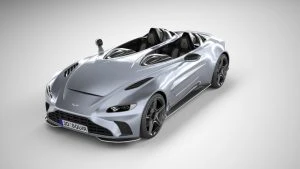
Aston Martin V12 Speedster
Two of the most beautiful cabriolet speedsters of recent times cost a king’s ransom and go like stink. Because most of us will only ever get to read about them, I thought I’d give them a plug here just so we’re all aware that there are still some very extraordinary cars being made. Arguably, and rightly so, these two cars may in your opinion not be quite as exceptional as a McLaren Elva, Chevrolet Corvette Convertible, a BMW Z4 convertible or even a Ferrari SF90 Spider, however if I had a Bentley Mulliner Bacalar or an Aston Martin V12 Speedster parked in my garage I would be especially pleased.
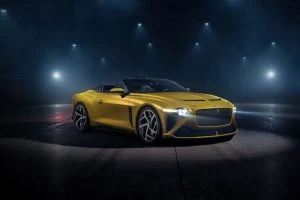
Bentley Mulliner Bacalar
Only 12 of the Bentley Mulliner Bacalars will ever exist, so, as you can imagine, the price tag of one of these is eyewatering (2.8 million AUD). Eighty-eight Aston Martin V12 Speedsters aren’t that many either; they fetch close to 1.5 million dollars new. It is almost inevitable that these two cabriolet cars will sell for more on the second-hand car market just because they are so rare and desirable. However, if you happen to be reading this, and are a squillionaire, then here are two of the most attractive cars on the planet.
Born out of the Bentley Continental stable, under the hood of the Mulliner Bacalar lies a W12 engine that has been fettled to produce 485 kW of power. It sits hunkered down on wider tracks and mesmerizing new wheels, and it boasts carbon-fibre front and rear wings, new light clusters (which look really cool) and a super glitzy centre console. Inside the Bentley Bacalar is a world of luxury and fine materials, as you would expect. Exclusive patterns on the switchgear knurling, for example, are only ever found on the Bacalar models. Then there are the uniquely quilted seats, where each seat boasts as many as 144,199 stitches. The veneer inserts that are used in the wrap-around cabin are from old river-wood trees from East Anglia peat bogs and are 5,500 years old (don’t tell the greenies this!).

Aston, on the other hand, has created a sweeter front end that looks sharper than the more muscular Bentley. Seated down low in the cockpit, the Aston also has the more futuristic dash design, with the chrome-rimmed air vents on the vertical either side of the digital driver’s display. 3-D printed rubber is used throughout the cabin, and then the bar that runs between the seats is a superb feature that looks exciting as well as ensuring strength to the open-top speedster’s on-road rigidity.
Aston’s V12 Speedster uses a potent 5.2-liter twin-turbo V12 that produces 515 kW and 752 Nm of torque. This power is sent to the rear wheels via an eight-speed automatic gearbox and a mechanical limited-slip differential. A 0-100 km/h sprint can be completed in around 3.6 seconds and the top speed arrives at a limited 186 mph (298 km/h). It sounds stunning when the throttle opens out.
The stats are that the Bentley Bacalar can run through the 0-100 km/h sprint in less than 4 seconds, and the 6-litre W12 twin-turbo engine packs 900 Nm of breath-taking torque, capable of hurling you to speeds well in excess of 200 mph (320 Km/h). AWD ensures maximum grip for all occasions, of course.

 Level 2, 9 Help Street