

Author archive
What Tyre do I Need?
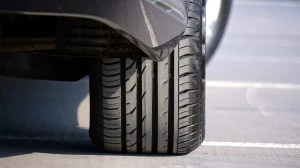
Tyres are the most crucial component to any drive. Safety matters out there on the roads, and ensuring that you have a good set of tyres rolling beneath your car makes all the difference to aspects of driving like your stopping ability, road holding capacity and anti-aquaplaning.
What the heck is aquaplaning? You may have experienced aquaplaning already when driving on a wet road and in the rain where puddles have formed over the road. Hit these puddles at a reasonable speed, and the tyres can skid over the top of the puddles, causing complete loss of traction to whichever tyre is aquaplaning at the time. Aquaplaning and sliding in the wet can and unfortunately does cause accidents.
Obviously, slowing down in the wet helps lessen the chance of having an aquaplane experience. However, there are other aspects to the tyre which can affect how your tyres will cope with puddles and water on the road during wet driving conditions. The condition of the tyre, the tread pattern the tyre has, and the amount of tread depth left on the tyre all decide how your tyre will cope with wet road conditions. These three components combined with how fast your car is travelling are the main players to whether or not you’ll roll through the puddle, displacing the water, or skid over the top of the puddle in much the same way as a skim board does in the shallow water at the beach.
Tyres are the only element of a car that is in contact with the ground while driving. Choosing the right tyres can increase the entire performance of your vehicle. Every tyre has its strengths and weaknesses. Some tyres are long-lasting, while others offer better grip. Some tyres are designed to be quiet and smooth while driving, while others have a tread pattern designed for better fuel consumption. There are tyre testers out there like, Tyre Lab at www.thetyrelab.com, that single out tyres that perform best for all road conditions or for certain types of road conditions. However, it is a fairly well-known fact that the more you invest in a tyre, the better the tyre quality will be and, consequently, the safer your driving experience. That said, you might be surprised (or not) at which tyres are rated highly for braking, anti -aquaplaning and road holding by The Tyre Lab.
By law, in Australia the minimum tread depth for a tyre is 1.5 mm. When it’s raining, the tread is responsible for securing contact between the tyre and the road, effectively pushing the water out from under the tyre as it rolls along.
Need new tyres?
First, find out the specifications in size and type from your car’s manufacturer, and this is the best size to go for. You can also find out what kind of tyres you need, by looking on the side wall of your current tyres. You will see a combination of characters which look a bit like this: 215/55R17 94H. If your car has been mucked with, then make sure you check the manufacturer’s specs.
You will need to have an idea of how much you are going to spend at the tyre shop. Choosing between a premium tyre and value is not always easy, or maybe it’s just too easy. There are even budget tyres, which can be good if you aren’t into driving quickly, however, if you do go for these, they won’t have the best grip for all occasions and for emergency situations in the wet and dry.
Tyre choice really does come down to your own individual needs, the weather conditions and climate you’ll be driving in, how icy or cold the roads can get, how hot it is, and definitely how hard and fast you drive your car.
Not all tyres are the same. So, if you buy a premium tyre that is designed with performance ability and grip for extreme hard and fast driving, but you drive like a snail, you’ll be perfectly safe in all road conditions. If on the other hand you drive like a racing car driver, where you pass every other car in sight, and yet you are driving with budget tyres, your safety and the safety of others will be massively compromised.
There are those of us who drive within the law and try to maintain a decent speed in all road and weather conditions. We will try and slowdown in the wet for example. We all need to be driving safely, yet it does help to know just what sort of tyres are on the car you drive and what they are capable of out there on the road. Just as equally-valid is knowing just what your tyres are not capable of. There is nothing worse than losing traction or have a tyre’s integrity let go in a life threatening situation.
Every journey is dependent on the performance of your tyres and their effect on your driving. Tyres impact on your steering, acceleration, handling, and braking. They’re also a key part of your car’s suspension and braking systems. If you don’t have the right tyres for your car, tyres that are legal and in good shape, you’re putting yourself, your passengers and other road users at risk.
Budget tyres versus Premium tyres
Even though all tyres look pretty much the same, the difference between a budget tyre and a quality tyre is huge. It comes down to the fact that the quality of the materials used in creating a premium tyre just can’t be replicated in a cheaply-made tyre.
Premium tyres have to meet high standards and are therefore made with more steel and specially formulated rubber and silica compounds. These high quality tyre materials ensure that the final product is much stronger, longer-lasting, and one that offers better grip than a cheap tyre option.
Premium tyre manufacturers focus on research and development, and often they will be linked with the motorsport world where competition in tyres really matters. Years of testing has proven that premium tyres do perform better and more consistently than a cheaper tyre alternative.
Premium tyres generally include names like: Dunlop, Michelin, Pirelli, Bridgestone, Kumho, Hankook and Continental. Manufacturers of quality tyres will achieve higher standards than a budget or value tyre in all aspects of a tyre’s job prescription. This will include: good grip for all driving conditions, exceptional wet and dry braking, superior handling at any speed, a higher impact damage threshold, better load-carrying capability, a longer service life (unless, of course, they are track racing tyres with a super-soft compound for ultimate grip on the track), better fuel economy, improved driving comfort; reduced noise, vibration and harshness.
We hope this was helpful.
Christmas Gifts For Driving Enthusiasts

Christmas is incoming and it’s nice to imagine what some ideal gifts might be for the drivers in our lives. Christmas is the time of year when we can think about God’s greatest gift to mankind: His Son Jesus. What better way to acknowledge this by giving some great automotive gifts to our family and friends, so here are some Christmas gift ideas for the driving enthusiast in your life:
A gift voucher
A gift voucher to a local automotive trade store gives a driver access to a world of automotive retail. Repco or Supercheapauto are two big outlets with so many possibilities that will make a driver happy over the Christmas period and into the new year. You can purchase anything from sound systems, after market GPS units, reversing cameras, tools and so much more…
Seat Covers
A new set of seat covers can make the environment of a vehicle that little bit nicer. We’ve just recently put a fine set of burgundy sheepskin covers on the front seats of our car, and I can say that they have instantly made the seats more comfortable, particularly for long journeys, and have given the interior a lift in its own individuality and style.
Cabin Air Freshener
It won’t be a gift for just anyone, but I’ve seen some little yellow sunflower air freshener diffusers. These are made from an eco-friendly material and deliver a high quality fragrance for the car which is, importantly, non-toxic. The sunflower design is cute and attractive, and it simply clips onto the air vents. Having bright little sunflowers around the dash conveying their sweet aroma is a sure way to brighten up any long journey this summer.
You can also buy some more manly looking air freshener diffusers (i.e., in the shape of a pine tree or rugby ball). I’ve also just seen a cool car aromatherapy set of round essential oil jars that clip onto the vents. On the front of the diffuser is a stunning scene of a night sky full of stars.
Cup Holder Coasters
Even a set of stylish coasters for the cup holders can brighten up a car’s interior. There are many types available with auto logos (e.g., Ford, Alfa Romeo, BMW), and then many abstract designs as well.
Car Mats
One part of the car’s interior that can quickly look drab is the floor mats. A new set of rubber or carpet mats for a car can lift the interior instantly. Just make sure that the floor mat design is appropriate for the car and the driver in your life.
Car Valet Voucher
This is a very nice gift. A voucher for a professional car grooming session at a valet business nearby should be a real winner, particularly when Christmas and New Years is a remarkably busy and, sometimes, messy time of year. The car at the centre of all the attention will likely be the driver’s pride and joy, so it should be a much appreciated gift.
A racing ticket
If the driver happens to enjoy a bit of motorsport action, then a ticket to the next race meet should be an ideal Christmas gift. Better still, why don’t you buy two tickets and go along with them to make a day of it!
Keeping a Car’s Interior Clean
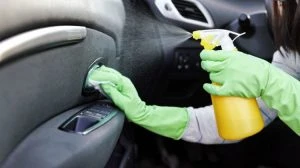
Cleaning our cars, inside and out, is a task that must be scheduled into the diary. We make sure that the mechanical servicing is carried out regularly on time, as it’s an essential requirement for the reliability and roadworthiness of the vehicle. If we like mechanical servicing to keeping the inside of the car in good shape, then cleaning and maintaining a vehicle’s interior and its bodywork also keeps the car in top shape for travelling. A vehicle with a clean interior is so much nicer to travel inside, and your travelling companions will appreciate the way it looks, smells and feels.
If you live a busy life and find it difficult to find the time to clean and maintain the inside of your car, a good rule of thumb might be to do the interior cleaning whenever the car goes in for a mechanical WOF or a service. At least this way you’ll be cleaning the car’s cabin and boot space properly once or twice a year. Is that enough? Probably not, but it’s a good place to start and something for you to work towards.
The purpose of cleaning your car’s interior is to keep the surfaces free from dust, grime and dirt. This includes the dash and interior panelling, the carpets, and the seat upholstery. Essentially, every surface of the vehicle’s interior needs to be cleaned, even the boot space.
After cleaning, any leather, wood or vinyl surfaces, they need to have a polishing layer applied, which is necessary to protect and maintain the surface’s integrity and lustre. Any tears or rips in the upholstery can be repaired and fixed.
What is a good interior cleaning process?
Start by taking out any loose items that are inside the car. Remove any rubbish. You can use a vacuum cleaner to suck up the small, loose dust and rubbish on the car’s carpets and seats. The vacuum cleaner head is a good shape for getting underneath the seats. Don’t forget the boot, either. The brush fitting works brilliantly over the fabric seats and the carpets. You can also use the soft brush attachment on the dash fascia.
After vacuuming out the car’s interior, it is then necessary to attend to any stains and spills with a cleaning solution. Leather and vinyl seats, also hard dash and door panel surfaces, can be wiped with a cloth that has been dampened with a solution of warm, soapy water. Wipe down the steering wheel. These surfaces can then be dried with another soft cloth, and you can even leave the car doors open for a while to let the fresh air run through the interior. Don’t forget to clean the seat belts while you’re at it. You can follow this by vacuuming and cleaning the interior carpets
Leather, vinyl, plastic, and veneer surfaces are now ready to be buffed nicely to a shine with a soft dry cloth and furthermore protected with a suitable conditioner or polish. Glass windows, the rear view mirror, and the driver’s display (digital or analogue) are best cleaned with a damp cloth, and then soon after dried fully with a scrunched up piece of soft newspaper or tissue paper. Doing this ensures that no streaks or dust is left on the glass or displays with the final wipe down.
Now, remove the dashboard’s dust and grime with a damp dusting cloth. After dusting, use a slightly damp microfiber cloth to remove any grime and fingerprints. It’s amazing how well cotton swabs can to get into small spaces around vents and knobs. It’s now time to clean the centre console, which is a common place for coffee and ice cream spills.
Finally, clean the door panels, handles and switchgear.
Hey presto, you’re good to go. At this point it can also be nice to place an air freshener/fragrance sachet inside the cabin to last till the next cleaning session.
What Is and Isn’t Inside an EV?
What is an EV? What are the obvious things that set an EV apart from the more conventional car that’s powered by an internal combustion engine (ICE)? And what is an EV like to maintain?
These are just a few of the good questions that might be rattling around in your mind as you consider the possibility of EV ownership. Let’s face it, most of us probably jump inside our cars and give little thought to what happens inside a car when we drive off.
Let’s start by answering the first question and develop for ourselves an understanding of what an EV is.
The letters ‘EV’ stands for the words ‘electric vehicle’. EVs don’t have a combustion engine underneath the bonnet, in fact they don’t have a combustion engine at all. This means that you won’t need to pull over at the gas station to fill your car up with any form of fossil fuel (e.g., unleaded gasoline (91), premium unleaded gasoline (95, 98 or 100 octane) or diesel. Neither will your car be running on gas (LPG or CNG). You won’t even have to top your car up with engine coolant or oil for engine lubrication. Sounds good!
Once you look away from the various processes of mining earth metals like lithium and cobalt (a by-product of nickel and copper mines); neodymium, terbium, or dysprosium (critical metals used in higher powered batteries that can last for longer distances – and everyone wants to be able to last longer) used in EV batteries and electronic componentry, EVs look to be more environmentally friendly and interesting cars to own and drive.
All your power is electronically accessible to your accelerator pedal, and your braking action is processed electronically as well. When you brake or decelerate, battery power can be reverted back into the battery pack. Basically, drain the battery in an EV, and you’ll need to plug it into a charging port again before you can get some power for driving about again. However, that’s nothing new now, is it?
To get power from your house power supply, you’ll need to have a conversion kit built into your home’s power system in order to be able to power up your EV within a suitable time frame, commonly 6 to 10 hours. More expensive options are available that will enable a quicker charging time. To get power after commuting around the city, you’re going to require a charging station or a park at work that has a convenient and vacant plug-in port for you to charge your vehicle up again to get home. There are some other charging stations (and we’ll need many more of these with more EVs running on the road) where you can park up for a couple of hours to recharge or top-up again for your commute home. If you drive your EV out of town and into the country, you’ll need to be sure that you have enough power between charging ports, because, unlike in a vehicle with a combustion engine, a jerry can won’t get you out of trouble nor will the longest power cord. I’m not sure what serious Outback off-roading enthusiasts will do if they drive an EV. Neither am I sure what mobile ‘tradies’ will do when they get caught short on power between towns.
What is missing inside an EV that you have in a common ICE vehicle?
Noise is the first thing that comes to mind. EVs do without the mechanical noise of the combustion/explosions that takes place inside a working ICE. What you do get is a very quiet ride with a bit of road noise from the tyres and wind about the bodywork as it slips through the air. Exhaust emissions are also a non-event.
EVs have no complex clutch or gearing, which means that EVs can accelerate smoothly and quickly, giving you the feeling that you’re driving a sports car. Instant maximum torque is always accessible.
A purely electric EV has fewer moving parts. There are only around about 20 moving parts in an electric motor, compared with nearly 2000 mechanical components in an ICE. The result is that an EV will need less fiddly routine maintenance jobs like changing the engine oil every 10,000km. You’ll still need to change the tyres on an EV, and you may go through more tyres because of all that instant torque and acceleration. A pricier tyre made up of a softer compound might also be necessary in order for you to be able to stick to the road better with the EV’s instant and quick acceleration.
You will also need to replace the battery pack, as they do have a life. This will be the one expensive maintenance bill. Buy a new EV, and you’ll be able to put this off for 10 years or so. Buy a second-hand EV, and who knows how long you’ll have before the battery pack will need replacing or you just won’t be going anywhere.
An EV owner will likely also need to pay some sort of road user charge or tax in the not-too-distant future, particularly if more EVs take to our roads.
However, own an EV and you won’t need an ICE tune-up or oil change, and the engine coolant won’t need to be replaced, either. In essence, an EV has no petrol, diesel or oil. It has no exhaust, no clutch or gears. It doesn’t have spark plugs, and it has no throbbing combustion noise that you find you get with a V8, a boxer or even a straight six.
As with any car, EVs have both their advantages and their disadvantages. At this stage, an affordable EV would be a great and enjoyable car for the city environment.
 Level 2, 9 Help Street