

Author archive
Fuel Prices: New Car?
It’s unfortunate to see that the prices for fuel in Australia have been on the steady increase across. Retailers suggest that the increase in the cost of fuel has come about through record oil prices and new logistical challenges for acquiring the fuel. It’s definitely worth shopping around to ensure that you can get the best price on your fuel at the pump, as prices do differ from retail outlet around town and across States.
Just recently, regular unleaded petrol (91) had a national average of $2.14 per litre, yet the cheapest was found in Carnarvon, Western Australia, where it was sold for $1.59 per litre. The most expensive was located in Derby, Western Australia, where (91) was seen being sold for $2.42 per litre. The same trend is occuring for (95), (98), (E10), and Diesel.
As for how long these high fuel prices will continue to last, fuel industry analysts say that it’s anyone’s speculation at the moment. Peter Khoury, NRMA spokesman, recently said: “These prices are completely off the scale, more than twice what [motorists] were paying in April 2020… We have no idea where we would set the ceiling at this point.”
It begs the question: Should a motorist that has to do quite a few kilometres each week look at purchasing a more fuel efficient car? The answer, I guess, is up to you. It depends on how tight your budget is. If you can afford a new car, or at least a second car that’s extra-miserly on fuel, then I’d say go for it – particularly if you’re having to do high mileages. Then again, if you are not travelling far each week, say to the shops and the occasional trip elsewhere, then staying with the car you have and keeping your travel to a minimum is probably the way to go at this stage, and we’ll sit tight and see where/when all this price rising will come to an end, revising it again in another few months.
You might be a motorist who needs to upgrade for various reasons including the rising fuel costs. In this case, being in the market for a new car and wanting to purchase a vehicle that delivers the best fuel-efficiency has to be a pivotal point of purchase for you. Here is a list of the most fuel-efficient vehicles in 2022 across numerous categories, something that you might find useful right now.
Note – Where “Diesel” hasn’t been mentioned after the model, assume that it’s “Petrol” version…
Small cars (Hatchbacks):
Toyota Yaris Hybrid Hatchback 3.3 litres/100 km
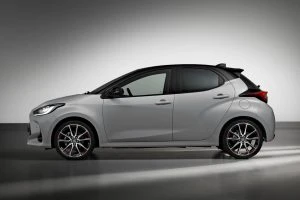
Toyota Yaris Hybrid Hatchback
Toyota Corolla Hybrid Hatchback 4.2 litres/100 km
Toyota Yaris Hatchback 4.9 litres/100 km
Mazda 2 Hatchback 5.3 litres/100 km
Toyota Corolla Hatchback 6.0 litres/100 km
Mazda 3 Hatchback 6.2 litres/100 km
MG3 Hatchback 6.7 litres/100 km
Hyundai i30 Hatchback 7.4 litres/100 km
Family & fleet (Sedans):
Toyota Camry Hybrid Sedan 4.7 litres/100 km
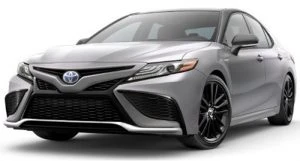
Toyota Camry Hybrid Sedan
Toyota Camry Sedan 6.8 litres/100 km
Small-Med SUV
Toyota RAV4 Hybrid 2WD 4.7 litres/100 km
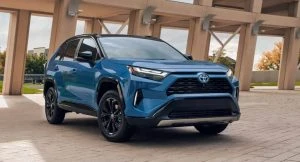
Toyota RAV4 Hybrid
Toyota RAV4 Hybrid AWD 4.8 litres/100 km
Mazda CX-3 2WD 6.3 litres/100 km
Mazda CX-30 2WD 6.5 litres/100 km
Toyota RAV4 2WD 6.5 litres/100 km
Mazda CX-5 2WD 6.9 litres/100 km
Toyota RAV4 AWD 7.3 litres/100 km
Mazda CX-5 AWD 7.4 litres/100 km
Mitsubishi Outlander 2WD 7.5 litres/100 km
Mitsubishi Outlander AWD 8.1 litres/100 km
Large SUV
Toyota Kluger Hybrid AWD 4.7 litres/100 km

Toyota Kluger Hybrid AWD
Hyundai Santa Fe AWD Diesel 6.1 litres/100 km
Kia Sorento AWD Diesel 6.1 litres/100 km
Toyota Prado 4WD Diesel 7.9 litres/100 km
Mazda CX-9 2WD 8.4 litres/100 km
Toyota Kluger 2WD 8.7 litres/100 km
Toyota Kluger AWD 8.9 litres/100 km
Toyota LandCruiser 300 Diesel 8.9 litres/100 km
Mazda CX-9 AWD 9 litres/100 km
Kia Sorento 2WD 9.7 litres/100 km
Hyundai Santa Fe 2WD 10.5 litres/100 km
Nissan Patrol Y62 14.4 litres/100 km
Ute
Nissan Navara STX 4WD Diesel 7.8 litres/100 km

Nissan Navara STX 4WD Diesel
Toyota HiLux SR5 4WD Diesel 8 litres/100 km
Ford Ranger XLT 4WD Diesel 8 litres/100 km
Isuzu D-Max XT 4WD Diesel 8 litres/100 km
Mazda BT-50 SP 4WD Diesel 8 litres/100 km
Mitsubishi Triton GLX+ 4WD Diesel 8.6 litres/100 km
Ford Ranger XLT 4WD Diesel 8.9 litres/100 km
LDV T60 Max 4WD 2.0L Diesel 9.2 litres/100 km
GWM Ute 4WD 2.0L Diesel 9.4 litres/100 km
Toyota HiLux Workmate 2WD 10.9 litres/100 km
Ram 1500 DS Limited 12.2 litres/100 km
Ram 1500 DT Express 12.2 litres/100 km
Chevrolet 1500 LTZ 12.8 litres/100 km
Van
Hyundai Staria Load van Diesel 7 litres/100 km
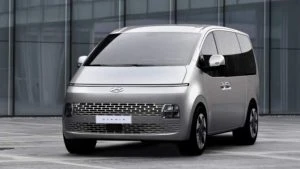
Hyundai Staria Load van Diesel
Ford Transit Custom van Diesel 7.3 litres/100 km
Toyota Hiace LWB van Diesel 8.2 litres/100 km
LDV G10 van Diesel 8.2 litres/100 km
LDV G10 van 11.1 litres/100 km
Toyota’s Hybrid vehicles, if they suit you needs, top their classes with fuel bills that were roughly half their nearest rivals. The Hybrid versions of the Toyota Yaris Hatch, the Toyota Corolla Hatch, the Toyota Camry Sedan, the Toyota RAV4 SUV, and the Toyota Kluger are the ones I’m talking about here.
Lightyear One – a Solar Powered EV

Lightyear One – a Solar Powered EV
In a country like Australia where the sun shines brightly for most of the year a car like the Lightyear One might be just the thing for getting around in. Sleek and comfortable, the Lightyear One is a solar-powered electric vehicle (EV) that has been designed and engineered in the Netherlands by Lightyear.
Having been recently tested in Italy, the Lightyear One completed 400 km on a single charge while driving at a constant speed of 130 km/h. According to Lightyear One’s manufacturer, regular driving will easily result in a range of 725 km (WLTP). If you’re like me and don’t know what WLTP means, then WLTP stands for Worldwide Harmonized Light-Duty Test Procedure. This mouthful is a new standard to measure fuel consumption, CO2 emissions, and range. The standard was introduced in 2017 and takes the measurements of test vehicles when driven in realistic driving situations to determine their fuel consumption, range, and emissions.
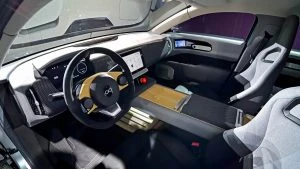
Lightyear One Interior
Because the Lightyear One is a solar-powered EV, its manufacturer also states that it would be possible to drive the car for months without needing to recharge. In Australia, where the sun shines most days of the year, a car like the Lightyear One would be perfect for this scenario. Take a good look at the car’s exterior and you’ll see the array of solar panels incorporated into the sleek exterior design. All of the panels facing skyward are made of solar panels and are ready for harvesting energy from the sun to charge the 60 kWh battery. 5 m2 of solar panels cover the Lightyear One’s roof, bonnet and tail and are capable of harnessing up to 12 km of range every hour. That means during a sunny 8-hour workday, a parked up Lightyear One could harvest 96 km of driving range – more than enough for most people’s work commutes. Even in cloudy conditions, its maker claims the Lightyear One that around 40 km of range can be harvested in that time. Obviously, you can also plug the car in for a quick recharge if you ever needed to.
Jump in the Lightyear One and drive on a full charge, and the Lightyear One’s 60 kWh battery pack provides a claimed 725 km of range, making it one of the most energy efficient EVs on the market. Efficiency of this standard is also achieved thanks to its construction consisting essentially of aluminium and carbon-fibre which gives it a weight of just 1315 kg. Also the car’s drag coefficient of just 0.20cd is sensational. As you can imagine, the aluminium and carbo-fibre underpinnings also drive the price of the car upward.
The Lightyear One is being manufactured in Finland, where its first deliveries will be made to Europe in mid-2022. The car’s price is around the AUD $238,000 mark. Just 946 of these cars will be built, however the company is already working on a more affordable solar-powered EV called the Lightyear Two which is expected to go on sale in 2024/25. It will have a much more affordable price, maybe even as low as AUD $50,000.
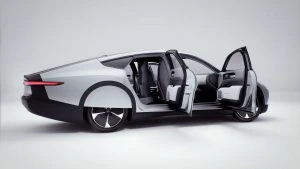
Lightyear One Sedan
In the Lightyear One there are 4 electric motors on board, one for each wheel. These provide the driving power. Together, they produce a combined 101 kW of power and 1200 Nm of torque. The car’s manufacturers say that the Lightyear One Sedan can seat 5 in comfort, and it has been designed especially for cruising and efficiency, and not for outright speed, thus claiming a 0-100 km/h sprint time of around 10 seconds.
I hope we see cars like this become available to people in Australia very soon. It also begs the question: Couldn’t the Holden name resurrect itself by Holden designers and engineers making a similar type of car in Australia for primarily Australians?
Hydrogen V8 ICE

Exciting news for internal combustion engine (ICE) lovers: Toyota, Mazda, Subaru and Kawasaki are wanting to collaborate on the attempt to keep the combustion engine alive while meeting all the global clean air targets. Not only that, but Toyota and long-time Japanese engineering partner Yamaha are at work developing a special new hydrogen-powered 5.0-litre V8 engine. Unlike a hydrogen fuel-cell car, which combines hydrogen and oxygen atoms to create electricity to drive a motor, this new hydrogen V8 internal combustion engine is a conventional piston-driven engine that has been tuned to burn hydrogen instead of petrol.
While this newly developed V8 engine isn’t completely new, the way it’s fuelled is. It’s a 5.0-litre naturally aspirated V8 that is based off the engine that has been used in the Lexus RC F coupe. Yamaha says that it produces around 335 kW of power at 6800 rpm and 540 Nm of torque at 3600 rpm. Having modified the injectors, the head, the intake manifolds and other engine components, this work has added up to make the engine environmentally friendly. The hydrogen-fed ICE has become less powerful than the petrol-fed V8 that the hydrogen engine is based on. In the Lexus RC F coupe, the petrol V8 puts out 472 kW and 536 Nm of torque, so while torque has increased a little, power has dropped considerably. That said, 331 kW is still a stonking amount of power to enjoy, and more often than not it is the torque that you really want in the real world conditions. You also still get the sound of a burbling V8, and what’s not to like about that!
Yamaha engineer, Takeshi Yamada, said that the engine has a different character to a conventional petrol motor. He stated that hydrogen engines provide a friendlier feel, making them easier to use even without having utilize other electronic aids for the drive.
Toyota is clearly committed to the project of providing ICE powerplants that use hydrogen as the fuel. Given that Toyota has run a hydrogen-powered Toyota Corolla in Japan’s Super Taikyu race series as well as showcasing a hydrogen-powered Toyota Yaris GR prototype with the same hydrogen engine technology, it is obvious that they want to continue with this new breed of ICE.
One of the beauties about burning hydrogen instead of petrol is that the hydrogen powerplant does not produce carbon dioxide, which is considered to be one of the primary contributors to global warming. There would also be no significant nitrogen oxides emissions from an ICE designed to burn hydrogen, thanks to the selective catalytic reduction technology used in the aftertreatment of the combustion gases.
“Hydrogen engines house the potential to be carbon-neutral while keeping our passion for the internal combustion engine alive at the same time,” Yamaha Motor president Yoshihiro Hidaka said. He also added that: “I started to see that engines using only hydrogen for fuel actually had very fun, easy-to-use performance characteristics”.
While hydrogen is plentiful in the universe, it must be separated from other compounds to be used as fuel. Up to the year 2020, most hydrogen was produced from fossil fuels, resulting in CO2 emissions. Hydrogen obtained from fossil fuels is often referred to as grey hydrogen, when emissions are released into the atmosphere. Blue hydrogen is the hydrogen produced from fossil fuels when emissions are captured through carbon capture and storage (CCS).
Hydrogen that is produced from fossil fuels using the newer non-polluting technology called methane pyrolysis is often called turquoise hydrogen.
You can also generate hydrogen from renewable energy sources, and this hydrogen is often referred to as green hydrogen. There are two practical ways of producing green hydrogen. One of the ways is to use electric power for producing hydrogen from the electrolysis of water. The other way of producing green hydrogen is to use landfill gas to produce the green hydrogen in a steam reformer. Hydrogen fuel, when it is produced by using renewable sources of energy like wind or solar power, is a renewable fuel.
Hydrogen can also be created from another renewable energy source called nuclear energy via electrolysis, and this is sometimes seen as a subset of green hydrogen, but it can also be referred to as being pink hydrogen.
Obviously, when a car can be designed to run on hydrogen that has been produced from renewable energy sources, then this is a good thing. Toyota and Yamaha remain adamant that this is great technology which could carve out a niche for itself in the new EV automotive landscape.
Toyota has also recently revealed a fleet of 12 zero tailpipe-emission concept vehicles, many of which will reach production in the coming years.
This is all good news stuff, especially for those of us who love the sound of an ICE instead of a silent EV. The noisy farts always get the best round of laughter!
Motorcycles

There are those of us who just don’t do motorcycles. The thought of hurtling along the motorway with a massive engine between your legs sounds downright alarming to many people, and I get that. Considering that a motorcyclist does have less protection than most road users does put a lot of people off riding a motorcycle. However, a careful and skilful rider can manage the risks and keep well out of harm’s way.
Maybe you already ride a motorbike. You might even be wondering about getting your motorcycle license. If you haven’t experienced riding a motorcycle, then the chances are you’ll enjoy the thrill of riding a motorbike safely. Safely being the important word. Once you’ve mastered the skill of riding a motorbike safely, travelling about Australia on two wheels instead of four can be a fun and exciting experience you’ll enjoy for years to come. Out in the open, taking in the sights and smells, experiencing the elements, being one with the machine as you lean through the corners and feel the response are all reasons why many people love riding motorcycles.
As a tool to combat rising fuel prices, the motorbike could be a useful option. Whether you’re single or married, the motorbike can combine with your other means of transportation to get you where you need to go. They use a lot less fuel than a car and have the size (or lack of size) that enables them to slip through congested areas and park in tight spaces. If emissions are an issue for you, then the motorbike generates less of an environmental impact than a car does.
Even with the recent global health concerns and restrictions on our daily lives, over the last couple of years the motorcycle has enjoyed an increase in sales throughout Australia. Over the 2020 period, new motorcycle and scooter sales in Australia were up 6.2% from the previous year, showing a strong demand for individual mobility transport options, of which the motorcycle is the best. And throughout 2021, the growth trend mushroomed with an increase of 16.6%. That equated to a total of 102 new units sold, the highest level for 15 years.
Honda, Yamaha, and Kawasaki claim the biggest chunks of the market share, while Suzuki, KTM, BMW, and Harley Davidson deliver strong motorbike sales. All motorcycle manufacturers have enjoyed the stronger consumer demand for motorbikes, resulting in better sales figures.
Many people find motorcycle riding a relatively easy task but riding out on the road still comes with a fair share of risk. Lack of experience and recklessness are often key areas associated with motorcycle accidents. Damp and slippery roads need to be recognized and ridden over with care.
Allowing plenty of space between you and other road users is a must, and as you ride be aware of other people’s actions, intersection dynamics, any oncoming cars, and any car (whether moving or stationary) in front of you as you ride. If you are reading the other road users well, reading the road conditions right, and keeping your distance, then motorcycling is relatively safe.
There are plenty of nice sport bikes out there like the Buell Hammerhead, Ducati V4 or the Yamaha YZF-R7. These are great bikes for a fast ride over a short distance. They can make useful commute bikes as well.

Buell Sportbike
The touring bikes and dual purpose-bikes are better set up for a comfortable seat and long distance ergonomics. These are swift bikes and can handle two-up and luggage no problems. They also make a decent commuter. Bikes like the Triumph Tiger 1200, MV Augusta Turismo, KTM 1290, Kawasaki Versys, Honda CB500X and BMW 1600 GT are great options in this class of bike. They are a heavy bike, so not ideal for learners and the inexperienced.
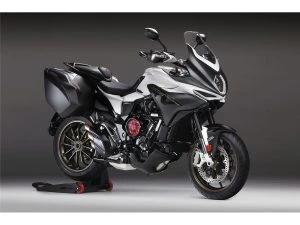
MV Augusta Turismo
Scooters and smaller bikes like the Honda Navi, BMW CE O4 Electric Scooter, and Honda CB300 are handy inner-city commuters and great or a learner rider.
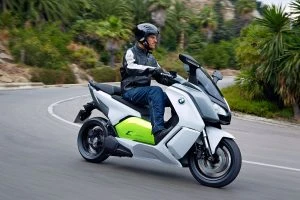
BMW Electric Scooter
A Roadster like the Harley Davidson Street Glide ST, Harley Davidson Forty-Eight, Indian Chief, and Triumph Bonneville Bobber are all about the wow factor and looks. These are sexy bikes, but some people also find their relatively relaxed riding position, which includes arms and legs pointing forwards, nice for cruising on longer rides.
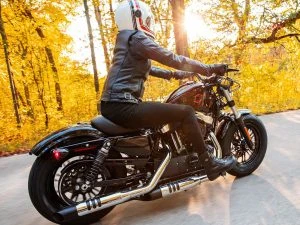
Harley Davidson Forty-Eight
 Level 2, 9 Help Street