

Author archive
Autonomous Cars With Eyes?

I’ll make no secret of the fact that I’m not a fan of autonomous cars. For one thing, a lot of people like the feeling of being in charge of where they’re going. For another, well, we’ve all had those moments when other electronic bits and pieces flop and crash, and generally don’t do what they’re supposed to do. An autocorrect fail is not usually life-threatening, and an app that refuses to open won’t kill you. However, we can all imagine what could go wrong with a car that (supposedly) thinks for itself. However, computers don’t get drunk or distracted, so the idea is that autonomous cars will make things safer overall on the roads.
However, among several things that autonomous cars have problems with, shared zones are one of them. Shared zones are those parts of the road where pedestrians and cars can share the same space. They’re usually found in commercial areas of town with lots of shops and eateries. You’ve probably used one of these at some point – I know I have. The thing with these spaces is that the issue of who gives way to whom is often sorted out through a complex series of gestures and eye contact between drivers and passengers. For example, if I’m the driver going through one of these shared zones, I can see a person on the side of the road who looks like they want to cross my path, make eye contact with him or her, then tell him or her to go first with a wave of my hand or a jerk of my head – and the pedestrian may do the same, or accept the offer to go first with a nod, a smile, a thumbs-up… or just stepping out.
The problem is that autonomous cars just aren’t equipped for this. Part of the problem is that they can’t cope with body language and all the subtle nuances that humans can do without thinking. We’re good at this sort of thing. However, another part of the problem, according to some Japanese researchers, is that pedestrians don’t know if the car is “looking” in their direction or is about to move in a certain direction. Indicators and brake lights help, but they can only convey big-picture information: left, right and stop. With cars driven by humans, the drivers do subtle things that suggest they’re about to do something, which another human can pick up on, such as inching forwards, adjusting positioning on the road prior to making a move. However, autonomous cars just do it, like the Nike ad.
What if cars could somehow make eye contact with pedestrians and telegraph what they’re about to do and/or let pedestrians know that the car has “seen” the pedestrian? Well, it’s being tried by some Korean researchers, who have decided that the solution is to give autonomous cars big googly eyes. It’s called the Gazing Car concept. The idea is that the big eyes will “look” at the part of the road that the sensors are focused on. This means that pedestrians will know if the car has registered their presence or if the car is about to move in that particular direction.
You can see the promo video for the Gazing Car here.
If you watched the video and saw the graph showing the reduction in unsafe crossings, please remember that the trial involved nine guys who crossed the road a combined total of 60 times, so it’s not conclusive and more research will need to be done.
Is this technology likely to be taken up? Given the track record of other whimsical pedestrian safety features (e.g., Tesla’s proposal to have bleating goat noises or farts as the low-speed audio warning sound on its EVs), I’d say it may not catch on. But what do you all think? Are these lights useful, creepy, cute or just plain silly? And am I the only one who thinks that a car with these lights ought to talk as well?
What’s Causing Those Potholes?
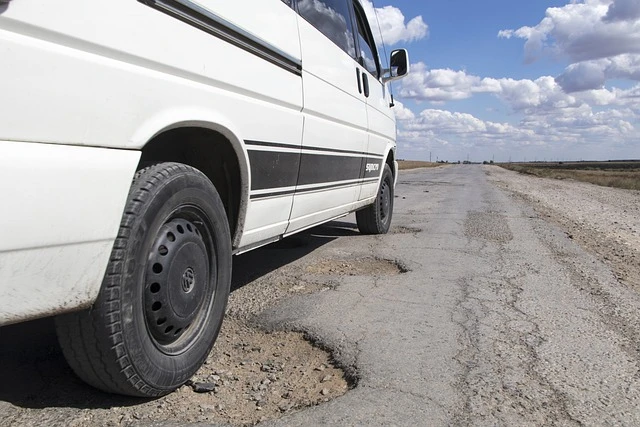
Potholes are so annoying! I know we need to be grateful that most of our roads are sealed and aren’t rutted, but a pothole was bad news. They were bad news even when roads weren’t sealed and ruts were common. The shallow ones bump you so hard that not even the world’s best suspension system can cancel it out (unless you dodge them), and the large ones can damage your car (more on that below). If you try to dodge a pothole, you can put yourself and/or other drivers at risk/ In the case of some modern cars that have driver aids that were designed for and tested on perfect roads, things like lane change assistance might throw a wobbly if you detect a pothole in the road ahead and adjust your driving line carefully to avoid it (the systems are smart enough to shut up if your movements are abrupt).
Why do potholes appear? Why does what used to be a perfectly good piece of road suddenly look like a teeny asteroid hit it? Are heavy trucks and road trains to blame? And what can you do about them?
The thing that causes potholes is nature striking back. They are caused by one of the most powerful elemental forces in the world: water. As you’ve probably seen at some point in your life, whether it’s a catastrophic landslide, a cliff eaten away by the action of the sea or just a rut in your garden after someone left the hose on for too long, water sweeps away and acts on dirt. And it’s water that causes potholes.
Now, it’s not the case that a pothole will appear where a puddle has been. It’s true that both potholes and puddles will form in parts of the road that have slumped or become rutted, but one doesn’t directly cause the other. There are other factors at play. The condition of the road is one of them and the amount (and weight) of traffic is another.
Water will get into the soil beneath the road and start loosening the particles of dirt, meaning that ruts and holes will form. This has always been the case ever since roads were invented. If anything, the whole point of road surfacing is to have something that doesn’t form ruts and holes every time it rains so that wheels can run over it smoothly. The different layers of a modern paved road are designed to ensure that water drains away well (and that the road will hold its shape despite heavy trafficking – but that’s good story for another time) with the asphalt over the top forming a mostly waterproof and resilient seal. However, nature will always prevail, and water will get in.
Once the water has got in, the most common thing that happens next to create a pothole in Australia is that the water will start washing away small, fine particles of dirt, then larger particles, and then a bit more. This will weaken the ground beneath the asphalt surfacing, as there’s less holding it up. As traffic goes over it, the asphalt surface will be pushed down a little, not so much that you’d feel it but still a little. And this compresses the water, which increases the pressure it exerts on the surrounding particles of dirt. Eventually, a characteristic pattern of cracks will appear on the surface of the asphalt, known as alligator cracking because the pattern looks like the skin of a big old croc.
Eventually, the friction from tyres rolling over the asphalt will break some of the surfacing loose, exposing what’s underneath. The hole will soon get wider and wider, and you’ll get a fair dinkum pothole, and it will get worse and worse the more the water gets in.
Water in its liquid state is the primary cause of potholes in Australia, although in parts of the country where you get frosts – and in other parts of the world where winters get particularly savage – another factor is at play. Water expands as it freezes, so any water in a tiny crack of the pavement or beneath the surface will expand. The asphalt, however, will become more rigid and brittle, so the expanding ice will break the asphalt and crack it more, which accelerates the process of a pothole forming.
Generally, the wetter things get, the more quickly potholes will form. This trend has often been noticed; in fact, Shakespeare makes a passing reference to it in one of his plays, where a character compares a stupid, pointless and completely undeserved action to fixing highways in summer.
There is nothing that you personally as a driver can do to fix a pothole. That’s the job of the local roading authority. In an ideal world, these people should inspect the roads and take action to resurface and to improve the drainage as soon as they notice signs of alligator cracking. However, in practice, we tend to see that the problem gets a temporary fix in the form of asphalt being slapped into the hole to fill it up. This works for a short time, but if poor drainage is what has caused the water to get in and pool beneath the road, another pothole will appear before long.
Ideally, you should drive around a pothole rather than letting your wheel run through them. If you drive through one, it can cause a lot of damage. Tyres are the most vulnerable. The most immediate and dramatic type of damage is if the rough edge of the pothole punctures or rips the tyre. However, there are more subtle types of damage. Going through a pothole can also cause sidewall bulges by forcing the liner apart from the sidewall – and these bulges can blow out very easily. If the rims are damaged or the alignment is thrown out by going over a pothole too fast, this will make the tyre wear out more quickly and unevenly.
The damage doesn’t stop there. The shock of going through a pothole will also put a strain on the suspension and steering as well as on the general alignment of the wheels (they’re all interconnected). This won’t happen straight away, but it will be made worse by continually going over rough roads and hitting potholes (e.g., one that’s on the road you take to work during rush hour, meaning that you have no choice other than driving over it). In the worst case, which is going into a very deep pothole that the local authorities should really have done something about ages ago, the undercarriage and exhaust system can be scraped and dented as well if it hits the undamaged surface of the road.
In the case of EVs, damage to the underside of the vehicle is particularly serious, as this is where the battery is. The battery is protected by an underfloor protector, which is like a suit of armour for your EV’s battery. However, if this underfloor protector is badly damaged, the battery becomes vulnerable and could go into thermal runaway (i.e., catch fire).
Obviously, if you see a pothole, you should avoid it. If the traffic is light and the road is wide, this isn’t a problem. However, in heavy traffic, going through that pothole may be unavoidable, as the results of hitting another vehicle would be much worse than the results of going through a pothole. However, the damage will be less if less force is involved, so dump some of that kinetic energy by slowing down, preferably well before you get to the pothole so you don’t bang on the brakes (however, banging on the brakes will be easier on your car than driving through a pothole, especially if you have brakes with all the driver aids).
Lastly, the question as to whether trucks are to blame for potholes. The answer “yes but”. Yes, trucks are heavy and the extra weight wears out the asphalt more quickly. However, cars are getting bigger and heavier in general, and EVs are particularly heavy compared with their ICE equivalents. However, the roads are still built to the old specifications for lighter vehicles, and don’t stand up. What’s more, budget cuts and cheapskate roading authorities mean that roads may be built to meet the bare minimum specifications rather than exceeding the standards for extra durability and resilience. Perhaps it’s time for the standards to be revise to meet the current vehicle fleet, especially if the government wants greater uptake of the heavier EVs.
Alloy Wheels 101

Many new models trundling out of car showrooms these days sit proudly on alloy wheels, which are usually measured in inches (only two other things are habitually measured in inches these days, with the other two being display/TV/computer monitor screens and a gentleman’s 11th finger). These alloys look very pretty but do they have any other advantages other than simple aesthetics?
Alloy wheels are often contrasted with steel wheels. Here, the pedantic geek in me has to stand up to tell you that, technically speaking, steel is an alloy of iron and carbon (and other bits, such as chromium, vanadium, boron, tungsten, titanium and other obscure elements on the period table). It’s probably one of the most common alloys, though it’s not the oldest: that honour goes to bronze (an alloy of tin and copper) and electrum (an alloy of gold and silver that can occur naturally). There are lots of alloys that have been used since ancient times, and the ability to create them is one of the earliest metalworking technologies out there*.

To be more precise, alloy wheels are made from alloys of aluminium or magnesium. This is why you’ll hear some people referring to mag wheels or mag-alloy wheels; mag is an abbreviation of “magnesium alloy”. This term probably dates back to the 1960s, which is when these wheels, previously only available to the car racing community, hit the market.
Steel wheels have their benefits, such as being cheaper and being easier to bang back into shape after a serious ding. However, they’re usually only fitted to cheaper cars and entry-level variants (if at all), and will never be found on any luxury vehicle worth its leather seats. So why do they use them?
The metals used to make alloy wheels tend to be a lot lighter, but they still have the strength needed to stand up to the rigours of driving. Getting the weight down is important to car designers (the weight of the vehicle, that is, not the designers) for a number of reasons. Firstly, lowering the unsprung weight of the vehicle makes things easier for the suspension, which, in turn, makes the car handle a lot better. So that’s definitely a good reason for fitting a car with alloy wheels. Being lighter also improves the fuel efficiency of the vehicles they’re fitted to because the lighter something is, the less energy it takes to move it. Needing less force to get moving also means that acceleration gets better. The reverse is true as well: objects that don’t weight as much are easier to stop and/or slow down.
Having less weight also means that a vehicle can have bigger wheels without adding extra kilos, and the general thinking is that if it’s measured in inches, bigger is better.**
However, having less weight is not the only advantage. The aluminium and magnesium alloys have better ability to conduct heat away from the brakes, meaning that the brakes perform better. If you’ve got an aluminium frying pan and a cast iron or steel skillet in your kitchen, you can see this easily. If you get them both up to the same temperature then whip them off the heat, the aluminium pan will cool down more quickly than the steel one (have your oven mitts handy). However, because of the greater strength of the aluminium or magnesium alloy, the wheels can be made with an open design – you know, those pretty stars and spokes. Yes, these are a lot more aesthetically pleasing than a plain old steel wheel but this sort of design isn’t just beautiful but functional as well. The open design allows the aluminium or magnesium alloy to release some of the heat generated by braking to the air, and the more surface area it’s got, the more heat it will lose.
The main ways of making alloy wheels are forging and casting. Forging involves heating up the metal or alloy, rolling it, hammering it and generally mashing it about. This process of heating, etc. makes the alloy grow stronger (I can see a nice little metaphor for a life lesson in there). However, it’s a long and complicated process, and is more costly than casting. Casting is where molten metal is poured into a mould, where it hardens. Cast alloy wheels are cheaper and easier to produce en masse, but they aren’t quite as tough as forged alloy wheels.
Of course, these days, there is a new kid on the wheel block: carbon fibre. Carbon fibre is even lighter than aluminium or magnesium alloys while still being super tough (diamond is pure carbon, remember). Carbon is also better able to withstand bumps without forming microcracks, meaning that it’s tougher in the long run. However, carbon fibre is a lot more expensive. Will we see carbon fibre becoming more common (and cheaper) as time goes by? I suspect we will, especially as EVs weigh a lot more than ICE vehicles, and thus cause more wear and tear on our roads, so trimming the weight down will be important (there’s also part of me that wonders if carbon fibre could be a way to sequester carbon, ultimately leading less carbon dioxide in the atmosphere, but this part is probably wrong). Anyway, in EVs, regenerative braking transforms a lot of the kinetic energy lost during braking into electrical potential energy rather than heat energy, so there’s no need for open wheel designs that dissipate more heat. Instead, the designers can go for aerodynamics for even better efficiency (and look even cooler). It will be interesting to see what they come up with.
* Could somebody please inform the writers of Amazon’s The Rings of Power of this fact?
** This may be true of wheels and screens, but speaking as a straight woman, it’s not true of the third. Seriously, size really doesn’t matter.
What Is Synthetic Fuel?

You’ve probably heard that the way that the oil and gas fields that produce the petrol and diesel we put in our internal combustion engine (ICE) cars were once ancient forests that were somehow buried and transformed into the form they are in today. You may have wondered whether it would be able to make something chemically identical to crude oil or refined oil in the lab, given that we know the chemical formula for petrol and diesel.
Well, you aren’t alone in wondering whether that could be possible. The truth is that it is possible to make petrol and diesel artificially in the lab without taking the aeons of time involved in fossil fuels. The result is called synthetic fuel or synfuel.
Synthetic fuel differs from biofuels such as ethanol because it is designed to be completely chemically identical to ordinary bog-standard fossil fuel petrol. This means that it can be used as is in a car with an unmodified internal combustion engine without being blended, which is what happens with biofuels (you know – E10 is 10% ethanol and 90% fossil fuel petrol).
Synthetic fuel is nothing new. In fact, the idea of making petrol for cars (and planes) from something else was tried successfully back in 1930s Germany, except that they used coal as their starting feedstock. This was one reason why the German army was such a threat during World War 2: they could manufacture their own synfuel out of coal, which they had, rather than relying on oil wells overseas and the associated supply chain. However, this method is unlikely to be used these days, as coal is still a type of fossil fuel and wouldn’t suit the purposes.
The process of making synthetic fuel or synfuel starts with the very common gas hydrogen. The hydrogen is then combined with carbon (carbon monoxide) to make syngas (chemically identical to natural gas but made artificially). This is where the exciting part of synfuel comes in, as the process can either take the carbon from some source or it can even capture the carbon out of the atmosphere. This means that when the synfuel is used in an internal combustion engine, the carbon is just going back into the atmosphere where it originally came from rather than adding new carbon. (OK, you could argue, like one of my relatives does, that what’s in fossil fuels was originally in the atmosphere when that ancient forest was green and growing, but that’s another topic and another debate altogether that I won’t get into here.) Anyway, syngas is made up of hydrogen and carbon molecules (it’s a hydrocarbon, as opposed to a carbohydrate) and can be messed about with to make different types of fuel, including petrol.
The three main ways of producing synfuel are biomass to liquid, power (or electricity) to liquid and sun to liquid.
The biomass to liquid process uses organic matter as a feedstock, which provides the hydrogen and the carbon. This organic matter doesn’t have to be an oil-producing crop, which is what happens with some types of biofuel. Instead, agricultural waste matter can be used as a feedstock, as can domestic waste. In fact, if the idea of synfuel catches on and becomes more widespread, they’ll be able to use what’s in the landfills and what we chuck out. This avoids the problem of deciding whether good crop-producing agricultural land should go to producing an oil crop to power internal combustion engines or to producing food. This type of synfuel can be referred to as biofuel, although “biofuel” is a confusing term that covers ethanol as well as biodiesel, so it’s best avoided.
Power to liquid production produces the type of syngas known as e-fuel. In this process, electricity (which can be generated by renewable means, such as wind or solar) splits a water molecule to get hydrogen and oxygen, and the hydrogen is then combined with carbon from the atmosphere. The main byproduct is oxygen, and if the process can use renewable sources of energy, then it’s as close to carbon neutral as petrol can be.
Sun to liquid production is less common. In this process, a reactor catches the heat energy of the sun (not photovoltaic energy or solar power) and uses that energy to convert water and CO2 into syngas.
I think it’s highly likely that synthetic fuel is going to become more common, as a lot of us know that ICE vehicles suit our lifestyles and needs best (tradies, for example), who can’t afford to take large chunks out of their working days to recharge, travel a lot and need something that will take all the gear needed for their work. This is because Formula 1 racing is planning to use it to power all its ICE racing cars, hopefully by 2026. We’ve seen a lot of technology that started off in the racing world making its way over to general use, so let’s keep our fingers crossed. In addition, Porsche has bankrolled a synthetic fuel plant in Chile that uses wind power and the power-to-liquid method. This opened at the end of last year (2022) with plans to produce 11,000 barrels of synfuel this year.
Given that Australia has a lot of sunshine and the potential for using it for either the sun-to-liquid or the power-to-liquid process (with the help of solar panels), it’s not surprising that they’re setting up a plant in Tasmania (funded by Porsche again), which is due to kick into action in 2026. Watch this space!
 Level 2, 9 Help Street