

Author archive
2018 Alfa Romeo Giulia Super Diesel
It’s been a long time “between drinks” for this scribe and Alfa Romeo. In a previous life one of the car brands sold was Alfa Romeo and a highlight was piloting the gorgeous 159. Sadly, Alfa ceased building that slinky temptress. Thankfully, a new car has come along to replace it and it’s the Giulia. With Sophia Loren looks, and Gina Lollobrigida curves, the Giulia’s Italian heritage is like a siren call to the eyeballs. Powered by a torquey diesel the review car came clad in a beautiful blue and certainly gave hints of another Italian beauty. Did someone say Maserati Quattroporte?
 In Super trim, there’s a choice of petrol or the diesel as tested. The classic 2.2L capacity has 132kW and a welcome 450Nm of twist at 1750 rpm. An eight speed auto with paddle shifters is fitted and will take the 1410 kg (dry) beauty to one hundred in a breath over seven seconds. Alfa Romeo’s official figures for consumption is 4.2L of dinosaur juice per 100 km from the 52L tank. Highway driving range is rated as 3.5L/100km and therefore theoretically capable of Sydney/Melbourne and a good portion of return.
 Outside the car was clad in metallic Montecarlo Blue. The hawklike LED headlights, matching LED tail lights, the traditional Alfa Romeo Vee grille, are beautifully proportioned and as curvaceous as a supermodel. It’s a beautiful colour and one of 14 possible choices. Inside it was full leather beige and black. Although a worry with two kids it held up just fine. But if you’re a dog owner, some towels would be highly recommended.
 It’s a push button start and one of the most sensible locations for it is on the steering wheel. One of the most ridiculously non-sensible locations for a bonnet opener is in the foot well above the driver’s left foot. In a right hand car it’s perhaps the silliest place such a device can be placed.
 Another oddity that the Giulia has is the design of the gear selector. With an Audi-esque design to that section, with Menu button, jog dial, and so on, one would think a trigger on the front of the selector and Park button on top would be ergonomically friendly. Somehow it wasn’t. Too many times whilst wrapping the hand around the lever to select Drive (a pull back to engage, forward for Reverse), the palm would flatten the Park. Then the softness of the trigger didn’t register so thinking it was in drive or Reverse had the diesel revving and no progress in either direction.
 Thankfully, the interior class overcomes this and in spades. The information screen with high quality DAB audio is not a touchscreen and is part of a beautifully integrated sweep from the passenger side to the driver’s left knee section. There’s a Walnut woodgrain trim there and if it’s not real wood it’s the best imitation of that natural product out there.
The seats are luxurious to the point of bed-like yet are bolstered so there is no lack of side support. There’s adjustable settings electronically for the seats all around including lumbar. They’re heated, naturally, however take far too long to get to a decent temperature unless it’s deliberately calculated to do so to prolong the seat material’s life. Interior specs are high: the Super gets dual zone climate control, rear seat ducting from this, heated steering wheel, a cooling breeze for the dash’s storage, rain sensing wipers, Tyre Pressure Monitoring System, and huge paddle shifters. Safety is looked after with Autonomous Emergency Braking and alerts via a musical tone. Reverse camera with guidelines, Lane Departure Warning, Blind Spot Alert, and front & rear sensors are standard. Cargo capacity is 480L for the 4643mm long Giulia.
 It’s on the road that the Super delivers. In the centre console is a dial with three settings, D N A. A is….uninspiring, N is relatively driveable but to extract the best out of the engine and transmission, D is definitely the driver’s choice. It’s spritely, athletic, energetic, and is what brings the Giulia Super diesel alive. There’s barely a momentary hesitation off the line before the eight speed auto simply launches the car away. Drive in D and then swap back to N or A and the result is instantly noticeable. The revs drop, the shifts slow, and driver’s experience of enjoyment drops away. Leave it in D and enjoy.
 The Pirelli 225/45 and 245/40 rubber wrap 18 inch alloys and house twin and single pot brakes. These react to a bare brush of the foot on the pedal and haul up the Giulia time and again without fade.
 Road holding is magic; think of sitting in a bed with each corner moving without affecting the centre. Think holding something that communicates every ripple to the hands yet does so without overwhelming them or becoming tiresome. Think silence and forward motion combining. Think turns that have lesser chassis’ cringing in fear, and grip that is velcro & super glue & limpet in one. Confidence inspiring is a serious understatement. A 2820mm wheelbase helps in stability, as does the double wishbone front and Alfa link rear. However, something else happens with the car’s handling at very low speeds. When maneuvering for street parking, the front end would “scrub”, with the tyres feeling as if they’re were on edge, not flat.
 Service intervals are 20,000km or twelve months, with a three year/150,000 warranty currently as standard according to the downloadable brochure.
 At The End Of The Drive.
At the time of writing The Giulia Super had a starting driveaway price of $64,900 plus a complementary three year service package and five year warranty with roadside assistance for the same period. Being the Drive 2017 Car Of The Year means that the Giulia Super is a pretty special machine. Oh, yes indeedy. Quirks aside, and let’s face it, without quirks it wouldn’t be an Alfa, left in D and driven the way a sports saloon should be driven, it appeals deeply.
Find out more here: 2018 Alfa Romeo Giulia Super
Opening The Door To Motorsport.
Motorsport in Australia is thriving in some areas, not so in others. There’s categories and events that many would not be aware of, yet they’re at full strength. The one make Hyundai Excel series is one, FoSC or Festival of the Sporting Car is another. State level motorsport country wide is flourishing with the champions of the next generation out there in their Formula Vee, Formula Ford, perhaps their Formula 3 or Formula 4. There’s young ladies and gentlemen campaigning in a near fifty year old Holden HQ from Barbagallo to Baskerville, and veteran drivers such as John Bowe racing in all sorts of cars at all sorts of events.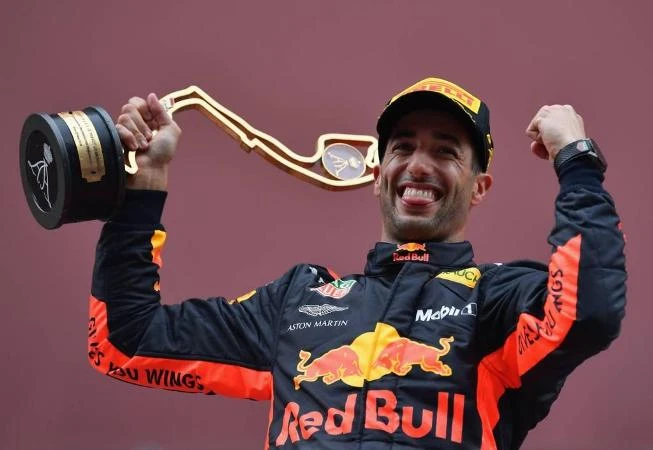 Molly Taylor is driving her rally specced and prepped Subaru in rallies around the country, and of course we have just seen Perth’s Daniel Ricciardo win at the Monaco F1 GP, and Will Power creating history by being the first Australian to win the Indy 500. Underlying all of these events is one crucial component. The officials working in front and from behind the scenes.
A huge proportion of how a motor sport event is built and staffed is thanks to officials that give up their time to be a part of the world’s biggest family. The family of motorsport. I recently wrote an article for Australia’s biggest aftermarket spare parts for classic cars company,Rare Spares article , where I talked to three people at various stages of their motorsport careers. Each of the three will state unequivocally that they simply can NOT go racing without the volunteer trackside officials.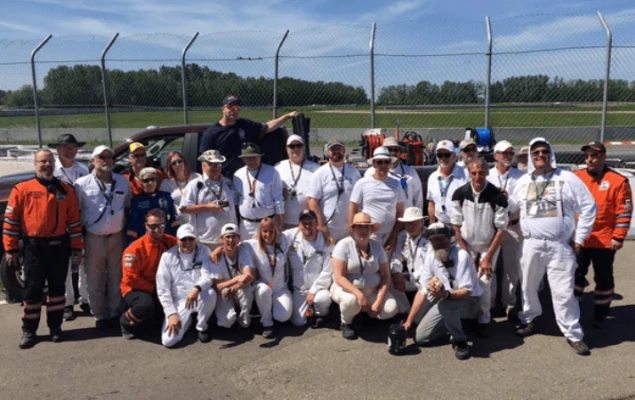 Here’s some points of view from those that are the steel behind motorsport.
Carolyn: “In 1998 I won tickets to Oran Park truck races from my ISP and got bored watching so I asked the girl at pit in how she got the job. She sent me to the office who referred me to timing. It was great fun and I’ve been to many events and race/ rally locations since. Highly recommend it.”
Marcus: “I’ve been around motorsport all my life. Dad raced Speedway on Tassie when I was younger.. Dad was also a track marshal so as a young bloke in Sydney first time spent many hours at Amaroo and Oran Park playing in the dirt as you do at a young age.. In November 1987 I had my first experience on a flagpoint at Baskerville and I was hooked.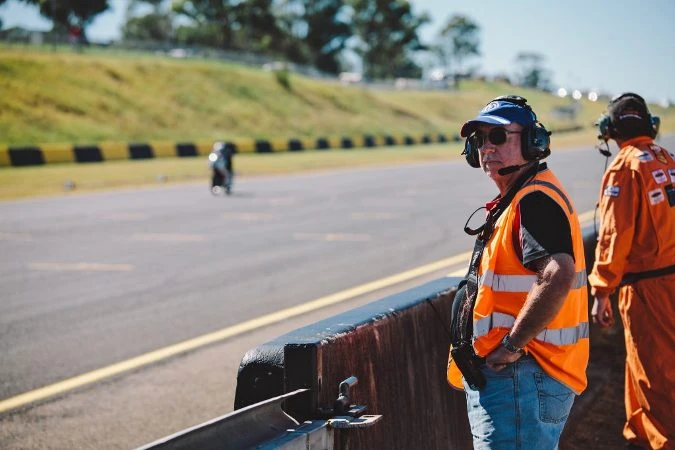 Did my first Bathurst 1000 in 1988 as a 15 year old what a eye opener.. In the years since I’ve been around Australia flagging at ATCC and Supercars.. For last 10 years ago I started doing more lower key events and clubbies because there was more satisfaction.. I still do the occasional big event but love doing club events… I’ve been blessed to have many mentors in my journey, obviously my father David and my Uncle Ted that taught me basically everything.. I’m very proud to be Fire & Recovery trained on top of my flagging… I’m at peace when I’m track side.”
Evan: “I started in Newcastle as a steward in 1978 with Newcastle Sporting Car Club, later also as a scrutineer and Clerk of Course – mainly rally, khana-cross and hill-climb. After moving to Sydney in 1986 my focus changed to circuits, with a little of the others still on the side. Sydney is a totally different beast to Newcastle – however having been NSCC’s State Council Delegate enabled me to get to know the right people of the time. Joining the ARDC was also of significant benefit as well as participation in a number of State panels. Basically like so many things in life, networking and training and proving yourself to the right people reaps rewards.”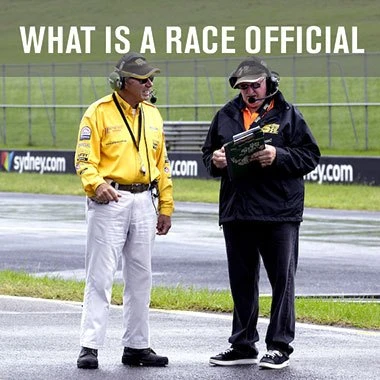 Cody: “I got into motorsport through a long time friend and fellow volunteer firefighter for the NSW Rural Fire Service. We both volunteered as fire marshals, he quit and here I am here 16yrs later still officiating. After we joined came as a officials no, because our RFS training used as recognition of prior learning.”
Corey: “Always had an interest and wanted to be apart of motorsport but never had the money to drive so i choose the next best thing to be involved and now wouldn’t have it any other way.”
Teena: “ Used to work in the field & wanted to be involved again.“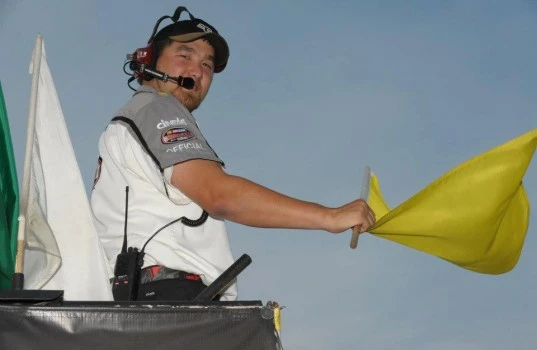 It’s interesting to note a big part of being an official is the training aspect. CAMS, The Confederation of Australian Motor Sport, is located in offices around the country and have a solid training program for beginners through to upper echelon players. Start off with CAMS here
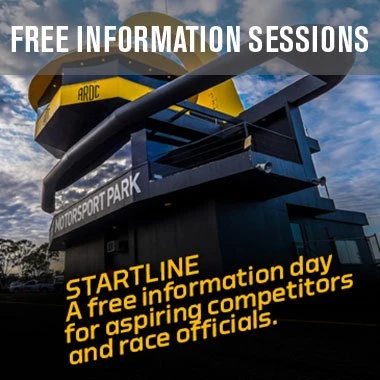
Circuits around the country have events where at a driver’s level, a potential official can see what it’s like to be on the tarmac. Sydney Motor Sport Park have a slightly more focused option. Called Startline, it showcases aspects of the western Sydney located track that many would not otherwise get to see. People get to meet well established officials, get a guided tour of the venue, have explanations of which roles can be available and how Australian motorsport officials have traveled to international motor sport events such as the F1 Grand Prix. It’s completely free and is highly recommended for anyone that wishes to become a trackside official. Here’s where you can get on to the Startline
 Me? I’ve worked trackside at the Melbourne F1 Grand Prix as a communications marshall. This is the link between trackside and race control, the eyes and ears, that reports incidents and advises race control of the status of what’s happening. I’ve worked at Rally Australia, Barbagallo Raceway, Oran Park, Bathurst, and have been the “voice” of Sydney Motor Sport Park since 2004. And like everyone mentioned here, I started by having a door open.
Come and join our family. The motorsport family.
(A big thanks to the officials that gave of their time, surnames for privacy reason have been deleted).
Private Fleet Car Review: 2018 Haval H9 Ultra.
Haval‘s H9 is the latest and largest entry from the Chinese based car maker. Available in two trim levels, the Lux and Ultra (aka Premium), they’re well kitted, aren’t terrible to look at either inside or out, and well priced too.  The Lux starts at $41,990 and the Ultra at $45,990 with both being drive-away. The only real options look like external paint and interior colours.
Both have a turbocharged 2.0L petrol engine, eight speed auto, and weigh over 2000 kilograms. This equates to an official fuel consumption figure on the combined cycle of 10.9L of 95RON per 100 kilometres from the 80L tank. Around town the Haval H9 Ultra, weighing 2250kg plus fuel and passengers, delivered a pleasing 12.5L/100km from the 180kW/350Nm engine. Towing capacity is 2500kg.
 The 4826mm long machine seats seven and the rear seats are powered. Activated by toggles which much be held to have the seat go from top to bottom and reverse, it’s a slightly painstaking way to get an extra two bums on seats. There are illuminated alloy side steps shrouded in plastic, LED strip lighting inside which can be changed at the touch of a button, the doors have LED puddle lamps that cast the Haval logo in red. Up front there’s “bendy” headlights and the LED system shines a crisp white that provides plenty of safe forward looking distance.

 Outside it looks like a pumped up version of a early noughties X-Trail thanks to the vertical lights at the rear. At the front there are stylish hints of Toyota LandCruiser and Prado. There’s a fair size comparison too, as the H9 stands and spans 1900mm in height and width. It’s an imposing sight to see, both in a shopping centre carpark and on the road parked.
 The interior features acres of leather. The (heated for Ultra) steering wheel, front, middle, and rear seats are leather, the front seats are heated in the Ultra, and the rear section has its own climate control system. The Lux has manually adjusted cloth seats, the Ultra’s are powered, have memory settings and a massage function.
 The third row seats in the Lux are manual, and the second row in the Lux miss out on heating as well. The Ultra also gets a full length glass roof and the front section is a movable sunroof. These are operated by a dial above the driver and passenger, and seem counter-intuitive in the direction of rotation to operate the roof. It’s a pleasant place to be and the seats themselves in the Ultra were very comfortable, supportive, and the massage function worked well enough too.
 The cabin the Ultra had was of black and bone. It’s a nice contrast as the bone tended more towards the white shade, not the beige shade as seen elsewhere, and suited the silver the revieww car came with. However the smoky grey faux wood trim in the review car is a matter of personal preference. The dash itself is clearly laid out and easy on the eye, with a sensible design layout, a centre LCD screen with changeable information displays and red highlighting.
  Haval add a small strip style display about the touchscreen in the centre of the dash that displays height, barometric pressure, tilt angle, and compass direction. The audio system is from Infinity and although not fitted with DAB, the touchscreen system proffers AM/FM and some very clean sound through the ten speaker mix. Switch gear is mostly cleanly laid out however the climate control button labelled Mode doesn’t quite bring up what is expected appears to work and the Synch between driver and passenger isn’t as clear either.
 Being as big as it is, it’s no surprise the H9 has plenty of shoulder, leg, and head room inside. Although the wheelbase is a surprisingly shortish 2800mm, the overall width and height give plenty of head, leg, and shoulder room. All round vision is good thanks to plenty of glass making for an airy cabin and there’s plenty of forward vision thanks to the height the driver sits at.
There’s a full suite of airbags on board sans driver’s kneebag. Haval aren’t alone in this though. Safety tech is of a high level such as front and rear parking sensors, Hill Start Assist, Hill Descent Assist, Blind Spot Alert, Tyre Pressure Monitoring, Lane Departure Warning, but no Autonomous Emergency Braking. The head rests in the front seat are crash programmed to move forward and cradle the heads of the front seat passengers. Out on the road that 350Nm and two plus tonnes don’t seem to promise anything other than a lumbering performance. Thankfully that’s not quite the case. A gentle push of the go pedal has the H9 move away softly and with increasing velocity nicely however a decent prod will have the big machine somewhere between “this is ok” and “wow, that’s pretty good”. The eight speed auto will drop quietly down a cog or two and having eight ratios does mean there’s better drivability when needed.
That peak torque is on tap between 1800 to 4500 however that weight counts heavily (no pun intended). This is where a petrol only range needs support from a diesel and with most two litre diesels hovering around the 400Nm mark, it’s perhaps something Haval should be looking at sooner than later. However it’s more likely a hybrid drivetrain would be fitted than an oiler.  It’s not all roses and silk though.The eight speed transmission is frustrating in its inconsistency. Gears are selected via an Audi style rocker item and Park is a button on the top.The transmission will not engage unless the seat belts are plugged in which is great, but the variances in between when the transmission engages is another. It’s erratic in that it will sometimes grab first smoothly, sometimes not. There’s some instant engagement, there’s sometimes a delay before lurching forward. The engine is in need of more refinement as there’s a coarse feeling to the way it spins. The auto, once warmed up, is as smooth as a modern eight speed with European ties should be and it was rare that a gear change was physically felt.
 It’s designed for off-road as well, the H9, as there’s a switch in the centre console for the AWD and has a locking rear diff, Low Range (where Neutral must be selected to engage), Snow, Sport, Sand, Auto, and Mud. It’s simple to use and although the Haval H9 is capable of off roading, it’s a safer soft roader. On a dedicated 4WD track, the Haval’s capabilities were tested and found to be suitable for soft-roading to mild off-roading.
  A 200mm ground clearance is where the H9 is let down and a conversation with a protruding piece of granite had the driver’s side sidestep shrouding broken and pushed back a couple of inches. The clearance means the 18 inch alloys and 265/60 rubber look undersized in the wheel wells. Approach and departure angles are 28 and 23 degrees respectively, and the H9 will crawl sideways at 23 degrees as well.
The H9 has a strange steering mix. On centre it feels rubbery yet the chassis will respond to the slightest touch. Left and right movement is virtually instant and allows for adept and confident handling on road. Road manners themselves for the Haval H9, bearing in mind its 1926mm width and 1900mm height, are decently good for such a large machine. The H9 is suspended on double wishbones up front and a supple multi-link rear, allowing for a slightly taut initial ride before quickly transitioning into a beautiful level of comfort.
Haval Australia has a five year warranty, five year 24/7 roadside assistance, but just 100,000 kilometres.
At The End Of The Drive.
The 2018 Haval H9 is a wonderful example of what feedback to a company can achieve. It’s a more refined vehicle, competent on road and to a measure of off road, provides plenty of room and comfort, and certainly fits the bill in the battle for the wallet. With a range now spanning four models, Haval’s becoming something to watch on the radar. Head here for more H9 info: 2018 Haval H9
The Green Hell.
Every country has a racetrack that is loved, respected, and wanted to be raced upon by anyone from armchair console players to professional drivers. Australia has Mount Panorama, The US perhaps Laguna Seca as the pick. Britain has a few including Silverstone, and then there’s Germany’s Nürburgring.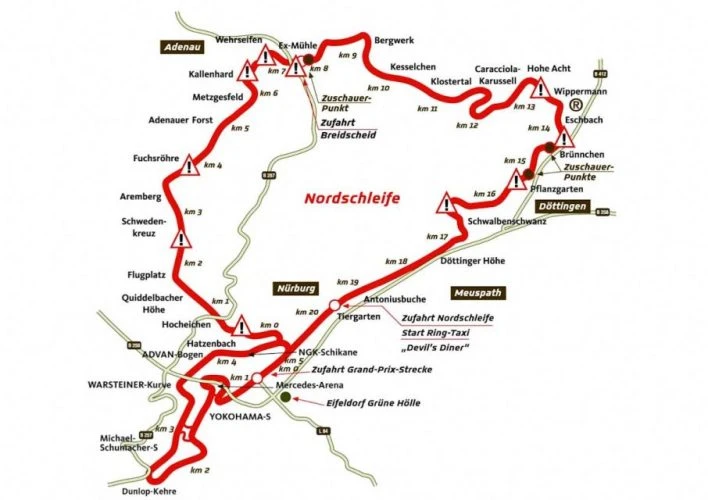 The location is steeped in history and can trace its origin back to the 1920s. Races were held on the roads and run under the auspices of the ADAC (Allgemeiner Deutscher Automobil-Club e.V). The Eifelrenen was an annual race that started in 1922. Held on 33 kilometres of public roads the mounting toll of damage and fatalities from this and other forms or racing lead to the founding of the original Nürburgring in 1927.
The original circuit had 187 bends and a distance of 28.265 kilometres. Bugatti driver Louis Chiron managed the quickest time and averaged 112.3 kilometres per hour. However, due to ongoing safety concerns, in 1929 it was decided to race only on the 22.8 kilometre Nordschleife for major races such as Grands Prix. The Südschleife, or South Ring, would host motorcycle and minor races on its separate 7.747 kilometre surface.

World War 2 intervened but racing recommenced in 1947. The Nordschleife would play host to the German Grand Prix. Names such as Alberto Ascari, Stirling Moss, Jim Clark, Juan Manuel Fangio, Jacky Ickx, Jacky Stewart, and John Surtees were soon made famous and took over the mantle of Ringmeister, a title given to drivers of pre WW2.
In the 1961 German Grand Prix practice sessions, Phil Hill became the first driver to slide under the nine minute mark and had a speed of 153.4 km/h. But by 1967 safety concerns had again been raised and modifications to the circuit were put in place. Regardless, the changes weren’t enough to placate the driving fraternity, with Scotsman Stewart dubbing the circuit “The Green Hell” after a rain soaked 1968 German Grand Prix, which, incidentally, Stewart won. More changes were made however the Nordschleife gained immortal notoriety in 1976. Although a decision had been made to make the 1976 GP the final one raced on the circuit, Austrian Niki lauda had tried to raise his co-drivers to a boycott level. The race went ahead in rainy conditions, and Lauda lost control of his Ferrari, crashing into the wall. Lauda was trapped and the ensuing fire nearly claimed his life.
Further track work reduced the overall length and in 1981 a new circuit was built which happened to incorporate part of the old circuits pit complex. Even this circuit called GP-Strecke was modified, extending the length from 4.5 km to 5.2 km. The circuit also has the distinction of becoming just the second circuit to name a turn after a driver, in this case turns 8 and 9 becoming the Schumacher S.
 Level 2, 9 Help Street