

Author archive
Kia Australia Releases 2019 Cerato S, Cerato Sport, Cerato Sport+
 The evergreen Kia Cerato sedan has been given a pretty solid makeover, with the hatch due for its own tickle and release later this year, plus GT versions for both are said to be on their way. There’s also been a range realignment name-wise.. We have driven the Kia Cerato S, Cerato Sport, and Cerato Sport+.
The Cerato S sedan starts from $23,790 plus on roads, as tested. The review car was in Steel Grey, a pleasing shade and a $520 option. The Sport was $25,790 plus on roads, clad in a gorgeous Horizon Blue, and the Sport+in Snow White Pearl came in at $28,290, plus on roads, and paint. Servicing costs are for a fixed amount over Kia’s class leading seven year warranty, and top out at $2,869.00. There’s a good range of colours available but only one is classified as a non-premium colour… If you’re after a manual, you’ll find it in the Cerato S only. You’ll also find only a 2.0L injected four cylinder across the range, with six speeds, in both auto and manual guise, hanging off of the side for the engine. It’s a peak twist of 192Nm and power is 112kW. Rev points are 4000rpm and 6200rpm respectively and there’s a noticeable increase of oomph once 3000rpm is seen on the dial. As we drove the autos only, they’re pretty much all good in the transmission sense. It’s the engine that needs refining and smoothing. See 4000rpm on the tacho and there’s a noticeable harshness and noise. It’s a metallic keen that, although somewhat raucous, is really only ever apparent when a heavy right foot is used, thankfully. It’s otherwise quiet, pleasant even.
It’s here that the auto shines. Seamless shifting when left to its own devices, it delights in its smooth and unhurried nature. Tilt the gear selector right, it goes into Sport mode, and when rocked forward and back, the changes are sharp and crisp. Acceleration in all three is enhanced by using Sport mode as the changes suit the characteristics of the engine’s tune. That engine tune helps in economy too. Kia says it’s 7.4L per 100L from the 50L tank for a combined cycle and a still too high 10.2L/100km for the urban cycle. Driven in a mainly urban environment with engines all under 3000km of age, we averaged under 7.0L/100km across the three.
 Road handling from the three was similar yet in one car somewhat oddly different to the others. The Sport+ rides on the same tyre and rim size as the Sport. 225/45/17 is what’s bolted to each corner and the alloys look sensational. The S has steel wheels at 16 inches, with 205/55 rubber. The S and Sport are more akin in they ride than the Sport+, with the McPherson strut front and coupled torsion bar rear feeling tighter, tauter, and less composed in the Sport+. Long sweepers with minor corrugations had the rear step out, whereas the S and Sport were less inclined to deviate. In a straight line all three sat comfortably but the Sport+ was more the princess in the bed with the pea. Minor irregularities were magnified and enhanced in the Sport+, with just that little bit more unwanted pucker factor whilst sitting on its leather clad pews. Freeway rides are tied down, there’s little to no float, and road noise is minimal thanks to extra noise reduction materials plus NVH reduction engineering. Get funky in the tighter corners in the mountain roads and handling is predictable with steering nicely weighted. Boot it out of a corner and the steering loads up and there’s no tending towards lift-off understeer.


 The S and Sport have cloth seats, manual adjustment, and no heating. The Sport+ has heating, no venting, and no powered front seats, an odd omission for a top of the range car. In fact, there’s really not a whole lot of difference between the three in some areas. All have the drive mode choice of Eco/Comfort/Smart with Sport engaged as mentioned. All have AEB with Forward Collision Warning – Car Avoidance, with the Sport+ getting Pedestrian and Cyclist on top plus adaptive cruise. All three have Android Auto, Apple CarPlay, voice activation, and Digital radio via the eight inch screen, with the Sport+ having the same dropout issues as experienced in the Sorento. Climate control is in the Sport+, with “standard” aircon in the other two. The driver sees info via steering wheel mounted tabs on a 3.5 inch TFT screen between two standard analogue dials. Perhaps here a LCD screen for the dials would help add cachet and differentiate the the Sport+ further.
 All three have Blind Spot Detection as an option, as do they have Rear Cross Traffic Alert as an option. These are part of two safety packs available at a $1000 or $500 price point. All other safety systems such as Hill Start Assist are common. The Sport+ gets an electro-chromatic (dimming) rear vision mirror, LED daytime lights, push button start, centre console armrest that slides, and folding wing mirrors. It’s also the only one with an external boot release on the car. That sounds like nothing important but when you’re used to pressing a rubber tab on the boot and not using the key fob, it’s not a smart choice.
 What is a smart choice is the redesign outside and in. Kia’s gone with the Euro style touchscreen that stands proud of the centre dash and it looks good. There’s turbine style airvents and the Sport+ has more brightwork around these and in the cabin than the Sport and S. There’s a pair of 12V and USB ports up front, with one dedicated to charging and the other for the auxiliary audio access via the smartphone apps. Although the front screen has been moved backwards, there’s no decrease in head, shoulder, and leg room for the 4.6m long sedan. Boot space is, ahem, adequate, at 434L with a long and quite deep design, and the spare is a full sizer, albeit steel fabricated unit.
 Outside there’s been a major re-skin; the front screen has been moved by nearly twelve centimetres and the bonnet line has been raised. The headlight clusters flow backwards at the top into the guards, with a nod towards the Stinger in styling here. At the right angle, somewhere from the rear quarter, there’s more than a hint of a certain Japanese luxury brand too. Sport+ has LED driving lights in a Stinger like quad design around the main headlight. There’s angular vents at each front corner that house the indicators and the Sport and S have a pair of globe lit driving lights between. Rear end design has been revamped and there’s beautiful styling to the tail lights, flanks, rear window line, and an integrated lip in the boot lid itself. Reverse lights have been moved to a triangular housing in the lower corners, echoing the front and again harken to a Japanese brand. It’s a handsome and well balanced look overall.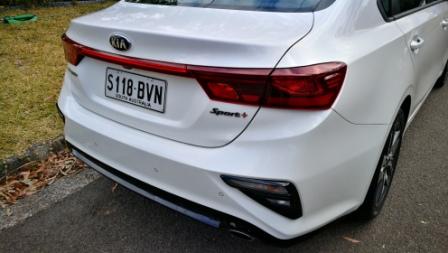

 Warranty is Kia’s standard seven years and there is 24/7 roadside assistance available as well.
At The End Of The Drive.
Kia’s growth curve is strong. Its building vehicles with a good feature set, with high quality, and quietly doing so with gusto. The Cerato sedan, the latest in a range of cars that DOESN’T include a four wheel drive capable ute, is commendable for both its very good looking sheetmetal and high levels of standard equipment. What initially looks like oversights in some areas is potentially a pointer towards what will come in the Kia Cerato GT. As it stands, though, a weak link is the engine. It doesn’t feel smooth, slick, and quiet enough at revs, and for a naturally aspirated 2.0L petrol engine nowadays, a peak power of 112kW really isn’t advertising friendly. It’d be nice if the torque was available at a lower figure or if there was more of it, but for the average buyer, the main concern would be the rare occasion they’d venture into plus 3000rpm territory.
Frugal is the word that stands out here too. So bundle a good looking sedan with good petrol usage in with sharp sub $30K pricing and that feature set, and Kia is kicking goals. Kia Australia’s Cerato for 2019 is available now.
F1 2018 Movements And News In The Mid-season.
The mid season break is heading towards its end and there’s been plenty happening. The latest news has been expected yet still of sadness for F1 followers. Fernando Alonso, at the age of 37, has announced his retirement effective at the end of the 2018 season. It will also be the conclusion of his 17th competitive season in F1.
The rumours that swirled through the F1 paddock in the first half of the season all pointed towards a confirmation to be made. However it’s also a surprise as Alonso says: “”I made this decision some months ago and it was a firm one. There are still several grands prix to go this season, and I will take part in them with more commitment and passion than ever.”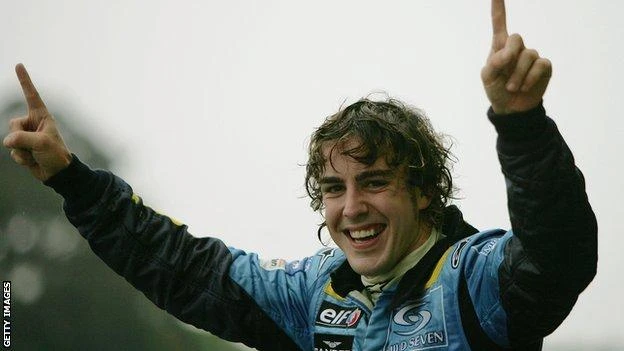
Alonso has alluded to 2019 being a year of new challenges, which potentially could be again rumours being confirmed that he will make the move to IndyCar racing on a permanent basis.
Alonso started with the now defunct Minardi team at the 2001 Australian Grand Prix. He’s a double F1 championship winner, having taken the crown in 2005 and 2006. He’s placed second in the championship three times and has 32 wins, 22 pole positions, and has stood upon the podium 97 times so far.
Daniel Ricciardo’s move to Renault in 2018 is still clouded with acrimony. Part of this comes from within the team he’s signed with for the next two years, with team principal Cyril Abitetoul admitting that their own engine development hasn’t been as successful as it should have been.
“I believe indeed that we underestimated the potential of the current engine regulations, let’s put it this way,” Abiteboul said. “We are now four years into this engine regulation and after four years you would expect that you would see the flattening out of the development curve.”
Red Bull then seems to have potentially dodged the proverbial bullet with its decision to source powerplants from Honda. The current reliability issues and uncertainty about Renault’s engine development then hover over some of the Perth born driver’s decision to leave Red Bull. However Honda’s engines also haven’t been perfect so there’s question marks aplenty for both the team and the exiting driver.
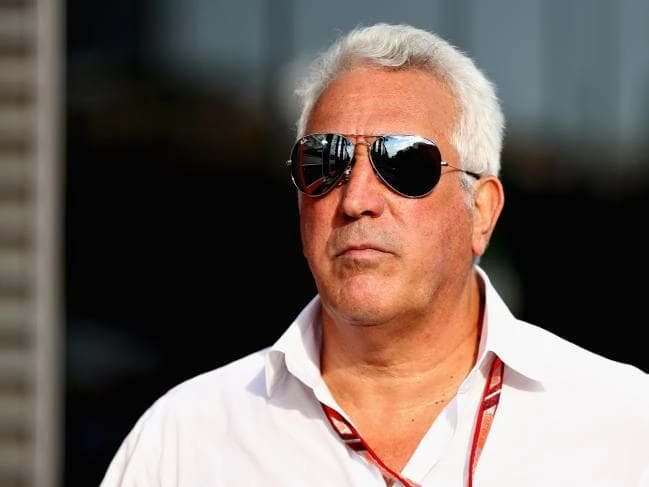
Force India’s financial woes have been assuaged thanks to a buy-out lead by Lawrence Stroll (above) the father of F1 Williams team driver Lance Stroll. A consortium, and a powerhouse one at that, signed off on the buy-out in early August. Thankfully this also has resulted in over four hundred employees not losing the ir job, and all creditors are reported to have been fully paid out. This means the Silverstone, UK, based team, will be back out on track at the resumption of the season at the Belgian F1 GP at the end of August.
BMW Has Competition For The M2.
BMW Australia has announced another model for their brilliant M2. Powered by a 302kW/550Nm straight six, the BMW M2 Competition starts at $99,900 (plus on-roads) with a M2 Competition Pure starting from $104,900 (plus on-roads). There’s a seven speed DCT, or dual clutch transmission that will take the M2 to 100 km/h in 4.2 seconds. For those that prefer an old style manual, a six speed manual is offered as a no-cost option. That peak power is from 5,250 to 7000 rpm, with that V8 eating torque across nearly three thousand revs, at 2,350 to 5,200 rpm. This backs up the M2’s intent to be a track day weapon, as there is a 1.5 kilogram strut brace and it’s a similar design to that seen in the M3 and M4. The suspension has ball joints that are engineered to have zero excess movement, and elastomer bands that transmit lateral movement to the torque struts in the suspension.
BMW’s M-differential is on board, with the design and engineering allowing a “lock-up” with an amount of zero to one hundred percent allowing precise control through virtually every driving condition. Strength and rigidity comes from a new forged alloy which is employed for suspension components and parts of the five link suspension. Stopping isn’t an issue thanks to the 400mm front and 380mm rears with six pot callipers that are an option. Standard stoppers are 380mm and 370mm.
Rolling stock are 19 inches in diameter and are 9×19 up front, 10×19 for the rear. Michelin Pilot Super Sport rubber wraps these, with 245/35/19 and 265/35/19 front and rear. These are super lightweight alloys and feature a Y shaped design coated in a light sheen or black. To take advantage of these there are three driving modes, Comfort, Sport, and Sport+, operated via a dial in the cabin. There’s settings available via a toggle switch on the leather bound steering wheel. An exterior update has been fitted with a deeper front skirt for better cooling and airflow. High gloss black coats the grilles and the quad exhaust is also painted black. Wing mirrors are a double arm design that aids in airflow, a M hallmark. And specifically for the Australian market the Competition Pure also gains M Sports seats with Illuminated Headrests and Lumbar Support, front Park Distance Control and the M Seatbelts over the predecessor model.
Compared to the M2 Competition, the Competition Pure rides on the 19-inch light alloy wheels familiar to the outgoing M2, though the Michelin Pilot Super Sports retain the same dimensions as the M2 Competition specification (245/35 R 19 front, 265/35 R 19 rear). The new design wheels are optionally available. Other specification adjustments include a HiFi Loudspeaker system, manually-adjustable M Sport Seats, Bi-LED Headlights and remote central locking (in place of Comfort Access).
BMW says the cars should be available from early 2019.
Going Hard With Two Doors.
 The Australian automotive industry is an oddity in the global scheme of things. A small buying population, the most brands per head of population, and innovations not seen elsewhere, make it virtually unique. Although we weren’t the first to build a car with a hardtop and two doors, we certainly made some great ones. Ford, Chrysler, Mitsubishi, and Holden all have cars that are memorable and one that stands out was the Monaro 427C.
Designed, engineered, and built in Australia, this car was intended to be a track weapon and race in the Bathurst 24 Hour. The first of these races was set to run in late 2002, meaning the development of the car, slated to run in 2003, had to be brought forward. The heartbeat of the 427C was its US sourced 7.0L or 427cid V8. With the Holden Racing Team turning down the offer of developing the machine, Garry Rogers Motorsport (GRM) took the Chevrolet Corvette C5-R engine, a Monaro body, and the responsibility of running the 427C as a race car.
The car would later be a controversial one; the race would attract cars from outside Australia such as Lamborghini’s Diablo GTR, Ferrari’s 360 N-GT, and the monstrous Chrysler Viper ACR. All of these cars would race with the same engine they would come off the production line with. However, the Monaro at the time came with Chev’s fabled 350cid or 5.7L V8, and therefore would be ineligible to run. However, the organiser of the race, which would come under the umbrella of a racing group called Procar, allowed the Monaro to be run with the bigger engine to be seen as more competitive with capacities such as the 8.0L V10 in the Viper.
As the race was going to be run under the then current GT regulations, GRM had to design a body kit to suit both the regulations and the aerodynamics of the VX Commodore based two door. Using the V8 Supercars design as a basis, GRM fitted a wider rear wing that sat below the car’s roofline, as per the regulations. A similar front air dam was fitted to the front, and underneath the 427C utilized a number of components that could be found on a Supercar. A technically minded casual observer would see a Hollinger six speed manual transmission, wheels of 18 x 11 and 18 x 13 inches, MacPherson strut front suspension and a trailing arm rear, bolted to coil springs and thick anti-roll bars. The engine was said to be good for 600 ponies (447kW) and would be bolted into the front of a car weighing 1,400 kilograms.
All up the Monaro 427C would be 4789mm in length, run a front and rear track of 1559mm/1577mm, and roll on a wheelbase of 2788mm. The aero package provided plenty of down-force and made for a stable on track racer.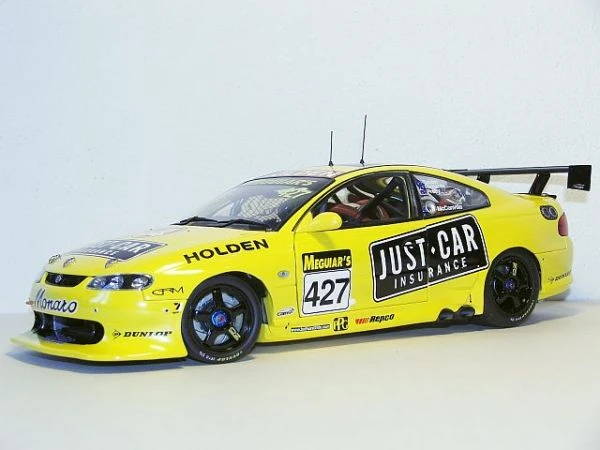
Raced at the 2002 Bathurst 24 Hour by a team of four drivers, being Garth Tander, Nathan Pretty, Steven Richards, and Cameron McConville, the car was also being touted as being available as a road car. The race car itself would prove to be strong, durable, and a race winner. Although suffering a flat tyre, a collision with another car, and pit lane races to see who could clear their car out to the circuit first, the car would ultimately win in its debut race by 24 laps.
As a road car, it was potentially to be motorvated by a 433kW version of the 427cid engine. But, as a business case, the numbers simply didn’t add up and would result in a mooted buy price of $215,000 being out of reach of its intended market. Just two road going cars, and just four race cars, would be built.
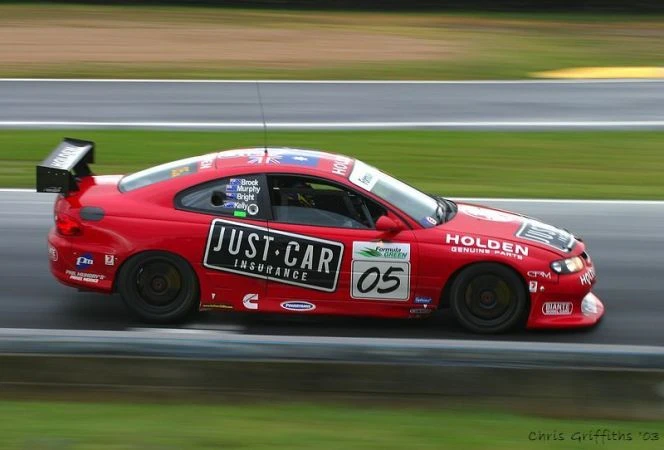
The Monaro 427C would go on to compete in the Australian Nations Cup Championship in 2003, and the Bathurst 24 Hour race in the same year. A second race car had been built by then. Driven by Peter Brock, Jason Bright, Todd Kelly, and Greg Murphy, the car would win by just 0.3035 of a second. Tander, driving the 2002 winning vehicle, was thwarted in a last sector charge by a yellow flag thanks to a car close to the racing line.
The 427C would race in 2004 and see a third chassis completed, before the Nations Cup category collapsed due to fiscal issues. With regulations reverting to GT Championship rules in 2005, the Monaro 427C was deemed ineligible. Of the race cars, one is with a private collector, one is in the Bathurst Motor Museum, and little if anything is known of the locations of the others.
(One photo courtesy Chris Griffiths, other source unknown)
 Level 2, 9 Help Street