

Author archive
2019 Toyota 86 GTS Manual and Auto – Private Fleet Car Review
This Car Review Is About: Toyota’s joint venture with Subaru, the two door sports coupe Toyota call 86. In this case we drove, back to back, the 86 GTS Manual with Dynamic Sports Pack, and the 86 GTS Auto.
 How Much?: The GTS Manual with Dynamic Sports Pack is priced from $43,534 driveaway with the “standard” GTS priced from $40,497. The Manual has Apollo Blue paint, a specialist colour for this model and trim, with the Auto being clad in White Liquid. Metallics are a $500 option. The auto is $42,866 with Ignition Red, $43,381 with the Liquid White.
Under The Bonnet Is: Subaru’s fabulous flat or “boxer” four. Peak power is 147kW (auto) and 152kW (manual) from the 2.0L capacity engine, with peak twist being either 205Nm or 212Nm. There are slightly different cog ratios in the manual as compared to the auto, with the manual’s final drive at 4.3:1, compared to 4.1:1 with the auto. Peak power is at a lofty 7,000rpm, with that peak torque found between 6,400rpm to 6,600rpm in the auto, 6,800rpm in the manual. In order to get those figures the engine is tuned to run on 98RON. Economy is quoted at 7.1L/100km or 8.4L/100km for the auto and manual on the combined cycle. Due to the physical size of the 86, fuel tank capacity is just 50L. We returned figures in largely urban driving of 7.9L/100km for the auto and 8.6km/100km for the manual. Gross vehicle masses are 1,670kg (auto) and 1,700kg (manual) with dry weights between 1,250kg to 1,280kg. On The Inside It’s: a nightmare for rear seat passengers, a tight squeeze for front seat passengers, and a harken back to “the glory days” of Toyota with a retro look and feel to the cabin’s design. The front seats use a lever method for moving the seats forward to allow access to the rear, but they also use levers for seat back and height adjustment, not the preferable electric or at least “roller dial” adjustment. They are heated via a two position switch but only for the squab, not the whole seat.

 The GTS spec has Alcantara trim on the doors and dash for a little extra comfort, plus carpeted floor mats which also add a little extra sound deadening. Pedals are alloy with rubber tabs for the retro look and aiding shoe grip. The dash dials are fully analogue with a small 4.2 inch LCD screen set at the bottom right. This provides oil and coolant temperatures, G-force instant and history, a power and torque delivery graph, and more. The main screen is 6.1 inches in measurement and is a modern look on a retro theme. There’s a solid black surround, a CD player slot, and AM/FM only, meaning no DAB. Satnav, reverse camera, and streaming apps are standard.
 The actual look is of dials and toggle switches. It’s meant to evoke a sense of looking back in time and it works. The dual zone climate control, the air intake for fresh/recirculate, even the glowing red LEDs for the clock and temperature displays, are all “olde timey” in look. The centre console plastics are a chintzy silver plastic and have the traction control tabs embedded. Both have the standard push button Start/Stop and that’s visually obvious by being located in the bottom right corner of the centre console stack. And for those that prefer mechanical stopping, a proper hand brake is employed.
 The dash is a sweeping design that joins both doors in an arc and wave and has the centre airvents looking not unlike a impulse engine housing from a starship. The top of the dash binnacle and the flat panel have the Alcantara trim, and there is a subtle silver hue to the airvent surrounds. That colour is also wrapping the gear selector. Thankfully, both headlights and wipers are Auto on. There are a couple of centre console cup/bottle holders, and just enough room in the door pockets for a bottle. The boot is also surprisingly big, and coped well enough with a weekly shop. For its more obvious audience, a couple or single, it’s ideal for an overnight bag or two.
 On The Outside It’s: Largely unchanged from the original model however a very mild facelift was applied in 2016. Tail lights are LED as are the headlight cluster driving lights. There are aerodynamic strakes in the lower quarters of the front bumper around the globe lit driving lights. The chin of the front bumper has been subtly restyled, and there are even thin strakes on the outer edges of the plastic at the bottom of the windscreen for air guidance.
The GTS Manual with Dynamic Sports pack comes with Brembo brakes and red calipers, Sachs suspension, and bespoke 17 inch black alloys. Rubber is from Michelin and is 215/45/17. There’s a small rear wing for both. The manual has it in full black whilst the auto was in black with body coloured end plates. There are twin exhaust tips and both are chromed. Indicators are embedded in the leading edge of the front wheel arches which also extend into the line of view from the driver’s seat. The auto also featured the excellent Brembo stoppers. Just a breath on the brake pedal has the Brembos applying grip, and with a beautifully modulated pedal, the driver can judge perfectly a “slow in fast out”corner drive.
 On The Road It’s: A huge amount of fun. Deliberately designed with a mix of skatiness and grip, the low centre of gravity, relatively thin rubber, and taut suspension make for a car that is always feeling like it’s ready to break loose. Get it onto a road that has more corners than straights and the chassis immediately shows why it delivers smiles in spades.
Although peak power and torque figures are north of 6,000rpm, the gearing and the engines are perfectly matched to give, if not true outright zip, a very good semblance of it. Because the driver sits so low to to the ground too, there’s a sense of higher speed. That’s helped by a raspy metallic induction note, especially in the auto with the longer gearing. On that point, the auto sees 100kmh/110kmh at 1,000rpm lower than the manual. 100kmh in the manual is 2,700rpm, 3,000rpm for 110kmh. Toyota’s head of PR, Orlando Rodriguez, advised that the manual was the pick for buyers and when the slight facelift in 2016 was applied, the change to the manual’s engine tune and final drive was applied due to the higher sales volumes. The auto’s driveline was left untouched. The manual is more manic to drive and the transmission changes have added faster acceleration times. The gear change is a combination of a definitive selector mechanism and a clutch that allows the driver to find JUST the right point to engage and slingshot away. Revs are dialled up, the left foot lifts to engage the clutch, and there’s a fine point where the rest of the travel upwards, and the accelerator’s pedal goes downwards, that works almost like a launch control. There is no clutch slippage, the narrow rubber hooks into the tarmac, and it’s off.
The auto is, naturally, easier to get under way and is by no means locked out of the fun facts. Left to its own devices it’s good enough, but use the paddle shifts or gear selector for a manual change, and it’s noticeably quicker, sharper, crisper. The selector in the manual is notchy, precisely metallic in feel, not unexpectedly, with a gate mechanism that tells the driver “yes, this is second, yes, this is third”. Reverse is a lift of a lock-out lever and across, and this too is definitive in its engagement and movement.  Both have a suspension that tends towards the harder side of ride, with the Dynamic Sports Pack adding a hint more of the sharper edge. It’s the sort of feel that would have the Michelin rubber roll over a coin and tell you not only is it a five cent piece, it’s heads up and made in 1991. But neither are excessively uncomfortable, even with the rear end kicking up a corner every now and then. There is just enough “give” to dial out the upper end of the harshness. The dimensions of the 86 help with handling. It’s shorter than it looks, at 4,240mm and squeezes in a 2,570mm wheelbase.
Steering is thought process quick, with a lock to lock of just three turns. Think your way through a corner and the wheel points the broad nose exactly where it should be. Once the seating position has been sorted, and it really would be easier with the roller dial adjustment, not the levers, the car becomes an extension, and that’s how a good sports car or car with more sporting pretensions than others, should feel. Although it’s not the roomiest of cabins, there’s enough for the left arm to grab the manual gear selector, both arms to be just at the right angle to steer and not be cramped or over-extended, and therefore that steering becomes the extension. What About Safety?: Camera for reverse, seven airbags, hill start assist, and the mandated driver aids.
 And The Warranty Is? Toyota announced in January of 2019 that passenger cars would receive a five year, unlimited kilometre warranty, which could be bumped to seven years on the engine and drivetrain on “properly maintained vehicles” that are equipped with genuine Toyota parts.
At The End Of The Drive: The joint venture between Toyota and Subaru has provided a car that has found itself a strong niche. There is a bespoke motorsport series, the car is used in driver training, and drivers that have either one will acknowledge another driver. It’s a car that feels as if it needs more power however the chassis is tuned to take advantage almost perfectly of what there is. It’s also the kind of car that has a set audience and those that appreciate what its intention is, will be the ones that extract every erg of enjoyment from the drive. On a cost effective or “bang for your buck” basis, for a dollar per smile, at $40 to $45K, it’s a bargain. The Toyota website is where more information can be found.
Pencil Sharp BMW M240i
BMW Australia has managed to negotiate a super sharp driveaway price for its stonking M240i coupe. With deliveries due to start for Q4, buyers will look at $74,900 as a driveaway starting price. Standard inclusions make for a long list.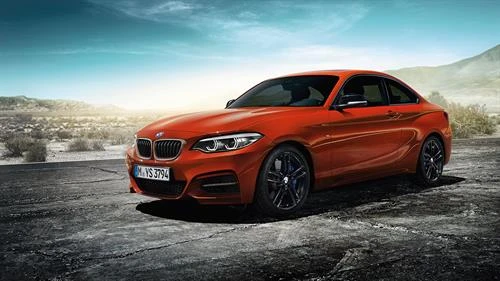
Up front is their M Performance TwinPower Turbo 6-cylinder in-line petrol engine. Peak power is 250kW of power with peak twist rated as 500Nm of torque. It’s quick, with a 0-100kmh of 4.6 sec. Drive gets to the tarmac via an 8 speed Sport Automatic gearbox, and the car rides on their proprietary Adaptive M Suspension with stopping power thanks to the M Sport brakes. The driver connects with the road through the variable sport steering, including the servotronic speed-sensitive assistance. Both driver and passenger have Sports seats to park their rear in and the driver has electric adjustment and memory positioning. Both front pews are heated but not vented. Sounds are fr
om Harman Kardon and pump through a 12 speaker set. An 8.8 inch touchscreen houses the controls including the nav system, a 20gb solid state hard drive, and also the Connected Drive services.
Outside are Adaptive LED headlights and the signature kidney grille is finished in Cerium Grey. Mirror covers are in black. There is also high-beam assist with extra safety assistance from the BMW Driving Assistant. That includes the Approach Control Warning, Lane Departure Warning, Pedestrian Warning, light city braking function and Attentiveness Assistant. Extra goodness for the driveaway offer comes from double-spoke 18-inch M light alloy wheels, sunroof, metallic paint and a wireless charge pad for compatible smartphones. Interior trim goes to Hexagon Alcantara and Anthracite/Black upholstery. Carbon fibre interior trim and Dakota leather upholstery can also be optioned.
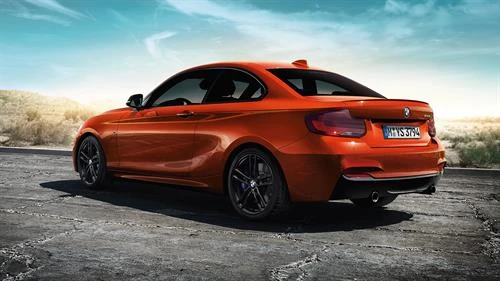
Buyers can choose from these exterior colours: Black Sapphire Metallic, Mineral White Metallic, Mineral Grey Metallic, Estoril Blue Metallic, Sunset Orange Metallic, and Long Beach Blue Metallic. Wheel options are double-spoke, Jet Black 18 inch M light alloy with 225/40/18s up front and 245/35/18s for the rear. There is also double-spoke style, Bi-colour Jet-Black 18inch M light alloy and 225/40 R18 for the front, with 245/35 R18 at the rear. Then there is double-spoke style, Cerium Grey Matte 18 inch M light alloy plus 225/40 R18 and 245/35 R18.
Contact us or your local BMW dealer for more details.
Renault and INFINITI Unveil Project Black.
INFINITI and the Renault F1 Team have completed the track-focused development of an unique high-performance, dual-hybrid powertrain. It’s been especially created for the INFINITI Project Black S prototype. The development work was signed off at Salzburgring in Austria by Renault F1 Team star Nico Hülkenberg, where two prototypes were put through their paces. A decision on the potential of the system for consumer use will be made by the end of this year.
The Project Black S prototype is part of an evolving collaboration between INFINITI and Renault F1 Team. It’s served as a test-bed for development of the new Formula 1 inspired powertrain technology. The latest version of the Project Black S was revealed in Paris in fall 2018. Since then, powertrain engineers from Renault F1 Team and INFINITI have developed the unique technology further, exploring whether it could be deployed in a high-performance road car. Furthermore, the program has provided an insight into how INFINITI can work hand-in-hand with partners on developing new projects and technologies. Mike Colleran, Deputy Chairman, INFINITI Motor Company, comments: “The work that has gone into Project Black S represents a milestone in INFINITI’s road to electrification. This test-bed for new ideas, and rapid development, represents everything INFINITI hopes to achieve with its electrified cars in future, such as smart energy management from advanced high-performance powertrains, a thrilling drive, and a performance aesthetic.”
Cyril Abiteboul, Managing Director of Renault F1 Team, said “A technical partner to the Renault F1 team, INFINITI’s experience of working with homologated hybrid powertrain technology was instrumental in the co-development of our dual-hybrid system. The Black S project now gives us a rare opportunity for the direct transfer of genuine F1-honed technology back into a road car. Making this leap, from circuit to road, is something we are incredibly excited to be involved in”.
A key aim of the Project Black S program was to explore the potential for new motorsport-inspired electrification technologies and development processes. Project Black S fuses expertise from road and race track, with its dual-hybrid powertrain, all-new, purpose built brakes, and optimized suspensions, all complemented by the use of advanced lightweight materials throughout the purposeful new bodywork and a motorsport-inspired interior.
INFINITI’s Mike Colleran comments: “Working with Renault F1 Team has opened our eyes to new ways of working. Outside of the traditional process in which we engineer cars and technologies, this collaboration has shown us what can be achieved with a small, dedicated team. We will learn from this to enhance the way we create other cars in future.”
The Project Black S dual-hybrid powertrain technology is derived from Formula One and engineered specifically for road use. A focused, agile team of designers and engineers from the two technology partners has enabled the rapid development of testing prototypes. A test-bed based on the INFINITI Q60 sports coupe and its 400 hp VR30 twin-turbo V6 engine, the dual-hybrid system combines supercar performance with smart energy management.
The VR30 engine has been transformed with the creation of two heat-energy harvesting systems with Formula 1 relationships. There is the MGU-H or motor generator unit – heat, which develops electricity under acceleration. Paired with a kinetic harvesting system or MGU-K: motor generator unit – kinetic, that generates electricity under braking and an all-new energy management system, Project Black S is a unique and exciting electrified performance hybrid prototype. In a similar manner to Renault F1 Team’s R.S.19 racecar, the Project Black S’ smart powertrain stores this energy and discharges it as the driver requires, spooling up the turbochargers instantaneously as the driver opens the throttle, boosting power sent to the rear wheels via the MGU-K over continued periods of acceleration.
Currently, the dual-hybrid powertrain is capable of producing up to 418 kW (568 ps, 563 hp) – 40 percent more than the prototype’s donor car, the INFINITI Q60 Red Sport 400. Uniquely, it provides sustained and sustainable hybrid performance, delivering electrically assisted acceleration, lap after lap.
The prototype offers drivers complete control over how the powertrain uses this energy, with three Formula One-inspired drive modes – Road, Quali and Race – each altering the way in which the powertrain harvests and discharges power.
INFINITI’s Mike Colleran added: “There is still work to be done. Now we have two completed prototypes we will fully evaluate the production potential of Project Black S. It is still too early to predict the outcome as we need a solid business case, but the latest rounds of testing have proved its unique performance and underlines our pursuit of electrified performance. This is an exciting phase of the process. We will consider every element of the development prototypes to establish the feasibility of volume or limited production in future.”
Private Fleet Car Review: 2019 Kia Picanto GT
This Car Review Is About: The 2019 Kia Picanto GT. It’s the pert and perky little five door hatch, with minor and tastefully styled body add-ons, an energetic powerplant, and a fun factor that’s off the scale. It’s a screaming bargain at just $17,990 driveaway. Under The Bonnet Is: A zippy and free spinning three cylinder petrol engine with a real warble when it’s spinning up. There are 74kW available at 4,500rpm, and a very useful 172Nm from 1,500rpm to 4,000rpm. Power heads to the front wheels via a five speed manual. Boost and bang for the milk-bottle sized engine comes from a turbocharger that adds plenty of sizzle. The dry weight of the Picanto GT is just 1,007kg, which means that the power and torque, plus the five speed, don’t need to work hard to provide the spark.
Tank size is just 35L for the standard unleaded fuel. Economy, says Kia, is 4.8L per 100km for the combined. In the urban cycle, its far more likely home, it’s 6.2L/100km. Get it onto the freeways and that drops to 4.0L/100km. We finished on 6.4L/100km on our mainly urban test cycle. On The Outside It’s: The same little block of Picanto that’s been available for a few years but now with extra grin. There are colour highlights from inserts outside and in, new wheels, front bar additions with driving lights and extra air intakes, whilst the rear gets the cool “neon” light look at night plus a twin exhaust and a diffuser style add-on. Nexen supplies the 195/45 N Blue Plus rubber to wrap the 16 inch eight spoke alloys. The review car came clad in Aurora Black, with the GT also having Clear White, Signal Red, and Titanium Silver.
On The Inside It’s: Comfortable and familiar, yet carries a bit more cachet. There are red leather highlights on the front seats, alloy pedals with rubber strips for extra foot grip, and red backlighting for the switchgear. There’s some brightwork on the tiller and piano black for the console stack. Seats are manually adjusted but with the not-quite-as user friendly levers rather than the dials which are MUCH more user friendly. Luggage space is 255L with the rear seats up, 1,055L with seats down. It’s JUST enough, if packed correctly, to carry a decent weekly family shop but if it’s a really decent shop, then the space behind the front seats will need to be used. Space itself is more than adequate for a couple, but go more than three then the Picanto’s 3,595mm length and 2,400mm wheelbase come into play. Thankfully the front seat room is enough for all but basketball players so pulled forward the rear leg room becomes tenable. Shoulder room is a bit cosy thanks to the 1,595mm and headroom is fine even with a 1,485mm height.
 Storage comes in the form of two cup holders in the centre console, bottle holders for the front doors, a coat hook and net hooks in the cargo area. Sounds are from a non-DAB equipped audio system but Bluetooth streaming is standard. Sound quality isn’t as good as it could be either, with depth and punch not on the same level as other systems found in Kias. Apple and Android apps are standard as well. That’s a good thing for those that use them as satnav is not standard.
 What About Safety?: Covered. Sort of…AEB (Autonomous Emergency Braking) with FCWS (Forward Collision Warning System) leads the party, backed up by a reverse camera and rear parking sensors. LED driving lights up front add visual safety and add to the visual presence and the headlights are Auto on. BUT, and it’s a big but, no Rear Cross Traffic Alert, no Blind Spot Alert, no Lane Keep Assist, no front sensors, hold back the Picanto GT in crucial areas.
On The Road It’s: An absolute bundle of fun. The engine is a cracker and the gearbox is well specced for cogs. The clutch is light and really could do with more feedback as to where the pedal is in travel and where the plates are in gripping. Once the driver has worked that out though, practice gets the pickup point and shifts to launch just right. However the spring loading for the gear selector is also light and a touch vague in where the lever goes. The gate is close so a slide from second to third feels like it’s in the same line, and there isn’t enough definition in the shifter’s movement to properly advise where the lever’s going.
ONCE everything is worked out, the little engine that could, does. It’s got a real warmth to the sound, yes, but the appeal is in how it pulls the Picanto GT , in how it allows tractability in gentle around town driving or getting serious on the freeway. It’s geared for easy going driving, but also some get up and go squirt as required. The turbo kicks in at just under 2,000 and on the freeway that gearing allows a push of the pedal to see the Picanto GT rocket forward. It’s accompanied by a thrum, a not unpleasant rumble from the three cylinder donk, which is muted when not being pressed. Off the line it’s easy to feel pressed back into the seat easily when driving in anger. There is some real urge in this tiny engine and it’s something a driver can exploit and enjoy. Bang the gear selector from first to second to third and the GT simply rolls on inexorably, seamless in its acceleration. Throw out the picks and the lightweight car slows quickly and confidently.And thanks to the slightly bigger footprint, and the grippier tyres, hard-arsed cornering can be exploited and enjoyed too. Under power the Picanto GT can be punted into turns that would see the speedo read 20, 30 km/h slower (depending on the corner’s radius and driving conditions) whilst taking advantage of the engine on boost.
Ride quality is good but not great. The rear end is prone to a little skipping around on the roads that have the expansion joints and the whole car will crash bang on missing road sections. It’s a suspension that is flat and taut but not supple enough to dial these out.
What About Warranty?: There is Kia’s 7 years warranty as standard. That’s with unlimited kilometres. Roadside assist is for 12 months initially however if the Picanto GT is brought to Kia for servicing then that extends to 7 years coverage also. Servicing is capped price and for every 15,000 kilometres or annually, whichever occurs first. At The End Of The Drive. The Kia Picanto GT is an embodiment of the words “pocket rocket”. That 172Nm of torque is so useable in a small car, and somehow manages to stay engaging even when loaded with two adults, a ten year old, and shopping. It’s the gear selector and clutch that blunts the engine’s sharpness as these really could do with tightening up. Ride quality is also not quite en’ pointe as there’s a lack of the absorption needed in the upper end of the travel.
The lack of DAB isn’t crucial but FM sounded dull. If a GT designation is to indicate a top of the tree model, then add a top of the tree audio setup. Make up your own mind by going here.
 Level 2, 9 Help Street