

Author archive
2020 Mitsubishi ASX Exceed: Private Fleet Car Review.
 This Car Review Is About: A recently (late 2019) updated ASX range which received the Mitsubishi shield nose, a mild refresh to the tail light cluster, and the deletion of a diesel as an option.
The Exceed sits at the top of a six tier (ES is manual or auto) range which provides one of the broadest choices available to Australian consumers for one stand-alone model.
How Much Does It Cost?: Mitsubishi have tight pricing for a diverse range. The entry point is the ES which lists at $24,990 drive-away as of February 2020. The Exceed comes in at $35,990. For that price Mitsubishi are including seven years warranty and two years free servicing. Under The Bonnet Is: Mitsubishi’s well proven 2.4L MIVEC petrol fed engine. There are no diesels and, as yet, no hybrids. Only the ES has a manual option, with a CVT being the transmission of no choice. It’s not a winner but more on that later. Peak power is 124kW, with peak twist of 222 torques available at 4,100rpm. Economy was excellent, with an around town best of a paltry 6.3L/100km. Mitsubishi’s combined figure is quoted as 7.9L/100km from a 63L tank filled with standard 91RON unleaded. Drive is now to the front wheels only.
On The Outside It’s: Lost the dumpy, squat, short jawed look and gained an assertive stance thanks to the reworked front. Apart from being resized and re-proportioned to fit the ASX, it’s identical to that seen on the rest of the family. The lower corners have a quad “ice cube” cluster with fog and indicator LEDs. With that sharper front end, it also highlights the curves in the rear which now don’t quite match the other end.
Both front fenders have a black plastic insert ringed with chrome. These sit on the join line with the doors and draw an upwards incline through the door handles to the rear window. The tailgate is manually operated, a feature that Mitsubishi should have sprung for to change to powered.
Tyres are from Bridgestone and their Ecopia range. They’re 225/55/17 and are on distinctive ten spoke alloys with black paint. The sheetmetal has a choice of eight colours, with the review vehicle in Lightning Blue. On The Inside It’s: Starting to show the base design’s age. Flat and slabby are how to describe the dashboard. Only the seats could be described as soft touch, and they’re sat on, not in. Again, the front seats are heated only, an oversight that doesn’t suit Australian summers.
 The driver faces a traditional two dial display with Mitsubishi’s standard colour LCD screen in between. For the Exceed, at least, a full LCD screen for a little class difference should be here.
The driver’s seat is powered for adjustment, at least. The second row fold easily and offer over 1,100 litres of cargo space. It’s here that you’ll find the subwoofer driver for the Rockford Fosgate DAB audio system. The company is a long time supplier of audio to Mitsubishi and it shows. It’s beautifully integrated and provides a sensational kick from the sub, balanced by outstanding treble and mid-range notes. The touchscreen is an 8.0 inch unit and the interface has been redesigned for a better look and use. Naturally it’s Android, Apple, and Bluetooth compatible in regards to the sounds system.
 Piano black surrounds the screen, as it does the gear selector and portions of the steering wheel. Auto wipers and headlights are standard also. The aircon is single zone and a pair of USB ports sit below the knurled chrome dials. The centre console houses two cupholders close to the console storage locker.
For a vehicle that fringes the small and medium SUV class, at just 4,365mm in length, it’s well packaged inside for head, shoulder, and leg room. Up front is 1,056mm with the rear seats having 921mm. Headroom is fine considering the ASX Exceed has a full glass roof. Front and rear measurements are 988mm and 934mm.
On The Road It’s: Frankly disappointing. The CVT hobbled the 2.4L to the point Sports mode was the preferred choice for driving. Sports mode should a mode to complement the normal Drive, not be the preferred standard. The Low range gear option made its presence appreciated when hitting the upwards slopes in Sydney’s Blue Mountains too, utilising the 222Nm far more efficiently than standard Drive. Left in Drive, acceleration was akin to wading knee deep in molasses whilst wearing boots and jeans. An Apollo trip to the moon and back is quicker than the ASX Exceeds time to 100. Flip the gear selector to the left and the chains are broken, the molasses is gone, and Apollo is still on the launch pad, such is the startling difference in nature. It also makes for a decent highway cruiser, quietly bubbling along and showing no signs of struggle. Corners, though….there’s little body roll but hit a road joint, an expansion joint, and suddenly the words lateral stability disappear. The front and/or rear skip violently sideways and for the unaware, it’s a moment of wondering what could happen.
 Braking and steering are suitable for the ASX Exceed too. There’s enough pedal pressure to tell the driver what’s going on in the stopping department whilst the steering, as light as it is, doesn’t feel artificial or over assisted.
Ride quality is also on par for expectations. It’s well tied down, finding that fine balance between absorption, suppleness, and tautness. Freeway driving has the steering requiring just the right amount of minimal input required.
What About Safety?: No problems here. Forward Collision Mitigation starts the list, Blind Spot Alert, Rear Cross Traffic Alert, and Lane Change Assist are here, along with seven airbags including driver’s knee. Front seat seatbelt pretensioners and a pair of ISOFIX seat mounts in the rear seats are also standard. A reverse camera with guidelines and rear sensors add to the package.
At The End Of the Drive. In our opinion, as much of a difference the facelift has made, it’s still, essentially, the same decade old ASX inside and it shows. It’s a massive seller for Mitsubishi, it’s fair to say, and that’s due to some very good pricing and the less than discerning tastes for a quality drive from those buyers. Given that there are similar vehicles at not much more that have a better interior and are dynamically superior, Mitsubishi should be giving thought to an improvement underneath from here on in. Find out more here.
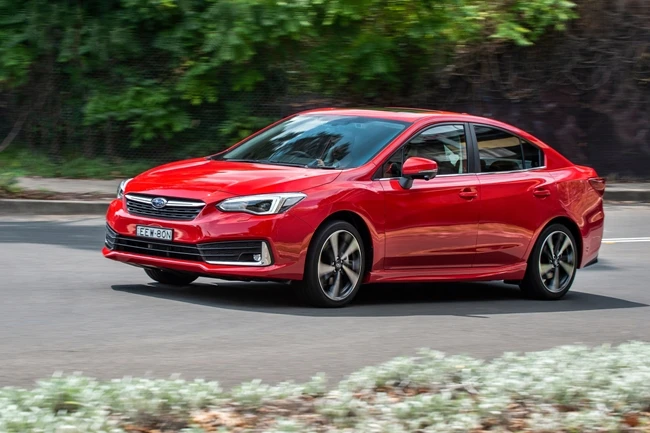
Subaru Unveils Updated Impreza and Hybridised XV & Forester.
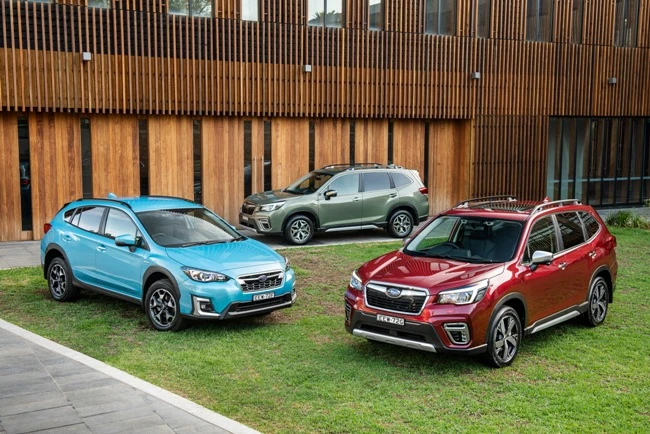
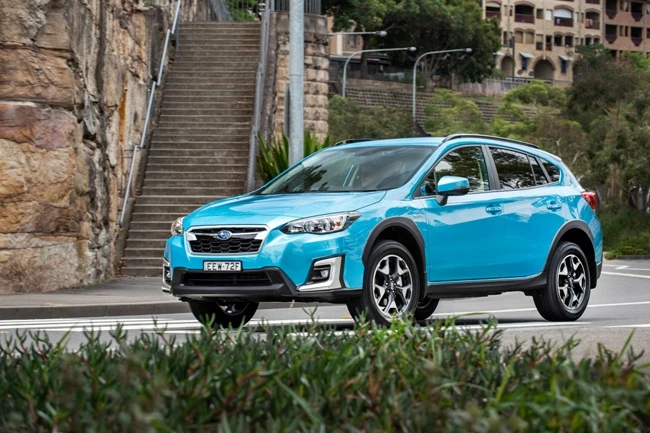
Niche filler Subaru has finally joined the hybrid family. The XV hatch and Forester now have that propulsion as an option. They’ve also updated their Impreza sedan and hatch range. For the XV there will be one variant and in hybrid form only, whilst the Forester will offer two, in L and S AWD specification.
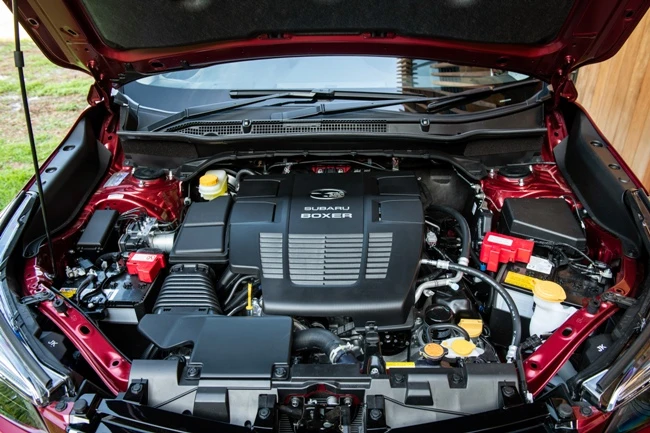
Forester will run the familiar 2.0L horizontally opposed four, as will the XV. Transmission remains as Subaru’s quite well sorted CVT. The Hybrid system has been dubbed “e-Boxer”, with a small capacity lithium battery linked to the petrol engine in a method called Motor Assist. There will be three drive modes available: Motor Assist EV driving, Motor Assist electric (EV) + petrol engine driving, and Petrol engine driving.
In pure EV mode it can reach speeds of up to 40 km/h before switching in the petrol engine. Economy, says Subaru, is down to 6.7L/100 from the 48L tank. Fuel is 91RON. That’s down from 8.1L/100km. XV Hybrid has an improvement of around 14% improvement for the urban cycle, and upwards of 7% for the combined. Forester’s improvements are 19% and 9% compared to the previous 2.5L variants.
Power is rated as 110 Kilowatts at 6,000 rpm and 196 Nm of torque at 4,000 rpm with the electric energy part offering 12.3kW and 66Nm or torque. Naturally the electric system features regenerative braking energy harvesting. The battery is integrated into the floor and located where the spare wheel once resided. The petrol engine has Subaru’s AVCS, or Active Valve Control System. Pricing for the trio is: $35,580 for XV Hybrid AWD, $39,990 for Forester Hybrid L AWD and $45,990 for the Hybrid S. Those prices are manufacturer’s list prices.
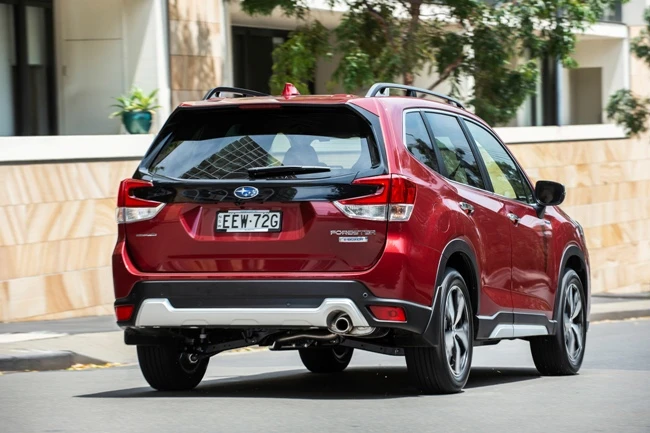
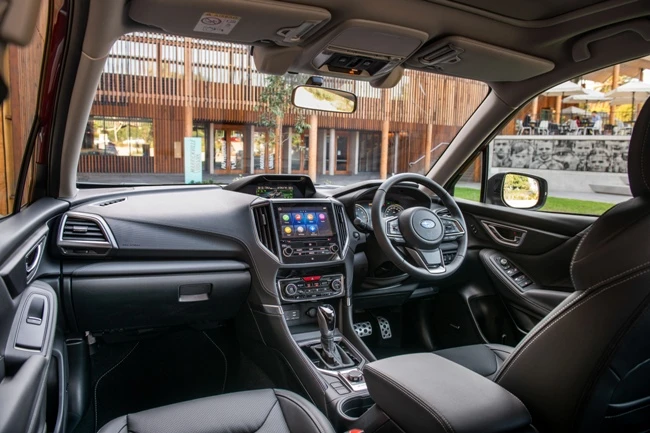
Subaru’s X-Mode, for soft and wet weather road driving, has returned. This is again a switch operated drive mode, and will show on the driver displays to indicate its engagement. Forester Hybrid S also has Subaru’s SI Drive system, where different driving modes, Intelligent and Sport, allow for some driver tailoring. The touchscreen is 6.5 inches in L, 8.0 inches in S, and features DAB, Apple and Android apps, driver’s kneebag, and Subaru’s renowned EyeSight system.
Orders are being taken however the initial allocation has been presold, with May the current ETA for new stock.
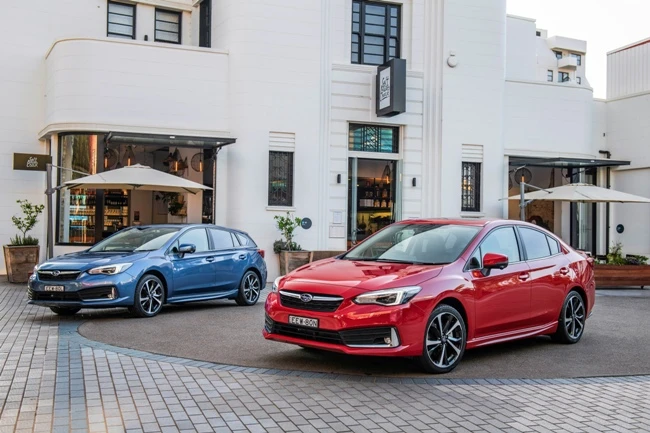
The bodies for both have been slightly tweaked, as has the Impreza sedan and hatch. All models have been given a restyled grille, with the front bumper and fog lights changed as well, plus there are new alloy wheels. The tail lights for the hatch have been given a smokey glass appearance. Also, all Imprezas now have SI Drive.
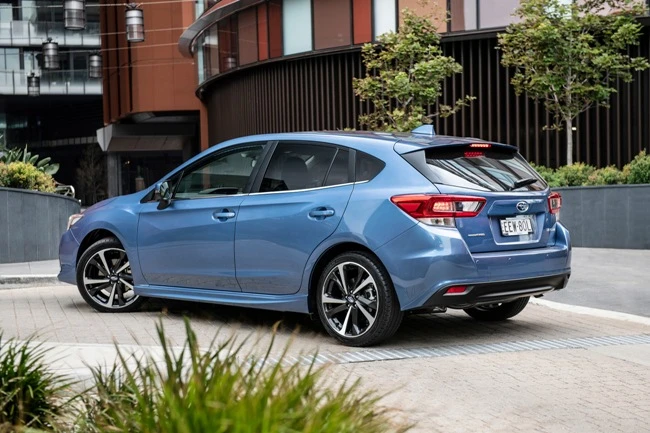
The range remains as a four tier model. The entry level 2.0i model starts from $23,740 and $23,940 for sedan and hatch, whilst the 2.0i-L starts from $25,860 and $26,090. The 2.0i-Premium is $28,390 and $28,590 with the range topper 2.0i-S at $31,160 and $31,360. Again these are manufacturer’s list prices.
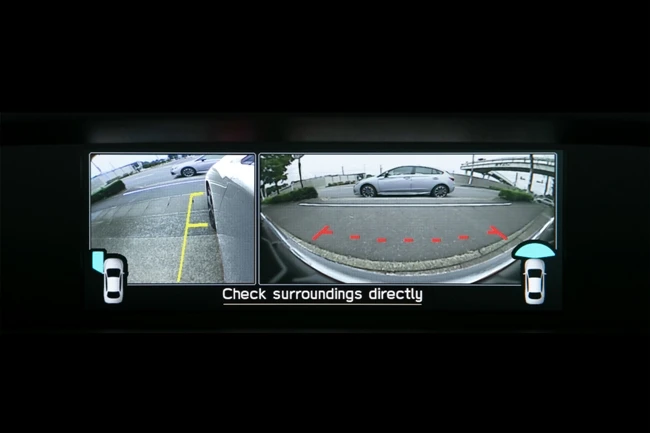
Apart from the looks there has been tweaks underneath for a better ride and handling package. Premium receives Blind Spot Monitor, Lane Change Assist, Rear Cross Traffic Alert plus Reverse Automatic Braking and Front View Monitor. The S gains front and side camera monitors, along with an auto dipping passenger side mirror when reversing.
All cars have a standard five year and unlimited kilometre warranty. Contact Subaru to book a test drive.
Ford Updates Their Escape Plan.
Ford’s entry into the mid-sized SUV market, Escape, has been given a new model and some updates to keep it fresh and in line with the competition. The 2020 Ford Escape line-up has a higher level of standard equipment, and is priced accordingly. There is a mix of all wheel, front wheel, and PHEV, being Escape FWD, Escape ST-Line FWD and AWD, plus a PHEV option, with the new Vignale in FWD and AWD. Deliveries are scheduled to start from Q3, 2020. The pricing matrix is thus: 2020 Ford Escape with a 2.0L EcoBoost engine and FWD, starts from $35,990 (manufacturers list price). Escape ST-Line from $37,990, with the AWD starting from $40,990. The PHEV starts from $52,940, with Vignale FWD and AWD from $46,590 and AWD from $49,590. Across the range is a 2.0L Ecoboost petrol engine, delivering 183kW and 387Nm, with power going to the tarmac via an eight speed auto. The PHEV, Ford’s first vehicle of this type in Australia, has a 2.5L petrol engine with an Atkinson Cycle design. On the electric side is a 14.4kWh lithium-ion battery which produces 167kW. Fuel economy is rated as an incredible 1.5L/100km. On a purely battery driven cycle, the range is up to fifty kilometres.
Standard equipment in the entry level makes for solid reading. 18-inch alloy wheels, a chromed five bar grille up front, LED headlights and tail lights, with an integrated spoiler on the tailgate’s top, whilst the 2.0L dumps via a pair of chrome tipped exhausts. A colour palette of 11 colours allows for good individualisation.
Extra standard equipment reads like a technology who’s who: push button start/stop, wireless smartphone charging pad, DAB audio via an 8.0 inch touchscreen, Ford’s SYNC3 command system with Apple and Android apps, voice command, and reverse camera. Sensors front and rear plus a handy window open/close command from the key fob add some real distinctiveness. There is also Ford’s bespoke FordPass Connect with app connectivity. This covers services that are designed to simplify the ownership experience. The app allows for roadside assist access, service scheduling and checking of service history plus, for the PHEV, charge station locations and on-the-fly charge level checking. Safety levels are comprehensive. The Escape list is: Autonomous Emergency Braking with Pedestrian Detection, Evasive Steering Assist, Forward Collision Warning, Dynamic Brake Support, and Traffic Sign Recognition. Adding to the list is Blind Spot Detection (BLIS), Lane Departure Warning, Lane Keep Assist with Lane Centring. whilst the driver has an Impairment Monitor System. Tyre Pressure Monitor, Adaptive Cruise, and an Emergency Assistance (000) call system round out the standard list of safety in the entry level. Extra safety is well packaged too: six airbags, seatbelt reminders, and ISOFIX seat restraints.
Warranty is five years and unlimited kilometres, with servicing being a 12 month or 15,000 kilometre cycle. A and B logbook services for the first four years/60,000km are set at a maximum of $299 per service. Ford’s Service Benefit, which includes a loan car, auto club membership, roadside assistance, and satnav updates, are also included.
Interior space has been increased. The new Escape is longer by 89mm, wider by 44mm, and the wheelbase has an extra 20mm. Shoulder room is up by 43mm, whilst front seat hip room is increased by 57mm. The second row, which can be slid forward or back, is up by 20mm and 36mm respectively. Overall height has been dropped by 20mm yet headspace is increased by 13mm up front and 35mm in the rear. Weight has been decreased by up to 90kg and torsional rigidity is up by 10%. ST-Line is the sports oriented model. Bespoke 18 inch alloys and grille, a sports style rear bumper and side skirts, plus a lowered suspension add to the look. A larger rear spoiler sits up at the roof’s rear and also brings black detailing inside and out. The roof rails are black which complements the headlining and belt mouldings. The driver has a 12.3 inch sports themed cluster and the steering wheel is a flat-bottomed item. A hands-free tailgate, front heated seats and Ford’s tech pack can specified as an option. The latter includes: Head Up Display, “matrix” headlights and an adaptive lighting feature.
  The Vignale gains an impressive list over the ST-Line. Advanced keyless entry starts the party, whilst the driver has a heated tiller and Head Up Display. Both front seats have ten way power adjustment and are heated. The second row has heating for the right and left seats whilst the rook shine sun in thanks to a panoramic glass insert. The tail gate is powered and hands free. Wheels are 19 inch alloys, with 20 inch alloys as an option. Headlights are self leveling LED quad-projector style and will bend in cornering. An exclusive colour, Blue Panther, is available to order.
PHEV, or Plug-in Hybrid Electric Vehicle, gains a partial leather trim, 10 speakers for the sound system, and a ten way powered driver’s seat. The ST-Line package is available as an option, with hands-free tail gate, front heated seats, and the tech pack.
Contact your Ford dealer for information.
Rubber And Tarmac: Driving Roads to Enjoy.
Along with owning a house, going on a great drive has to be one of the great Aussie dreams. But, much like the pub discussion over which sci-fi franchise is best or is AFL better than NRL, the best Australian roads to drive can be a subjective list. Here’s five, both classic and perhaps a surprise or two, worthy of consideration.
1. The Great Ocean Road, Victoria.
Known for a combination of long sweeping corners, spectacular views, and holiday traffic, the Great Ocean Road, all 244 kilometres of it, is a walk up start. Commencing at Torquay, the home of the legendary Bells Beach surf classic, head west and passing the stunning Cape Otway lighthouse, taking in the remaining pillars of The Twelve Apostles, and terminating near the picturesque seaside town of Warrnambool, this is regarded as one of the world great drives.
2. Caves Road, Western Australia.
Western Australia is home to the world’s most isolated capital city, Perth, and a world renowned wine region in the south. Margaret River is truly one of the country’s loveliest areas and is a lazy three or so hour drive south of the city.
Caves Road runs north/south in the state’s far south west, between the historic seaside town of Busselton (with its kilometer long jetty) and the peaceful village ambience of Augusta. It provides easy access to the stunning coastline, the friendly towns, and of course, the fabulous wine region.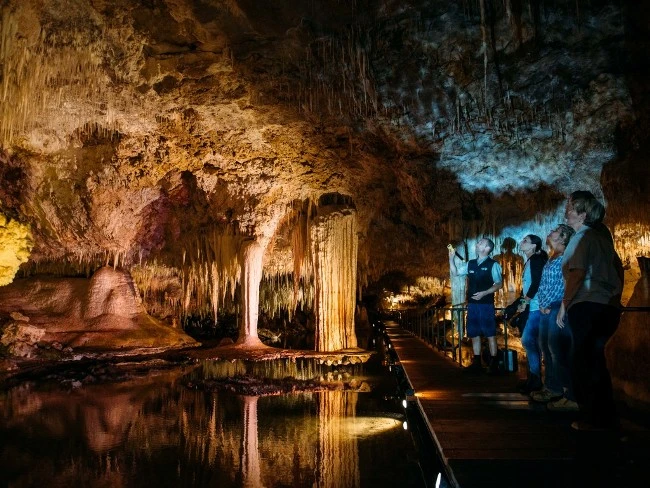
3. Brown Mountain, NSW.
Although short in distance, at between ten to fifteen kilometers in length, this is a road that will bring a knowing smile to those that have driven it. Located west of Australia’s cheese capital, Bega, Brown Mountain itself is the highest peak in the Monaro region at 1243 metres above sea level. There’s Cooma, the gateway to the northern snowfields, and the Snowy Mountain Highway that winds its way across the stark landscape, a drive in itself. There’s a sudden change from plains and cleared land to forest before the sharp descent to almost sea level down this tricky, tight, yet offering vast views east, road. This one hit the news recently after heavy rain washed two huge boulders onto the road, blocking access for a couple of days. Explosives had to be used to get the boulders out of the way.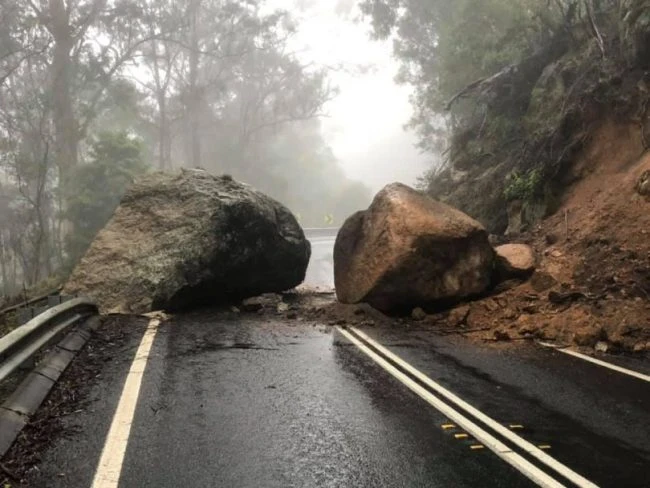
4. Border Range Loop, Queensland.
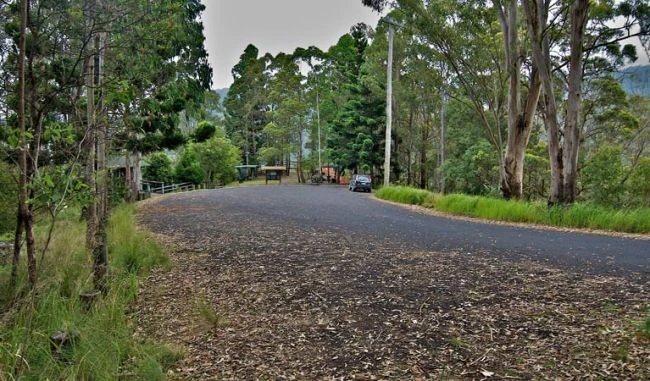
Picking one from Queensland is, like all other states and territories, a hard one. But perhaps for sheer value, the Border Range Loop drive, that takes in 530 kilometres of beautiful roads and views southwest of Brisbane and the Gold Coast, is the choice.
Stretching over a recommended three day drive, there’s plenty to see on the road to the Queen Mary Falls near Killarney. There’s the ranges that are home to Mount Tamborine as well, a view not to be missed.
5. Uluru, The N.T.
Why this one? Simple. Who could pass up the opportunity to drive through Australia’s fabled outback towards The Red Heart of this magnificent area, and see the imposing monolithic red rock rising majestically out of the plains ahead. Stretch the view a little and there’s the incredible jumble of The Olgas, or Kata Tjuta, glowing various shades of red and orange, just forty kilometers further on from the wonder that is Uluru.
Tell us your favourite driving road and let us know on in our comments section.
 Level 2, 9 Help Street