

Author archive
Automobile Servicing: Dealership V Mobile.
Very few would disagree that the days of hauling out the toolbox on a Sunday morning to tune the Kingswood are long gone. With the advent of Electronic Fuel Injection or EFI, longer lasting oils, engine covers that look too tricky to remove, plus more specific guidelines from car makers, servicing a car at home has become something of the past.
Or has it?
Mobile servicing has become a huge business over the last couple of decades or so and it has provided some genuine benefits. To find out more, we spoke to David Endres from APR Mobile Servicing. He has over twenty years of experience in the automotive servicing field including fifteen as a mobile servicer.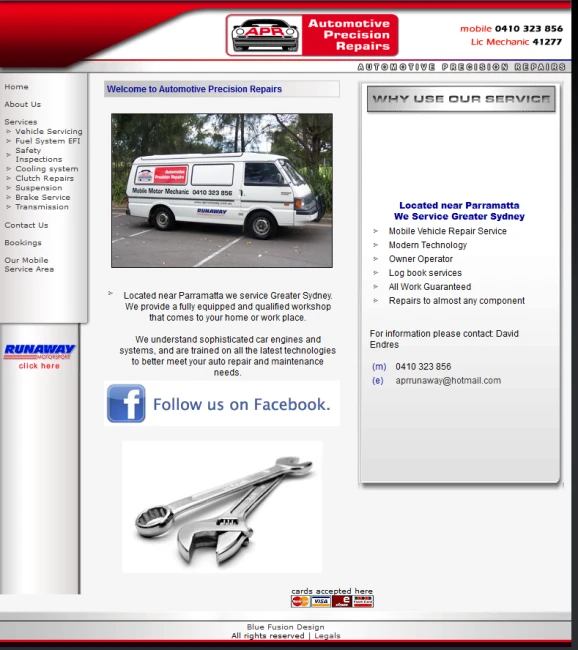 We started with what appears to be an obvious benefit: that one on one contact. Straight away there is that personal service, that personal touch, by having your car serviced at home or at work, says David. You get to meet the person that will be performing the service, and feedback is virtually instant is something needs to be discussed. David says it’s an instantly more usable system as any issues or changes that may have arisen can be discussed face to face and clarifications are conveyed in a far more understandable sense, rather than by a phone call, or worse, by email or text. Also the client can see for themselves what might be the problem, right on the spot.
This brought us to the convenience factor. It’s a big one, says David. “We come to you at a time that suits you, and with more people working from home, your life continues whilst we look after your car.” If a service is done at an office workplace, there is less downtime, says David, and this is one way to keep the boss on your side. Plus, it means there is little to no extra travel time required, such as if a dealership is some distance away from home or work.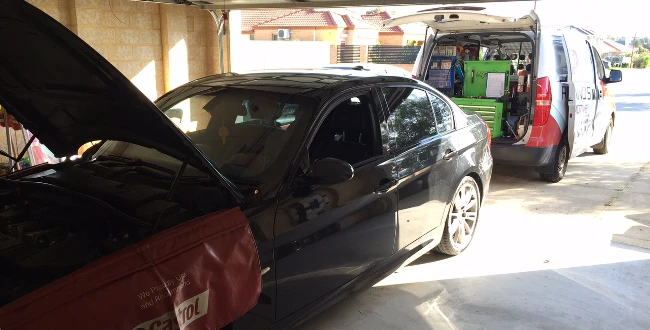 One unexpected benefit of a mobile service, says David, is for the elderly and infirm benefit plus stay at home parents. This absolutely minimises intrusions into their lives, and as David pointed out, imagine having to wrangle small children back and forth on public transport on a hot summer’s day. Trade services such as sparkies or plumbers gain the benefit of a mobile service, as their own light commercial vehicle can be looked after whilst they themselves are on the job. This applies to company “reps”, who can meet David at a specified location and time, leave him to service their vehicle and they continue their representative role.
Given the question of timeframe, David says he aims to have around two hours from start to finish. What this means for the work from home Mum, or the look after the grandkids grandparents, is downtime is as short as possible, rather than the traditional method of a dealership’s “drop off in the morning, pickup in the afternoon”. However, there is a benefit in the dealership approach. Should a part be required and it’s not immediately in stock at that dealership, a turnaround time to have a courier bring the part from a warehouse or another dealership can virtually ensure it’s done during the day and ready for a client to pickup at day’s end.
This, says David, is where a mobile service callout will require a re-booking whilst an ordered part is on its way. He’s at pains to caution that if the work required has the vehicle in a condition that it shouldn’t be driven, that the client is immediately fully briefed. he also highlights that a second visit to fit the required part is at no extra cost to the client. This took us to the cost factor. David believes that mobile servicers are very cost effective, as their only overheads are the costs of running the service vehicles, rather than paying for a building’s electrical costs, management costs, and the like. And, as a rule, the actual hourly rates are competitive, saving a client money.
The experience factor was a key point here. Acknowledging that everyone starts somewhere, David opines that having the experience to provide a mobile service provides a true peace of mind for a client, with the ability to deal with questions and any potential issues on the spot because of it. In a dealership situation, that experience starts with an apprentice, a position where the basics of servicing a vehicle, especially in a first service, leads to the experience required in providing a mobile service.
Inclusive of this point is the process of assisting a client to diagnose a problem if the booking isn’t for a straight service. By working one on one with the owner, and asking open ended questions, it minimises the time needed to diagnose and identify the problem. This includes possibly driving the vehicle before commencing any work. At a dealership, a similar process can be undertaken, and the benefit comes back to the timeframe and possibly having a required part in stock.
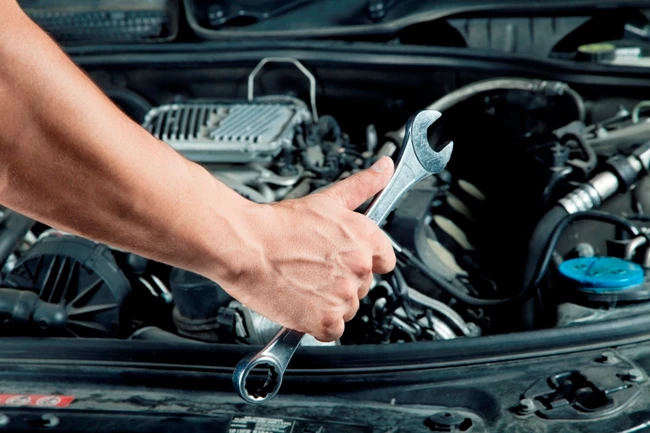
Serviceman
Location wise, a mobile service can cover a lot of ground, and it’s here that the benefit of being largely city wide in coverage helps. APR’s homebase in in Parramatta, west of the Sydney CBD, however the coverage is across most of the majority of the Sydney basin. The timeframe to work with is critical here, says David. With an average lead-in time of a week, this allows APR Mobile Services to arrange a schedule that suits the client first and reduces drastically unnecessary travel from the business end.
It also allows David to ensure that, where possible, the right parts to start with are available, and it also provides him with the opportunity to fit parts that aim for a longevity situation. By that, David says it brings to a client, the right parts to ensure that downtime is minimised but also that the gaps between visits for unnecessary work is reduced as much as possible.
Another benefit, says David, is purely personal. By being hands-on with a client’s car, a relationship is built, and a number of clients like to reward the efforts provided. Although dealership staff can be on the receiving end of a gift from a grateful client, it’s not as personal as dealing with someone one-on-one. There’s a more rewarding situation for many clients, especially for those that may have been under stress or are not automobile savvy, and they like to express their gratitude with a small gift personally. What this does for a mobile servicer is up the level of satisfaction for a job well done, something David at APR Mobile Services takes a lot of quiet pride in knowing has been provided.
David and APR in Sydney can be reached at 0410 323 856. Check your search engine for local mobile servicers.
Era’s End: 2020 B1000 Says Goodbye To The Lion
Motorsport at Bathurst will see the end of an era for the “long” weekend of October 15 to 18. Covering four days, with practice, qualifying, and racing for the main game of Supercars and the supporting categories, it’s a tradition that sees an end to an era in 2020.
Starting in the 1960s as the Armstrong 500, and undergoing several sponsorship name changes, such as the Hardie-Ferodo, Tooheys, and more recently Supercheap, Australia’s “Great Race” says goodbye to Holden as a brand and competitor this weekend.
With the closure of the manufacturing side of the brand in 2018 and the subsequent decision by General Motors to retire the century-plus old name of Holden, a name that has been a constant at the mountain for over two decades, and a history that goes back another three, to think that the name will finally disappear from showrooms and timing sheets for ever is almost impossible to consider.
Holden itself began as a saddlery in 1856 by James A. Holden. He had emigrated to Australia from England in 1852. 1905 and James’ son, Edward, who had been dabbling in the still new field of automobiles, joined the company. This lead to the firm becoming involved in providing minor repairs to the upholstery in vehicles of the day. After some years of build bodies to be mounted on chassis, Holden’s Motor Body Builders was founded in 1917. General Motors bought the firm in 1931 after The Great Depression took its toll and General Motors-Holden was born.
Holden gave us the 48-215 and FJ, the EH 179 Special, the brutal 350ci Monaro and nimble XU-1, the downright sexy LX A9X Torana hatchback, and of course, the Bullpitt favourite. The Kingswood. There was the 186ci, the 253ci, and our own homegrown power hero, the 308ci.  Then came 1978 and the birth of a nameplate that would underpin Holden until 2018. First up was an Aussie icon designation, the VB. 1984 and the world car VK, followed by the Nissan powered VL, the restyled VR and the billion dollar baby VE before the final V series car, the VF. The ZB Commodore would be the nail in the coffin as far as many were concerned as it was front, not rear, wheel drive. Gone was the V8 and a “proper” four door as the ZB was a fastback design.
The Red Lion brought to public prominence Brock. Peter Geoffrey Brock, if you don’t mind. There is Bruce McPhee and Barry Mulholland, Colin Bond and Tony Roberts, Larry Perkins, John Harvey, Russell Ingall, Craig Lowndes, Mark Skaife, Steven Richards that all have red lion blood in the veins.
It’s not all beer and skittles though. Viva, Epica, Malibu are names that will remain associated with the brand and did little to help the public perception of a brand that had lost its way. Stories of indifferent dealership service practices and a slowness to move with the market also blurred the once untarnished badge’s line between want and want not.
Holden had a proud history in Australia, in both the automotive retail sector and in motorsport. In that sense it officially reaches the end of the line late in the afternoon of Sunday October 18 2020.
Vale, Holden.
2020 Peugeot 508 GT: Private Fleet Car Review
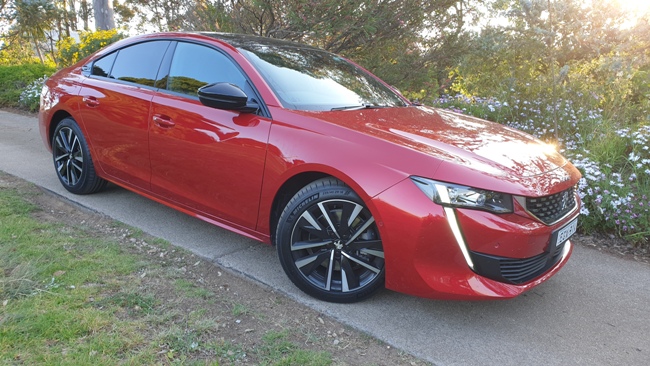 This Car Review Is About: Peugeot’s super slinky, super sexy, super underrated 508 sedan/fastback/hatchback. It gets the three names because it has a powered rear hatch and has a profile that blends a sedan and fastback style. Any way you look at it, the 508 is a truly stunning vehicle to clap the optics on. There is a Sportswagon variant as well for those needing that extra cargo space.
How Much Does It Cost?: At the time of review it’s $56,990 driveaway. Peugeot’s website, at the time of writing, indicated a price of over $62K normally.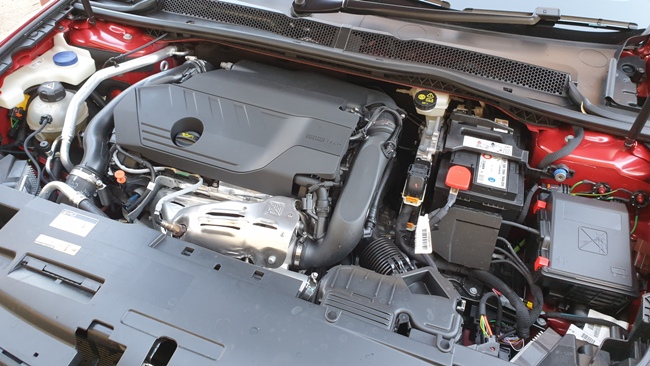 Under The Bonnet Is: A 1.6L petrol engine with turbo oomph. There is 165kW and 300Nm @2,750rpm available, and drive gets through to the front wheels via a smooth-as-silk eight speed auto. Our time with the 508 coincided with a drive to Bega on the New South Wales south coast. Economy is excellent at 6.4L/100km from the 62L tank and this was with four aboard, luggage, and a pooch. Peugeot is one of the rare companies that provides a 0-100 time and for the fastback it’s 8.1 seconds. Top speed is electronically limited to 250kph.
On The Outside It’s: An eyecatcher, especially in the glorious Ultimate Red metallic which is one of nine external colours available as a current no-cost option. The front features blade style LED driving lights and indicators, self-leveling LED headlights, and starts the flowing look that embodies French chic. Subtle crease lines roll back from the bonnet to the windscreen base, and from the forward flanks along the frameless doors. A three claw rear light is joined to the body via a sharp crease that brings the roofline to the powered hatch.
Michelin supply the 235/45 ZR Pilot Sport4 rubber on black painted and machined 18 inch alloys. The design is based around five triangles and the combination of machined metal that stops short of the centre hubs looks fantastic against the red. The roof looks all black however it hides a sunroof.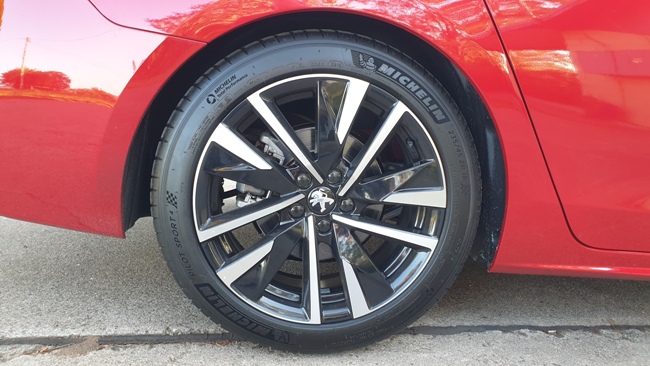 The hatch opens via a hold-and-press tab on the keyfob, a double-tap button inside, a press of the Peugeot lion emblem, or a somewhat fussy kick under the left rear section of the bumper. It’s not always successful and repeated tests saw the shin barked on the bumper more than the procedure worked.
Up front and “magic wash” wipers ooze rather than spray the cleaning fluid; it takes a moment for the nozzles to flow but they’re far more quiet and efficient. Just as efficient is the auto high-beam feature, dipping and raising the stronger light as a sensor dictates from the outside readings.
On The Inside It’s: A truly beautiful place. Pliant Nappa leather with diamond shaped stitched shaping, a floating centre console with smartphone charge pad and two USBs, and Peugeot’s cool looking 12.3 inch i-cockpit greet passengers with a warm ambience. There is two position memory seating for the driver plus eight-way adjustment and massage for both front seats, heating is standard, and the support underneath and for the sides is sportscar-like. There’s a nice touch from the frameless windows that drop slightly and raise automatically as the doors are opened and closed. Basic controls such as satnav, aircon, audio etc are activated via soft touch and classy looking alloy look tabs below the touchscreen. Under these and wrapped in piano black are the supplementary aircon controls. On top of the floating console is a rocker switch to engage different drive modes. At the end facing the rear seat passengers are another pair of USBs and airvents.
 There are a couple of hidden tricks for the cabin too. The child locks are disengaged via a tab on the driver’s door’s armrest, not via the setup in the 10.0 inch touchscreen. As our time with the 508 coincided with a swap to daylight saving, a change to the clock was needed. This is done not by tapping the time display itself, but using an options screen via a Settings icon.
Subtle mood lighting is seen in the dash and centre console drinks holders for a classy touch, and the classy look extends to the choice of display on the i-cockpit screen. There are Dials, Minimalist, Navigation and more to choose from, and activated via a press and roll of the selector on the left side of the steering wheel’s arm. here is also the volume control for the DAB equipped audio system, with legendary French speaker manufacturer Focal providing the outlets. It’s not all beer and skittles though. That sloping rear roofline does make it a little tight for taller passengers, with anyone knocking on six feet probably close to nudging the noggin. Rear leg room is also adequate but again verging on tight for the taller. The cargo space too feels somewhat compromised thanks to the slope of the hatch and a high floor yet offers 487L to 1,537L.
 On The Road It’s: An absolute delight and performance utterly belies the 1.6L’s 300Nm. Around town it’s as easy to drive as expected, with the eight speed DCT on tap at all times and mostly lacking the yawning gaps found in other similar transmissions. The gear selector is as pistol grip style with a button on the right side being pressed and a rocker forward or backwards to engage Reverse or Drive. Cog engagement is far better than that seen in other vehicles and allows forward motion to be both quick, and importantly, safer.
It’s a real cruise mobile, helped by utterly sublime suspension that has each corner rolling over its own section of road without interfering with the other three. Magic carpet in feeling, it dealt with the suburban roads just as easily as the highways, especially those south of Canberra. It’s the ideal mix of quietly wafting whilst being ready to attack like a sports machine. The steering was better when the Lane Keep Assist was disengaged, as this was a little too aggressive in re-centreing the 508 GT. Weight was virtually perfect and torque steer negligible. Braking was instinctive in feedback too.
It’s in its highway prowess that the 508 GT really sang, with that fuel economy a great starting point. However it’s the unexpected flexibility of that seemingly too small 1.6L that sold its potential and won us over. It’s unstressed as a highway goer, with the rev counter just under 2,000rpm. When needed to get angry, it launches the 508 forward with unexpected and wholly welcomed verve and vigour, allowing legal and safe passing to be safer than expected. On one long, straight, and vision perfect for overtaking road, in a line of traffic behind a few caravan-toting 4WDs, the right moment was selected to indicate after checking for rear traffic, and suddenly seeing the front of the line before indicating again and pulling in. For a car of its overall size and with the payload aboard, it’s far, far better than expected and makes long drives a safer proposition.
Easing off and going uphill, the numbers on the digital face roll back rapidly, and there’s only the gentlest of squeezes of the accelerator to settle the vehicle and have it back on the pace. Through all of this, the suspension is supple enough to be luxury when required, and can be punted with sporting intent just as easily too. Peugeot have hit the sweet spot with the 508’s ride and handling.
What About Safety?: Nothing is missing here. Active Blind Spot Detection Alert, Video Camera and Radar autonomous emergency braking, and Adaptive Cruise Control heads the list. Six airbags, ISOFIX, Highway Keeping Assist and Lane Keeping Assist are also included.
What About Warranty And Service?: Five years and unlimited kilometres, plus capped price servicing for five years and five years roadside assist.
At The End Of The Drive: The Peugeot 508 GT fastback is a truly underrated car. It will cosset you in silent comfort and take you to within sight of dedicated, and pricier, sports oriented vehicles. There is plenty of space, plenty of tech and safety, and plenty of that underlying, restrained performance, to not just delight, but surprise in the best way possible.
It’s the car that surprised us with its all round ability, and in a shrinking sedan market, deserves better consideration. The Peugeot 508 GT is that virtually perfect blend of a luxury car that eats up highway miles whilst offering the iron glove performance of a dedicated sports hatch. Yes please, sign me up. Get yourself into one here.
MINI Countryman Rolls Out For Oz.
MINI Australia has introduced the new Countryman to the Australian market in the first week of October 2020, with pricing starting from $44,500 (plus ORC) for the Cooper Countryman. There has been changes to the interior and exterior, upgrades mechanically, and improvements in the technological bases. Four variants will be available from the launch, with Cooper S Countryman, Hybrid Countryman, and JCW Countryman with the addition of a Pure version. Some models will have an all-wheel-drive system. The Hybrid Countryman has an increased range on battery power, with between 55km to 61km expected. This is thanks to a larger 9.6kWh battery being supplied. One exterior change is to the signature grille, with a redesign for the hexagonal look forming a centrepiece for redesigned front and rear bumpers. LEDs now form the standard lighting package, especially at the front (fog lights) and rear that highlights the Union Jack logo. These will sit behind a cargo area offering up to 1,275L of space.
A key interior change is the addition of purely digital displays for the driver at 5.5 inches. The MINI Connect service has extra functionality, and AppleCarPlay will be available via the 8.8 inch touchscreens.
Brett Wauby, MINI Australia and New Zealand General Manager said: “The arrival of the new MINI Countryman will bolster the strong momentum we’ve enjoyed in Australia thus far in 2020. We anticipate strong interest in the new Countryman, a clear favourite in the MINI range, and look forward to delivering signature British charm, go-kart thrills and value-added practicality for our MINI fans.” The Cooper Countryman starts the range, as mentioned, from $44,500 manufacturers list price. Power will be supplied from a 3 cylinder petrol engine providing 100kW and 220Nm for a 9.7 second 0-100 time. Transmission is a seven speed DCT. Economy (combined) is 6.3L/100km. 17 inch alloy wheels will be standard as will an auto tailgate. Leatherette Sports seats will support the driver and front passenger. They’ll have access to wireless smartphone charging, Apple CarPlay, and be safe with City Crash Mitigation with Pedestrian Detection plus Adaptive Cruise Control with Stop/Start. Dynamic Traction Control with Electronic Differential Lock Control and Park distance control with rear camera and reversing assistant will also be standard.
Cooper S Countryman starts from $52,990. A 4-cylinder petrol engine delivers 141kW & 280Nm for a 7.5s 0-100 time whilst providing economy of 6.7l/100 km via a 7-speed Steptronic sport dual-clutch transmission. There will be three MINI Driving Modes (Sport, Mid, Green). The exterior highlights will see a Piano Black Line Exterior (headlights surround, bezels around rear lights, front grille frame, door handles) with the radiator grille in black surround and featuring a black honeycomb insert and S designation.
18-inch light-alloy wheels with run-flat tyres will be here. Inside there is a John Cooper Works steering wheel, Leather Cross Punch Sports seats for driver and front passenger in Carbon Black that will match the piano black surfacing for the trim. An extra safety element is the Forward Collision Warning with visual and audio warning signal, plus braking pre-conditioning. Hybrid Countryman starts from $60,990. It’s the same 3 cylinder petrol plus a 65kW/165Nm electric motor and six speed auto. 0-100 is 6.8s and economy is 2.4l/100 km. There is an extra drive mode (Green+) and the All4 intelligent all-wheel drive system. The Piano Black exterior package is fitted and complements the chrome side scuttles. The 18 inch alloys and run-flats are standard as are the blackouts for the grille.
  The interior has the John Cooper Works steering wheel, Carbon Black Leather Cross Punch Sports seats for driver and front passenger, Piano Black interior surfaces and the Forward Collision Warning with visual and audio warning signal, plus braking pre-conditioning.
The JCW Countryman Pure kicks off from $61,915. The 4 cylinder petrol breathes via a pair of centrally mounted tailpipes and punches out 225kW and 450Nm for a 5.1s sprint time. Economy is 7.6l/100 km. The transmission is an 8 speed Steptronic sport automatic paddle shifts and launch control. The MINI Driving Modes are Sport, Mid, Green and grip is via the All4 intelligent all-wheel drive system. 18 inch alloys and run-flat tyres ride with a Sport tuned suspension. Brakes are fixed 4 piston front calipers. The grille has a red insert whilst the rear sit flat courtesy of a JCW spoiler.
Countryman’s additional specification over JCW Pure has a starting price from $67,818 and has adaptive suspension, 19-inch light-alloy wheels with run-flats. with the interior getting a HUD and sounds via a Harman Kardon HiFi Sound System with 12 speakers and eight channel digital amplifier.
 Level 2, 9 Help Street