

Author archive
Tesla Gets A Semi And Updated Roadster.
It’s been hinted at, guessed about, and now it’s for real. Tesla has given us a semi. 2019 is the year that is currently scheduled for first delivery and reservations are currently being taken in the US for just five thousand American dollars. Tesla has unveiled the new truck at a lavish event and simply stated, the design and specifications are stunning.
- Zero to 60 mph in five seconds, unladen,
- Zero to 60 mph in twenty seconds with an 80000 pound (over 36200 kilos) load,
- Will climb a five degree slope at a steady 65 mph,
- No shifting and clutching mechanism, regenerative braking recovers 98% of energy and no moving engine parts reduces maintenance, costs, and wear,

- New megachargers add 400 miles range in thirty minutes,
- Enhanced Autopilot, the Tesla Semi features Automatic Emergency Braking, Automatic Lane Keeping, Lane Departure Warning, and event recording,
- Has an autonomous convoy mode, where a lead truck can control following trucks. Tesla has also changed the way we view a semi, with the cabin designed to be driver-centric, and with stairs to allow better entry and exit from the cabin. The cabin itself will allow standing room and for the driver two touchscreens for ease of use and providing extra information at a glance.


Tesla has also revealed a throwback to their origins, with a revamped Roadster. It’s also some numbers that, if proven, are truly startling. Consider a 0-100 kph time of 1.9 seconds, a standing 400 metre time of 8.8 seconds, 0 – 160 kph of just 4.2 seconds, over 250 miles per hour top speed and a range of over 600 miles. It’ll be all wheel drive, a four seater, have a removable glass roof, and will start at a current mooted price of US$200000.


More information can be found via The Tesla website
Information provided courtesy of Tesla.
Private Fleet Car Review: 2018 Mitsubishi Outlander LS PHEV
PHEV. It’s short, sharp, sounds like an ex AFL player but with vastly more substance. It stands for Plug-in Hybrid Electric Vehicle. In layman’s terms, it’s an electrically powered car that you can plug in to your home power system to charge a battery inside the car. What it doesn’t tell you is that the petrol engine that’s also fitted can be used as a generator and that the brakes can be used to harvest the kinetic energy generated and recharge the battery on the go. Private Fleet trundles the Mitsubishi Outlander LS PHEV from the lower Blue Mountains to Temora, in the central west of NSW, via Bathurst, and home via Yass and Goulburn. It’s readily identifiable as a PHEV thanks to the three subtle (ahem) badges on the rear door and front flanks. Oh, there’s a Tesla style fast charge port so you achieve approximately 80 percent full charge from empty in just half an hour, as long as you have the appropriate equipment, including the transformer the PHEV comes with for the everyday single phase household which is best left overnight to really give the “tank” a full charge. Hence the Plug-in part of the name.
 Mitsubishi currently only have the Outlander as a hybrid vehicle and it’s a kinda cool one with three distinct hybrid modes, EV, Series, and Parallel modes. When the EV Mode is chosen you’re driving purely on battery power alone. You can also drive with the 2.0L petrol engine as a charging unit or as a paired situation where the petrol engine kicks in as required. Transmission is a single or fixed speed transaxle unit.
There’s a big silver EV button in the centre console or two buttons either side of the jet fighter Drive selector (no gears as such) marked Save or CHRG. Save turns off the electric option and runs purely on the petrol powerplant, the other is self explanatory. When fully charged, the battery indicator shows a range of around fifty kilometres. If you accelerate ssssllllooooowwwwllllyyyyy it will stay on battery only but give it a reasonable prod and the petrol engine cuts in. On battery it’s an eerie almost silence, with a barely audible whir as the PHEV wafts away. The petrol engine is isolated, muted, and there’s hardly a vibration in the body to alert you to it being engaged. The computer programing is seamless, as is the actual switching between modes, and the whole system is intuitive.
 Fuel consumption is still…..well, a concern. Mitsubishi’s refinement to the overall system now rate consumption as 1.7L of 91RON per 100 kilometres. That’s certainly achievable on virtually purely electric runs that cover no more than maybe fifteen kilometres or so. A Wheel Thing finished, after a week and well over 1000 kilometres, closer to 9.5L/100 kilometres. That’s from a 45L tank. Overall power is rated at 120 kW and that’s for the two electric motors fitted, one for the rear and one for the front wheels, which out put a total of 120 kW and 332 Nm. Mitsubishi says 6.5 hours for a full charge to the battery using the charger on a standard household supply.
The petrol engine is rated for a fairly measley 87 kW, but a better torque figure is usable at 186 Nm @ 4500 rpm. It’s also worth noting that you can effectively have the PHEV as an AWD or All Wheel Drive vehicle by the simple expedient of pushing a clearly marked 4WD button in the centre console. The drive west from the lower Blue Mountains sees the westbound highway rise by some five hundred metres vertically over a horizontal distance of perhaps eighty kilometres, before dropping drastically at the western edge to the Hartley Valley from Mt Victoria via one of the most picturesque yet narrow roads around. It’s here that you can tip the drive selector into B3 or B5, two different braking modes to harvest the kinetic energy, and add extra range back into the battery system. The brake pedal itself is slightly numb also but not so enough to isolate feedback to your foot when generating energy on a downhill run where the braking modes don’t slow the car enough.
There’s a couple of steepish climbs before entering Lithgow, the home of famed Australian runner Marjorie Jackson, before a reasonably flat run to Bathurst, and from here to the WW2 prison town of Cowra, where a number of Japanese prisoners staged a breakout. The roads were flat, surprisingly smooth, allowing the PHEV to build up speed slowly in order to not punch a hole in the range availability. The PHEV was also predisposed to understeer, not uncontrollable, but easier where safe to allow the nose to run wide and follow its own path. The steering itself was numb to the point of disconnection on centre, with an artificial feel to the travel either side.
On the more rough tarmac surfaces in the central west of NSW there was noticeable road noise from the 225/55/18 Toyo A25 rubber, which also didn’t look as if they’d fit the wheel well, with plenty of room between the lining and the rubber. The suspension itself is tuned somewhere between taut and not quite so taut, with initial give before firming up rapidly.  Adding to the ride query is an overly short front suspension travel, a trait found in some other cars where riding over a school lane speed hump at exactly the legal speed has a crash thump that sounds as if the struts are about to pull out from the body mounts. It’s disconcerting and at odds with the mooted soft road ability the Outlander is marketed with. On the upside directional changes are dealt with well, on smooth roads, with a centre of gravity well below the driver’s seat meaning body roll is minimal.
 Economy here varied between 4.0L/100 km where the Charge tab was engaged, as once underway the drain on the system isn’t aware as much (naturally) as accelerating constantly. There’s a centre of dash display, as is standard in all Outlanders, in this case showing the range from purely battery and both battery and fuel.
 In Temora itself, the car was charged up overnight. The purpose of visiting Temora was to watch their Remembrance Day airshow, as Temora is a former working WW2 airforce base and home to aircraft such as a Gloster Meteor, Spitfire, Hudson, and more. The show itself was a quickish 3.5 hours but wrapped with the tarmac being opened for visitors being able to meet the pilots including Red Bull Air Race and former RAAF pilot, Matt Hall.
 An overnight charge has the battery in the PHEV topped up and Sunday’s return trip via the township of Harden (seriously), via Yass and along the monumentally boring Hume Highway past Goulburn. The roads here were again most straight and corners rated between 75 to 95 kmh meaning that most of them were well within the abilities of the drivetrain to gently ease off and gently accelerate up.
Straight line stability in the Outlander is wonderful, lateral stability not so, with both front and rear, time and again, skipping left and right on rutted and broken surfaces. There’s an instant feeling of uncertainty before either corner cocks a leg and then there’s the sideways movement. A quick lift of the right foot, the chassis regathers its thoughts, and it’s business as usual. In the greater scheme of things it’s a minor annoyance but shows that underneath it’s not quite as settled compared to some of its rivals. Final consumption figures are a long way from the claimed 1.7L/100 km which would be spot on for short distance, flat road, driving. But along the way you can enjoy the decently velour covered comfortable seats, the DAB equipped sound system, with plenty of punch and clarity. Being a largish SUV (call it 4.8 metres in length) means plenty of head (1030 mm), leg (1039 mm for the front), shoulder (1437 mm), and cargo space, with the five seater allowing 477 litres.
  There’s a parcel shelf that covers the spare and has a small locker for the charge cable. However the dash and overall cabin presence is dating and needs a makeover to bring it up to the perceived level of quality as seen in the Korean and European rivals. Outside it’s no different, apart from the badging, to the currently design ethos of Mitsubishi, with the broad and chromed “Shield” nose, curvaceous body that would shame some super models, and a rounded in profile but square from the rear…rear.
 You’ll not want for safety in the form of airbags, hill start assist, and the basic traction control systems, forward collision alert, lane departure warning, and something called an Ultrasonic Misacceleration Mitigation System….what you don’t get is satnav, as the seven inch touchscreen interface has apps for Apple CarPlay and Android Auto, has GPS, but not a navigation facility.
 At The End Of The Drive.
At the time of writing Mitsubishi didn’t list a price for the PHEV on their website, stating it was “Price on application”. Given the standard Outlander range starts at $27990 and goes up to $47990 for the Exceed version (also available as a PHEV) it’d be fair to say somewhere in the mid $30K bracket for the LS. It’s different in that you get a petrol power generator and a back up driver unit at that, with the main focus being that it’s a plug in unit and less reliant on the petrol engine. The fact that it’s a SUV is also different, with very, very few other companies offering anything similar and bear in mind the Outlander isn’t aimed at the luxury car market.
Unfortunately that shows up mostly in the interior, and on road the unsettled feeling it exhibits just a little too often. Measured up, on these two standards, against the Santa Fe, Sorento, Fortuner, and the Euros such as the Tiguan, its lagging. Where it scores the brownie points is in the drive tech, so click here: 2018 Mitsubishi Outlander PHEV for specific information and contact your local dealer for pricing.
Car Of The Year Awards Surprise From News Corp.
As we head towards the end of 2017 the awards season for cars gets under way and some of Australia’s biggest media groups roll out their list of contenders for the gongs in various categories. News Corporation, the company behind CarsGuide, has released their list of finalists for their COTY awards and there’s no surprises in that the two Korean brands feature two of the more newsworthy cars of recent weeks. It’s no surprise that no Australian built cars feature but it is a surprise that there’s just two European brands in the mix…bear in mind that this is the view of this news group and it’s worth looking out for the lists from the other news groups.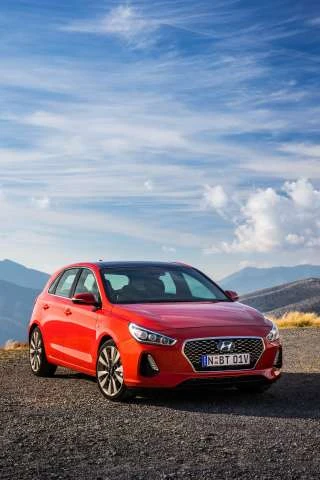 From Korea comes the monster killing Hyundai i30 with the comments of: Loads of standard equipment, confident roadholding and a five-year warranty. There’s also the Kia Picanto, the good looking small hatch with: value-for-money hatchback that’s well equipped and suited to city living. Kia also lobs out the polarising (to Holden and Ford fans) Stinger: Old-school, rear-wheel-drive sports sedan with room for five and a twin-turbo V6.
Audi is one of the two European entries, with News Corp choosing the new Q5: German precision engineering matched to a frugal diesel engine and cutting edge safety. Japan is the country of origin for the rest of the finalists and it’s an eclectic mix, starting with Suzuki‘s Swift, a fun and funky and frugal little car with New Corp saying: Fun to drive turbo three-cylinder with strong safety package. Next up is Subaru‘s resurgent Impreza, recently tested by Private Fleet’s Dave: Quality cabin and crash-avoidance tech usually reserved for luxury cars.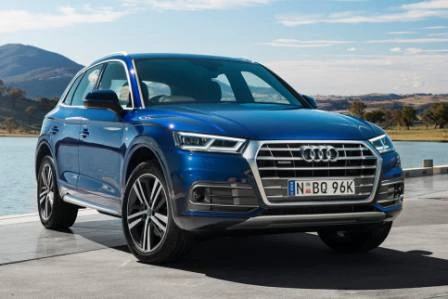 The Japanese onslaught continues with Honda‘s completely revamped Integra range including the fire snorting Type R: Explosive hot hatch with in-your-face styling and a punchy turbo engine. Mazda is in there as well with their mid range CX5: Well priced, stylish cabin design and surprisingly agile for a softroader. Honda throws in another SUV with the CR-V: Spacious, versatile interior, quality finishes and hi-tech feel. Skoda‘s brilliant new Kodiaq is the other European sourced finalist with: clever touches in the cabin, zippy turbo engine and a generous warranty.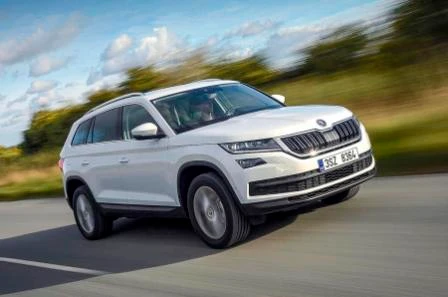
The final word goes to Richard Blackburn, motoring editor: “Every year, it’s getting more difficult to separate the best from the rest. Brands that buyers once turned their backs on are now every bit as good as the established players, while safety technology usually reserved for expensive luxury cars is increasingly available on cheap hatchbacks.”
Private Fleet Car Review: 2018 Subaru WRX STi R-Spec.
Once upon a time, the World Rally Championship or WRC was regarded as highly as the Formula 1 championship. Names were known, cars were followed, and drivers were gods. Subaru looked at its small car, the Impreza, and thought that its all wheel drive system inside its roomy yet compact body would make a solid base from which to develop a WRC entry. Subaru Technica International, the motorsport arm of the car company, along with UK based ProDrive, gave us the WRX (World Rally Cross) and an icon was born. Flash forward to 2017 and the World Rally Championship is dull in lustre, with the once broad appeal now seemingly limited to hardcore motorsport fans. Subaru enters a team in the Australian Rally Championship, the ARC, with Molly Taylor the works driver. The car? The WRX STi. In road going trim it’s known as the Subaru WRX STi R-Spec and the 2018 version is now available to buy and drive. This test car was taken from the lower Blue Mountains to the Hunter Valley for a birthday (thanks for the cards and cakes, by the way) during some of the heaviest rain seen for Sydney and surrounds for some time.
 It’s Subaru’s 2.5L flat four that powers the four wheels, twisting out a peak of 407 torques at 4000 rpm, and 221 kilowatts at 6000. There’s oodles of torque on tap from idle and is well and truly felt when rifling through the close ratio six speed manual via the short throw gear selector. There’s a pair of twin chrome tipped exhausts that deliver the characteristic boxer four thrum which is audible inside the cabin, even over the roar of the Yokohama Advan 235/35/19 (first time this diameter has been fitted) tyres pumping litres of water.
 When it was dry, the R-Spec showed exactly what it can be capable of. Tenacious grip, speed into and out of corners that frighten lesser chassised cars, the sheer ability to be put into a situation that had the Advan tyres shrugging as if to say “Is that all?”. The racing creed of slow in, fast out is put to good use as the torque slingshots the R-Spec towards lightspeed.
 Being an all wheel drive car is one thing, being a premium sports oriented all wheel drive car is another, and Subaru continues to offer its DCCD or Driver Controlled Centre Differential system to back that up, along with Subaru’s variable engine mapping system. Accessed via a toggle switch mounted in the centre console, the system allows the driver to tailor the proportion of drive between front and rear from 50:50 to 41:59. Under normal driving you can feel the torque tugging at the front and in circumstances such as shopping centre car parking, its a bit of an effort to move the car around. By altering the torque split you can not minimise but alleviate some of the tugging up front. It allows manual or auto adjustment, with one step in auto and up to five in manual.
 Thanks to the weather, exploring the outer boundaries of the performance capabilities of the STi R-Spec wasn’t a safe option, but there’s no doubt the car is more than capable under thundering skies. There’s auto headlights, auto wipers and they adjust for speed as well. Being a six speed manual the R-Spec misses out on Subaru’s fabulous Eyesight collision avoidance system however does get Lane Change Assist, Blind Spot Monitor, and gains a camera for both front and left side vision enhancement, allowing more precise monitoring for parking and hopefully not scraping the 19 inch alloys. There’s also a non DAB equipped Harman Kardon sound system and here the first quibble arose. Even with the settings wound up, the audio quality, oddly and disappointingly, still sounded like AM, with a real lack of separation, clarity, depth, and bass.
 Ride quality is surprising, surprising in that something so taut is also comparatively comfortable. Yes, it’s tight and jiggly from the 2650 mm wheelbase, but there’s just enough give to provide a semblance of nice. On smooth blacktop it’s a delight, toss it onto the rutted and broken rough headed tarmac surrounding Cessnock and it’s railway locomotive in that you can count how many grains of sand on a pebble yet without feeling your spine will be shaken to dust. Pop into your local Westfields, hit those damnable yellow metal speed bumps, and instead of crash thump it’s next please. It’s a suspension tune that doesn’t detract from the outright capabilities of the R-Spec nor does it overly frighten in comfort loss.
 You’ll not lack for comfort inside either, with grippy and supportive heated Recaro seats, Subaru’s wonderful triple screen information systems, and plenty of room in the current Impreza bodies. However, this STI R-Spec is still built around the just superceded Impreza design, meaning it’s the fiddly touchscreen, smaller centre console bin, not quite as good as now ergonomics, and a flat dash look.
 Outside there’s a slight change, with the front bumper relocating the globe driving lights and indicators to inside the headlight cluster, and replacing them, in the lower corners, with a vented black plastic insert. At the rear is the STi’s trademark landing pad that masquerades as a wing for the handy 460 litre boot and designed so it doesn’t obscure rear vision from inside.
 What the STi does do extraordinarily well, whether it’s bright daylight or blown out grey skies, is simply DRIVE. There’s plenty of torque to launch the car off the line, and you can rifle through the gears with a silky snick snick, listening to the raspy throb rise and fall, feel the body of the car bobbing around, whilst feeling that the hand and feet and part of the road underneath.The torque allows an immense amount of drive-ability in all gears bar sixth if you’re traveling at eighty kph or less, where fifth and then fourth comes into play.
  In gear acceleration is nothing short of stupendous and overtaking, safely, is how it should be. Done quickly, not a ludicrously ponderous move for fear of being pinged. There’s a price to pay for this exuberance, with 98RON the only tipple the car will drink, and at a figure of over fifteen litres per one hundred kilometres covered in an urban environment. Even driven with as gentle a right foot for the weather demands, the lowest was still 9.4L/100 km.
 The steering, although heavy, isn’t strenuous, and does an excellent job of communicating to the driver just what kind of road and the condition of the road, the car is on. It’s twitchy at times yet never hints at instability, and can be easily held with one arm, but two is better as you’ll think a direction and the nose goes there. It’s ratioed for quick response so it’s definitely not suitable for a driver that tends towards the lackadaisical in their driving style.
  Thankfully there’s plenty of safety equipment on board in the form of airbags, pretensioning seat belts and the like and Brembo brakes that didn’t work terribly well. Yep, that’s right. Instead of hauling up the 1532 kilo machine in a fingersnap, there was a worrying, and occasionally puckerworthy, lack of retardation in this particular car. Even good shoving of the centre pedal, needed in the wet and vision obscuring conditions of the Pacific Highway on a rainy day, offered little resistance.
 At The End Of The Drive.
As a driver’s car, brakes aside, the STi R-Spec delivers a joyous experience. As a piece of technology, it delivers something tactile and connectable. Even based on a now slightly outdated base, the Subaru WRX STi R-Spec commands attention and stokes the driving fires. If there’s a final question mark, it’s the value of the asking price at $57K. Balanced against newer and cheaper metal such as offerings from Ford, VW, perhaps even the new Kia Stinger GT, it’s no longer as much a value add as it once was. But when it continues to emotionally connect to you as a driver then there’s no price that can be put on that.
Web yourself to Subaru WRX/STi info to book a drive and spec up your own WRX STi R-Spec.
 Level 2, 9 Help Street