

Archive for 2022
Fuel Miser Comparison (2010/2022) Audi-Fiat

One of the easiest ways to counter any rises in the fuel prices is to look at downsizing to a more economical car. If this sounds something you’d be into, then you certainly won’t be the first person to do so. We’ve just purchased a smaller Honda Jazz as a run around. Just think back to the fuel crisis in the seventies.
Anyway, it’s always an interesting topic, and who wouldn’t mind driving a new- to late-model car that spends less time at the gas pump. If you are a commuter, then you’ll appreciate owning a car that doesn’t cost the earth to run.
I thought I’d look at a list of cars that featured in an article written back in 2010, where I compared some of the thriftiest cars at that time. These were cars which had been designed to function as some of the world’s best fuel sippers. These vehicles were sold new in Australia, but I thought I’d add a new twist this time by adding what we can consider as the brand new version of these old models with their statistics for fuel consumption as a comparison – you know, a bit of nostalgia along with the new, and what’s changed – or not.
Note that the fuel consumption figures are based on the number of litres of fuel consumed every 100 km travelled. Often real world situations can play havoc with Lab tested fuel consumption figures, but this definitely gives you an interesting picture And, here is the list that is in alphabetical order – just to be helpful:
Audi
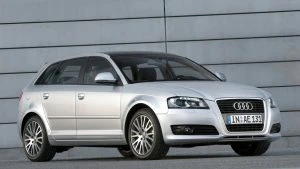
Audi A3 TDI 2010
The 2010 Audi A3 TDI offered a tidy package with practicality and comfort on its side. It uses the 1.9-litre TDI engine linked to a 5-speed manual gearbox that has plenty of useful torque and manages a fuel economy figure of around 4.5 litres/100 km. It was probably one of the roomiest economy cars on this list at the time.
Audi’s 2022 A3 is available in three model grades and two body styles ” Sportback (hatchback) and Sedan. Two powerplants are available for the stylish new A3. The most fuel efficient is the 35 TFSI 1.5-litre turbo-petrol with mild-hybrid technology producing 110kW/250Nm with a claimed 5 litres/100 km combined economy.

Audi A3 2022
Audi also has the smaller A1 model to add to your shopping list, which you can now buy new. It has a 1.0-litre 3-cylinder ULP engine with 85kW/200Nm and a 5.4 litres/100 km combined economy, or a 1.5-litre four-cylinder 110kW/250Nm option with a 5.8 litres/100 km combined economy.

Audi A1 2022
BMW
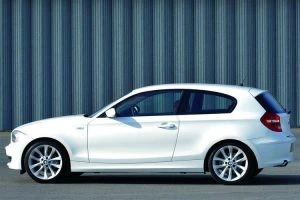
BMW 118d 2010
At the time, another small German car, the 2010 BMW 118d, offered a fun drive and used an automatic gearbox with a stop/start function for the engine. It also offers a slick 6-speed manual gearbox option and achieved an impressive 4.5 litres/100 km for its combined fuel economy. You have 300 Nm of torque, and it feels a punchy little powerhouse, and it’s also RWD!
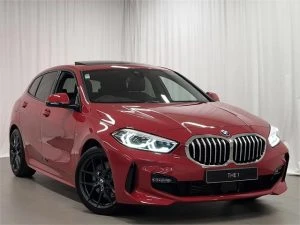
BMW 118i M Sport
In 2022, the 1-Series is available in a 118i M Sport version, which uses a 103kW/220Nm three-cylinder turbo ULP (unleaded petrol) motor with a claimed 5.9 litres/100km combined.
Citroen
The French loved to rival the Germans, and still do, so it was no surprise to see that the Citroen C3 and C4 featured in 2010. They are still nice-looking and comfortable cars. The Citroen C3 HDi offers the driver a tidy fuel consumption figure of 4.4 litres/100 km, while the bigger and roomier C4 HDi could deliver 4.5 litres/100 km in combined fuel economy runs.
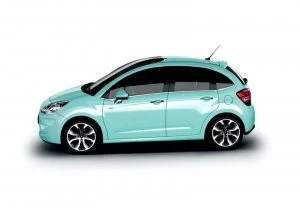
Citroen C3 2010
2022 sees Citroen’s C3 with much more grown-up styling, and a 1.2-litre three-cylinder 82kW/205NmTurbo petrol engine that delivers the power through a 6-speed automatic FWD driveline. Fuel consumption should see around 5.7–6.4 litres for a Worldwide Harmonised Light Vehicle Test Procedure (WLTP) combined cycle, which is the current testing process for measuring a new car’s fuel economy, electric driving range, and emissions.

Citroen C3 2022
Fiat
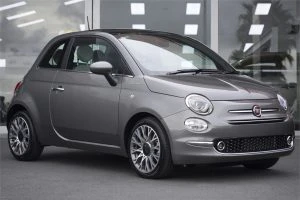
Fiat 500 2022
One of the 2010 super cuties, and still with endless loads of flair, is the nicely packaged turbo-diesel Fiat 500 that captures your attention. Whether it is the 1.3 JTD engine mated to a 5-speed or 6-speed manual gearbox, both options provided a thrifty 4.0–4.5 litres/100 km fuel consumption.
2022 Fiat 500 cars are still available new, of course with all their modern updates and new technology like Apple CarPlay and Android Auto, Bluetooth connectivity, and updated safety technology. The current 500 and 500 Convertible offer a manual or single-clutch automated manual five-speed gearbox that underpins the driving force behind the 1.2-litre 4-cylinder engine producing 51kW and 102Nm. Fiat rate it good for around 4.9 litres/100 km on a combined run, making this a great modern car to drive in an urban setting.
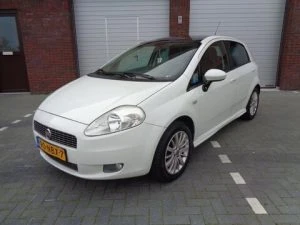
Fiat Punto 2010
In 2010, the Italian flamboyance continued with the Punto 1.3 and 1.4 JTD models. The Punto handles the road well, making it rewarding to drive, while returning a combined 4.6 litres/100 km. Currently, Fiat no longer sells a New Punto model, so, if you’re into Fiats, then the 500 is the one for you.
Let’s Go and Caravan

We’ve got the country, we’ve got the beauty, and it seems peoples’ love for caravanning and camping around Oz is growing steadily. The latest figures from Tourism Research Australia show that the popularity of domestic caravanning and camping trips is one pastime that many Australians cherish. It’s not hard to see why people enjoy it, when there is so much natural beauty in Australia’s landscapes and wildlife.
According to the latest domestic tourism record, it shows that Australians spent a total of 54.5 million nights caravanning and camping during the year ending March 2019. This number is an increase of 6.5% from the previous year. While on these trips, many caravanners and campers also opted to eat out at local cafes or restaurants, a bonus for the local businesses. This growth was experienced across the board, in all States and Territories, with over 10% growth recorded for Northern Territory, South Australia, Victoria, Tasmania and Queensland. Interestingly, in terms of age demographics, those with a family in tow – i.e. parents with one or more children living at home – belonged to the demographic group that accounted for the largest number of caravan/camp trips in a year. People who were part of the younger, mid-life demographic, and with no children, were those of the second largest group taking plenty of caravanning or camping trips (4.2 million). When it comes to the most nights away in a year, the older non-working demographic (often called ‘grey nomads’) were leading the way with 32% of the total number of nights spent in Australia caravanning or camping. In comparison, the family segment was only slightly less at 30%.
Sorry tenters, but I’m getting older and so will give my few cents worth for caravanning in the following! I enjoy getting away in our caravan when we can. Having a caravan in tow allows for a little more comfort on the trip, with less hassle on arrival at each new destination. Everything you really need is with you, and the beds are ready made for the night, with no need to pitch tent!
I would certainly recommend trying caravanning, particularly if you like the idea of enjoying the great outdoors, getting away from most of the electronic vices, and smelling the clean air. You get to meet a whole bunch of friendly, like-minded people along the way. You also get to discover the many new places you’ve never seen before or rediscover your old favourite spots that you love to get back to. These sorts of experiences are a treat that I never grow tired of.
Caravan Types
Here are some of the varieties of caravans you can buy without looking into purchasing a fully-fledged motorhome:

Standard Caravan
Easy to tow. It really just depends on the tow rating of your car as to how large or heavy the standard caravan is. The smaller the caravan, generally, the lighter and easier it is to tow than bigger ones. Standard caravans come in a range of sizes, single and tandem axles, and so some of the standard caravans can even be pulled by smaller cars.
Because standard caravans aren’t as heavy as the more ruggedly designed off-road caravans, they demand less torque and horsepower to tow comfortably out on the open road; thus, they are more economical on the fuel/power bill.
Standard caravans are also a bit easier to store and manipulate by hand, particularly the smaller ones.
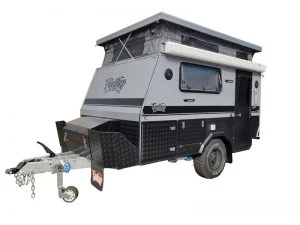
Pop Tops
Pop-tops are easy to tow. Small caravans like pop-ups are, generally, much lighter and easier to tow from A to B than larger types of caravans. You get much better fuel economy towing a pop-top because of the lower drag co-efficiency.
Pop-tops a doddle to store and manipulate by hand, particularly the smaller ones.
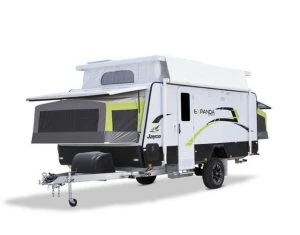
Expander
The merits of an expander caravan are similar to any standard or off-road caravan; however, they have the added bonus of a variety of pop-out areas that can be designed into the ceiling and walls. Essentially, pop these areas out at your destination, and you have a lot more interior space and utility at your disposal while being stationary. Just before you tow away, these areas are fold back into place, and away you tow again.

Off Road Caravan or Camper
The merits of having an off-road capable caravan or camper speak for themselves. They have been built tough and rugged so that you can tow them off-road. Obviously, you are going to need a bigger, torquier vehicle to tow this type of caravan/camper as they are heavier built and weigh more. Usually, these are towed by a decent 4×4 capable vehicle like a Land Rover, Toyota Land Cruiser, Ford Ranger, etc.

Camper Trailer
Similar to a pop-up caravan, except they fold out an array of attached tents. These are light and easy to tow. They can be designed for towing both on and off the road. They are cheaper to buy, as are pop tops.
Are You Being Misgendered By A Crash Test Dummy?

It may have come to your notice that not all car drivers are men. For most of us, this isn’t much of a staggering revelation, especially if you are a woman. Or if you were ever driven places by your mother. Or taught your daughter to drive. Or asked your wife or girlfriend to share the driving with you on a long-haul trip interstate. Or if… well, you get the picture. However, it seems as if car manufacturers, especially those responsible for the passive safety features, haven’t quite cottoned onto this yet, as a whole. You’d think that Bertha Benz had never taken her husband’s prototype horseless carriage out for a long drive to demonstrate to the world that this new invention was easy to use.
The road safety analysts who collect facts on these sorts of things found, when they separated out the data for men and the data for women, found out that women are 73% more likely to be injured in a vehicle crash than men and 17% more likely to die in one. This isn’t because they’re crashing at a higher rate, either. According to the Insurance Institute for Highway Safety in the US, men still crash more and are more likely to do silly things like not wear seatbelts, drive too fast and drive drunk. However, if they do get into identical crashes, a man is more likely to survive it than a woman.
One has to ask why, given that most car manufacturers pride themselves on how good their safety features are. After all, they do all those crash tests with dummies, don’t they? Surely these should make cars safer for both men and women?
Well, yes. Lots of passive safety features such as airbags have become standard on just about every new vehicle thanks to these tests. But there’s a wee problem with these tests, as pointed out by investigator and social commentator Caroline Criado-Perez in her book Invisible Women. Ms Criado-Perez dug around a bit and found out a few things about the standard crash test dummies used in most tests by most manufacturers. In these tests, they tend to use three main ones for the frontal crash tests: one 95th percentile male (in other words, a dummy representing a really big dude who’s bigger than 95% of other guys), a 50th percentile male (an average guy) and a 5th percentile female dummy (a teeny lady who’s shorter than 95% of the population). In other words, tests are carried out on twice as many male dummies as they are on female dummies. That’s a wee bit of a problem to begin with.
However, it gets worse. According to Ms Criado-Perez, during those frontal crash tests, the female dummy isn’t even tested in the driver’s seat – she goes into the front passenger seat. This makes you wonder what century these designers are living in. Surely, given that they’re putting all these electronic assistance gadgets, they know that this is the 21st century and that women drive cars, don’t they? The good news here is that in Australia, the ANCAP tests do put that 5th percentile female dummy in the driver’s seat during the frontal tests – good for them.
However, there’s one wee problem with that female dummy. OK, she’s smaller than the male ones and she’s got boobs, but when it comes to actual anatomy, that dummy doesn’t actually represent real female biology. What the designers did was to simply take the male dummy, scale it down and put boobs on it. The trouble is that nature doesn’t work like that. There are differences between male and female skeletons – that’s forensics 101 (yes, literally; it’s part of the basic undergraduate anatomy course). Take necks for example. If a man and a woman have the same sized head, the woman will have thinner neck vertebrae and a thinner neck. Now look down a bit to the other end of the spine, and look at the pelvis. The male pelvis is narrower and has a heap of different angles, which means that a guy’s legs are also straighter – and that’s just the start. The differences between male and female pelvises are as different as the soft bits found in and on the pelvis (yes, the bits you’re thinking of). And the list goes on: men have longer ribcages and denser long bones as well.
In short, using a smaller version of a male dummy doesn’t actually represent a female body. Women are being misgendered by crash test dummies, in effect.
Would you be surprised to learn that in one recent study on sex differences between injuries from car crashes, women were more likely to have injuries to their pelvises and spines – the places where female bodies are most different from male bodies? Those whiplash-protecting headrests do something, but they’re better at protecting male necks than female necks – because they’ve been tested on what are essentially male dummies.
However, this isn’t an excuse for men to hog the driver’s seat. Volvo is one car manufacturer who has cottoned onto the fact that women have been driving since Bertha Benz took a road trip through the Schwartzwald, and they’re starting to work out how they can make cars safer for 100% of drivers. What’s more, a more anthropomorphically correct female dummy has been invented, known as the THOR-5F. The THOR-5F isn’t just a scaled-down male dummy but has been built to actually represent that dainty 5th percentile female, pelvis, neck and all. This dummy even has a whole heap of sensors in the abdomen and the dummy looks like she’s in the second trimester of pregnancy. A crash test mummy, if you like. Here’s hoping that ANCAP and the other safety testing authorities will insist that this dummy or other dummies based on real women must be used in crash tests.
In the meantime, keep on driving safely and always wear your seatbelt (even if arranging it around your boobs is awkward).
Hybrids, EVs, and the City Environment
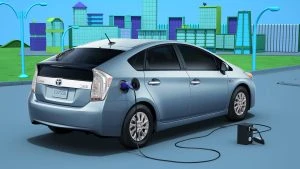
With the big push for clean air and protecting the environment, running a new hybrid vehicle is one way to make the gradual change from fossil fuels to electric more affordable and realistic as we head into a future of EVs.
A gradual change is key, so that everyone can adjust their budgets and business direction accordingly. And making the change gradual ensures that EVs can become more affordable to the masses. Have you heard of the ‘trickle-down effect’? This term refers to the reality of fashion trends flowing from the wealthy (e.g., politicians, mayors, doctors, directors, engineers etc.) to the less well-off or the working class (e.g., factory hands, beneficiaries, shop assistants, cleaners, farm workers, etc.) in society. This trickle-down phenomenon can be related to any new consumer product, especially when these products are first introduced into the market.
At the product’s initial introduction into the marketplace, it is costly and only affordable to the wealthy, but, as the product matures, and as time goes on, its price begins to fall so that it might become more widely affordable and thus adopted by the general public and the working class. One would assume that pure EVs will follow this kind of trend.
Right now, EVs are expensive to purchase new, especially when you want to have one of the EVs with all the status (e.g., Tesla, Porsche, Mercedes Benz). There are some cheaper options like the MG ZS EV, Hyundai IONIQ electric, the Nissan Leaf, and the Hyundai Kona electric. These cars can generally be had for less than $60k.
Currently, owning and operating a 100% EV would be an ideal option if you just wanted to hop between addresses inside the city boundary or maybe commute short distances to and from the urban jungle. However, throw in some intercity travel or long country drives, and the EV is simply left wanting. I’m aware that EV manufacturers are working hard to change this, to make their EVs capable of travelling much longer distances between recharges, as well as making the recharge time much quicker than it commonly is. As it stands today, Australia’s recharging infrastructure is in its infancy, and beyond the city boundary, even inside, it still has a long way to go before becoming seamless and brief.
If you live in and mostly travel inside one of our lovely Australian cities, owning or operating a vehicle that is capable of running on electric power for all or at least some of the time (more depending on you commute or travel patterns) would surely be an option if you aren’t doing so already. This would instantly help to improve the air quality of the congested city environment.
Who wouldn’t want to enjoy breathing cleaner air inside a city’s boundaries? We all would, right? But I can’t afford an EV because (a) it’s not practical and (b) you can’t afford one? If you relate to either of these truths, then you aren’t alone and are currently in the majority. So, what about a Hybrid then? Right now, hybrid vehicles do make a lot of sense. They are able to use their small electric motor for 20–30 km of inner city travel, thus making the city air cleaner and the environment better for all city dwellers and workers. However, when the commute includes distances beyond the city boundary, the petrol motor will happily take over transport duties and to get you where you want to go, recharging the electric motor’s battery in the process.
Of course, a bicycle or even walking is another option for inner city travel, particularly when it isn’t raining. If you are wanting a Hybrid vehicle or even an EV, then do have a look at some of our Hybrid and EV reviews or talk to some of our sales staff to see if there is a likable and affordable option out there for you.
 Level 2, 9 Help Street